Technology Insights & Guides
When working with Technology, the collection of tools, methods, and systems that let us create, store, and move digital information. Also known as Tech, it powers everything from simple apps to global networks. Technology changes fast, so getting a solid grounding helps you spot real value amid hype.
Blockchain, a decentralized ledger that records transactions across many computers forms the backbone of many modern innovations. Its security hinges on the hash rate, which measures how much computing power defends the network against attacks. Higher hash rates mean stronger resistance to 51% attacks, making the chain safer for users and investors alike. Understanding this link lets you assess a blockchain’s health before you commit capital.
Enter NFT, a non‑fungible token that uniquely represents a digital or physical asset on a blockchain. NFTs go beyond art; they can act as tamper‑proof product passports, letting consumers verify authenticity with a smartphone scan. This counter‑feiting shield is especially valuable for luxury goods, where a single fake can damage a brand’s reputation. Coupled with evolving storage solutions, NFTs are becoming a reliable way to attach data to real‑world items.
Scalability remains a hot topic, and State Channels, off‑chain mechanisms that allow participants to transact instantly and cheaply are a leading answer. By moving most interactions off the main chain, state channels keep the core ledger lean while still guaranteeing final settlement. This approach unlocks use cases like micropayments for streaming content or real‑time gaming, where speed and privacy matter.
For developers needing reliable file storage, IPFS, the InterPlanetary File System that stores and retrieves files using content‑addressed hashes offers a decentralized alternative to cloud providers. Files are split into blocks, each given a unique CID, and then distributed across a peer‑to‑peer network. This architecture reduces single points of failure and cuts costs, making it ideal for archiving NFT metadata, large datasets, or any content that benefits from permanence.
Putting these pieces together, you’ll see how technology builds on foundational concepts—blockchain security, NFTs for authenticity, state channels for speed, and IPFS for resilient storage. Below, you’ll find deep dives that unpack each topic, show real‑world applications, and give you actionable steps to leverage them in your projects. Let’s explore the details and boost your tech toolkit.
Wrapped Asset Bridge Security: Risks, Custody Models & Safety Checks
By Robert Stukes On 25 Aug, 2026 Comments (0)
Wrapped asset bridges enable cross-chain transfers but rely on custodial vaults. Learn how to evaluate security risks, check proof of reserves, and navigate new regulatory standards for safe usage.
View MoreWhat is Archethic (UCO) Crypto: Biometric Blockchain Guide
By Robert Stukes On 24 Aug, 2026 Comments (0)
Discover what Archethic (UCO) is, how biometric keys work, and analyze the token's security risks and market position in 2026.
View MoreKYC Verification with Blockchain: How Distributed Ledgers Fix Identity Checks
By Robert Stukes On 16 Aug, 2026 Comments (12)

Discover how blockchain transforms KYC verification by replacing repetitive document checks with secure, reusable digital identities. Learn about Hyperledger Fabric, smart contracts, and the real-world benefits for privacy and compliance.
View MoreNFT Standard Limitations and Solutions: ERC-721 vs ERC-1155 Guide
By Robert Stukes On 9 Aug, 2026 Comments (0)
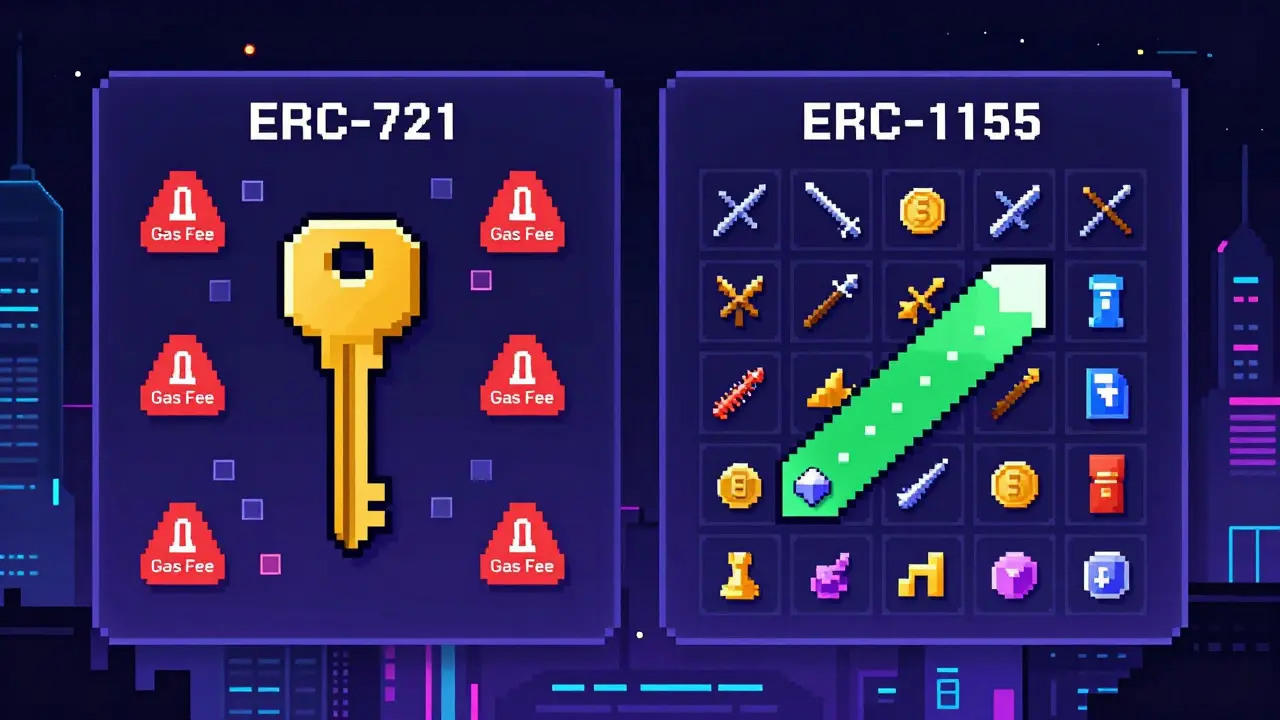
Explore the key limitations of NFT standards like ERC-721 and ERC-1155, including high gas fees, metadata fragility, and legal ambiguity. Discover practical solutions for scalability, interoperability, and secure ownership in blockchain ecosystems.
View MoreWhat is Quantum-Resistant Cryptography: A Practical Guide for 2026
By Robert Stukes On 6 Aug, 2026 Comments (17)
Learn what quantum-resistant cryptography is, why RSA is vulnerable to quantum computers, and how NIST standards like CRYSTALS-Kyber are securing blockchain and enterprise data in 2026.
View MoreWhat is Block Time in Blockchain? A Simple Guide to Speed, Security, and Trade-offs
By Robert Stukes On 19 Jul, 2026 Comments (0)

Learn what block time is in blockchain, how it impacts transaction speed and security, and compare Bitcoin, Ethereum, and Solana's approaches to network performance.
View MoreGPU Mining Profitability and Setup: A Realistic Guide for 2026
By Robert Stukes On 16 Jul, 2026 Comments (0)

Discover the truth about GPU mining in 2026. Learn which altcoins are profitable, how to set up a rig, and why electricity costs matter more than hardware.
View MoreSmart Contract Immutability: Balancing Security Risks and Benefits
By Robert Stukes On 15 Jul, 2026 Comments (0)
Explore the trade-offs of smart contract immutability. Learn how unchangeable code boosts security but creates permanent risks, and why many projects now use upgradeable proxy patterns.
View MoreStaking vs Mining: Complete Comparison of Blockchain Validation Methods
By Robert Stukes On 5 Jul, 2026 Comments (0)
Compare staking vs mining: energy use, costs, risks, and rewards. Learn which blockchain validation method suits your goals in 2026.
View MoreOngoing Compliance Obligations: How to Stay Legal in the Blockchain Era
By Robert Stukes On 4 Jul, 2026 Comments (13)
Learn how to manage ongoing compliance obligations effectively. Discover why static checklists fail, how to build dynamic registers, and leverage technology for continuous regulatory adherence.
View MoreHistorical Smart Contract Hacks: Lessons from The DAO, Ronin, and Wormhole
By Robert Stukes On 24 Jun, 2026 Comments (0)
Explore the history of major smart contract hacks, from The DAO to Ronin. Learn how vulnerabilities in DeFi and cross-chain bridges led to billions in losses and shaped modern blockchain security.
View MoreHow to Create a Digital Signature for Crypto Transactions: Step-by-Step Guide
By Robert Stukes On 22 Jun, 2026 Comments (0)
Learn how digital signatures work in crypto. We break down the ECDSA process, hashing, and nonce generation to explain how blockchain verifies ownership securely.
View More