
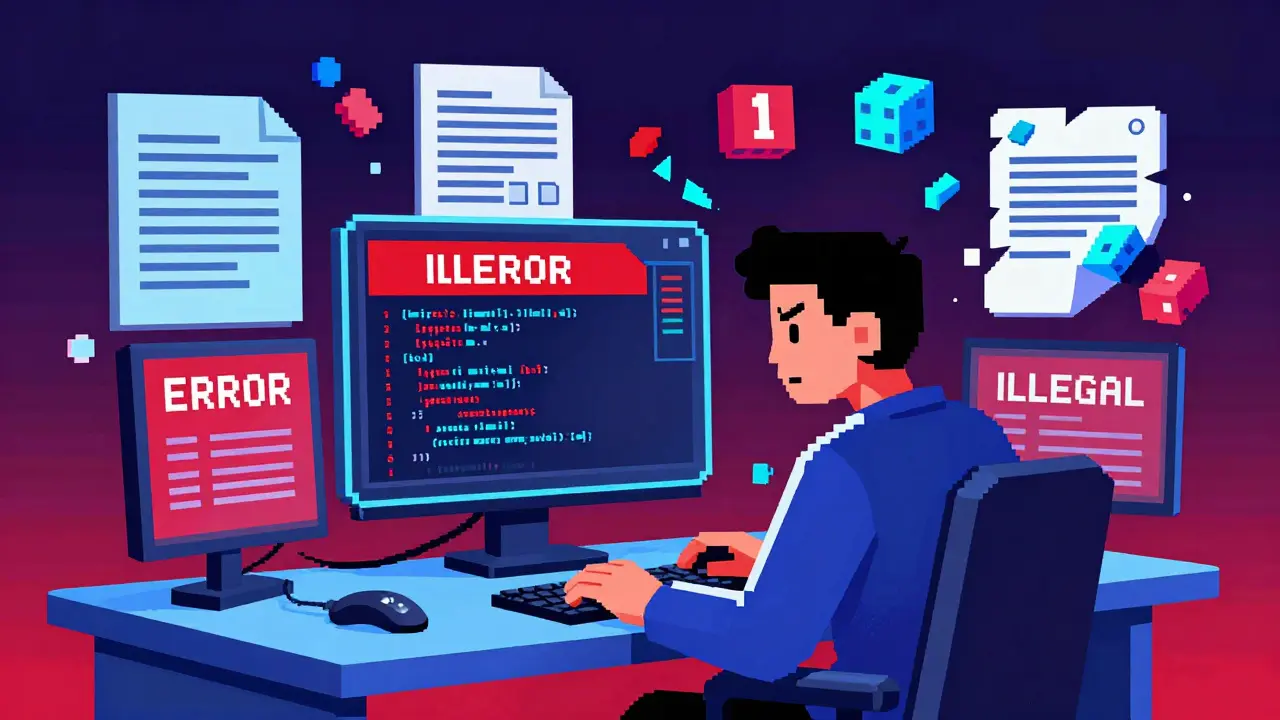
Imagine building a smart contract that automatically executes payments when conditions are met. It works perfectly. But then, a new law passes overnight requiring specific data retention for those transactions. Suddenly, your code isn't just buggy; it’s illegal. This is the reality of ongoing compliance obligations. They aren’t a one-time checklist you tick off during launch. They are a continuous, living process that demands constant attention, especially in fast-moving sectors like blockchain and technology.
For many founders and developers, compliance feels like a static hurdle. You get your license, pass your audit, and move on. That mindset is dangerous. Regulatory landscapes shift constantly. A rule that was valid last month might be obsolete today. Understanding what ongoing compliance actually means-and how to manage it without drowning in paperwork-is critical for survival.
What Are Ongoing Compliance Obligations?
At its core, an ongoing compliance obligation is any requirement an organization must consistently meet throughout its operational lifecycle. These fall into two distinct buckets: mandatory and voluntary.
Mandatory requirements are non-negotiable. They include laws passed by governments (like GDPR in Europe or HIPAA in the US), industry-specific regulations, site licenses, and contractual agreements with partners. If you ignore these, you face fines, lawsuits, or shutdowns. For example, under GDPR, non-compliance can cost up to 4% of your global annual turnover. That’s not a fee; it’s an existential threat.
Voluntary commitments are choices you make to build trust or align with values. Think ISO 14001 environmental standards, professional body codes of conduct, or public pledges to reduce carbon emissions. While not legally enforced, failing to meet these can destroy your reputation. Stakeholders expect consistency. If you promise sustainable practices but don’t track them, you’re greenwashing.
The key difference between old-school compliance and modern ongoing compliance is dynamism. Regulations change. In 2022, 78% of major regulatory frameworks underwent significant amendments. Treating compliance as a static document is a recipe for failure. You need a system that breathes with your business.
Why Static Checklists Fail
Many companies still treat compliance as an annual event. They hire an auditor once a year, fix whatever issues are found, and hope nothing breaks until next time. This approach is fundamentally flawed.
A 2022 Deloitte study of 500 multinational corporations revealed that organizations using continuous compliance monitoring experienced 63% fewer regulatory violations than those relying on annual reviews. Why? Because problems don’t wait for your calendar. A software update might inadvertently expose user data. A new supplier might violate labor laws. A change in local zoning might affect your warehouse operations.
Consider the case of a mid-sized manufacturing company fined $450,000 in 2022. They had a compliance management system. They even had documentation. But they failed to update their environmental obligations after wastewater discharge regulations changed. The system existed, but it wasn’t maintained. That gap between having a process and actively managing it is where most failures happen.
In the blockchain space, this risk is amplified. Decentralized finance (DeFi) protocols operate across borders, often falling into regulatory gray areas. One jurisdiction might classify your token as a security, while another sees it as a utility. Without ongoing monitoring, you could accidentally violate securities laws in three countries before lunch.
Building a Dynamic Compliance Register
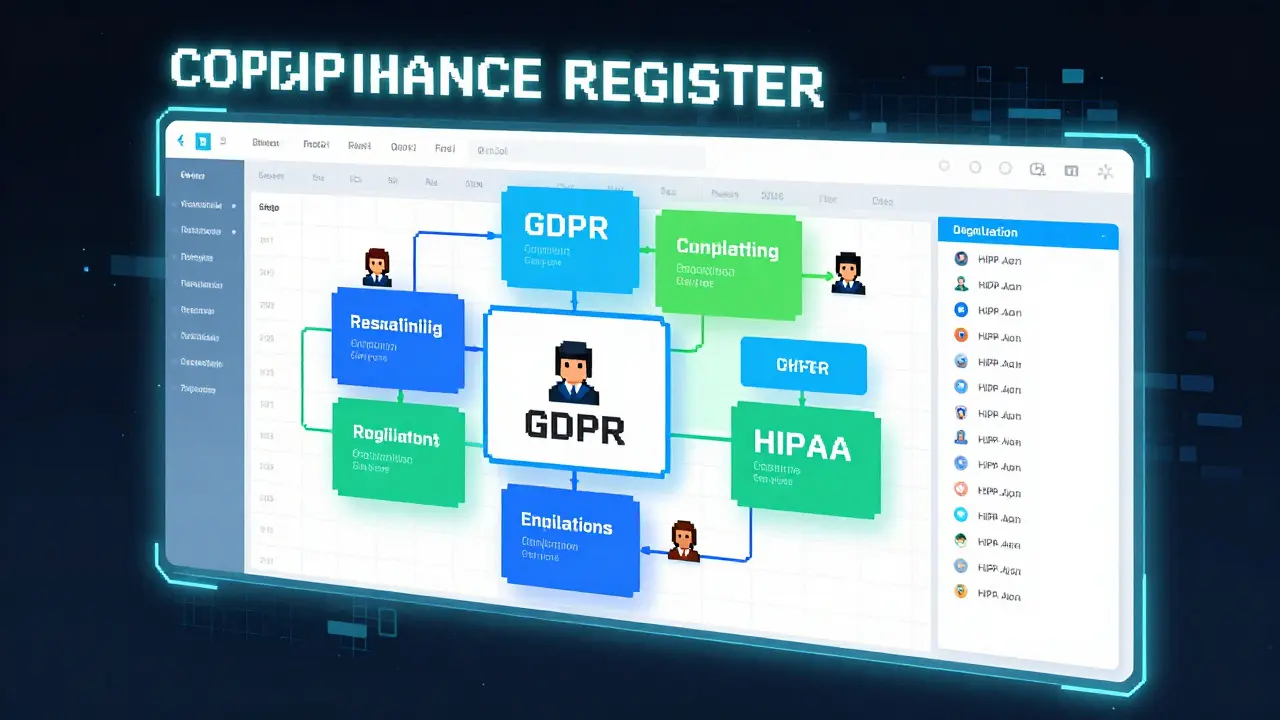
The foundation of effective ongoing compliance is a dynamic register. This isn’t just a spreadsheet gathering dust. It’s a living database that catalogs every obligation your business faces.
Here’s what needs to go into it:
- Regulation Name: e.g., General Data Protection Regulation (GDPR).
- Jurisdiction: Where does it apply? EU, California, New York?
- Type: Mandatory or voluntary?
- Responsible Party: Who owns this? Legal team? IT security? Operations?
- Review Frequency: Quarterly? Monthly? Real-time?
- Evidence Required: What proves you’re compliant? Logs? Audits? Certificates?
Leading organizations update these registers quarterly or semi-annually. For high-risk industries like fintech or healthcare, updates should happen monthly. The goal is to ensure that when a new law passes, someone knows about it within days, not months.
Don’t underestimate the power of ownership. Assigning each obligation to a specific person prevents the "tragedy of the commons," where everyone assumes someone else is handling it. When a department head owns a compliance item, it becomes part of their performance metrics, not just legal’s problem.
Integrating Compliance Into Daily Operations
The biggest mistake companies make is siloing compliance in the legal department. When compliance lives only in legal, it becomes an obstacle rather than an enabler. The best practice, endorsed by ISO 14001 Clause 6.1.3, is to embed compliance into your operational workflows.
This means designing your processes so that compliance is automatic. If you require two-factor authentication for all users, you’re not just securing accounts; you’re meeting cybersecurity compliance standards effortlessly. If your supply chain software flags suppliers who don’t meet ethical sourcing criteria, you’re proactively managing human rights obligations.
Siemens AG demonstrated this effectively by implementing an AI-powered compliance monitoring system. They reduced their regulatory response time from 45 days to just 7 days. By integrating compliance checks directly into their procurement and development pipelines, they turned a reactive burden into a proactive advantage.
For smaller teams, integration doesn’t mean expensive AI. It means simple habits. Reviewing vendor contracts for compliance clauses before signing. Adding data privacy checks to your product design phase. Making compliance a standing agenda item in weekly team meetings.
The Role of Technology and Automation
You cannot manually track hundreds of changing regulations across multiple jurisdictions. Human error is inevitable. This is where technology becomes essential.
Compliance management software has evolved significantly. Tools now offer real-time regulatory change alerts, automated document control, and integration with enterprise resource planning (ERP) systems. According to Gartner, by 2025, 85% of large enterprises will integrate artificial intelligence into their compliance monitoring processes.
Blockchain itself offers unique opportunities here. Maersk implemented a blockchain-based compliance ledger that reduced regulatory documentation processing time by 80%. Immutable records provide transparent, auditable trails that satisfy regulators without endless manual paperwork. For crypto projects, smart contracts can enforce compliance rules automatically-such as restricting transfers to sanctioned addresses.
However, technology is a tool, not a solution. As John Davis, CEO of Compliance Solutions International, notes, "The most significant compliance failures occur not from ignorance of regulations but from failure to maintain awareness of regulatory changes." Software can alert you, but people must act on those alerts. Training remains crucial. Small businesses typically need 80-120 hours of staff training to effectively use these tools.

Costs, Challenges, and ROI
Implementing a robust ongoing compliance framework costs money. For mid-sized organizations, initial setup ranges from $50,000 to $250,000. You’ll also need dedicated personnel-typically 1-3 full-time compliance officers per 500 employees.
Small businesses often find this overwhelming. Lisa Martinez, a sole proprietor, shared her struggle: "Tracking ongoing compliance obligations for my LLC feels overwhelming... I spent $2,300 last year on penalties for missed filings that I didn’t know existed." Her experience highlights a common trap: trying to DIY complex compliance leads to costly mistakes.
Yet, the return on investment is clear. McKinsey & Company projects that organizations with mature compliance systems will experience 28% lower regulatory penalty costs through 2030. Beyond avoiding fines, compliance builds stakeholder trust. Customers prefer brands that respect their data. Investors favor companies with clean regulatory records. Partners want reliable vendors.
There is a balance to strike. Professor Michael Chen warns that spending more than 15% of operational budgets on compliance can slow product development by 22%. The goal isn’t bureaucracy; it’s efficiency. Automate what you can. Focus human effort on judgment calls and strategic decisions.
Looking Ahead: Emerging Trends
The regulatory landscape is shifting rapidly. The European Union’s Corporate Sustainability Reporting Directive (CSRD), effective January 2024, forces approximately 50,000 companies to expand their sustainability reporting. In the US, SEC climate disclosure rules require public companies to report greenhouse gas emissions, with phased implementation through 2028.
For blockchain and tech firms, this means new obligations around energy consumption, supply chain transparency, and algorithmic accountability. The ISO 14001 standard is scheduled for revision in 2025, with stricter requirements for ongoing monitoring. Regulatory harmonization efforts, like the International Framework for Sustainable Finance, aim to simplify cross-border compliance by 2026.
Cybersecurity threats targeting compliance systems are also rising, up 65% in 2022. Protecting your compliance data is now part of compliance itself. As regulations grow more complex, the ability to adapt quickly will separate thriving businesses from struggling ones.
How often should I review my compliance obligations?
You should review your compliance obligations at least quarterly. For high-risk industries like finance, healthcare, or blockchain, monthly reviews are recommended. Additionally, trigger immediate reviews whenever there is a significant change in your business operations, such as entering a new market or launching a new product.
Is ongoing compliance necessary for small businesses?
Yes, absolutely. While small businesses may not need expensive software, they still face legal risks. Ignorance of the law is not a defense. Start with a simple compliance register and focus on mandatory requirements relevant to your location and industry. Consider outsourcing complex tasks to consultants if internal resources are limited.
What is the difference between mandatory and voluntary compliance?
Mandatory compliance involves laws and regulations you must follow to avoid penalties, such as tax laws or safety standards. Voluntary compliance includes standards you choose to adopt, like ISO certifications or ethical sourcing pledges. While not legally required, voluntary compliance builds trust and competitive advantage.
How does blockchain impact compliance obligations?
Blockchain introduces unique challenges due to its decentralized nature and cross-border operations. Projects must navigate varying regulations regarding tokens, data privacy, and anti-money laundering. However, blockchain technology can also enhance compliance through immutable audit trails and automated smart contract enforcement.
Can automation replace human compliance officers?
No, automation supports but does not replace humans. Software can track changes and flag issues, but it requires human judgment to interpret context and make strategic decisions. A hybrid approach, combining AI-driven monitoring with expert oversight, is the most effective model.




Ray Arney
July 5, 2026 AT 18:49honestly this is just common sense but i guess we gotta spell it out for everyone now
Erika Pozzetto
July 7, 2026 AT 01:40It is imperative to note that the distinction between mandatory and voluntary compliance is not merely semantic but fundamentally operational in its implications for organizational integrity. The author correctly identifies that while voluntary commitments such as ISO standards are not legally binding, their neglect can precipitate a catastrophic erosion of stakeholder trust which is often more damaging than any statutory fine. Furthermore, the integration of these obligations into daily workflows rather than siloing them within legal departments represents a paradigm shift that many traditional enterprises have yet to fully embrace or understand in its entirety.
DJ Maleko
July 7, 2026 AT 04:49lol imagine thinking you need an AI system to track laws 😂 most people just ignore it until they get sued then cry about it. the real issue is that regulators change rules every time they wake up so no amount of software helps if the target keeps moving 🤷♂️
Linda Hilliard
July 8, 2026 AT 02:42Oh darling, please. This article reads like a pamphlet written by someone who has never actually deployed a smart contract on mainnet. You speak of 'dynamic registers' as if they are some magical panacea, but let us be clear: the fundamental flaw here is the assumption that regulation itself is rational. It is not. It is a chaotic mess of political posturing and bureaucratic bloat. To suggest that one can simply 'integrate' compliance into operations is to misunderstand the very nature of regulatory capture. One does not 'manage' chaos; one survives it through sheer will and expensive counsel. Also, emojis in professional discourse? How quaint. :)
Eric Braddock
July 8, 2026 AT 05:36you guys are all missing the point because the deep state wants you to think compliance is about safety when it's really about control. they want your data on the blockchain so they can track every satoshi you move. the 'regulatory changes' are just pretexts to expand surveillance infrastructure. do not trust the systems. they are designed to fail you. 🚩🚩🚩
Shay Thomson
July 8, 2026 AT 07:01I feel like we're all just trying our best in a world that keeps changing the rules while we're playing the game. It's heartbreaking to see small businesses crushed by fines they didn't even know existed. We need more empathy from regulators, not just stricter enforcement. Let's work together to build a system that supports innovation rather than stifling it with fear. Everyone deserves a fair chance to succeed without being trapped by red tape. 💔✨
Kristine Lawson
July 8, 2026 AT 14:43I must respectfully disagree with the premise that automation is merely a 'tool.' In fact, I would argue that the reliance on human judgment in compliance is the primary vector for failure. Humans are inherently biased, fatigued, and prone to error. Therefore, the only logical conclusion is that full automation is not just preferable, but morally obligatory. To suggest otherwise is to advocate for negligence. Moreover, the notion that 'training' solves the problem is laughable. Training cannot overcome cognitive limitations. We must automate everything. Period. ;)
Winston Lacewing
July 10, 2026 AT 08:11This is absolute madness! How dare they expect us to keep up with laws that change overnight? It's a moral outrage that companies are punished for things they couldn't possibly predict. I'm shaking with rage right now reading this. They should be ashamed of themselves for creating such a hostile environment for honest workers. This needs to stop immediately before society collapses under the weight of bureaucracy! 😡😡😡
Andrew Schneider
July 12, 2026 AT 03:39oh sure, let's just pretend that buying a $250k software suite fixes the root cause of government incompetence. meanwhile, my startup is burning cash just to stay alive and now i have to hire a 'compliance officer' to watch me breathe? what a joke. the whole system is rigged against the little guy anyway so why bother? might as well throw a party and go down swinging 🎉🍾
Mark Tuason
July 12, 2026 AT 18:03While the concerns raised regarding the cost of compliance are valid, it is important to consider the long-term benefits of having a structured approach. Many organizations find that once the initial setup is complete, the ongoing maintenance becomes quite manageable. It may be helpful to start with a simple register and expand from there as resources allow.
Ella Collinson
July 14, 2026 AT 01:08The epistemological framework presented here lacks sufficient granularity regarding the ontological status of decentralized autonomous organizations. If an entity has no central authority, how can it be held liable for 'ongoing obligations'? The concept of a 'responsible party' dissolves in the face of true decentralization. Therefore, the entire model of compliance described is fundamentally incompatible with the ethos of Web3 unless we redefine liability at a protocol level, which introduces complex game-theoretic challenges that are not addressed here.
Nick G
July 14, 2026 AT 12:04I appreciate the thoughtful discussion everyone is having here. It is clear that this topic resonates deeply with many of us who are navigating the complexities of modern business environments. I believe that by sharing our experiences and perspectives, we can collectively develop strategies that are both effective and humane. Perhaps we can explore ways to support smaller businesses through community-driven resources and mentorship programs that help demystify these requirements. Let us continue to foster a spirit of collaboration and understanding as we move forward together in this evolving landscape.
Russ Fincham
July 14, 2026 AT 12:16Look, I've been in this game for twenty years and let me tell you something. None of this fancy talk about dynamic registers matters if you don't have the guts to say no to bad deals. Compliance isn't a checklist, it's a mindset. You either respect the law or you don't. Most people here are overcomplicating it because they're scared of getting caught. Just do the right thing and sleep well at night. Simple as that.