Imagine handing over a stack of cash without ever showing your ID. That sounds risky, right? But on the blockchain, this happens millions of times a day. It works because of digital signatures. These cryptographic proofs prove you own the funds without revealing your secret password (private key) to the world. If you are building a wallet, developing a smart contract, or just trying to understand why your transaction confirmed while someone else’s failed, understanding how these signatures are created is essential.
This isn't magic; it's math. Specifically, it involves elliptic curves and hash functions that have been battle-tested since Bitcoin launched in 2009. In this guide, we will break down exactly how a digital signature is generated, step by step, so you can see under the hood of every crypto transfer.
The Core Concept: Proving Ownership Without Revealing Secrets
Before diving into the code or math, let's clarify what a digital signature actually does. In the physical world, you sign a document with ink. Anyone who knows your handwriting can verify it's you. In crypto, you sign a transaction with mathematics. The network verifies it's you, but they cannot reverse-engineer your signature to find your private key.
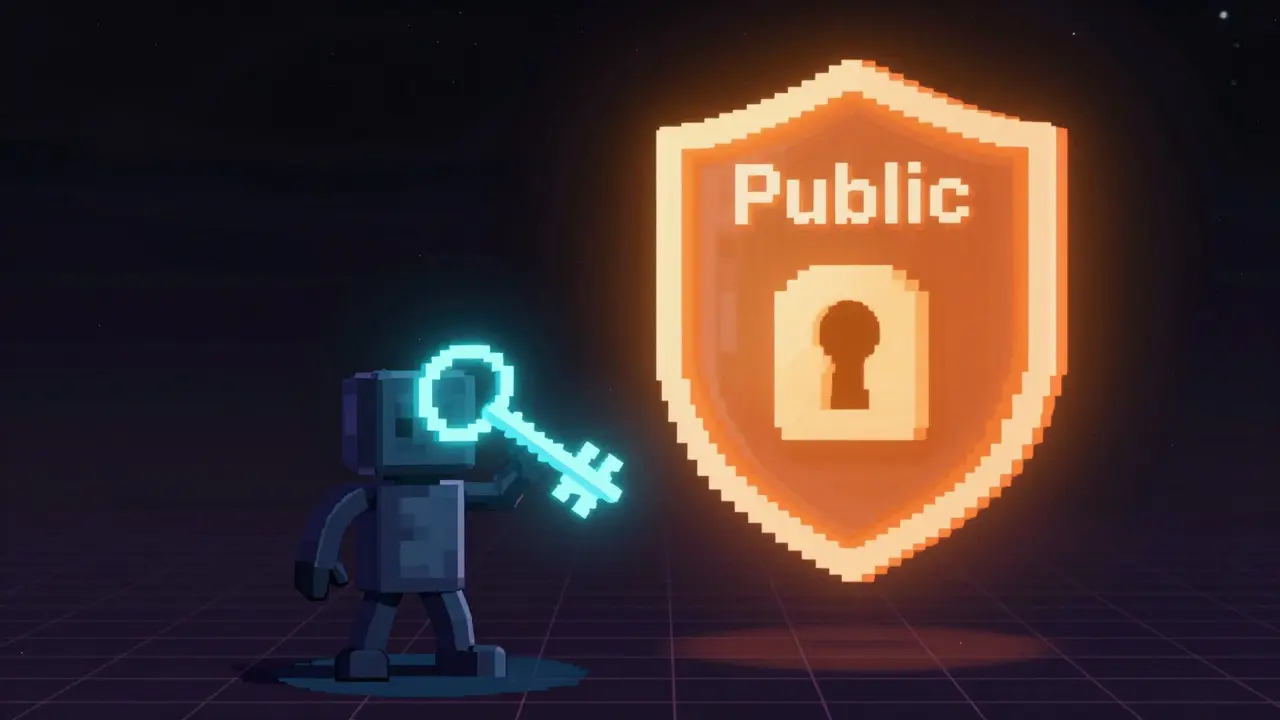
This process relies on asymmetric cryptography. You have two keys:
- Private Key: A secret number known only to you. It is used to create the signature.
- Public Key: A derived value shared publicly. It is used by others to verify the signature.
If someone steals your public key, they can see your address, but they cannot spend your money. They need the private key to generate the valid signature required to authorize a transfer. This separation is the foundation of trustless systems like Bitcoin and Ethereum.
Step 1: Hashing the Transaction Data
You don't sign the entire transaction directly. Transactions contain variable amounts of data-inputs, outputs, timestamps, fees. Signing raw data is inefficient and insecure. Instead, you first compress the transaction into a fixed-size fingerprint called a Hash.
In Bitcoin, this is done using the SHA-256 algorithm twice (double-SHA256). Here is why:
- Consistency: No matter if the transaction is 100 bytes or 1,000 bytes, the hash is always 256 bits (32 bytes) long.
- Integrity: If even one bit of the transaction changes (e.g., changing $10 to $11), the resulting hash changes completely. This prevents tampering.
- Efficiency: Signing a small 32-byte number is computationally cheaper than signing a large block of data.
For Segregated Witness (SegWit) transactions, defined in BIP-143, the hashing process is more specific. It creates a "sighash" that includes only the relevant parts of the transaction being signed. This allows multiple inputs in a single transaction to be signed independently, which is crucial for complex multi-party payments.
Step 2: Generating the Random Number (Nonce)
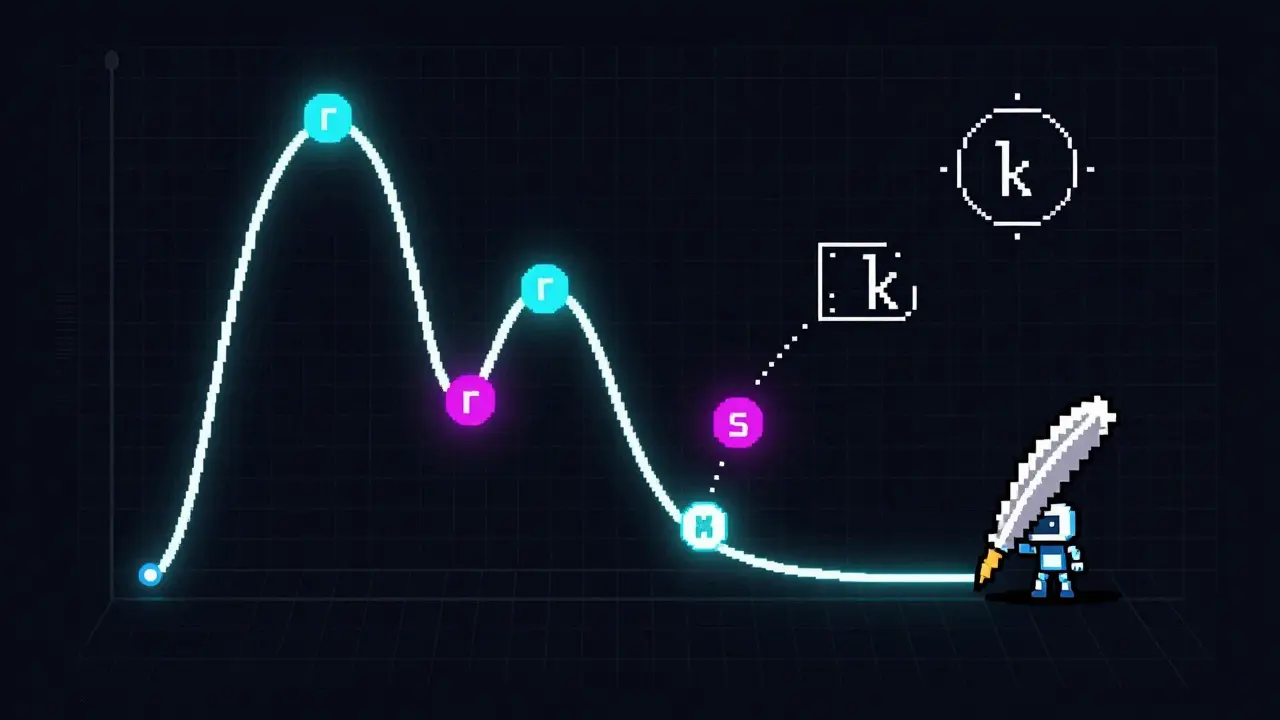
This is the most critical-and dangerous-step. To create the signature, you need a random number, often called 'k' or the nonce. This number must be:
- Cryptographically secure: Predictable randomness leads to disaster.
- Unique: Never reuse the same 'k' for two different transactions.
Why is this so important? If an attacker sees two transactions signed with the same 'k', they can mathematically derive your private key instantly. This isn't theoretical. In 2013, a vulnerability in Android's Java SecureRandom library caused many Bitcoin wallets to leak private keys because the random numbers were not truly random. Similarly, Sony’s PlayStation 3 hack in 2010 exploited a reused nonce to steal their signing key.
To prevent this, modern implementations use RFC 6979, a standard that generates the 'k' deterministically from your private key and the transaction hash. This means you get a unique, secure random number every time, without relying on potentially flawed system entropy.

Step 3: Creating the Signature with ECDSA
Now comes the heavy lifting. Most cryptocurrencies, including Bitcoin and Ethereum, use the Elliptic Curve Digital Signature Algorithm (ECDSA) based on the secp256k1 curve.
The algorithm takes three inputs:
- The hash of the transaction (from Step 1).
- Your private key.
- The random nonce 'k' (from Step 2).
It performs complex elliptic curve math to produce two values: 'r' and 's'.
- r: Derived from the x-coordinate of a point on the elliptic curve calculated using 'k'.
- s: Calculated using the formula: s = k^(-1)(hash + r × private_key) mod n.
The pair (r, s) constitutes your digital signature. Notice that your private key is part of the calculation for 's', but it is never outputted. The signature proves you knew the private key corresponding to the public key associated with the input funds, without ever showing the key itself.
Step 4: Encoding and Broadcasting
The raw (r, s) values are binary data. To transmit them over the network, they must be encoded. Bitcoin uses Distinguished Encoding Rules (DER) format. This wraps the 'r' and 's' values in a specific byte structure that includes length indicators.
Additionally, a SIGHASH flag is appended. The most common is SIGHASH_ALL (0x01), which locks all inputs and outputs. This ensures that once you sign, no one can change the recipient or amount. Other flags exist for more advanced scripting needs, but SIGHASH_ALL is the standard for simple transfers.
Once encoded, the signature is attached to the transaction. The node broadcasts it to the network. Miners and validators then use your public key to verify the signature against the transaction hash. If the math checks out, the transaction is accepted.
| Algorithm | Key Size | Signature Size | Primary Use Case | Vulnerability |
|---|---|---|---|---|
| ECDSA (secp256k1) | 256-bit | ~72 bytes | Bitcoin, Ethereum, Litecoin | Signature Malleability, Nonce Reuse |
| RSA | 2048-bit+ | ~256 bytes | Traditional Finance, SSL/TLS | Larger size, slower verification |
| Schnorr | 256-bit | 64 bytes | Bitcoin (Taproot), Lightning Network | None known (theoretically stronger) |
| EdDSA | 256-bit | 64 bytes | Stellar, Cardano | Deterministic nonces (safer) |
Common Pitfalls and Best Practices
Even experienced developers make mistakes here. Here is what to avoid:
Never implement your own crypto library. As Dr. Matthew Green from Johns Hopkins noted, 98% of custom ECDSA implementations contain critical flaws. Use established libraries like libsecp256k1, BitcoinJS, or Web3.py. These have been audited thousands of times.
Check for Low-S Signatures. For any given (r, s) pair, there is a complementary high-s value that is also valid. To reduce spam and malleability, Bitcoin requires signatures to use the lower half of the curve (BIP 62). Ensure your implementation normalizes 's' to be less than n/2.
Beware of Endianness. Cryptographic libraries often expect big-endian byte order, while some hardware or lower-level languages might default to little-endian. Mixing these up results in invalid hashes and failed verifications. Always check the documentation for your specific library.
The Future: Schnorr and Post-Quantum Security
ECDSA has served us well for over a decade, but it has limits. It doesn't allow for efficient signature aggregation (combining multiple signatures into one), which bloats the blockchain. This is why Bitcoin adopted Schnorr signatures via the Taproot upgrade in 2021. Schnorr signatures are simpler, faster, and allow multiple users to co-sign a transaction with a single combined signature, reducing fees and increasing privacy.
Looking further ahead, quantum computing poses a theoretical threat to ECDSA. Shor's algorithm could theoretically extract private keys from public keys if quantum computers reach sufficient qubit counts (estimated at 1,500+ logical qubits). While current quantum processors are far from this threshold, NIST is already standardizing post-quantum cryptography algorithms. However, for the next 15 years, ECDSA and Schnorr remain secure enough for all practical purposes.
What happens if I lose my private key?
If you lose your private key, you permanently lose access to the funds associated with that public key. There is no "forgot password" button on the blockchain. The digital signature mechanism is designed so that only the holder of the private key can authorize transactions. Recovery is impossible unless you have a backup seed phrase or encrypted backup.
Can I use the same signature for two different transactions?
No. Each transaction must have a unique signature. More importantly, the internal random number (nonce) used to generate the signature must be unique. Reusing a nonce leaks your private key immediately. Modern libraries handle this automatically using deterministic generation (RFC 6979), but manual reuse is catastrophic.
Why do Bitcoin transactions sometimes fail due to signature issues?
Transactions may fail if the signature is malformed (incorrect DER encoding), if the 's' value is not normalized to low-S (as per BIP 62), or if the sighash type is incorrect. Nodes reject these to prevent malleability attacks where the transaction ID changes after signing, confusing payment tracking systems.
Is ECDSA safe from quantum computers?
Currently, yes. Breaking ECDSA requires a quantum computer with thousands of stable logical qubits, which does not exist today. However, experts recommend moving towards post-quantum resistant algorithms in the long term. For now, the immediate risk is classical hacking (phishing, malware) rather than quantum decryption.
What is the difference between a digital signature and a password?
A password is a secret you share with a central authority (like a bank) to prove identity. A digital signature is a mathematical proof generated locally by your device. The network verifies the math without needing to know your secret. This removes the need for trust in a third party and eliminates the risk of the server storing your credentials insecurely.