
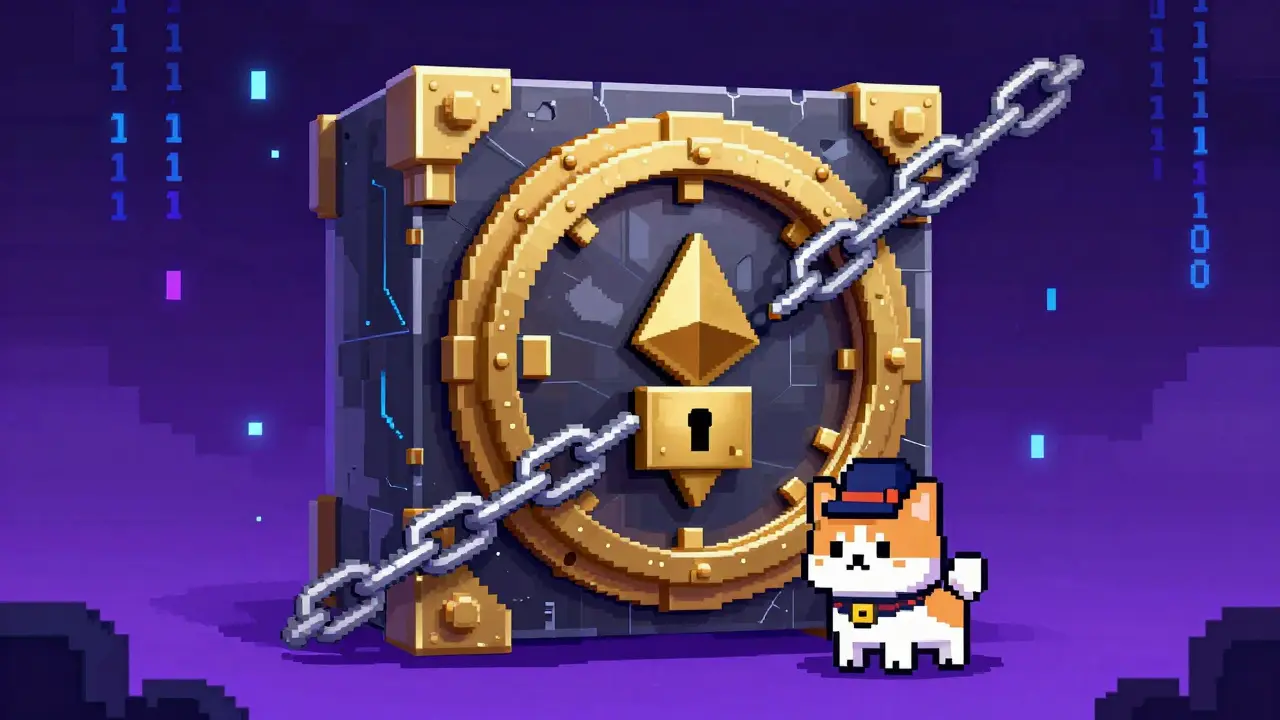
Imagine a cryptocurrency where the creator simply launches the project, locks the doors for 200 years, and then vanishes into thin air. That is exactly how Inu Inu is a community-driven meme token built on the Ethereum blockchain that positions itself as a cultural statement against centralized finance. Also known as INUINU, it debuted on July 7, 2022, not as a complex piece of software, but as a "lifestyle choice" for those tired of the corporate grip on money.
The Core Concept: More Than Just a Dog with a Hat
At first glance, INUINU looks like every other dog-themed token on the market. However, the project frames itself as the "last great meme on Ethereum." While most coins try to pivot toward utility-creating platforms or payment systems-Inu Inu leans entirely into the meme identity. Its mascot is simply a dog wearing a hat, symbolizing a playful but defiant stance against traditional financial institutions.
The project's philosophy is rooted in extreme decentralization. Unlike many tokens that have a "founder" or a CEO calling the shots, INUINU is run by its holders. This happened by design: the original developer performed a stealth launch, set up the safety mechanisms, and then stepped away. This left the community to manage everything from social media growth to promotional strategies. If you're looking for a corporate roadmap or a quarterly earnings report, you won't find one here.
Technical Breakdown and Tokenomics
To understand how INUINU actually works, we have to look at the math and the rules baked into its smart contract. The token is hosted on the Ethereum a decentralized, open-source blockchain with smart contract functionality network, which means it relies on the security and infrastructure of the world's most popular programmable blockchain.
One of the biggest draws for traders is the zero tax policy. In the meme coin world, it's common to see "buy taxes" or "sell taxes" where a percentage of every trade goes to a marketing wallet or is burned. INUINU does neither. Every single cent you trade stays with the parties involved, making it a more frictionless asset for those who trade frequently.
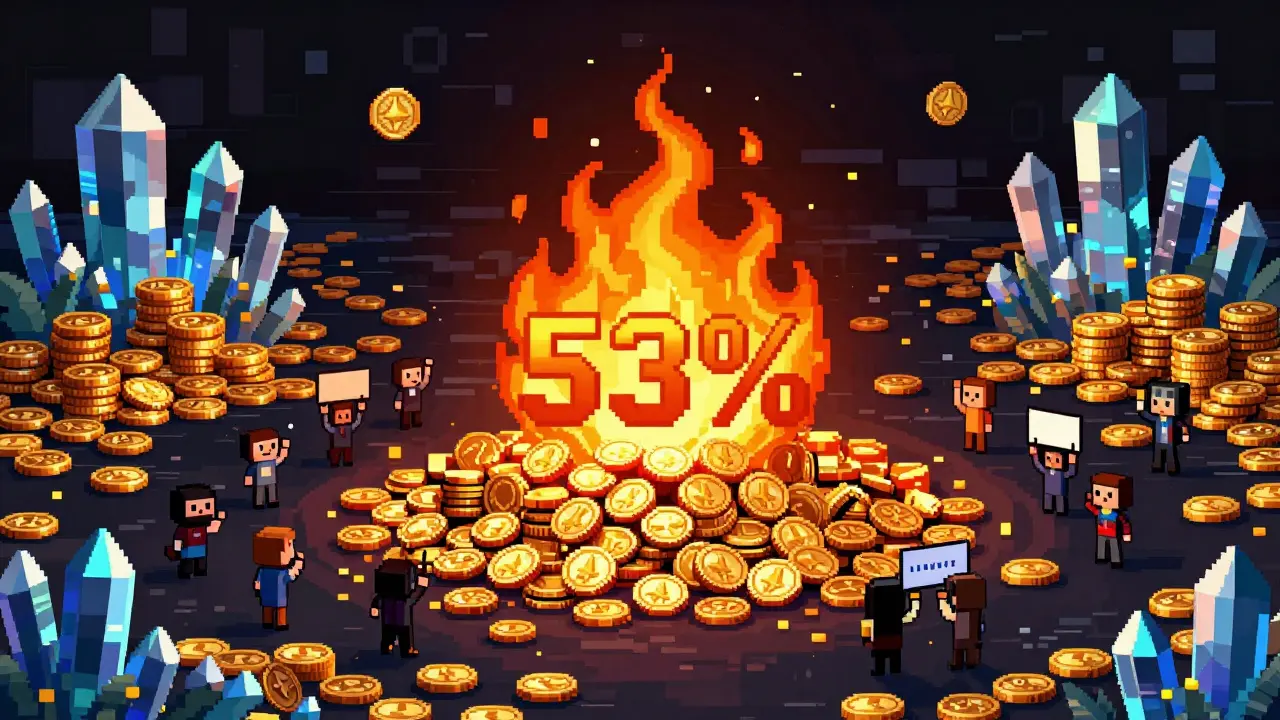
The supply dynamics are where things get interesting. There is a bit of a debate on the exact numbers, but the maximum supply is generally cited around 1 quadrillion tokens. To combat the inflation typical of these high-supply coins, the developer burned 53% of the total supply immediately at launch. This effectively deleted more than half of the coins from existence to create scarcity.
| Attribute | Value / Detail |
|---|---|
| Blockchain | Ethereum |
| Launch Date | July 7, 2022 |
| Transaction Tax | 0% (Zero Tax) |
| Liquidity Lock | 200 Years |
| Initial Burn | 53% of total supply |
| Approx. Circulating Supply | 465 Trillion |
The "Rug-Proof" Argument: Liquidity and Safety
The biggest fear in the meme coin space is the "rug pull," where developers drain the liquidity pool and leave investors with worthless tokens. Inu Inu attempted to solve this with an aggressive security posture. The liquidity-the pool of funds that allows users to trade the token-was locked for 200 years. For all practical purposes, this means the liquidity is permanent.
Additionally, the launch included anti-bot protection. This was designed to stop "snipers" (automated scripts that buy up huge chunks of a coin in the first millisecond of launch) from controlling the supply. By limiting the impact of bots, the project aimed for a more organic distribution of tokens among real people rather than a few wealthy bot-operators.
Market Performance and Reality Check
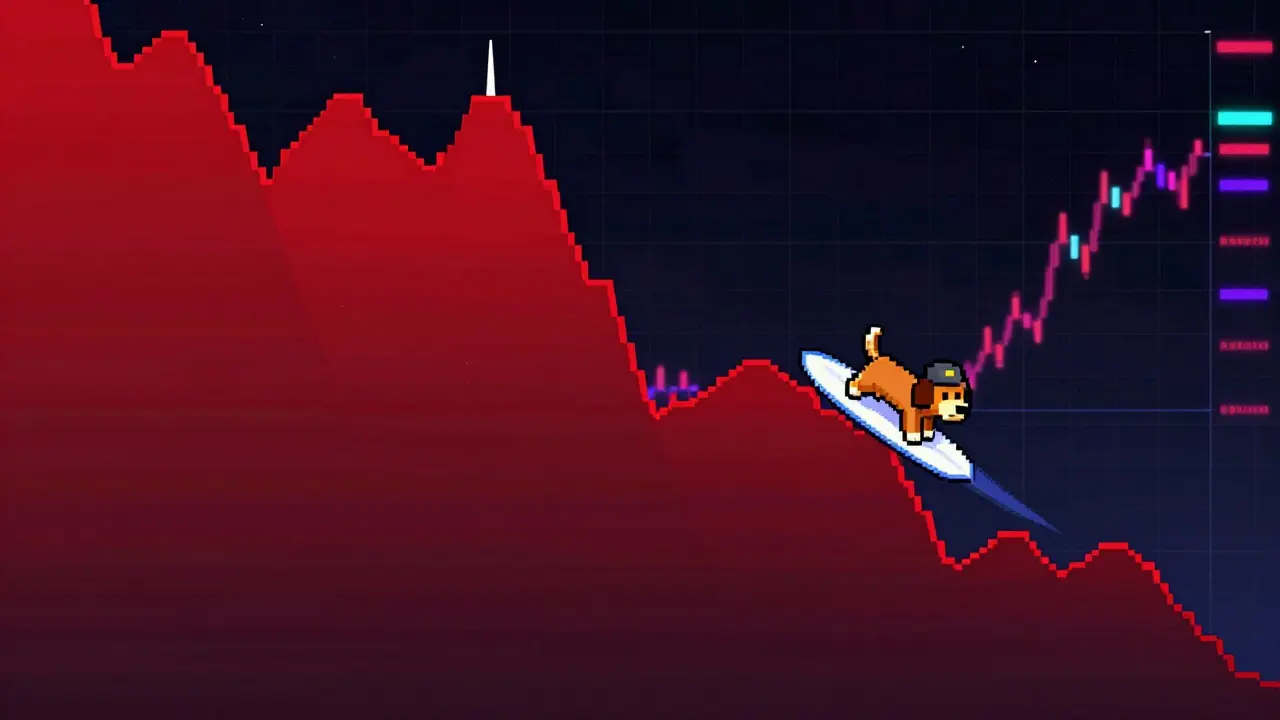
If you've been tracking the charts, you know that Inu Inu crypto experiences the kind of volatility that makes traditional stocks look boring. The token hit an all-time high on April 12, 2024, reaching $0.00000002. Since then, it has seen a massive correction, dropping roughly 95% from that peak. This is a textbook example of the "hype cycle" seen in meme assets.
Current trading volumes are quite low, often fluctuating between $50 and $300 per day. This is a critical point for anyone considering a trade: low liquidity means that a single large buy or sell order can cause the price to swing wildly. This is known as "slippage," and it's a significant risk for anyone moving large amounts of capital into a low-cap token like this.
You can find the token on platforms like Coinbase a major cryptocurrency exchange providing a gateway for retail investors , MEXC a global digital asset trading platform , and LBank a cryptocurrency exchange supporting a wide variety of altcoins . However, the availability on these exchanges doesn't necessarily mean the coin has high stability; it simply means the infrastructure for trading is there.
Comparing Inu Inu to the Meme Coin Giants
How does this stack up against the "big dogs" like Dogecoin the original meme coin that started the trend in 2013 or Shiba Inu an Ethereum-based ecosystem that evolved from a simple meme into a suite of products ?
While Shiba Inu built an entire exchange (ShibaSwap) and a Layer-2 network (Shibarium), Inu Inu has consciously avoided this path. It doesn't have a whitepaper, a technical roadmap, or a development team. For some, this is a red flag-a lack of transparency. For others, it is the ultimate form of a "pure" meme coin: a digital collectible whose value is derived entirely from community faith rather than a business plan.
Risks and Red Flags to Consider
Investing in INUINU is not like investing in a company with revenue and assets. It is a highly speculative bet. There are several specific risks you should be aware of:
- Zero Utility: The token doesn't "do" anything. It isn't used to power a network or provide a service. Its value is based solely on what the next person is willing to pay for it.
- Lack of Documentation: Without a whitepaper or audited smart contract available to the public, you are relying on community narratives.
- Liquidity Issues: As mentioned, the low trading volume makes it hard to enter or exit large positions without crashing the price.
- Concentration Risk: With only around 2,700 holders, the project is susceptible to the actions of a few "whales" who hold large percentages of the supply.
Is the Community Really the "Strongest"?
The holders of Inu Inu often describe themselves as the most loyal community in the space. In the world of meme coins, "community」 is the only real currency. When there is no product, the only way the price goes up is if a group of people collectively decide to promote the coin and hold onto it (the "HODL" mentality).
This community operates primarily through decentralized channels and social media. Since there is no official leadership, the holders are the marketers, the moderators, and the decision-makers. This creates a very tight-knit environment, but it also means the project's survival depends entirely on the passion of a few thousand people.
What is the purpose of the Inu Inu token?
Inu Inu is primarily a meme token. It doesn't have a traditional utility or a business plan. Instead, it serves as a community-driven digital asset and a cultural statement against centralized financial systems, acting more as a social identity for its holders than a functional tool.
Is Inu Inu a safe investment?
Like all meme coins, INUINU is extremely high-risk. While the 200-year liquidity lock reduces the risk of a developer "rug pull," the lack of a whitepaper, low trading volume, and extreme price volatility mean you could lose a significant portion of your investment. It is speculative, not a stable investment.
Why is the price so low (with so many zeros)?
This is due to the massive total supply (up to 1 quadrillion tokens). When a project creates trillions of coins, the price per individual token becomes microscopic. Investors usually look for the price to "delete a zero" (e.g., moving from $0.0000000001 to $0.000000001) as a sign of growth.
Who is the developer of Inu Inu?
The original developer stealth-launched the coin on July 7, 2022, set up the liquidity locks and burns, and then disappeared. The project is now entirely community-managed, meaning there is no single individual or company in charge of its development.
Where can I buy INUINU tokens?
INUINU is listed on several exchanges including Coinbase, MEXC, and LBank. Because it is an Ethereum-based token (ERC-20), it can also be traded on decentralized exchanges (DEXs) like Uniswap, provided you have the correct contract address.
Next Steps for Potential Holders
If you are new to this space, don't jump in blindly. Start by checking a blockchain explorer like Etherscan to see the current holder distribution. If a few wallets hold 80% of the supply, the risk is much higher. Also, test the liquidity by attempting a very small trade first to see how much slippage occurs on your preferred exchange.
For those who already hold the token, keep an eye on community sentiment. Since there is no official roadmap, the only way the project evolves is through collective action. Watch for shifts in holder count and daily volume, as these are the only real metrics of health for a project with no formal business structure.
Robert Mosolygo
April 24, 2026 AT 17:28The concept of a "stealth launch" is just a convenient veil for the developers to concentrate supply in shadow wallets before pretending to vanish. If you actually analyze the blockchain data, you will find a pattern of coordinated transfers that suggests a centralized cabal is manipulating the price from the sidelines. This isn't a cultural statement; it is a psychological experiment in how much gullibility the retail market can sustain before the inevitable collapse.
Tony Gurley-Ward
April 26, 2026 AT 08:55Who cares about the "math" when the whole thing is basically a digital fever dream? It's kind of poetic that we've reached a point in human civilization where a dog in a hat is the ultimate symbol of financial rebellion. I love the sheer absurdity of it all-it's like a Dadaist performance piece but with the potential to make you lose your rent money. Absolutely whimsical stuff!
Lisa Camp
April 26, 2026 AT 22:48STOP OVERTHINKING IT! Just buy the dip and HODL till the moon! 🚀
Gary Lingrel
April 28, 2026 AT 09:24imagine thinking a token with no purpose is an investment lol 🙄 just another way to gamble away your life savings while pretending it's "decentralization"
Keith Garcia
April 29, 2026 AT 02:30The sheer banality of this "investment" is truly staggering. We are witnessing the absolute nadir of financial literacy where the absence of a roadmap is marketed as a feature rather than a catastrophic failure of basic competence. It is an exercise in collective delusion for the intellectually impoverished. 🤡💅
Yvette P
April 29, 2026 AT 08:21Oh honey, please. Let me educate you on the actual mechanics of slippage and liquidity depth in low-cap ERC-20 tokens because clearly, the "community" is just vibing while their capital evaporates. You've got a token with a quadrillion supply and a trading volume that wouldn't cover a decent dinner for two, and you're talking about a "cultural statement"? It's an absolute circus of inefficiency where the only thing being "disrupted" is the bank account of anyone naive enough to believe that a 200-year lock on a dead coin is a safety feature. Seriously, if you aren't looking at the order book depth and the whale concentration via a real-time analyzer, you're basically just throwing darts at a board while blindfolded in a wind tunnel. It's adorable that people think they're "fighting the corporate grip" by buying a token that behaves like a lottery ticket from a gas station in the middle of nowhere. The asymmetry of information here is just breathtakingly wide, and most of you are just swimming in the shallow end without a life jacket while the whales are basically doing laps around you. Good luck with your "lifestyle choice" of losing 95% of your portfolio value in a single correction cycle!
Sarah Fisher
April 30, 2026 AT 06:34There is something genuinely interesting about the idea of a token that refuses to have utility. In a world where every single app and coin is trying to be a "solution" for something, having a project that is purely about the social bond and the shared joke is almost a meditative experience. It challenges our traditional notion of value, shifting it from functional use to purely emotional or cultural resonance.
Candace Sherrard
April 30, 2026 AT 21:05I tend to agree with the sentiment that there is a certain beauty in the void of purpose, as it allows the participants to project their own meanings onto the asset rather than being constrained by a corporate vision. When we strip away the promise of a "Layer-2 network" or a "payment system," we are left with the rawest form of human speculation and social contagion, which is a fascinating study in behavioral psychology if you just step back and observe it without the panic of the price chart.
Jason M
April 30, 2026 AT 23:01Listen, everyone! We can turn this around! The power of the community is UNSTOPPABLE! Let's all educate ourselves on the risks but keep the spirit alive! We can build something amazing together if we just keep pushing and supporting each other through the volatility!
Sarah Ingrams
May 2, 2026 AT 12:29just be careful everyone
Kathleen Bergin
May 3, 2026 AT 09:49It is just a coin with a dog on it. It does not do anything. You will lose your money.
Miranda Jamieson
May 4, 2026 AT 02:57Only a complete idiot would think that "no whitepaper" is a positive thing. You are all just pretending to be "rebels" while you get played by a developer who probably laughed while clicking the burn button. Wake up and stop acting like you're part of a revolution when you're actually just exit liquidity!
jill huyo-a
May 5, 2026 AT 16:20I wonder if there is any way for the community to actually create a roadmap themselves since there is no central leader to tell them no. It would be a great experiment in collective governance to see if a group of strangers could actually organize something useful without any formal structure or incentive other than the price of the token.