Imagine you want to help secure a digital bank. In the old days, you’d buy expensive machinery and plug it into a wall socket that runs hot enough to fry an egg. Today, you just lock up some money in a digital vault and let it sit there while the system does the work. This isn’t science fiction-it’s the current state of blockchain validation, where two competing methods, mining and staking, determine who gets paid to keep networks like Bitcoin and Ethereum running.
If you are looking to earn passive income from crypto or simply trying to understand why your electricity bill spiked last winter, you need to know the difference between these two approaches. One burns energy; the other locks capital. Both have pros, cons, and risks that could make or break your wallet.
The Core Difference: Work vs. Wealth
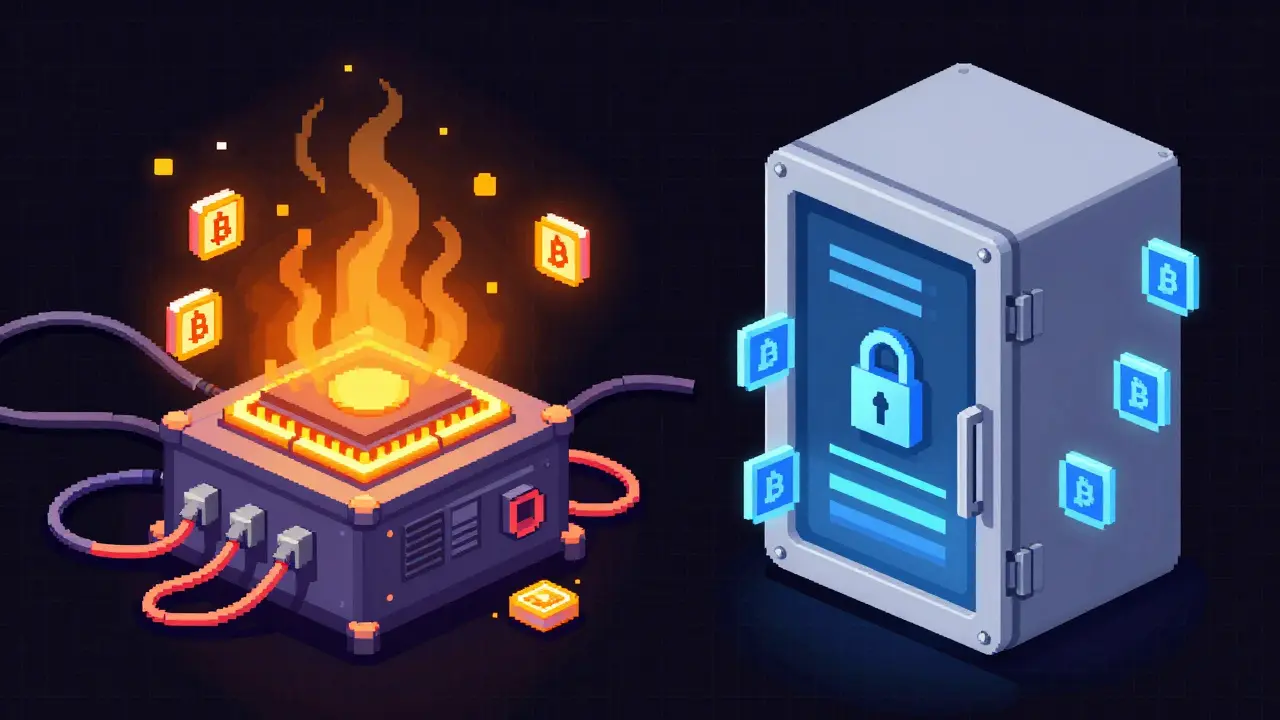
At its heart, the debate is about how we trust strangers on the internet. Proof of Work (PoW), the method used by Bitcoin, relies on physical effort. Miners compete to solve complex mathematical puzzles using specialized hardware called ASICs. The first one to solve it gets to add the next block of transactions to the chain and earns a reward. It’s a race where speed and power matter most.
Proof of Stake (PoS), adopted by Ethereum after its 2022 upgrade known as "The Merge," takes a different route. Instead of burning electricity to solve puzzles, validators lock up their own cryptocurrency as collateral. The network randomly selects them to validate transactions based on how much they have staked. If they act honestly, they earn rewards. If they try to cheat, they lose their locked-up funds-a penalty known as slashing.
Think of PoW like hiring bouncers who prove their strength by lifting heavy weights all day. PoS is more like asking people to put down a security deposit before they’re allowed inside. If they cause trouble, you keep their deposit.
Energy Consumption: The Environmental Divide
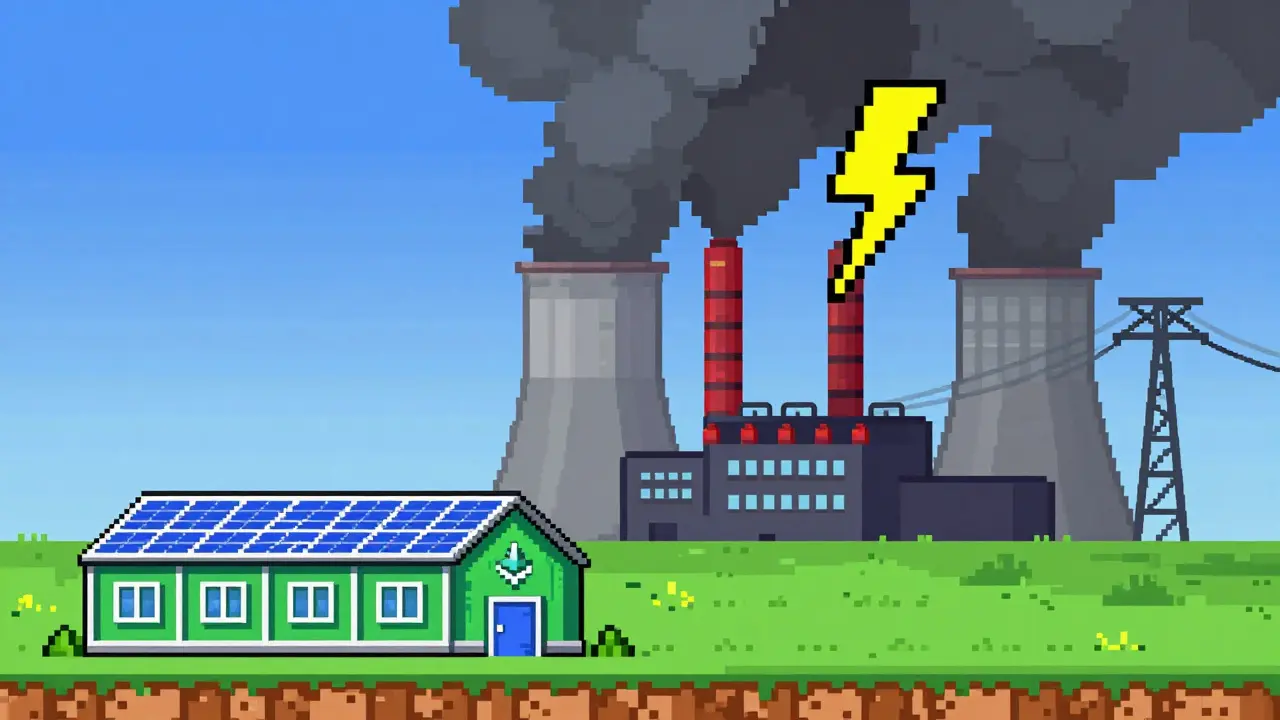
This is the biggest talking point in the industry. Bitcoin mining consumes massive amounts of electricity. According to the Cambridge Bitcoin Electricity Consumption Index, the network uses over 120 terawatt-hours annually-roughly the same amount as countries like Argentina or Norway. Critics argue this is unsustainable, while defenders point out that many miners now use renewable energy sources like hydroelectric power in Iceland or wind farms in Texas.
In contrast, Ethereum staking drastically cut its energy footprint. After switching to PoS, Ethereum’s energy consumption dropped by 99.95%, falling from nearly 79 TWh/year to just 0.0026 TWh/year. For context, that’s less energy than a small household uses in a year. If environmental impact is your primary concern, staking is the clear winner.
| Feature | Mining (Proof of Work) | Staking (Proof of Stake) |
|---|---|---|
| Energy Use | Very High (120+ TWh/year for Bitcoin) | Negligible (0.0026 TWh/year for Ethereum) |
| Hardware Cost | $2,000 - $10,000+ (ASICs/GPUs) | $50 - $200 (Standard PC/Raspberry Pi) |
| Noise & Heat | Loud fans, significant heat output | Silent, minimal heat |
| Setup Complexity | High (requires cooling, pool config) | Low (software installation only) |
Barriers to Entry: Can You Actually Participate?
Let’s talk about what it takes to get started. Mining has become increasingly difficult for everyday users. To mine Bitcoin profitably today, you need an Application-Specific Integrated Circuit (ASIC) miner. A top-tier device like the Bitmain Antminer S19 XP costs around $4,500 and draws 3,060 watts of power. That’s not something you run in your living room without risking fire hazards and skyrocketing utility bills.
Furthermore, mining difficulty adjusts automatically. As more people join, the puzzles get harder. In March 2023, Bitcoin’s network difficulty hit an all-time high of 63.2 trillion. Unless you have access to cheap electricity (below $0.08 per kWh), mining at home is likely a losing proposition. Many retail miners reported net losses after accounting for hardware depreciation and power costs.
Staking, on the other hand, is far more accessible. You don’t need powerful hardware. A simple Raspberry Pi or even a smartphone can run a validator node. However, there is a financial barrier. To solo-stake on Ethereum, you need 32 ETH. At current prices, that’s tens of thousands of dollars. But you don’t have to go it alone. Liquid staking protocols like Lido allow you to stake fractional amounts. Centralized exchanges like Coinbase also offer one-click staking, making it easy for beginners to participate with as little as $10 worth of tokens.
Rewards and Risks: What’s the Catch?
Every investment comes with risk, and both mining and staking have unique pitfalls.
Mining Risks:
- Hardware Depreciation: ASICs lose 50-70% of their value within 12 months. When newer, faster models arrive, your rig becomes obsolete.
- Electricity Volatility: If your power rate spikes, your profits vanish instantly.
- Regulatory Crackdowns: Countries like China banned mining in 2021, forcing operators to relocate or shut down.
Staking Risks:
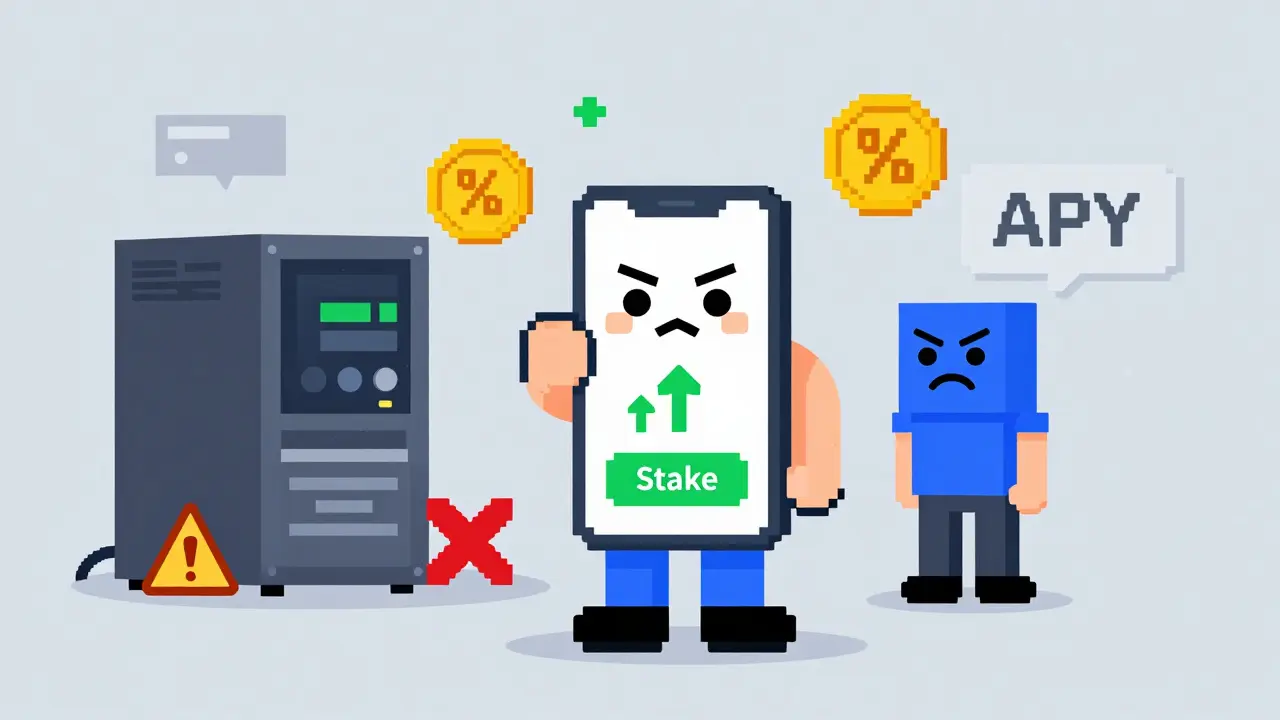
- Slashing: If your validator goes offline or acts maliciously, the protocol penalizes you by burning part of your stake. In Q1 2023, Ethereum slashed 1,832 validators.
- Lockup Periods: Your funds aren’t always liquid. Withdrawing staked ETH can take time due to exit queues.
- Centralization Concerns: Large entities control significant portions of staked supply. As of August 2023, three entities (Lido, Coinbase, Kraken) controlled over 31% of staked ETH, raising fears of centralization.
In terms of returns, staking generally offers predictable annual percentage yields (APY). Ethereum typically pays 3.0-4.2% APY, while Solana offers 6-8%. Mining rewards are less predictable because they depend on the market price of the coin, the network difficulty, and your electricity cost. Some miners report negative returns during bear markets.
Which Should You Choose?
Your decision depends on your resources, goals, and risk tolerance.
Choose mining if:
- You have access to extremely cheap or free renewable energy.
- You enjoy technical challenges and managing hardware.
- You believe in the long-term security model of Proof of Work and want to support Bitcoin specifically.
Choose staking if:
- You want low-maintenance passive income.
- You care about environmental sustainability.
- You prefer locking up capital rather than buying expensive hardware.
- You are interested in participating in modern smart contract platforms like Ethereum, Solana, or Cardano.
For most individual investors in 2026, staking is the more practical option. The barriers to entry are lower, the environmental impact is negligible, and the technology is maturing rapidly. Mining remains a viable business for industrial-scale operations with deep pockets and strategic energy partnerships, but it is largely inaccessible for the average person.
Is mining still profitable for individuals in 2026?
For most individuals, no. Bitcoin mining requires industrial-grade ASICs and electricity rates below $0.08/kWh to be profitable. Home miners often face net losses due to hardware costs and depreciation. Staking is generally more accessible and profitable for retail participants.
What happens if I get slashed while staking?
Slashing is a penalty where a portion of your staked cryptocurrency is burned if your validator misbehaves (e.g., going offline or signing invalid blocks). On Ethereum, minor offenses might result in small fines, while severe violations can lead to losing your entire stake. Always ensure your validator software is updated and your internet connection is stable.
Can I unstake my crypto anytime?
It depends on the platform. Solo staking on Ethereum involves an exit queue that can take days or weeks to process. Liquid staking tokens (like stETH) can usually be traded immediately on exchanges, though selling them might incur a slight discount if market conditions are volatile. Check the specific terms of your staking provider.
Which cryptocurrencies use Proof of Stake?
Major PoS networks include Ethereum, Solana, Cardano, Polkadot, Avalanche, and Cosmos. Most new blockchain projects launched in recent years choose PoS or variants like Delegated Proof of Stake (DPoS) due to its energy efficiency and scalability.
Is staking safer than mining?
Safety depends on what you mean. Mining has no risk of slashing, but it carries higher operational risks (hardware failure, regulatory bans). Staking has no hardware risks, but your capital is exposed to slashing penalties and smart contract vulnerabilities if you use third-party platforms. Diversification and choosing reputable providers mitigate these risks.