

Imagine trying to buy a loaf of bread or pay for a month’s rent, only to find that your bank account is frozen because the government says the money you’re holding is illegal. For millions of people living in countries with strict banking restrictions on cryptocurrency, this isn’t a hypothetical nightmare-it’s daily life. In nations like Nigeria, China, and Vietnam, governments have slammed the door on digital assets, banning domestic exchanges and penalizing financial institutions that touch them. Yet, despite these walls, crypto adoption keeps climbing. How? Because when you block the front door, people simply climb through the window.
The landscape of restricted access is vast and varied. As of 2025, nine countries-including Afghanistan, Algeria, Bangladesh, China, Egypt, Kuwait, Nepal, and North Macedonia-have implemented complete bans on Bitcoin (CoinGecko, 2025). Others, like Turkey and Vietnam, enforce severe restrictions that make traditional exchange usage nearly impossible. But where there is a ban, there is usually a workaround. Citizens aren’t just surviving; they are building sophisticated, resilient ecosystems to move value across borders without triggering regulatory alarms.
The Rise of Peer-to-Peer Trading Networks
If centralized exchanges are the main highway, Peer-to-Peer (P2P) platforms are the hidden backroads. When banks refuse to process crypto transactions, users turn to each other. P2P marketplaces like Paxful and Binance P2P allow buyers and sellers to trade directly, using escrow services to hold funds until both parties confirm the deal. This method bypasses traditional banking rails entirely for the actual transfer of ownership, relying instead on local payment methods like mobile money, bank transfers to personal accounts, or even cash deposits.
In Nigeria, where the Central Bank has maintained a ban on crypto transactions since 2017, P2P trading has become the lifeline for the economy. According to Chainalysis, peer-to-peer transactions accounted for over 38% of crypto volume from restricted countries in 2024. Nigerian users often use services like Chipper Cash to create virtual dollar cards, linking them to P2P trades. One user reported processing $3,200 monthly through this method with minimal issues, highlighting how deeply embedded these workarounds have become (Reddit, March 2025).
| Method | Anonymity Level | Liquidity | Risk Factor |
|---|---|---|---|
| P2P Platforms (e.g., Paxful) | Medium (KYC required) | High | Counterparty scams, account freezes |
| Decentralized Exchanges (DEXs) | High (No KYC) | Low to Medium | User error, smart contract risks |
| Gift Card Arbitrage | Medium | Low | Price premiums, fraud |
| Hawala Networks | High | Variable | Trust dependency, lack of recourse |
However, P2P isn’t risk-free. Users must vet counterparties carefully. Scams are prevalent, and platforms occasionally freeze accounts if they detect patterns linked to restricted jurisdictions. Vietnamese users, for instance, often pay a 2.5% premium over market rates to ensure faster settlement and lower scrutiny on Binance P2P (Tinhte.vn, April 2025).
Decentralized Exchanges: The No-KYC Alternative
For those who want to avoid identity verification altogether, Decentralized Exchanges (DEXs) offer a compelling solution. Unlike centralized platforms that require Know Your Customer (KYC) checks, DEXs like Uniswap and PancakeSwap operate via smart contracts on blockchains. You connect your wallet, swap tokens, and disconnect. No name, no passport, no phone number.
This anonymity comes at a cost. Liquidity on DEXs can be thin, especially for less popular tokens, leading to higher slippage fees. Furthermore, while the exchange itself doesn’t ask for ID, the fiat on-ramp does. To get crypto into a DEX, you still need to acquire it first. This is where non-custodial wallets like Trust Wallet play a crucial role, allowing users to store assets privately before moving them to a DEX for trading.
Despite these hurdles, DEX usage is surging. Following OKX’s expansion of restrictions in early 2025, Uniswap v4 saw an 187% increase in users from restricted countries (Dune Analytics, February 2025). The appeal is clear: control. In a world where governments can freeze bank accounts, self-custody offers a sense of security that centralized intermediaries cannot match.
Technical Workarounds: VPNs and Tor
Even if you know which platform to use, accessing it can be physically blocked. Governments in Iran, China, and others employ sophisticated internet censorship tools to block IP addresses associated with crypto exchanges. The countermeasure? Virtual Private Networks (VPNs) and the Tor browser.
VPNs mask your geographic location by routing your internet traffic through servers in other countries. NordVPN reported a staggering 342% increase in users from Nigeria and a 217% increase from China between late 2023 and late 2024 (NordVPN Transparency Report, 2025). For many, this is the first step in their daily routine: connect to a server in Singapore or Switzerland, then log in to an exchange.
For deeper privacy, the Tor browser remains a favorite. It bounces traffic through multiple relays, making it nearly impossible to trace back to the original user. Adoption of Tor grew by 189% in Iran and 223% in North Korea in early 2025 (Tor Metrics, 2025). However, speed is a major drawback. Loading heavy exchange interfaces over Tor can be frustratingly slow, pushing some users toward lighter, mobile-first solutions.

Creative Payment Methods: Gift Cards and Hawala
When direct bank transfers are banned, creativity takes over. One of the most widespread methods is gift card arbitrage. Users purchase Steam, iTunes, or Amazon gift cards with local currency and sell them for cryptocurrency on platforms like Paxful. Chainalysis documented $427 million in gift card-based crypto transactions from restricted countries in 2024 alone (Chainalysis, 2025).
Another ancient system adapted for the digital age is Hawala, an informal value transfer network rooted in trust and honor rather than formal banking infrastructure. In the Middle East, users leverage Dubai-based services to convert fiat to crypto. Since the UAE has established the Dubai Virtual Asset Regulatory Authority (VARA), these channels are relatively stable. Between July 2023 and June 2024, VARA-compliant exchanges processed over $30 billion in transactions, much of it flowing from restricted neighboring regions (Sumsub, 2025).
These methods are effective but expensive. Gift cards often trade at a discount, meaning you lose value in the conversion. Hawala relies heavily on personal networks; if your broker fails, you have little legal recourse. It’s a trade-off between accessibility and security.
The Risks of Going Underground
None of these methods are perfect. In fact, they carry significant risks. Professor David Yermack of NYU Stern warned that 67% of users in restricted countries report at least one security incident, including scams targeting no-KYC exchange users (Yermack, April 2025). The IMF noted that $217 million was lost by Nigerian users in 2024 due to unregulated platform collapses (IMF, April 2025).
Account closures are also common. Bangladeshi users reported 87 account closures in January 2025 alone, freezing an estimated $412,000 in assets (Facebook, January 2025). The psychological toll is high. Users live in constant fear of losing their savings due to a single mistake-a wrong seed phrase, a scammer, or a sudden regulatory crackdown.
Moreover, the learning curve is steep. A World Bank survey found that 78% of new users in restricted countries need help managing seed phrases (World Bank, March 2025). Without proper education, private keys-the master passwords to your wealth-are easily lost or stolen. Community-driven resources, like the 'Crypto Without Borders' Telegram channel, have stepped in to fill this gap, offering guides for 43 restricted jurisdictions (Telegram, 2025).
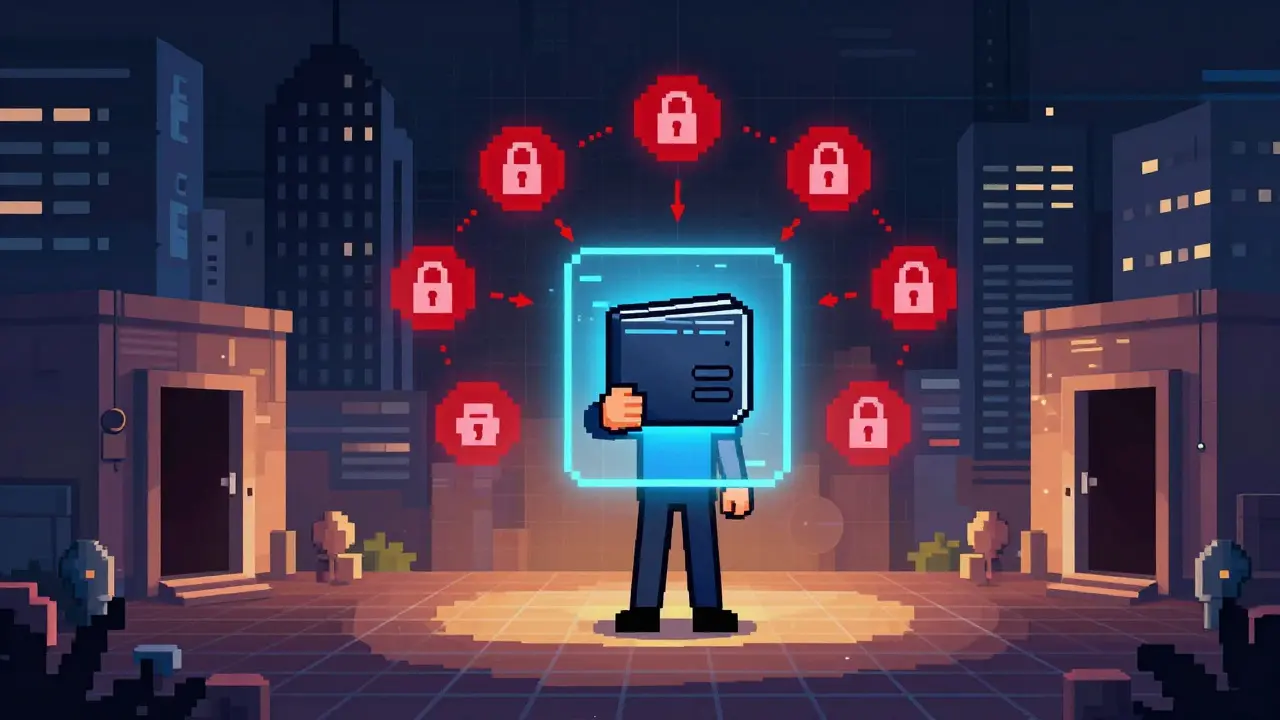
Step-by-Step Guide for Safe Access
For someone starting out in a restricted country, establishing safe access takes time and caution. Here is a practical framework based on expert recommendations:
- Secure Your Connection: Install a reputable VPN like NordVPN or ExpressVPN ($11.95-$12.95/month). Choose a server in a crypto-friendly jurisdiction.
- Set Up a Non-Custodial Wallet: Download a trusted wallet like Trust Wallet. Write down your seed phrase on paper and store it securely. Never share it digitally.
- Acquire Initial Crypto: Use P2P platforms or gift card arbitrage to buy small amounts of Bitcoin or Ethereum. Start with trusted merchants with high completion rates.
- Transfer to a DEX: Move your assets to a decentralized exchange like Uniswap for trading. This minimizes exposure to centralized custodians.
- Withdraw to Cold Storage: For long-term holding, use a hardware wallet. Hot wallets are convenient but vulnerable to hacks.
- Establish Recurring Access: Build relationships with reliable P2P traders or hawala brokers to streamline future transactions.
This process typically takes 3-5 weeks to master, according to CryptoSlate (February 2025). Patience is key. Rushing leads to mistakes, and mistakes cost money.
The Future of Restricted Access
The battle between regulators and citizens is intensifying. Governments are upgrading their blockchain surveillance capabilities, making traditional workarounds less effective. The IMF warns that users may be forced toward more sophisticated, yet riskier, alternatives (IMF, April 2025).
However, innovation continues. Gartner predicts a 340% growth in zero-knowledge proof implementations by 2026, which could enable verified transactions without revealing user identities (Gartner, March 2025). Privacy coins like Monero (XMR) and Zcash (ZEC) are already seeing spikes in adoption, up 317% in China and 289% in Iran since 2023 (CoinMarketCap, 2025).
While the road ahead is uncertain, one thing is clear: demand for financial freedom is unstoppable. Whether through P2P networks, DEXs, or ancient hawala systems, citizens in restricted countries are proving that you can ban the technology, but you can’t ban the need for choice.
Is it legal to use crypto in restricted countries?
Legality varies by country. In places like China and Algeria, crypto trading is explicitly banned and can result in fines or prison sentences. In others, like Nigeria, regulations are ambiguous but enforced through banking bans. Always consult local laws, though enforcement is often inconsistent.
What is the safest way to access crypto in a banned country?
There is no perfectly safe method, but combining a reputable VPN with non-custodial wallets and decentralized exchanges reduces risk. Avoid sharing personal information and start with small amounts to test reliability.
Can I use a regular bank account for crypto purchases?
In most restricted countries, banks are instructed to block crypto-related transactions. Using a regular bank account directly may lead to frozen funds or account closure. P2P methods using personal transfers are more common but carry counterparty risks.
Are decentralized exchanges truly anonymous?
DEXs do not require KYC, so they don’t collect your identity. However, blockchain transactions are public. If you link your wallet to a known identity elsewhere, your activity can be traced. Privacy coins and mixers add layers of anonymity.
How do gift card arbitrage scams work?
Scammers may accept your gift card code but fail to release the crypto. Always use platforms with escrow services and check seller ratings. Never send codes outside the platform’s secure chat.



Ken G
August 1, 2026 AT 21:59the system is rigged against the little guy anyway. they ban it because they cant control the money flow anymore. its obvious they want to keep you poor and dependent on their failing banks. wake up people.
Lorraine Surringer
August 2, 2026 AT 19:39i mean honestly this is so stressful for everyone involved just reading about it makes my heart race ugh why does government have to be so difficult??
Alex Di Mango
August 3, 2026 AT 02:42it is definitely a tough situation but i think there is hope in these decentralized solutions. we should support those trying to maintain financial freedom. it takes courage to navigate these restrictions and i admire their resilience.
Amor Jordan
August 3, 2026 AT 14:36the emotional toll described here is devastating. losing savings due to a simple mistake or a scam feels like a betrayal of trust. we need more community support systems to help people feel less alone in this struggle.
Nick Darring
August 5, 2026 AT 03:14you know what really gets me is how everyone assumes p2p is the answer but its actually just shifting the risk from the bank to some random stranger online who might steal your money anyway so its not really safer just different kind of unsafe and people dont realize that until its too late
Eden Tadesse
August 5, 2026 AT 04:16i tried using a vpn once and it was so slow i couldnt even load the page properly maybe im doing something wrong but it seems hard
Eric Zehr
August 6, 2026 AT 15:26the guide provided is solid. securing your seed phrase is the most critical step. if you lose that key you lose everything forever so write it down on paper and hide it well.
Namrata Mapgaonkar
August 7, 2026 AT 13:03in india we also face some issues with crypto regulations though not as bad as china :( but hawala is very common here too so its interesting to see similar patterns elsewhere :)
Rita Dutta
August 9, 2026 AT 00:17the concept of digital sovereignty is being crushed by old world powers clinging to fiat currency which is essentially a hallucination of value backed by nothing but debt and fear. true wealth is portable and unseizable.
Paul Smith
August 9, 2026 AT 08:06great info here! 🙌 its amazing how creative people are when forced to adapt. keep sharing these resources so others can stay safe and informed 💪
Rodmun Tarnowski
August 10, 2026 AT 19:09one must consider the legal implications carefully. while the desire for financial freedom is noble, ignorance of local laws is no excuse for non-compliance. proceed with extreme caution.
Matthew Smith
August 11, 2026 AT 09:26moral ambiguity surrounds this whole issue. is it right to break laws to survive? perhaps the laws themselves are immoral. food for thought.
Prudence Flemming
August 12, 2026 AT 03:19the paradigm shift towards self-sovereign identity via blockchain is inevitable. traditional banking is a legacy system built on trust deficits. crypto solves the trust problem through code not intermediaries.
Carl Michaud
August 13, 2026 AT 05:15obviously the deep state wants to track every transaction. privacy coins are the only real solution. monero is king because it hides the metadata that the surveillance apparatus craves. use it or get tracked.
Matt Kay
August 14, 2026 AT 23:26too long did not read. seems risky.
Earl Kott65
August 15, 2026 AT 06:02hey hey let's gooo! 🚀 this stuff is wild but totally doable if you follow the steps. don't let the haters stop you from gaining financial freedom! 💸
Ethan Yuwono
August 15, 2026 AT 16:12the philosophical underpinning of decentralization is appealing. it returns agency to the individual. however one must remain grounded in reality regarding security risks.
Jack Delasquez
August 17, 2026 AT 12:48just get out there and do it! dont overthink it. start small and build up. you got this man!
Harman Singh
August 19, 2026 AT 12:23why is everyone so obsessed with crypto? it feels like a cult. i miss simpler times when money was just paper and you didnt have to worry about seed phrases or vpns.