
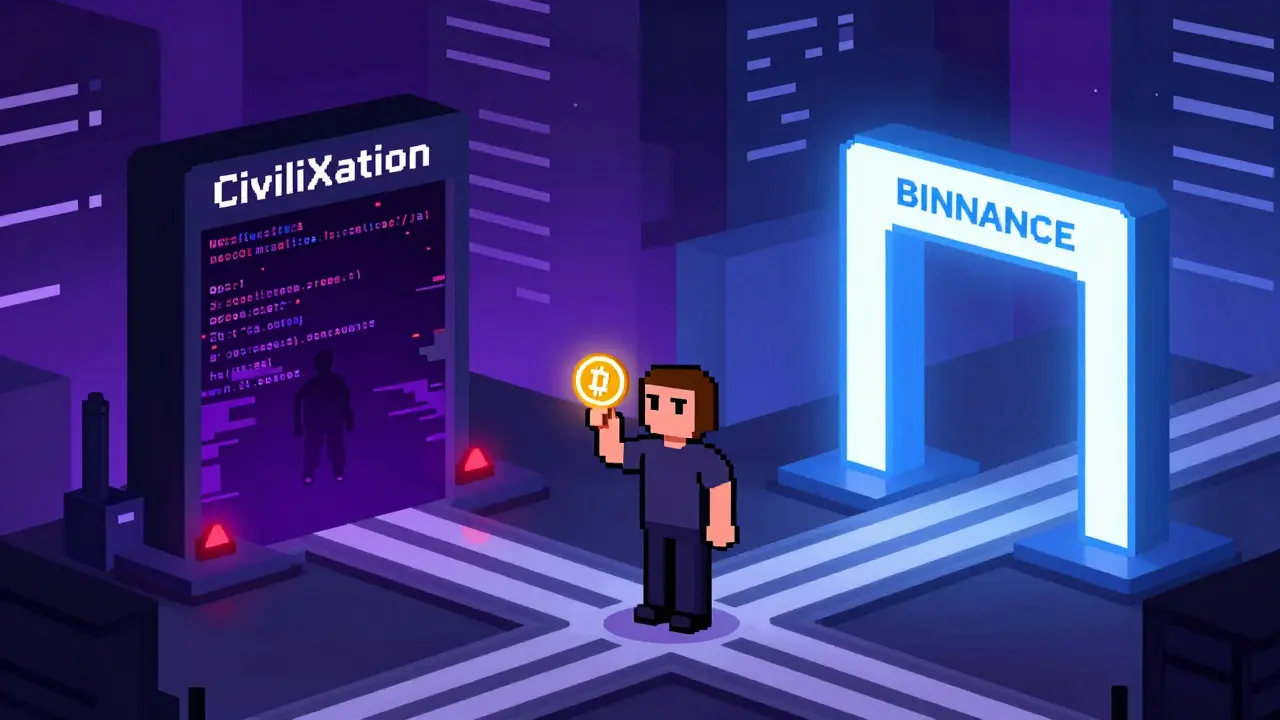
You’ve probably seen the name civiliXation pop up in search results or maybe even on social media, promising a new way to trade cryptocurrency. The name sounds grand-like something out of a sci-fi novel about building digital empires. But here is the hard truth that most quick reviews skip: **there is no such thing as a "CiviliXation" cryptocurrency exchange.**
If you are looking for a platform called CiviliXation where you can deposit funds and buy Bitcoin or Ethereum, you are likely being misled. This confusion usually stems from mixing up two completely different things: the Civilization (CIV) a low-cap cryptocurrency token traded primarily on decentralized platforms and actual, regulated exchange platforms like Binance or Kraken.
Making this distinction is not just academic; it is critical for your financial safety. In the world of crypto, mistaking a token for an exchange can lead you into scams, phishing sites, or illiquid traps where you cannot withdraw your money. Let’s clear up exactly what CiviliXation is, why it isn’t an exchange, and where you should actually be trading if you want to hold the CIV token or safer alternatives.
The Core Confusion: Token vs. Exchange
To understand why there is no "CiviliXation Exchange," we need to look at how the crypto market works. An exchange is a marketplace-a company or protocol that facilitates trades between buyers and sellers. Think of it like the New York Stock Exchange or eBay. A token, on the other hand, is an asset you buy *on* those exchanges. Think of it like a specific stock ticker symbol, say, AAPL.
Civilization (CIV) A cryptocurrency token with a low market capitalization, often confused with an exchange platform due to naming similarities is the latter. It is a digital asset. It does not have its own banking infrastructure, customer support team, or security protocols for holding user deposits. It exists on the blockchain, specifically the Ethereum network, and is traded via smart contracts.
The name "CiviliXation" appears to be a misspelling or a variation used by some lesser-known entities to capitalize on the recognition of the CIV token or the concept of "crypto civilization." However, no reputable financial database lists an exchange under this name. When you search for it, you might find:
- The CIV token itself, which has a very small market presence.
- Unrelated mobile games like "Crypto Civ: Bitcoins Rise," which have been criticized for deceptive advertising practices.
- Phishing websites trying to trick users into connecting their wallets to malicious contracts.
If a website claims to be the "Official CiviliXation Exchange," treat it with extreme caution. Legitimate exchanges do not hide their identities behind vague names that mimic existing tokens.
Analyzing the Civilization (CIV) Token
Since the "exchange" doesn't exist, let’s look at what does: the CIV token. Understanding its fundamentals will help you decide if it’s worth your attention-or if it’s better to steer clear entirely.
As of mid-2026, the Civilization token ranks around #2709 in global market capitalization. To put that in perspective, there are over 25,000 cryptocurrencies in existence. Being ranked outside the top 100 means it has extremely low liquidity. Liquidity is crucial because it determines how easily you can sell your assets without crashing the price. With CIV, the 24-hour trading volume is often near zero. This means if you buy $1,000 worth of CIV, you might struggle to sell it later without accepting a significantly lower price.
| Metric | Value / Status | Risk Level |
|---|---|---|
| Market Rank | #2709+ | High (Low Visibility) |
| Primary Trading Venue | Uniswap V2 (Ethereum) | Medium (DEX Risks) |
| Liquidity | Extremely Low | Critical (Withdrawal Issues) |
| Volatility | ~15.8% | High (Price Swings) |
| Regulatory Status | Unclear / Unregistered | Very High (Security Risk) |
The technical data paints a cautious picture. The token has experienced significant volatility, with periods of price drops to near-zero values. While some prediction models suggest minor upticks, these are speculative guesses based on historical patterns that may not hold true. For instance, while one model predicted a rise to $0.007 by late 2025, others forecasted a decline below $0.001. This divergence indicates high uncertainty.
More importantly, the token lacks practical utility. Unlike Ethereum, which powers smart contracts, or Bitcoin, which serves as digital gold, CIV does not have a clearly defined use case beyond speculative trading. Without utility, long-term value is difficult to sustain.
Where Can You Actually Trade CIV?
If you are determined to trade the Civilization token, you won’t find it on major centralized exchanges like Binance, Coinbase, or Kraken. These platforms have strict listing requirements regarding security, liquidity, and regulatory compliance. CIV does not meet these standards.
Instead, CIV is traded on Uniswap V2 A leading decentralized exchange (DEX) on the Ethereum network allowing peer-to-peer token swaps. Uniswap is a protocol, not a company. It allows you to swap tokens directly from your personal wallet (like MetaMask) without an intermediary holding your funds.
Here is how the process typically works:
- You connect your Ethereum-compatible wallet to the Uniswap interface.
- You enter the contract address for the CIV token (be careful to verify this address, as fake tokens with similar names exist).
- You approve the transaction and pay gas fees (network costs) to execute the swap.
This method carries risks. Since Uniswap is non-custodial, if you send your ETH to the wrong address or interact with a malicious contract, there is no customer support to call. Your funds are gone forever. Additionally, due to low liquidity, you may experience high "slippage," meaning you get fewer tokens than expected because the pool doesn’t have enough depth to fill your order at the displayed price.
Red Flags: Signs of a Fake Exchange
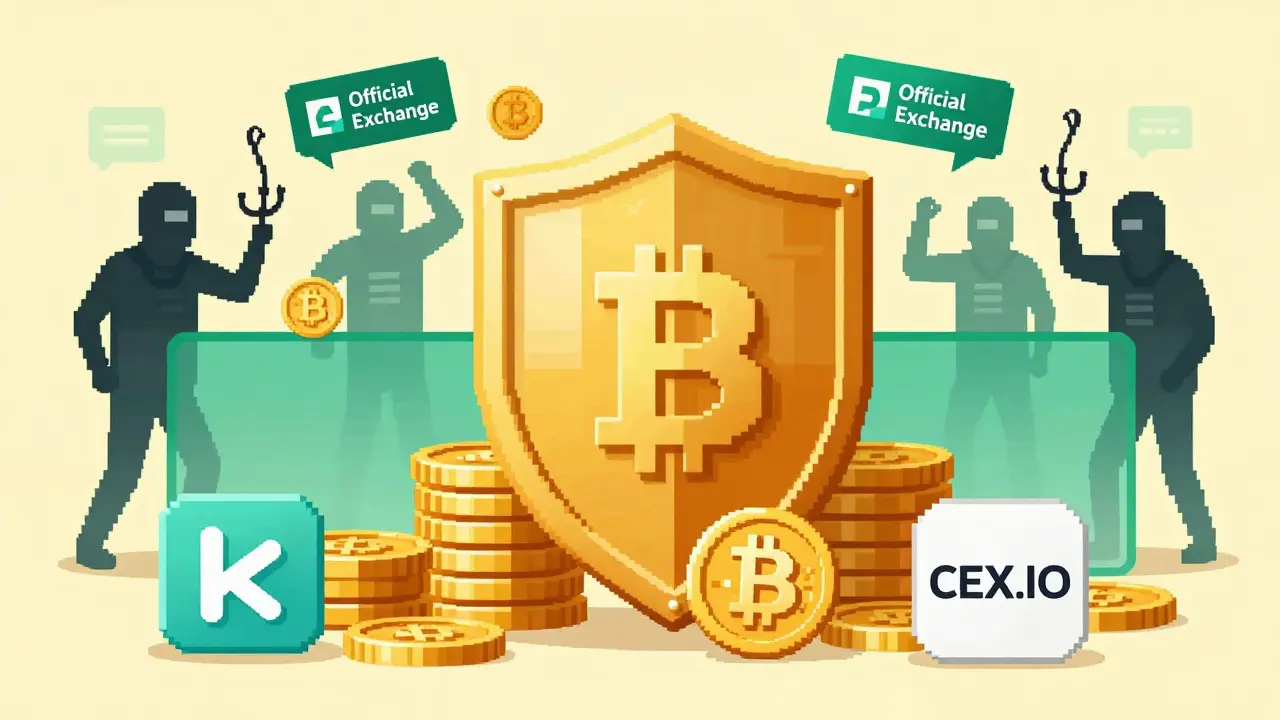
Because the name "CiviliXation" sounds authoritative, scammers often create fake websites mimicking legitimate exchanges. They might promise high returns, guaranteed profits, or exclusive access to the CIV token. Here is how to spot them:
- No Regulatory Information: Legitimate exchanges display their licensing details (e.g., FCA in the UK, FinCEN in the US). Fake sites hide this information or provide fake license numbers.
- Pressure to Deposit: If a site urges you to deposit immediately to "lock in" a price, it is a scam. Real markets don’t work that way.
- Poor Website Quality: Look for broken links, grammatical errors, and generic stock photos. Professional exchanges invest heavily in UX/UI design.
- Requests for Private Keys: No legitimate service will ever ask for your private key or seed phrase. If they do, disconnect immediately.
In the UK, where I live, the Financial Conduct Authority (FCA) maintains a register of authorized firms. If a crypto service operates in the UK without being registered, it is illegal. Always check the FCA register before engaging with any platform.
Safe Alternatives for Crypto Trading
If your goal is to trade cryptocurrency safely, stick to established, regulated platforms. These exchanges offer better security, higher liquidity, and recourse if something goes wrong.
| Exchange | Best For | Security Features | Supported Assets |
|---|---|---|---|
| Binance The largest global cryptocurrency exchange by trading volume | Global Altcoin Traders | Safu Fund, 2FA, Cold Storage | 350+ Coins |
| Kraken A secure exchange known for institutional-grade security and transparency | Security & Institutional Trading | Audited Proofs of Reserves, 2FA | 200+ Coins |
| CEX.IO A regulated European exchange suitable for beginners and pros | Overall Best for 2025/2026 | FCA Regulated, Insurance Coverage | 100+ Coins |
| Revolut A fintech app offering crypto trading alongside banking services | Beginners & Convenience | Bank-Level Security, App Locks | 228+ Digital Currencies |
Binance remains the go-to for traders who want access to a vast array of altcoins, including many that aren’t listed elsewhere. However, its complexity can overwhelm beginners. Kraken is ideal if security is your top priority. They have never been hacked and regularly publish proof-of-reserves audits to show they hold user funds. CEX.IO offers a balanced approach, with strong regulatory compliance in Europe and a user-friendly interface. Revolut is great for casual investors who want to buy crypto within their existing banking app, though fees can be higher and withdrawal options limited.
None of these platforms list the CIV token, which further underscores its lack of mainstream credibility. By sticking to these reputable exchanges, you avoid the pitfalls of obscure tokens and fake platforms.
Why "Crypto Civilization" is a Misleading Term
You might also encounter the phrase "building a new crypto civilization" in articles or blogs. This is a conceptual metaphor used by thought leaders like Michael Casey from CoinDesk to describe the evolution of Decentralized Finance (DeFi). It refers to creating economic systems that operate without traditional banks or intermediaries.
This concept has nothing to do with the CIV token or a fake exchange named CiviliXation. Scammers often co-opt popular buzzwords to make their projects sound innovative. When you hear terms like "revolutionary," "exclusive," or "civilization-building" in a crypto pitch, pause and ask for concrete evidence. How does it work? Who backs it? Where is the code?
Real innovation in crypto comes from transparent, open-source projects with active developer communities. Tokens like CIV, which lack clear documentation and community engagement, rarely contribute to this progress.
Final Thoughts on CiviliXation
To summarize: Do not look for a "CiviliXation Exchange." It does not exist. The Civilization (CIV) token is a low-liquidity, high-risk asset traded only on decentralized platforms like Uniswap. It is not suitable for most investors due to its volatility, lack of utility, and potential for loss.
If you are new to crypto, start with Bitcoin or Ethereum on a regulated exchange like Kraken or CEX.IO. Learn the basics of wallet security, private keys, and market cycles. As you gain experience, you can explore more niche assets-but always do your own research (DYOR) and verify sources through multiple independent channels.
Your money is hard-earned. Protect it by avoiding platforms that sound too good to be true or rely on confusing names to mask their lack of legitimacy. Stay skeptical, stay informed, and trade safely.
Is CiviliXation a real cryptocurrency exchange?
No, there is no legitimate cryptocurrency exchange named CiviliXation. This name is likely a confusion with the Civilization (CIV) token or a fraudulent attempt to mimic a real platform. Always verify exchange names against regulatory registers like the FCA or FinCEN.
Where can I buy the Civilization (CIV) token?
The CIV token is primarily traded on Uniswap V2, a decentralized exchange on the Ethereum network. It is not available on major centralized exchanges like Binance or Coinbase due to low liquidity and lack of regulatory compliance.
Is investing in the CIV token safe?
Investing in CIV is considered high-risk. It has low liquidity, high volatility, and no clear utility. There is a significant chance of losing your entire investment. It is generally recommended for experienced traders only, and even then, caution is advised.
What are the best crypto exchanges for beginners in 2026?
For beginners, regulated platforms like Kraken, CEX.IO, and Revolut are recommended. They offer user-friendly interfaces, strong security measures, and customer support. Binance is also popular but may be complex for new users.
How can I identify a fake crypto exchange?
Look for red flags such as missing regulatory information, promises of guaranteed returns, poor website quality, and requests for private keys. Always check if the exchange is registered with relevant financial authorities in your country.


Terry Hyland
June 16, 2026 AT 04:39its a scam plain and simple. these crypto guys are all thieves trying to steal from honest people. i told you so.
Tim Lefebvre
June 16, 2026 AT 11:47hey thanks for the info. i was kinda confused bout this civ token thing. looks like uniswap is the only place but its risky right? just want to be safe with my money lol
Monica Pathammavong
June 17, 2026 AT 03:03actually you are missing the bigger picture here. the liquidity issues are not just about market cap they are about the fundamental lack of utility in the token design itself which suggests a rug pull mechanism was likely embedded in the smart contract from day one. also your spelling of 'bout' is annoying.
Mark Brunschwiler
June 17, 2026 AT 03:05i feel so sad for everyone who lost money on this. it breaks my heart to see people get tricked by fake exchanges. we need more love in the world not scams. why do people lie?
Sonya O'Brien
June 17, 2026 AT 10:53I completely agree with the assessment that sticking to regulated platforms is the only sensible approach for the vast majority of investors, especially those who are new to the space and might not have the technical expertise to navigate decentralized exchanges safely, as the risks associated with low-liquidity tokens and potential phishing sites are simply too high to justify any speculative gains that might be possible in such a volatile and unregulated environment.
Filbert Reeves
June 18, 2026 AT 06:54you fools think kraken is safe? they are part of the deep state controlling the currency supply. the real freedom is in the dark web coins no one talks about. this article is propaganda to keep you poor. wake up sheeple.
Manish Prajapat
June 19, 2026 AT 21:04The concept of value in digital assets is often misunderstood by those who rely solely on traditional financial metrics. True utility comes from community adoption and decentralized governance structures, which may not be immediately apparent in market capitalization rankings alone.
John Doe
June 21, 2026 AT 05:25This is absolutely terrifying! I cannot believe how many people fall for these traps every single day. It makes me so angry that scammers exist. We need better laws!
Mekz Wheoki
June 21, 2026 AT 07:36oh look another victim asking basic questions. if you dont know what an exchange is maybe stay away from crypto entirely. embarrassing really.
Skm Shubham
June 22, 2026 AT 01:53Your analysis of the CIV token is superficial at best. The volatility metrics provided ignore the broader macroeconomic factors influencing altcoin markets. Furthermore, dismissing Uniswap as merely a protocol overlooks the sophisticated MEV strategies employed by bots that exploit low-liquidity pools, making it even more dangerous for retail traders than you suggest.
Rob Aronson
June 22, 2026 AT 12:25Spot on regarding the regulatory aspects 🚀. In the US, FinCEN registration is non-negotiable for legitimate custodial services. Always verify the MSB status before depositing fiat 💸. DYOR is the golden rule here 👑.
Kwon Bill
June 23, 2026 AT 11:57In Asian markets, we see similar patterns with fake exchanges targeting local languages. The key is understanding the underlying blockchain architecture rather than trusting brand names. Decentralized finance requires a shift in mindset towards self-custody and verification of smart contract audits.
Danna Charris
June 25, 2026 AT 09:07Precisely. Only amateurs chase low-cap gems without due diligence. Stick to blue chips or go home.
Josh Dodson
June 26, 2026 AT 07:32good luck out there folks! remember to use 2fa always. dont let the bad guys win. u got this!
Suman Patil
June 27, 2026 AT 04:40Let's spread awareness about these scams together! Community strength is our best defense against fraudsters. Stay positive and keep learning about blockchain security protocols to protect your assets effectively.
Kumaran sowkarpet
June 29, 2026 AT 00:14Very useful info. In India we have SEBI regulations now. Always check if platform is registered. Safe trading friends :)
Mauricio Contreras Loredo
June 30, 2026 AT 17:59Yeah sure, trust the government regulators. That worked out so well for everyone else. Maybe try using a hardware wallet instead of relying on their 'safety'.
sreeja boora
July 1, 2026 AT 02:48The regulatory framework in India is robust and protects citizens from such fraudulent activities. Users must adhere to strict compliance measures when engaging with cryptocurrency platforms to ensure national financial security.
Grace Newman
July 2, 2026 AT 09:51It is imperative to recognize that these entities are often fronts for larger global surveillance networks designed to track individual financial movements under the guise of anti-money laundering protocols. One must remain vigilant against such encroachments on personal liberty.
Annemarie Fitzgerald
July 2, 2026 AT 14:20the tragedy of modern existence is our reliance on digital constructs that hold no tangible value. we build castles in the air while the ground crumbles beneath us. pathetic really.
Abby Sivertsen
July 3, 2026 AT 17:17I hear you. It’s wild how much energy goes into these schemes. Just chill and stick to what you know. No need to stress over fake exchanges.
Benjamin Eisen
July 3, 2026 AT 17:46great point about checking the fca register. i always forget to do that. thanks for the reminder buddy. lets keep each other safe out there!