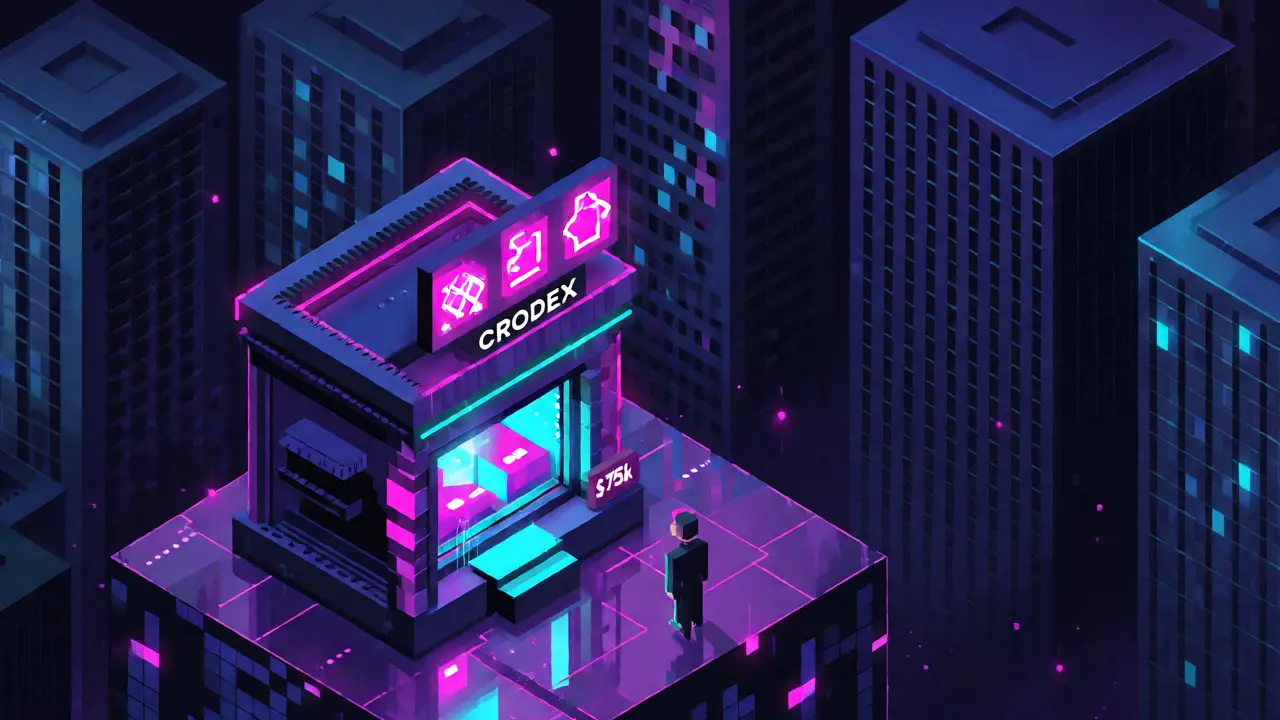
You see a chart with a 14,000% gain from its all-time low. You think you've found the next Bitcoin. Then you check the market cap: $75,000. That's less than a used Honda Civic. Welcome to CRODEX, a decentralized exchange that doubles as a high-risk lottery ticket for the CRX token.
If you're hunting for stable returns or a reliable place to swap your daily coins, CRODEX might not be it. But if you enjoy digging through the dirt of the crypto trenches hoping to strike gold, this review breaks down exactly what you're dealing with. We'll look at the platform's mechanics, the brutal volatility of its native token, and whether the aggregator feature actually saves you money or just adds complexity.
The Dual Nature of CRODEX: Platform and Token
CRODEX isn't just an exchange; it's a hybrid ecosystem. On one side, you have the trading platform itself, launched in 2022. It functions primarily as a decentralized exchange (DEX) aggregator. Think of it like Kayak for crypto trades. Instead of checking Uniswap, then SushiSwap, then PancakeSwap individually, CRODEX scans these sources to find you the best price across multiple liquidity pools.
On the other side, there's the CRX token. This is the native cryptocurrency of the ecosystem. Unlike major exchanges where the native token (like BNB on Binance) offers fee discounts and broad utility, CRX is currently more of a speculative asset. Its value is tied to the platform's adoption, but right now, that adoption is minimal.
This dual structure creates a confusing dynamic for new users. Are you buying CRX because you want to use the exchange? Or are you buying it because you hope the price goes up? For most people today, it's the latter. The platform supports only nine cryptocurrencies and eleven trading pairs. That's tiny. For context, Coinbase lists over 200 assets. CRODEX is a boutique shop in a world of supermarkets.
Trading Mechanics and Liquidity Reality
Let's talk about the actual trading experience. Because CRODEX acts as an aggregator, its primary job is routing orders. When you initiate a trade, the platform looks for the best execution path. In theory, this should mean better prices for you. In practice, with such low volume, the "best price" often comes with significant slippage risks.
Slippage happens when the order book is thin. If you try to buy $1,000 worth of a token on CRODEX, you might move the market against yourself because there aren't enough sellers at the current price. You end up paying more per unit than the quoted price. This is the curse of micro-cap exchanges. High spreads eat into any potential profit from finding a slightly better rate elsewhere.
The platform requires standard Web3 wallet connectivity. You don't create a traditional account with a password and email in the same way you do on centralized exchanges. You connect MetaMask or another compatible wallet. This means you hold your own keys. If you lose your seed phrase, your funds are gone. No customer support can reset your password for you. For beginners, this self-custody requirement is a steep learning curve.
Deep Dive into the CRX Token Economics
The numbers behind CRX tell a story of extreme speculation. Let's look at the hard data as of September 2026:
| Metric | Value | Context |
|---|---|---|
| Current Price | $0.7486 | Down 15% in the last week |
| Market Cap | $75,130 | Micro-cap category |
| Total Supply | 100,000 tokens | Fully circulating |
| All-Time High | $111.08 | Over 14,000% above ATH low |
| All-Time Low | $0.0002 | Extreme volatility range |
Notice the supply. Only 100,000 tokens exist. That scarcity sounds impressive until you realize the demand is equally small. A market cap of $75k means the entire project is worth less than many individual non-fungible tokens (NFTs). With such a low float, a single large buy order can spike the price by double digits, and a single sell order can crash it just as fast.
The token has no major institutional backing visible in public records. Most expert analysis databases barely mention it. FxVerify lists it, but detailed professional reviews are scarce. This lack of coverage is a red flag. It suggests that CRODEX hasn't attracted serious analyst attention yet, likely due to its limited impact on the broader DeFi landscape.
How to Buy CRX: Accessibility and Fees
Getting your hands on CRX isn't as simple as clicking "Buy" on Robinhood. Since it's not listed on top-tier centralized exchanges like Coinbase Pro or Kraken directly for fiat purchases, you need to jump through a few hoops.
Here is the typical path for a US-based user via Binance:
- Create a free Binance account and complete KYC verification.
- Purchase a stablecoin like USDT using a bank transfer or card.
- Navigate to the spot trading section and search for the CRX/USDT pair.
- Execute a limit order to avoid excessive slippage.
For European users, Kriptomat offers a direct EUR purchase option. However, they enforce a minimum investment of €15. More importantly, you must use a bank account registered in your own name. Third-party transfers are rejected. This compliance step protects them from anti-money laundering regulations but adds friction for casual investors.
Once you have CRX, storing it requires care. While you can keep it on an exchange, moving it to a hardware wallet is safer given the platform's size. If the exchange faces technical issues or regulatory hurdles, your assets remain under your control.
CRODEX vs. Major Aggregators: Where Does It Fit?
To understand CRODEX's value, compare it to established players. The DeFi space already has giants like 1inch and Matcha. These platforms aggregate dozens of DEXs and offer robust routing algorithms. They handle billions in volume monthly.
CRODEX operates in the shadow of these leaders. Its aggregation scope is narrower. It doesn't seem to integrate with every major chain or pool. This limitation means you might miss out on the absolute best prices available globally. However, for traders who prefer a simplified interface without the overwhelming options of 1inch, CRODEX offers a streamlined, albeit smaller, experience.
Consider this comparison table to visualize the differences:
| Feature | CRODEX | 1inch / Uniswap |
|---|---|---|
| Asset Selection | 9 Cryptocurrencies | Hundreds to Thousands |
| Liquidity Depth | Very Low | High to Very High |
| User Base | Niche / Emerging | Global / Mass Market |
| Token Utility | Speculative Asset | Governance & Fee Discounts |
| Risk Profile | Extremely High | Moderate |
The takeaway here is clear: CRODEX is not a replacement for your main trading venue. It's a supplementary tool for specific, niche trades or for those betting on the success of the CRX token itself.

Regulatory Risks and Future Outlook
Decentralized exchanges operate in a legal gray area. As regulators in the US and EU tighten rules around crypto intermediaries, platforms like CRODEX face uncertainty. They don't hold user funds in custody, which helps their case, but their aggregator role involves facilitating trades that could be subject to securities laws depending on the assets involved.
There is no public record of CRODEX obtaining specific licenses in major jurisdictions. For investors, this means the risk of sudden delisting or operational shutdown due to regulatory pressure exists. Always assume that micro-cap projects can disappear overnight if compliance costs become too high.
Looking ahead, CRODEX needs to expand its token list significantly. Nine assets are not enough to sustain organic growth in 2026. They need to integrate with newer Layer-2 networks and increase marketing visibility. Without these steps, the platform risks becoming obsolete as larger aggregators continue to dominate mindshare and liquidity.
Who Should Use CRODEX?
So, should you bother with CRODEX? Here is a quick decision framework:
- Skip it if: You are a beginner looking for a safe place to store Bitcoin or Ethereum. You want low fees and high liquidity. You prefer centralized exchanges with insurance protections.
- Consider it if: You are an experienced DeFi trader comfortable with Web3 wallets. You are speculating on micro-cap tokens and can afford to lose the entire investment. You want to test alternative aggregation routes for specific altcoins.
The CRX token is currently a vehicle for speculation, not utility. Its price action is driven by sentiment and low-volume pumps rather than fundamental cash flow or widespread usage. Treat it like a venture capital bet: high risk, potentially high reward, but mostly likely to result in a loss.
Is CRODEX a legitimate exchange or a scam?
CRODEX appears to be a legitimate operating entity founded in 2022, not a outright scam. However, it is extremely small and illiquid. Legitimacy does not equal safety. The risk here is not necessarily theft, but rather stagnation, low liquidity, and potential regulatory shutdown.
Why is the CRX token so volatile?
The volatility stems from its micro-market cap of approximately $75,000 and a fixed supply of only 100,000 tokens. With such low trading volumes, even small buy or sell orders cause massive percentage swings in price compared to larger assets like Bitcoin.
Can I withdraw CRX to my personal wallet?
Yes, since CRODEX is a decentralized platform, you retain custody of your assets. You can withdraw CRX to any compatible blockchain address, such as a MetaMask wallet or a hardware device like Ledger or Trezor.
What are the fees on CRODEX?
Fees include network gas fees for the underlying blockchain and potential spread costs due to low liquidity. Specific trading fee percentages are not widely publicized, so always check the transaction preview before confirming a swap to account for slippage.
Does CRODEX offer staking rewards?
Information regarding active staking programs for CRX holders is limited. Unlike major exchanges that offer clear APY rates, CRODEX focuses primarily on trading aggregation. Check the official platform documentation for any current yield opportunities.