

| Entity Type | Tax Rate | Key Condition |
|---|---|---|
| Resident Individual (Low Income) | 13% | Income up to 2.4 million rubles |
| Resident Individual (High Income) | 15% | Income exceeding 2.4 million rubles |
| Non-Resident Individual | 30% | Flat rate on all crypto income |
| Corporate Entity / Mining Firm | 25% | Profit tax via general taxation system (OSNO) |
How Individual Taxes Work
For most people, the rules follow a progressive scale. If your annual crypto gains stay under 2.4 million rubles (roughly $32,650), you pay a 13% personal income tax. Once you cross that line, the rate bumps up to 15% for the excess. One critical detail that catches many off guard: there is no 'long-term holding' loophole. Unlike other types of property in Russia, you can't avoid tax just by holding your coins for three years. You owe the tax regardless of how long you've held the asset.
The government has also bundled crypto income with securities transactions. This means if you trade stocks and Bitcoin, they all go into one big pot for tax calculation. This is meant to stop people from jumping between asset classes to hide gains. However, for non-residents, the deal is much harsher-a flat 30% tax applies to all gains, with no progressive brackets.
The Corporate Grind and Mining Restrictions
If you're running a business, the rules are significantly stricter. Companies cannot use simplified tax regimes like USN or AUSN. You must use the General Taxation System (OSNO), and the profit tax for mining and sales is set at 25%. This is roughly 20% higher than the standard corporate profit tax, which some experts argue is an attempt to discourage massive industrial mining in favor of state-controlled energy use.
Beyond the money, there are geographical red lines. Mining is completely banned in Dagestan, Chechnya, and the DPR/LPR territories until 2031. Even if you aren't in those regions, you might face "seasonal restrictions." In places like Irkutsk Oblast, Buryatia, and Zabaykalsky Krai, the government can shut down mining operations during energy deficit periods to keep the lights on for residents. This has already caused a noticeable dip in domestic mining activity in the Irkutsk region.

Calculating Your Liability: The Market Quote Headache
Calculating exactly how much you owe is the most frustrating part of the process. The law requires you to use market quotations from "foreign trading organizers." To be valid, an exchange must have a daily trading volume over 100 billion rubles and three years of public data. This means you can't just pick a random small exchange to make your gains look smaller.
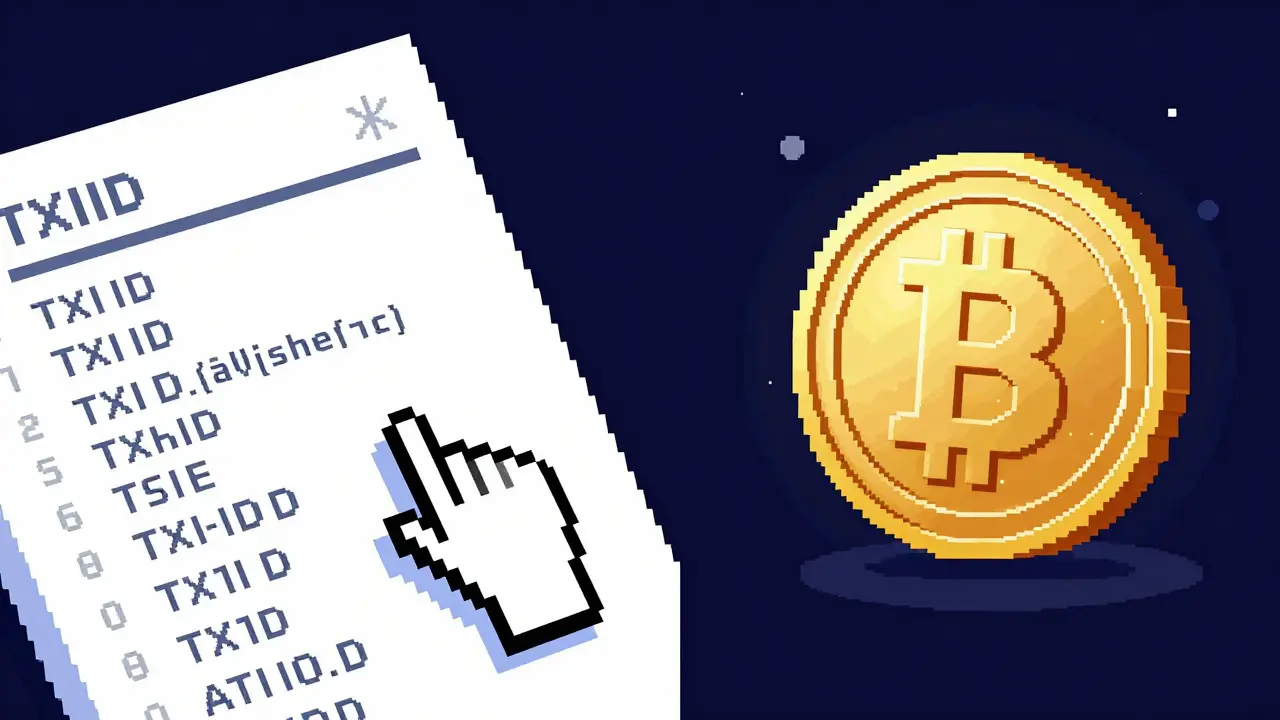
The Federal Tax Service requires meticulous record-keeping. You need to document:
- Every wallet address involved.
- Transaction IDs (TXIDs) for every move.
- The exact exchange rate at the moment of the transaction.
Reporting Thresholds and Penalties
You don't have to report every single cent, but the threshold is lower than some expected. There is an annual reporting limit of 600,000 rubles (about $8,100). If your transactions exceed this, you must file. This is a point of contention, as a huge portion of retail investors operate below this limit and are effectively invisible to the system-for now.
If you get caught ignoring these rules, the FTS doesn't play around. Missing your quarterly reports can lead to fines of up to 40,000 rubles. If you've avoided paying the tax itself, you're looking at penalties ranging from 15% to 40% of the unpaid amount, plus accumulated interest. The risk of a "silent" wallet is shrinking as the government increases its monitoring capabilities.
The Shift Toward Institutional Adoption
Despite the heavy taxes and restrictions, there is a silver lining: the VAT exemption. Cryptocurrency transactions are exempt from Value Added Tax, which has made it much cheaper for big players to move assets without adding a 20% overhead. This has led to a surge in institutional participation, with nearly 50 traditional financial institutions registering as crypto service providers by early 2025.
We're also seeing the rise of a parallel system. The government is pushing the Digital Ruble, which is a Central Bank Digital Currency (CBDC). While different from Bitcoin or Ethereum, the digital ruble is being piloted for welfare payments. This indicates that while the state wants to tax decentralized crypto, it wants to fully control the digital money used for social services.
Do I have to pay tax if I hold crypto for more than 3 years?
Yes. Unlike other movable property in Russia, cryptocurrency is specifically excluded from the three-year ownership exemption. You must pay tax on your gains regardless of how long you held the asset.
What happens if I mine in Irkutsk or Buryatia?
You may face seasonal restrictions. The government can prohibit mining during periods of energy deficit to protect the power grid. Additionally, if you are operating as a business, you must pay a 25% profit tax under the OSNO system.
Is there a VAT on cryptocurrency trades in Russia?
No. Under Federal Law No. 418-FZ, cryptocurrency transactions are exempt from value-added tax (VAT), which is a major benefit for high-volume traders and institutions.
What is the reporting threshold for individuals?
The current annual reporting threshold is 600,000 rubles. If your cryptocurrency-related income or transactions exceed this amount, you are required to report them to the Federal Tax Service.
What are the penalties for not reporting crypto income?
Failure to file quarterly reports can result in fines up to 40,000 rubles. Unpaid tax obligations can trigger penalties of 15-40% of the unpaid amount plus interest.
Next Steps for Crypto Users
If you're currently operating in Russia, your first move should be a full audit of your transaction history. Gather every TXID and wallet address you've used since January 2025. If you're a corporate entity, ensure you've switched to the General Taxation System (OSNO) to avoid massive compliance penalties.
For those using P2P platforms to avoid the 600,000 ruble threshold, be aware that the FTS is increasingly looking at bank transfer patterns to identify unreported crypto trading. The safest bet is to maintain a transparent ledger and consult with an accountant who specializes in the 2025 framework, as the calculation of foreign market quotes remains the most common point of failure during audits.




vijendra pal
April 5, 2026 AT 18:22Actually most peeple dont realyze that these rules are basiclly just a way for the govt to launder their own control over the network 🙄 it is obvios that the 600k ruble limit is just a trap for retail traders to get them into the system before hiking the rates again 🚀📉💸
david head
April 6, 2026 AT 23:53man this is wild 😱 total game changer for anyone in that region!
Alexandra Lance
April 7, 2026 AT 06:10Oh sure, because the government just "wants to help" with legitimacy 🙄 it is so clear they are just using the Digital Ruble to create a total surveillance state where they can freeze your funds for thinking the wrong thoughts 🤡 typical power grab wrapped in a "guide" 💅✨
Lauren Gilbert
April 9, 2026 AT 05:35It is quite fascinating to observe how the concept of decentralized currency is being slowly absorbed by the very structures it was designed to circumvent, creating a paradoxical relationship where the state recognizes the asset only to ensure its own slice of the profit, which makes one wonder if true financial autonomy can ever exist when the legal framework is designed to tether the digital world back to national borders through taxation and reporting thresholds.
Sonya Bowen
April 9, 2026 AT 21:45Keep in mind that the OSNO requirement for firms essentially removes any competitive tax advantage for startups.
Carol Prates
April 11, 2026 AT 11:28Omg the drama of having to spend dozens of hours on TXIDs is literally my nightmare! Imagine the stress of an audit just because you didn't keep a perfect spreadsheet for a few months, honestly just tragic 💅
Emma Pease-Byron
April 13, 2026 AT 03:10The sheer audacity of assuming that a 600,000 ruble threshold constitutes an "invisible" zone for retail investors is quaint. Any individual with a modicum of financial literacy knows that bank pattern recognition software renders such thresholds entirely decorative.
Erica Mahmood
April 13, 2026 AT 22:42basically just a standard KYC/AML push but with more paperwork since there is no native API for FTS reporting yet
Krystal Moore
April 15, 2026 AT 01:53It's honestly disgusting that they're targeting the small miners in Irkutsk while the big institutional players get VAT exemptions. Where is the morality in protecting the grid by crushing the little guy's side hustle?
Sharhonda Walker
April 16, 2026 AT 06:37Just a heads up for anyone doing this, make sure you use a reliable csv export from your exchange or the FTS will reject your claims based on formatting errers
gladys christine
April 16, 2026 AT 10:19GOOD LUCK TO EVERYONE STRUGGLING WITH THESE TAXES!!! YOU GOT THIS!!! 🌟✨
Manisha Sharma
April 16, 2026 AT 14:35Russia is finally acting with the strength our allies in the east admire, though these rules are merely a reflection of the inevitable shift toward state-managed digital assets which is far more sophistocated than any western approach to crypto
Bruce Micciulla Agency
April 17, 2026 AT 18:13the 25 percent profit tax on mining firms is a blatant attempt to stifle the growth of private infrastructure in favor of state energy monopolies and it is honestly laughable that anyone thinks this promotes industry when the lack of simplified tax regimes basically guarantees that only the most bloated companies can survive the compliance overhead
Adriana Gurau
April 18, 2026 AT 19:10Such a basic breakdown. I've already optimized my portfolio to avoid these pitfalls while others are still reading guides :) 🙄
June Coleman
April 19, 2026 AT 17:42Oh yeah, because nothing says "supportive environment" like 40,000 ruble fines for a missed report. Just lovely.
Emily 2231
April 21, 2026 AT 03:31The Digital Ruble is the ultimate tool for the New World Order to track every single kopek we spend and the fact that they are piloting it for welfare is exactly how the social credit system starts in the east
Robert Coskrey
April 21, 2026 AT 13:34The distinction between resident and non-resident tax rates is quite clear, though the 30% flat rate for non-residents is notably aggressive.
Suvoranjan Mukherjee
April 23, 2026 AT 05:04For those managing high-frequency trades, I recommend using specialized portfolio trackers to handle the market quote requirements! It saves a ton of manual labor and ensures your cost-basis is accurate across different trading pairs, which is crucial for avoiding those FTS penalties!
JERRY ORTEGA
April 24, 2026 AT 07:49just keep your records clean and you'll be fine most of these penalties hit people who try to hide obvious transfers
shubhu patel
April 25, 2026 AT 10:43It is really quite a lot to take in for a casual user who just bought a bit of coin for the future, and I think it is important to remember that while the rules are strict, they do provide a legal pathway for people to finally move their assets into the traditional banking system without fear of immediate freezes, which is a slow but steady step toward stability in a very volatile market.
vijendra pal
April 26, 2026 AT 12:40Lmao look at all these people acting like the FTS actually cares about the 600k limit when they can just flag any P2P transfer that looks suspicious anyway 🤡🤡🤡