
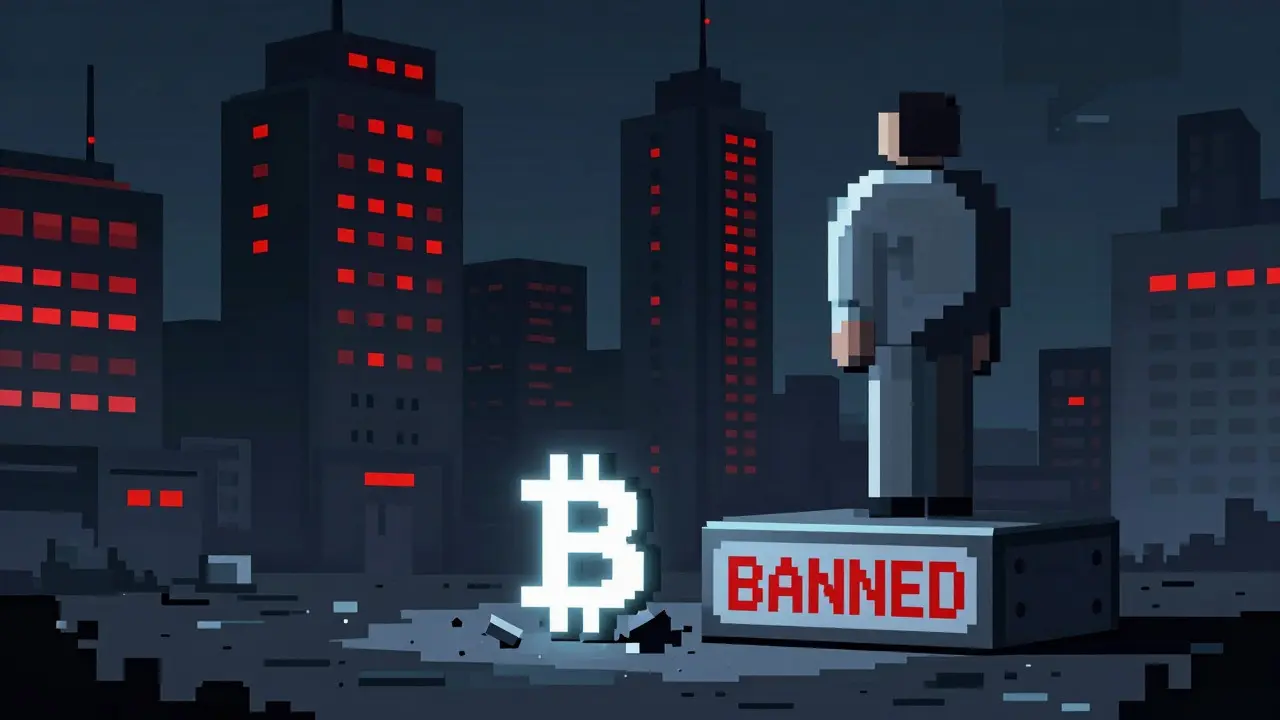
Imagine checking your portfolio only to find that the government has criminalized holding it. For millions of people, this isn't a dystopian sci-fi plot; it is their daily reality. As we move through 2026, the global map of cryptocurrency regulation remains sharply divided. On one side, you have nations racing to build regulatory frameworks to attract blockchain innovation. On the other, you have countries slamming the door shut, implementing bans that range from banking restrictions to outright criminalization.
If you are looking to trade, mine, or simply hold digital assets, knowing which jurisdictions are hostile is just as important as knowing which ones are friendly. Some governments view decentralized finance as a threat to monetary sovereignty, while others see it as a tool for capital flight. Here is a breakdown of the worst countries for crypto restrictions right now, why they banned it, and what it means for users on the ground.
The Total Prohibitions: Where Crypto Is Illegal
At the extreme end of the spectrum are countries where cryptocurrency is not just regulated-it is prohibited. In these jurisdictions, owning Bitcoin or Ethereum can lead to severe legal consequences, including fines and imprisonment. These bans are usually driven by a desire to control capital flow and protect the national currency.
China remains the gold standard for comprehensive crypto prohibition. Since September 2021, the People's Bank of China (PBOC) has banned all domestic cryptocurrency trading, initial coin offerings (ICOs), and mining operations. The ban is not merely advisory; it is enforced with significant state power. Chinese authorities classify crypto activities as "illegal financial activities." While peer-to-peer trading still happens underground via virtual private networks (VPNs) and overseas exchanges, the risk is high. Banks routinely freeze accounts linked to crypto transactions, and miners face electricity cuts and equipment confiscation. China’s strategy is clear: replace decentralized crypto with its own state-controlled Central Bank Digital Currency (CBDC), the digital yuan.
Bangladesh takes an equally hardline stance. The Bangladesh Bank has declared all cryptocurrency usage illegal under anti-money laundering laws. Possession itself is a crime. Despite having a young, tech-savvy population that would benefit from financial inclusion tools, the government views crypto as a threat to financial stability. Legal proceedings against violators are common, and the central bank actively monitors internet traffic to detect illicit trading. There is no room for nuance here; if you touch crypto in Bangladesh, you are breaking the law.
In North Africa, Algeria enforces one of the strictest bans globally. The country prohibits the use, holding, and trading of digital assets. Violations can result in prison sentences of up to five years and hefty fines. The Algerian government’s primary concern is preserving the value of the dinar and preventing capital flight. With limited access to foreign exchange, citizens often turn to informal markets, but the state’s grip on financial infrastructure makes legitimate crypto adoption nearly impossible.
Similarly, Bolivia has maintained a complete prohibition since 2014. The Central Bank of Bolivia cites fraud prevention and money laundering risks. Any form of digital asset activity is illegal, and authorities actively pursue enforcement actions. This reflects a broader regional skepticism toward decentralized systems, preferring traditional banking channels even when they are inefficient.
The Banking Blockades: Restricted Access
Not all restrictive countries go for total criminalization. Some prefer a slower strangulation method: cutting off the plumbing. By banning banks from interacting with crypto companies, these nations make it incredibly difficult to move fiat money into or out of digital assets.
Nigeria is the prime example of this approach. In February 2021, the Central Bank of Nigeria (CBN) issued a circular prohibiting financial institutions from facilitating any cryptocurrency transactions. While individual ownership was never technically illegal, the banking ban created a massive barrier. You could own Bitcoin, but you couldn’t easily buy it with Naira through a bank account. This forced the market underground, leading to a boom in peer-to-peer (P2P) trading platforms like Binance P2P. However, the friction is real. Users report frequent account freezes and difficulties cashing out large sums. Although there have been occasional rumors of policy softening, the core restriction on bank involvement remains a major headache for Nigerian traders.
Afghanistan joined this list in August 2022 when the Taliban government banned all cryptocurrency trading. The ban was part of a broader effort to consolidate economic control and prevent sanctions evasion. Given the country’s isolation from the global SWIFT banking system, one might expect crypto to thrive as an alternative. Instead, the Taliban’s authoritarian enforcement has suppressed open markets, driving transactions into opaque, risky informal networks.
The Tax Trap: Hostile Regulation Without a Ban
Sometimes, the government doesn’t need to ban crypto if it can tax it into obscurity. This is the strategy employed by some of the world’s largest economies, creating a "hostile environment" rather than a criminal one.
India offers the most punishing tax regime in the world for crypto investors. Introduced in 2022, the framework imposes a flat 30% tax on all cryptocurrency gains. But it gets worse. There is also a 1% Tax Deducted at Source (TDS) on every transaction. This means if you trade frequently, you lose 1% of your volume immediately, regardless of profit or loss. Combined with the 30% gain tax, the effective tax burden can exceed 50% for active traders. Furthermore, losses from crypto cannot be offset against profits from other sources, nor can they be carried forward. This structure effectively discourages mainstream adoption and pushes many Indian users toward offshore exchanges or privacy coins to avoid detection. The Reserve Bank of India (RBI) has historically been skeptical, and while the Supreme Court lifted earlier banking restrictions in 2020, the tax code remains a heavy anchor.
Ecuador takes a different angle. It does not ban crypto, but it refuses to recognize it as legal tender. More importantly, the government launched its own state-backed digital currency, the Sistema de Dinero Electrónico (SDE). By promoting a centralized alternative, Ecuador aims to crowd out decentralized options. While not illegal, using Bitcoin for payments is discouraged, and there is little institutional support for crypto businesses. The message is clear: trust the state’s digital money, not the blockchain’s.

Why Do Countries Ban Crypto?
Understanding the motivation behind these bans helps predict whether they might change. Most restrictive policies stem from three core fears:
- Capital Flight: In countries with volatile currencies or strict forex controls (like Algeria and Bangladesh), crypto allows citizens to move wealth out of the country easily. Governments fear this drains reserves and destabilizes the economy.
- Monetary Sovereignty: If people use Bitcoin instead of the national currency, the central bank loses control over interest rates and money supply. China’s push for the digital yuan is a direct response to this.
- Financial Crime: Authorities worry about money laundering, terrorist financing, and scams. While blockchain is transparent, pseudonymity makes tracking harder for under-resourced agencies.
However, experts argue that bans often fail. They drive activity underground, reducing transparency rather than increasing it. In Nigeria, for instance, P2P trading volumes surged after the banking ban because demand remained high despite the friction. Similarly, Chinese users continue to trade via VPNs, albeit with higher risks.
How to Navigate Restrictive Jurisdictions
If you live in one of these countries, your options are limited and carry risk. Here is what you need to know:
- Check Local Laws First: Regulations change rapidly. What was legal last year might be banned today. Consult local legal experts before engaging in significant transactions.
- Use Non-Custodial Wallets: In restrictive environments, keeping crypto on an exchange is dangerous. Exchanges may freeze funds or hand them over to authorities. Self-custody wallets give you control, but you bear the responsibility of security.
- Beware of P2P Risks: Peer-to-peer trading is common in banned regions, but it is fraught with scams and chargeback fraud. Always use escrow services provided by reputable platforms, and verify counterparty reputations.
- Consider Privacy Implications: In countries monitoring internet traffic, using public Wi-Fi for crypto transactions can expose your IP address. Virtual Private Networks (VPNs) help, but ensure they are trustworthy and do not log data.
- Tax Compliance: Even if crypto is restricted, tax obligations may remain. In India, failing to report gains can lead to severe penalties. Keep detailed records of all transactions.

Comparison of Restrictive Policies
| Country | Restriction Type | Key Enforcement Mechanism | Risk Level |
|---|---|---|---|
| China | Total Ban | Bank freezes, ISP blocks, criminal penalties | Very High |
| Bangladesh | Total Ban | Anti-money laundering laws, possession crimes | Very High |
| Algeria | Total Ban | Prison sentences, heavy fines | Very High |
| Nigeria | Banking Ban | Circular prohibiting bank-fiat conversions | High |
| India | Punitive Tax | 30% gain tax + 1% TDS on trades | Medium-High |
| Ecuador | Non-Recognition | Promotion of state CBDC, no legal tender status | Low-Medium |
The Future of Crypto Bans
Will these bans last? History suggests that technology often outpaces regulation. As blockchain becomes more integrated into global finance, maintaining a total blackout becomes increasingly difficult. Neighboring countries adopting friendly regulations create arbitrage opportunities that pressure restrictive nations to reconsider.
However, for now, the trend in places like China and Bangladesh shows no sign of reversal. Their focus is on Central Bank Digital Currencies (CBDCs), which offer the benefits of digital payments without the decentralization that threatens state control. For crypto enthusiasts in these regions, patience and caution are essential. The landscape is harsh, but not static. Stay informed, stay safe, and always prioritize legal compliance.
Is Bitcoin illegal in China?
Yes, since September 2021, all cryptocurrency trading, mining, and related services have been classified as illegal financial activities in China. While personal possession is not explicitly criminalized, any attempt to trade or convert crypto faces severe penalties, including frozen bank accounts.
Can I trade crypto in India?
Trading is legal but heavily taxed. India imposes a 30% flat tax on crypto gains and a 1% Tax Deducted at Source (TDS) on every transaction. This makes active trading expensive and complex, though not prohibited.
What happens if you use crypto in Bangladesh?
Using crypto in Bangladesh is illegal. The Bangladesh Bank has banned all crypto-related activities under anti-money laundering laws. Violators can face legal prosecution, fines, and potential imprisonment.
Did Nigeria ban cryptocurrency?
Nigeria did not ban crypto ownership but banned banks from processing crypto transactions. This creates significant barriers for buying and selling crypto legally, forcing many users to rely on peer-to-peer networks.
Are there any countries that completely ban crypto mining?
Yes, China has banned all domestic cryptocurrency mining operations. Other countries like Algeria and Bolivia also prohibit mining as part of their broader crypto bans due to energy concerns and financial control.
Why do countries ban cryptocurrency?
Countries typically ban crypto to prevent capital flight, maintain monetary sovereignty, and reduce risks of money laundering and financial fraud. They often prefer state-controlled digital currencies (CBDCs) over decentralized alternatives.
Is it safe to use P2P crypto trading in restricted countries?
P2P trading carries significant risks in restricted countries, including scams, chargebacks, and legal exposure. While it bypasses banking restrictions, users must exercise extreme caution, use escrow services, and verify counterparty reputations.