
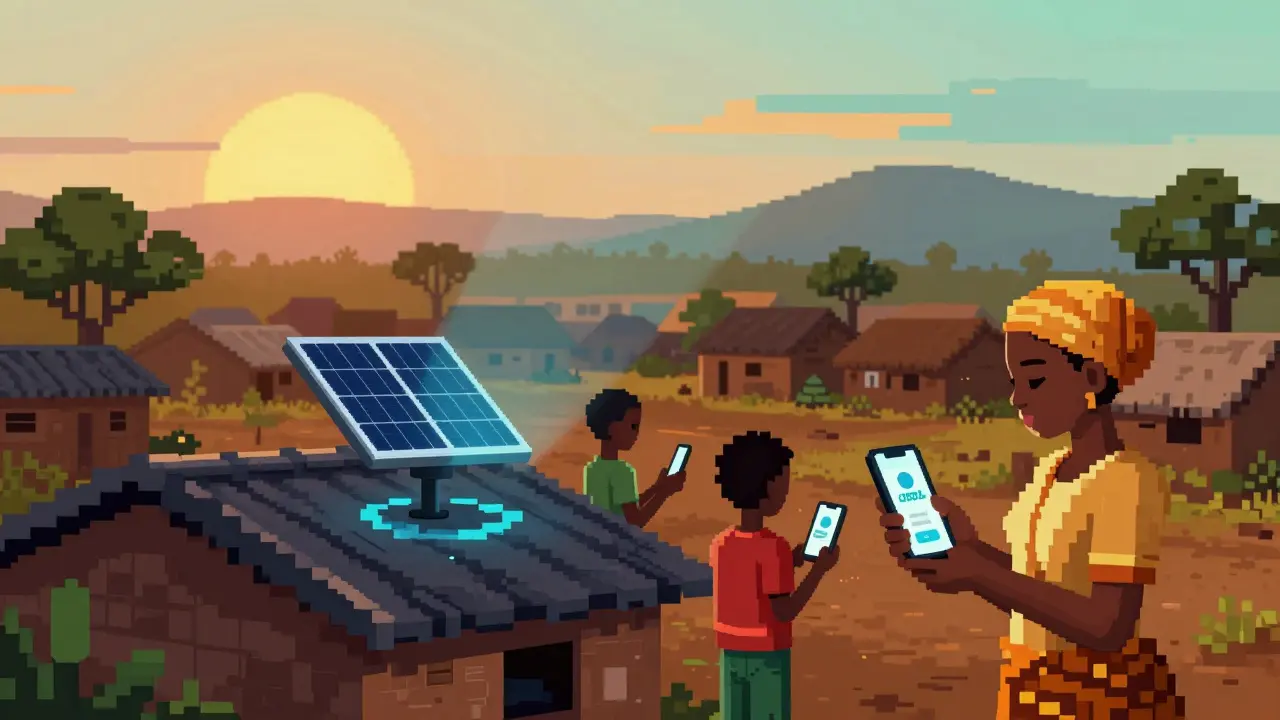
The World Mobile Token (WMTX) isn't just another cryptocurrency. It’s a utility token built to connect the unconnected. While most coins focus on trading or speculation, WMTX powers a real-world network: a decentralized mobile and internet service that brings affordable connectivity to places where traditional telecom companies won’t go. Think remote villages in Africa, rural islands in Southeast Asia, or underserved neighborhoods in Latin America. This isn’t theory. It’s happening now.
How WMTX Actually Works
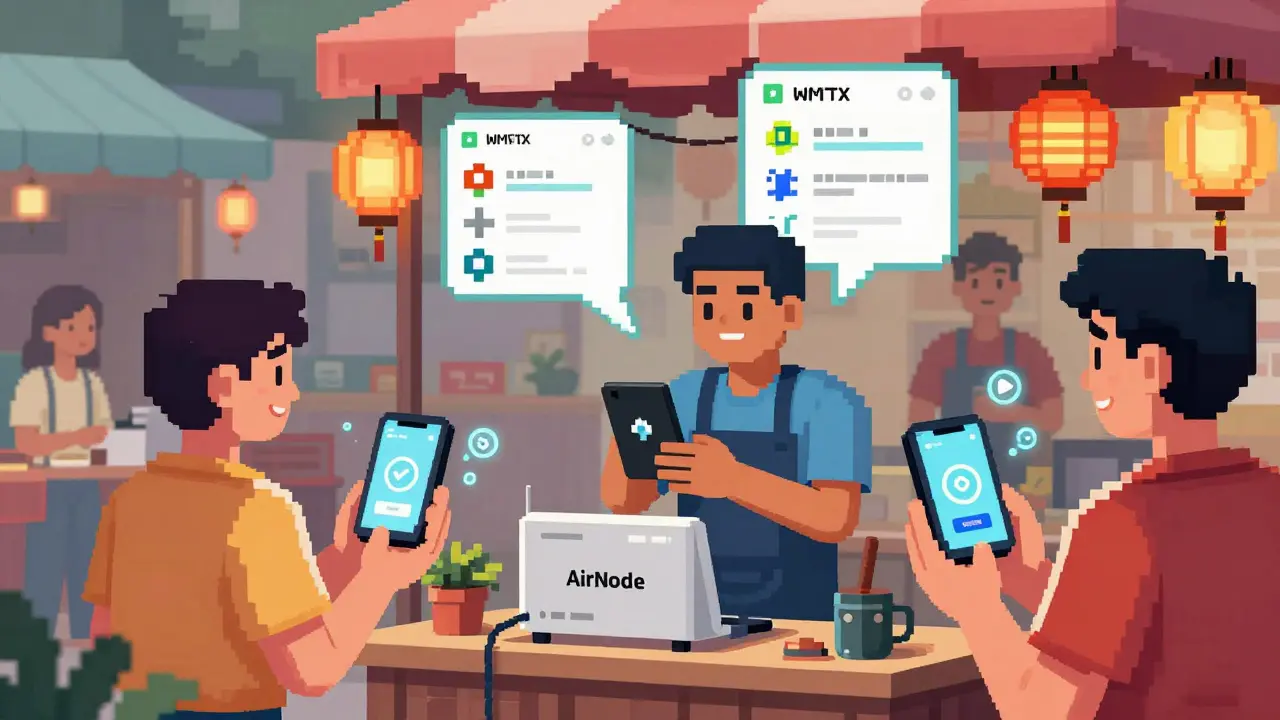
World Mobile Token runs on a blockchain-based telecom network called the World Mobile Network. Instead of building expensive cell towers owned by big corporations, the network uses small, solar-powered access points called AirNodes. Anyone can set one up-on their roof, in their shop, even in their backyard. In return, they earn WMTX tokens for providing connectivity to nearby users.
This is called a DePIN model-Decentralized Physical Infrastructure Networks. It flips the old telecom system on its head. No more monopoly control by a single provider. No more high roaming fees. No more needing a bank account just to buy data. Users pay for calls, texts, or data using WMTX. The payments go straight to the AirNode operator, not a middleman. And because the system runs on smart contracts, everything is transparent and automatic.
Why WMTX Uses Ethereum, Base, and BNB Chain
WMTX didn’t stay on one blockchain. It moved. Originally launched on Ethereum, the token now operates across three chains: Ethereum, Base (Coinbase’s Layer 2), and BNB Chain. Why? Because each one offers something different.
- Ethereum gives it strong security and smart contract reliability.
- Base cuts transaction fees and speeds up payments for everyday users.
- BNB Chain handles high-volume transactions with low cost, perfect for regions with lots of users.
This multi-chain setup means WMTX can scale without getting bogged down by network congestion or high gas fees. It also makes it easier for people to use WMTX on wallets they already have-like MetaMask or Trust Wallet.
The Tokenomics: Supply, Burning, and Rewards
There are 2 billion WMTX tokens total. Not all are in circulation yet. The supply is released over time through staking rewards and network growth. But here’s the twist: every time someone uses WMTX to pay for a call or data, a portion of that token is burned. That means the total supply slowly shrinks over time.
That’s a deflationary mechanism. It’s designed to keep value stable as more people join the network. At the same time, operators who run AirNodes get paid in WMTX. Stakers who lock up their tokens to help secure the network also earn rewards. This creates a loop: more users → more usage → more rewards → more people setting up nodes → better coverage.
As of March 2026, the live price of WMTX is $0.08949. Its 24-hour trading volume is over $110 million. The highest price it reached was $0.14235 in November 2025. Market cap sits around $77.9 million, with a fully diluted valuation of over $2.8 billion in Bitcoin terms.
Real Use Cases: Banking the Unbanked
WMTX isn’t just about internet access. It’s about access to everything else.
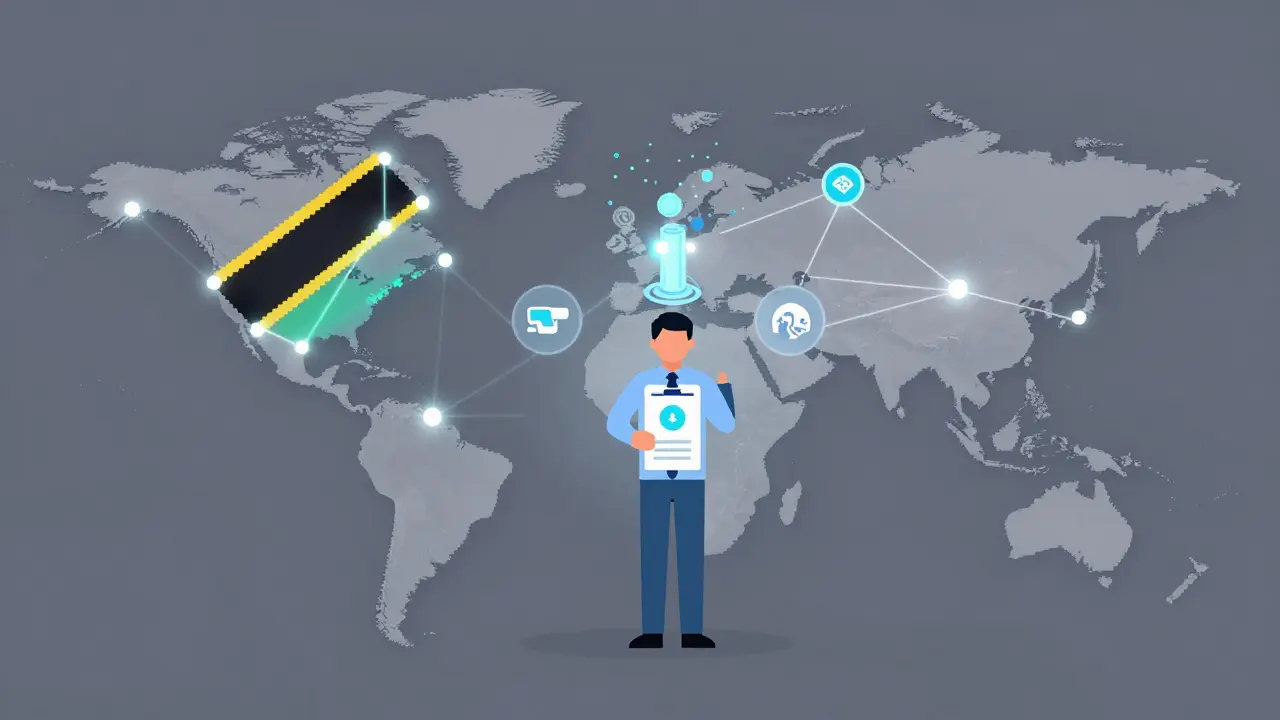
World Mobile pairs its network with a decentralized digital ID built on Cardano’s blockchain. This ID lets people:
- Open a digital bank account without paperwork
- Apply for microloans using their usage history as credit
- Access telemedicine services with verified identity
- Receive aid or remittances without relying on traditional banks
For millions who’ve never had a passport, a utility bill, or a bank statement, this ID is life-changing. It’s not a fantasy. In pilot zones in Tanzania and Pakistan, people are already using it to get loans, pay for school fees, and even start small businesses.
How to Get and Use WMTX
You can buy WMTX on major exchanges like Bitrue, Gate.io, and Uniswap. You can also earn it by becoming an AirNode operator. All you need is a solar panel, a small radio unit, and an internet connection. The setup is low-cost and designed for local entrepreneurs.
Once you have WMTX, you can:
- Stake it to earn passive rewards
- Pay for mobile data and calls in countries where the network is live
- Use it for cross-border payments without forex fees
- Vote on network upgrades as a token holder
Staking is available through platforms like Aerodrome on Base. The more you stake, the more you help secure the network-and the more rewards you earn.
Why It Matters
Half the world still has no reliable internet. Telecom companies ignore these areas because they don’t see profit. WMTX changes that. It turns users into stakeholders. It turns connectivity into a shared asset. It doesn’t just give people data-it gives them control.
When you buy or use WMTX, you’re not just investing in a coin. You’re investing in infrastructure that could bring education, healthcare, and economic opportunity to places that have been left behind for decades.
The telco industry is worth over $1.5 trillion. WMTX isn’t trying to replace it. It’s trying to include the 3.7 billion people it forgot.
Is WMTX a good investment?
WMTX isn’t a traditional investment like Bitcoin or Ethereum. Its value is tied to real-world usage. If the World Mobile Network expands and more people start using it for calls, data, and digital IDs, demand for WMTX will grow. But if adoption stalls, the price could stagnate. It’s a bet on infrastructure, not speculation. Only invest what you can afford to hold long-term.
Can I mine WMTX?
No, WMTX doesn’t use mining. It runs on proof-of-stake. You can earn WMTX by staking your tokens or by operating an AirNode-providing physical connectivity. Mining hardware won’t help. You need a solar-powered access point and a willingness to serve your community.
Where is World Mobile Network live right now?
As of early 2026, the network is fully operational in Tanzania and has pilot programs in Pakistan, Indonesia, and parts of Latin America. Expansion is planned for Nigeria, Kenya, and the Philippines later this year. Coverage is still limited, but growing fast. Check the official World Mobile website for real-time coverage maps.
Do I need to be tech-savvy to use WMTX?
No. End users don’t need to understand blockchain. The World Mobile app works like any mobile app-you buy data, make calls, and top up with WMTX. The blockchain runs in the background. Even people with basic phones and no prior tech experience can use it. The real tech is in the AirNode operators and stakers, not the end users.
How is WMTX different from other crypto telecom projects?
Many projects talk about blockchain and telecom. WMTX is one of the few with live, operational networks. It’s not just a whitepaper. It’s already connecting real people. It also uses a hybrid multi-chain approach, which most competitors don’t. Plus, the deflationary burning model and direct staking rewards for operators create a self-sustaining economy that’s hard to copy.
Can I use WMTX outside the World Mobile Network?
Yes. WMTX is traded on major exchanges and can be held in any wallet that supports ERC-20, BEP-20, or Base tokens. You can use it for trading, sending to friends, or holding as an asset. But its real value comes from using it within the World Mobile ecosystem-paying for services, staking, or operating a node.
Jeannie LaCroix
March 24, 2026 AT 05:15They're not just selling tokens-they're selling dignity. And that? That's worth more than any NFT.
Domenic Dawson
March 26, 2026 AT 00:38Sam Harajly
March 26, 2026 AT 04:36Jackie Crusenberry
March 27, 2026 AT 16:35Shana Brown
March 29, 2026 AT 13:44❤️
Dominic Taylor
March 31, 2026 AT 12:02Leona Fowler
April 1, 2026 AT 21:15Sarah Terry
April 2, 2026 AT 11:15Shayne Cokerdem
April 3, 2026 AT 06:56aravindsai pandla
April 4, 2026 AT 18:18namrata singh
April 4, 2026 AT 23:08Cordany Harper
April 6, 2026 AT 20:23DarShawn Owens
April 7, 2026 AT 23:37Andy Green
April 8, 2026 AT 08:29Zion Banks
April 8, 2026 AT 10:31Annette Gilbert
April 9, 2026 AT 18:07JOHN NGEH
April 11, 2026 AT 16:26