

The Conflict Between Law and Economic Survival
If you are reading this, you likely need to move money out of Egypt, and you've probably heard that crypto is the only way to make it work quickly. But before you type those wallet addresses, there is a hard truth you must accept: sending cryptocurrency across borders from Egypt is currently illegal under national law. The gap between what the government says and what citizens actually need has created a high-stakes environment where your digital assets could vanish overnight due to enforcement actions.
The situation isn't just a grey area; it is a direct prohibition backed by severe penalties. Yet, economic desperation drives millions of Egyptians to ignore these warnings. With inflation crushing savings and currency value plummeting, many see Bitcoin as a store of value that protects purchasing power against hyperinflation as their only lifeline. Understanding the legal minefield is not optional-it is essential for anyone considering this route.
The Regulatory Wall: Law No. 194 of 2020
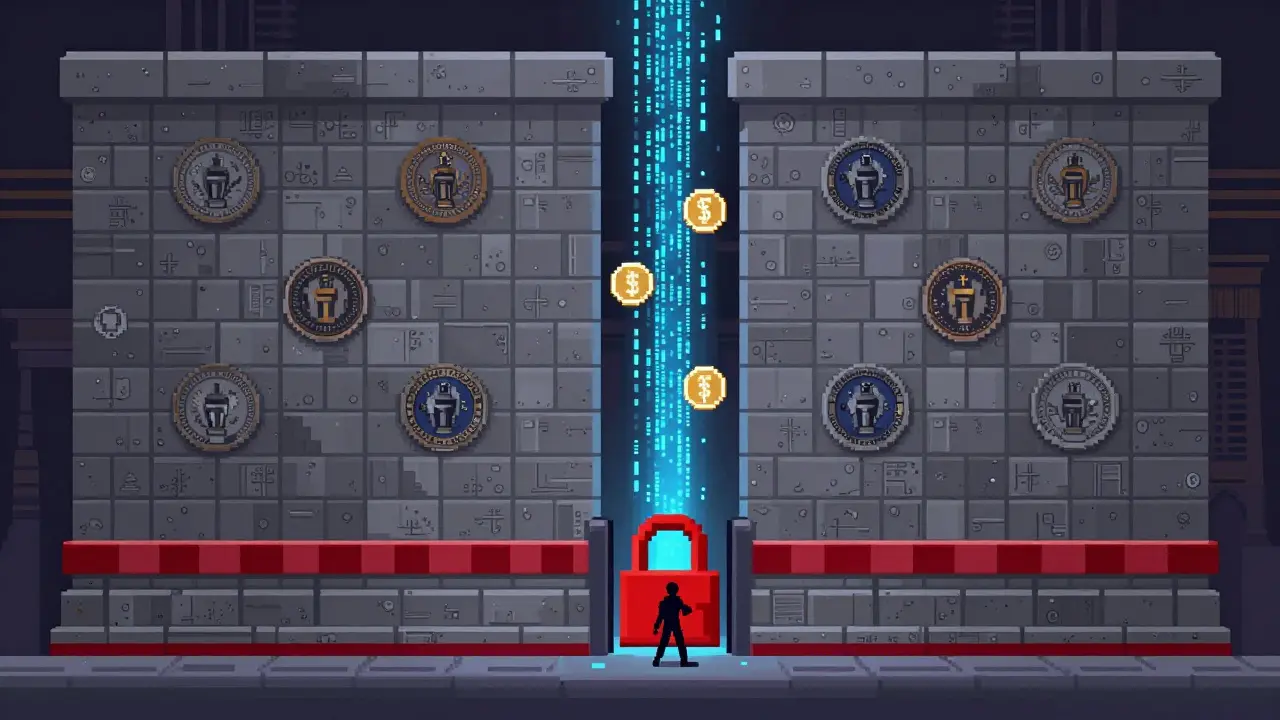
At the heart of the restriction sits Law No. 194 of 2020legislation enacted by the Central Bank of Egypt prohibiting unlicensed crypto activities. Passed in late 2020, this banking system law explicitly bans the issuance, trading, promotion, or operation of any cryptocurrency without approval from the Central Bank of EgyptCBE. As of March 2026, the bank has not issued a single license for crypto operations. This means every transaction involving digital assets on domestic soil technically violates banking regulations.
Why does this matter for cross-border transfers? When you send crypto abroad, you aren't just moving tokens; you are engaging in foreign exchange activity. The law treats this as unlicensed banking conduct. The Central Bank has repeatedly clarified that no private individual or company can facilitate these transfers legally. They view it as a threat to monetary policy stability. Consequently, any attempt to bypass the official currency channels using digital currencies is classified as illegal trade under the banking law.
Economic Pressure Driving the Underground Market
You cannot discuss the risk without acknowledging the reward that drives users to take it. The economic context in 2026 has shifted from theoretical concern to daily crisis. The Egyptian Poundthe official currency of Egypt subject to significant devaluation has lost approximately 68% of its value against the US dollar since 2020. Recent data indicates annual inflation reached 33.7%, eroding the real income of average citizens. For someone holding pounds in a bank account, the value drops faster than wages can grow.
This pressure has created a paradox: while the law bans crypto, the economy pushes people toward it. Reports suggest over 4 million Egyptians now hold crypto assets, roughly 8% of the adult population. Many treat it as a survival mechanism rather than an investment choice. If the pound were stable, compliance would be easier. Instead, the currency crisis forces a massive segment of the population into a "compliance-free" zone where they prioritize asset protection over legal adherence. This disconnect explains why enforcement is difficult, even as the law remains strict.
| Channel Type | Legal Status | Average Cost | Risk Level |
|---|---|---|---|
| Traditional Banking | Fully Compliant | High (Strict Caps) | Low (Limited Access) |
| Crypto Transfers | Prohibited | Low Fees (1.5-3%) | Extremely High |
| Remittance Companies | Licensed | Moderate (Up to 8%) | Moderate (Delays) |
Penalties That Change Your Life
Most users understand the concept of "risk," but few grasp the severity of the penalty structure in Egypt. Violations of banking laws are not merely civil matters. Under the provisions related to Law No. 194, authorities can impose prison sentences alongside heavy financial fines. Reports from 2025 confirm that fines for unauthorized crypto activities can reach EGP 10 million (roughly $213,000 USD). This figure alone exceeds the net worth of most individuals operating in this space.
Furthermore, the risk extends beyond the transfer amount. Authorities do not necessarily seize just the digital funds. Previous crackdowns have seen the seizure of hardware used to facilitate transactions, including computers and mobile devices. In some cases, individuals have faced charges related to money laundering because the source of funds is often difficult to trace through standard banking audits. The Central Bank has shown willingness to close platforms operating within the country; in May 2024, three local exchanges were shut down with operators fined heavily. While individual users are often harder to catch, the precedent for aggressive enforcement exists.
Operational Challenges and Surveillance
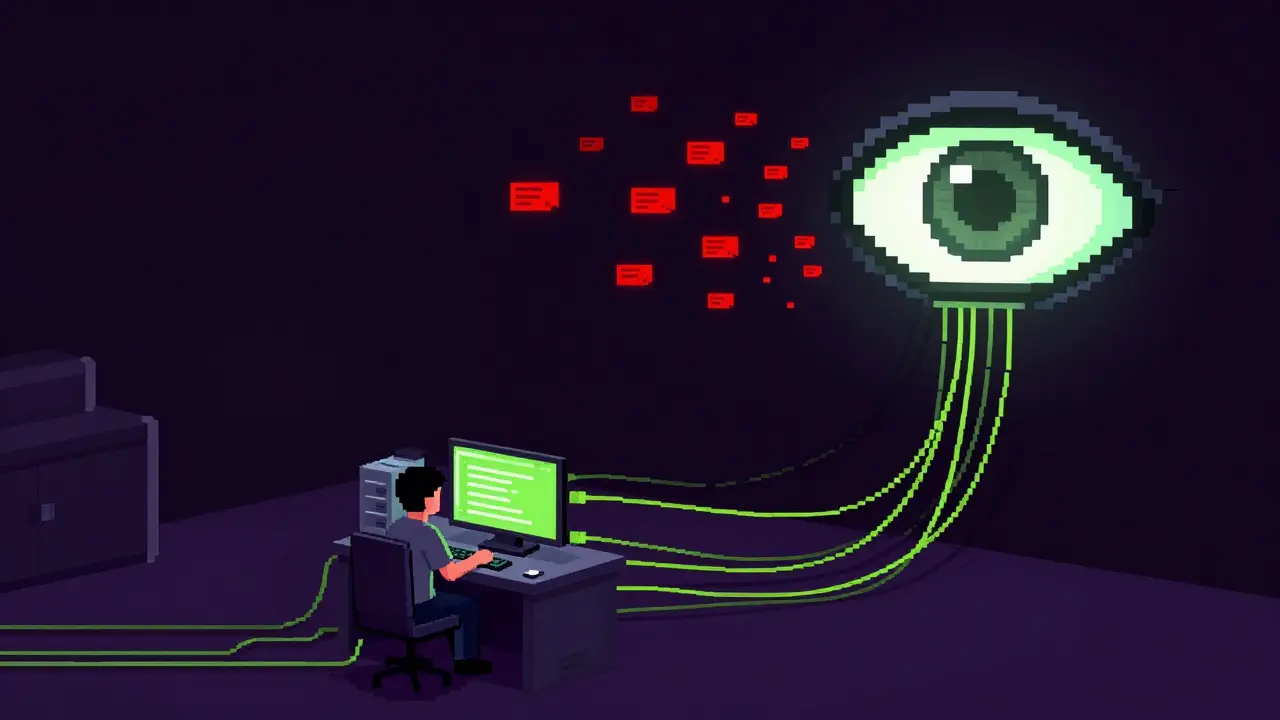
Navigating the technical side involves more than just setting up a wallet. You have to contend with state-level internet monitoring. Internet Service Providers (ISPs) in Egypt monitor traffic, and reports from digital rights groups indicate that nearly 78% of cryptocurrency-related websites are actively blocked as of late 2025. Attempting to access unblocked global exchanges requires tools like Tor or encrypted proxies, which themselves can draw suspicion from network administrators if flagged by national filters.
Even if you get the connection working, blockchain forensics pose a hidden threat. Governments have invested significantly in tracking technology since 2023. Tools like Chainalysis allow authorities to trace wallet addresses back to identity nodes, especially when fiat on-ramps or off-ramps are used. Using a centralized exchange like Binance often requires KYC (Know Your Customer) data linking the wallet to your ID. A simple cross-border transaction might flag this link to the regulator.
Users attempting to mitigate this often turn to privacy-focused coins like Moneroa privacy-centric cryptocurrency designed to obscure transaction details. However, swapping stablecoins for privacy coins adds friction and exposure to different market risks. It creates a complex layer of security management that requires constant vigilance against operational slips.
The Religious Dimension
A unique factor in Egypt's regulatory landscape is the influence of Islamic law on financial compliance. The Dar al-Ifta, Egypt's primary body for Islamic legislative interpretation, has issued a formal fatwā declaring cryptocurrency transactions forbidden (ḥarām). This ruling was reaffirmed recently, adding a cultural and ethical layer to the legal prohibition. For many citizens, this creates an internal conflict: obeying the state law versus following religious guidance.
While secular laws are enforced by police and courts, the religious ruling impacts social standing and business legitimacy. Even in a grey legal area, businesses risk reputational damage if associated with ḥarām instruments. Conversely, the lack of clear legal clarity allows some individuals to argue the line between personal savings (which might be interpreted differently than trading) versus commercial banking operations.
Is There Hope for Legalization?
The current landscape is rigid, but signals from the government suggest a long-term evolution is possible. The Central Bank established a Fintech and Innovation Unit in 2024, signaling awareness of global trends. While this unit hasn't authorized crypto yet, they have held closed-door consultations with international regulators. International bodies like the IMF have noted the need for better digital frameworks to support remittances.
However, experts disagree on the timeline. Optimistic projections suggest a regulated framework might appear in 2-3 years, driven by the sheer size of the shadow economy. Pessimists argue the religious and financial stability concerns will delay reform for 5-7 years. Until then, operating without a license remains a violation of banking codes. Any advice suggesting full safety is premature.
Can I buy crypto in Egypt without getting caught?
There is no guarantee of avoiding detection. While small-scale purchases go unreported frequently, internet filtering and ISP monitoring can flag suspicious patterns. Authorities have acquired basic blockchain analysis capabilities that can link wallet activity to IP addresses.
What happens if my crypto transfer is frozen?
If authorities identify an unlicensed transaction, they can freeze assets tied to your accounts. Additionally, banks may report suspected violations to the National Agency for Data Protection, potentially freezing your traditional bank accounts linked to the crypto activity.
Are there any legal ways to use digital assets in Egypt?
Currently, there are no licenses issued for crypto trading or payment processing in Egypt as of early 2026. The Central Bank maintains a total prohibition on public dealings with cryptocurrencies until a specific legal framework is adopted.
Does the government track P2P trades?
Yes. Peer-to-peer transactions conducted via major platforms are often logged. Since these platforms require identity verification, the data is accessible to authorities upon request during investigations. Untraceable methods carry higher technical complexity and remain risky.
Will the ban change soon?
Recent discussions by the Central Bank's Fintech Unit hint at future frameworks, but no official timeline exists. Experts predict potential reforms within 2-5 years, depending on how well the state manages inflation and digital finance pressures.




Jamie Riddell
March 31, 2026 AT 20:07Reading this gives me chills knowing how hard people struggle for survival without breaking laws
Markus Church
April 1, 2026 AT 00:39The legislative framework appears quite stringent against private asset movement across borders
Leah Lara
April 1, 2026 AT 16:37Just stick to cash
Chris R
April 3, 2026 AT 00:47We see similar struggles in Lagos though our legal battles differ significantly
Justin Smith
April 4, 2026 AT 01:27Law 194 explicitly prohibits unlicensed issuance under Central Bank oversight protocols
Wade Berlin
April 4, 2026 AT 16:02Guess the government wants you to lose everything before you try saving something
Colin Finch
April 5, 2026 AT 16:04Money loses value like sand through fingers while we try holding onto digital stones
Shubham Maurya
April 6, 2026 AT 17:23This is scary 😱 why does anyone bother living there 🤦♂️
Justin Garcia
April 6, 2026 AT 19:43You sound clueless about basic risk assessment involved here
Tiffany Selchow
April 7, 2026 AT 08:04They should just ban it globally instead of letting criminals run wild
Addy Stearns
April 8, 2026 AT 21:00Economic systems function like vast machines that grind down the individual operator when lubrication fails completely. History repeats itself because leaders forget the lessons taught by collapsing currencies of past centuries. People seeking preservation methods find themselves trapped between illegal pathways and worthless savings accounts. The psychological toll of watching wealth vanish overnight creates deep anxiety within families trying to survive another month. Digital assets offer a glimmer of hope yet come with heavy shadows of potential imprisonment and confiscation. Authorities track movements on blockchains with increasing sophistication despite claims of privacy tools existing online. Religious interpretations complicate matters further for those guided strictly by traditional texts alongside secular statutes. Every transaction carries hidden costs beyond fees paid to exchanges or brokers facilitating transfers across national lines. Trust becomes scarce when institutions meant to protect citizens actively monitor and penalize financial independence efforts. Survival instincts push populations into grey zones where law enforcement cannot reach every corner of the economy. Global networks connect individuals fighting similar battles in different nations facing identical currency devaluation pressures. Technology evolves faster than legislation allowing citizens temporary windows of opportunity before crackdowns occur inevitably. Those navigating these waters understand the stakes better than observers sitting comfortably abroad analyzing charts. Fear of losing access to funds forces many to hold physical coins or paper records far removed from digital traces. The cycle of inflation eats purchasing power until foreign exchange controls become absolute walls around domestic economies. Hope remains fragile yet persistent even when official channels appear entirely closed to ordinary residents needing liquidity.
Raymond K
April 10, 2026 AT 00:18Its really brave but pls stay safe my friend
Shaira Vargas
April 11, 2026 AT 21:42I am scared for everyone who tries this because money takes lives away
Samson Abraham
April 13, 2026 AT 11:28Legal compliance remains the only path forward despite personal hardships faced daily
Cara Boyer
April 14, 2026 AT 02:17Deep state tracks your wallet everywhere even via blockchain 🔒👀 typos included
athalia georgina
April 14, 2026 AT 07:17why would you risk prison when family needs you there 💔
joshua kutcher
April 15, 2026 AT 21:09Many seek stability elsewhere but home holds deep roots worth protecting carefully
Joy Crawford
April 16, 2026 AT 01:54feels sad reading all this 😢 people suffer for no reason sometimes
Beverly Menezes
April 16, 2026 AT 14:16Peace is important but hunger drives us to do desperate things too
Lisa Miller
April 16, 2026 AT 15:40Hope springs eternal even when banks close their doors on us
Zackary Hogeboom
April 17, 2026 AT 04:27Honestly the tech moves faster than regulators ever could catch up
Alex Kuzmenko
April 18, 2026 AT 22:48teh govt shud think abt solutions insted of bans
Jay Starr
April 19, 2026 AT 19:22The system is designed to fail people just to maintain control powerfully
Matt Bridger
April 20, 2026 AT 13:06Such populist arguments ignore the fundamental economic principles at play fundamentally