You’ve probably heard of Steam. It’s the giant that dominates PC gaming distribution. But what if there was a version of it where you actually owned your games, earned real value from playing them, and cut out the middlemen taking huge cuts? That’s the promise behind Colizeum, a decentralized gaming platform built on the Ethereum blockchain. At the heart of this ecosystem sits its native cryptocurrency, ZEUM. If you’re seeing this ticker symbol pop up in chats or trading pairs, you’re likely wondering: what exactly does this coin do, and is it worth your attention?
Colizeum isn’t just another meme coin or a vague "metaverse" project with no product. It aims to be a community-run alternative to traditional app stores. The goal is simple but ambitious: bridge the gap between Web2 (traditional internet) and Web3 (blockchain-based internet) for gamers and developers alike. In this guide, we’ll break down how the ZEUM token works, why it exists, where you can buy it, and what the current market reality looks like for this specific asset.
The Core Concept: A Decentralized Game Store
To understand the ZEUM token, you first need to understand the platform it powers. Think of Colizeum as an attempt to build a "Steam for Blockchain." Traditional platforms take significant percentages of revenue from developers and players. Colizeum proposes a model where influencers, developers, and players share the value they create directly.
The platform provides several key services:
- Play-to-Earn (P2E) Infrastructure: Tools for developers to easily add blockchain economies into their games.
- Prediction Markets: Betting systems integrated into gaming environments.
- Tokenized Tournaments: Competitive gaming events with crypto rewards.
- Attention Marketplace: A system where visibility is bought and sold transparently on-chain.
For a developer, this means using Colizeum’s SDK (Software Development Kit) to plug blockchain features into existing games without starting from scratch. For a player, it means accessing these games through a unified storefront where transactions are transparent. The ZEUM token is the fuel that makes all these interactions possible.
What Is the ZEUM Token? (Utility Breakdown)
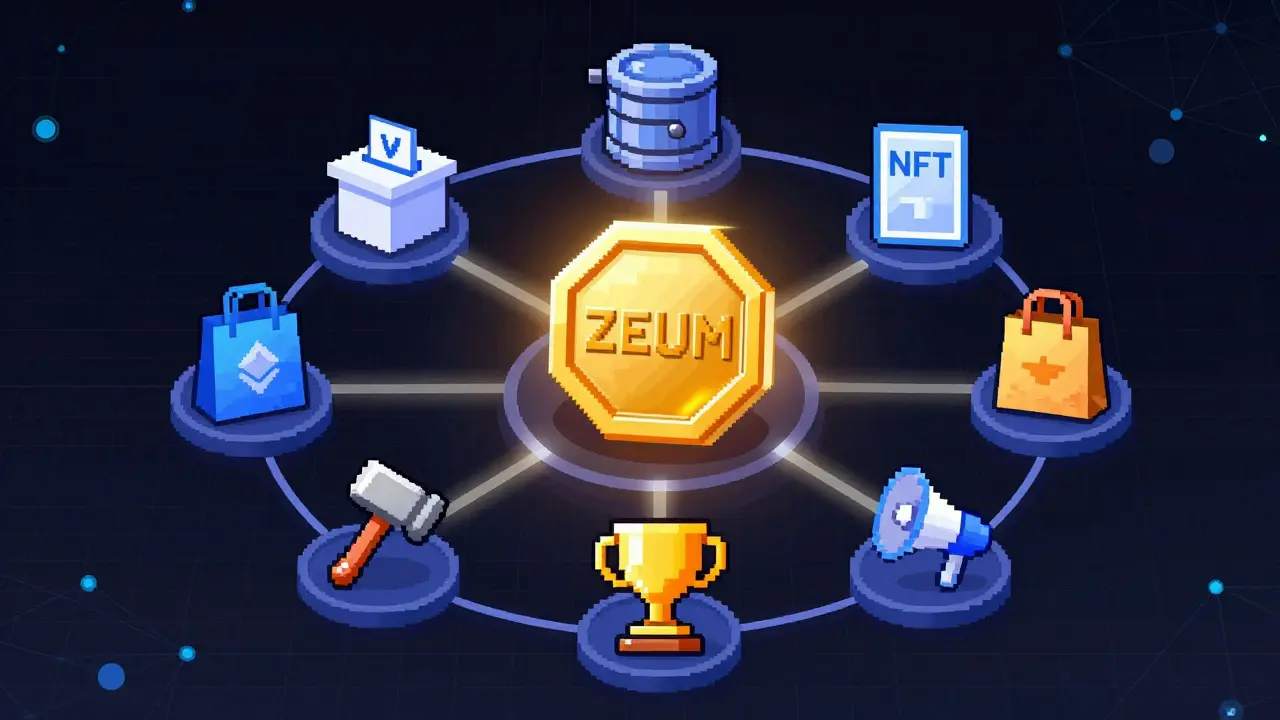
ZEUM is an ERC-20 utility token operating on the Ethereum network. This means it requires an Ethereum-compatible wallet (like MetaMask) to hold and transact. Unlike speculative tokens that rely solely on hype, ZEUM has seven documented use cases within the Colizeum ecosystem. Here is how the token is actually used:
- Governance: Holders vote on which games get listed in the Colizeum Game Store. This gives the community power over the platform’s content.
- Staking: Investors and developers can stake ZEUM to boost their earnings from the platform. As of recent data, millions of tokens have been staked, indicating active participation.
- Player Card Minting: Users need ZEUM to mint NFTs that represent their player profiles or achievements.
- In-Game Currency: Developers can choose to accept ZEUM for selling in-game assets, creating direct demand from players.
- NFT Minting Fees: When developers create digital assets (skins, weapons, items) as NFTs, they must pay fees in ZEUM.
- Tournament Entry: Participating in competitive tournaments often requires paying an entry fee in ZEUM.
- Advertising: In the Attention Marketplace, users stake ZEUM to increase the visibility of their games or purchase ad placements between other games.
This multi-utility design is crucial. If the platform grows, the demand for ZEUM should theoretically rise because it’s needed for almost every interaction. However, remember that utility only creates value if people are actually using the platform.
Tokenomics: Supply and Deflationary Mechanics
When analyzing any crypto project, you need to look at the supply dynamics. Colizeum has a fixed total supply of 1,000,000,000 (1 billion) ZEUM tokens. There will never be more than this amount created. This scarcity is a foundational element of its economic model.
The project describes ZEUM as a "deflationary" token. While specific burning mechanisms (how tokens are permanently removed from circulation) aren't always detailed in public docs, the concept implies that over time, the circulating supply may decrease due to fees or burns, potentially increasing the value of remaining tokens if demand stays constant or rises. Always check the latest official documentation for updates on burn rates, as these mechanisms can change.
Market Performance and Price History
Crypto markets are volatile, and ZEUM is no exception. Understanding its price history helps set realistic expectations.
| Metric | Value | Date/Context |
|---|---|---|
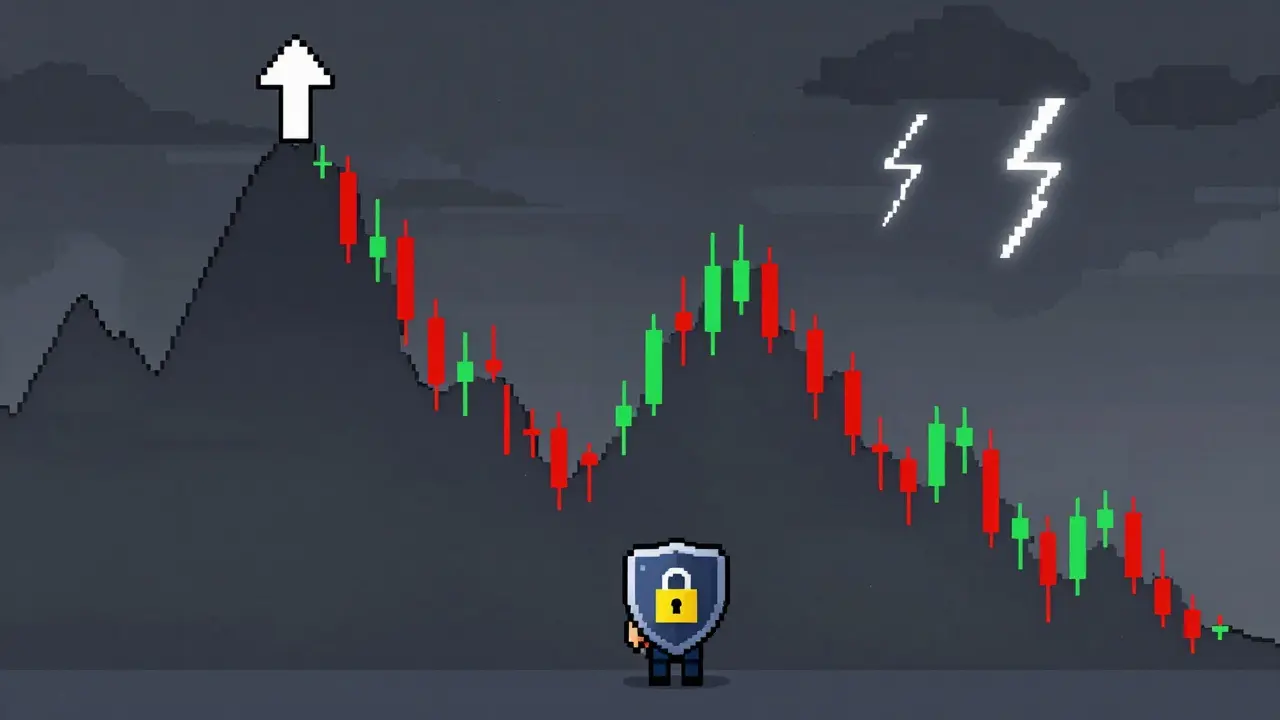
| All-Time High (ATH) | $0.1491 | May 4, 2022 |
| All-Time Low (ATL) | $0.000525 | September 13, 2024 |
| Current Price Range | $0.0008 - $0.0016 | Recent trading data (2023-2026 context) |
| Drop from ATH | ~98.37% | Reflecting broader crypto bear market trends |
The drop from its 2022 high is steep, mirroring the wider downturn in the gaming and metaverse sectors during the 2022-2023 bear market. Many projects in this space saw similar corrections. Currently, ZEUM trades primarily on exchanges like Gate.io, Uniswap V2, and PancakeSwap. It is notably absent from major centralized exchanges like Coinbase, which can limit accessibility for some retail investors.
How to Buy and Store ZEUM
If you decide to invest, here is the practical process. Since ZEUM is an ERC-20 token, you cannot hold it in a standard Bitcoin wallet. You need an Ethereum-compatible setup.
- Get a Wallet: Download a non-custodial wallet like MetaMask or Trust Wallet. Ensure you securely back up your seed phrase.
- Fund Your Wallet: Buy Ethereum (ETH) on a major exchange (like Binance, Kraken, or Coinbase) and transfer it to your wallet address. You’ll need ETH to pay for gas fees when swapping tokens.
- Use a DEX or CEX:
- Centralized Exchange: Create an account on Gate.io, deposit funds, and trade USDT for ZEUM.
- Decentralized Exchange: Connect your MetaMask to Uniswap or PancakeSwap. Swap your ETH for ZEUM using the contract address found on CoinGecko or CoinMarketCap to avoid scams.
- Verify the Contract: Always double-check the smart contract address. Scammers often create fake tokens with similar names. The official ZEUM contract is widely listed on trusted trackers.
Risks and Considerations
No investment is without risk. Here are specific factors to weigh before buying ZEUM:
- Adoption Dependency: The token’s value is tied entirely to the success of the Colizeum platform. If few developers use the SDK or few players join the store, demand for ZEUM drops.
- Liquidity Issues: Trading volume can be low compared to top-tier coins. This means large buys or sells can significantly impact the price (slippage).
- Data Inconsistencies: Some aggregators have shown conflicting data regarding circulating supply in the past. Always cross-reference multiple sources like CoinGecko and CoinMarketCap.
- Regulatory Uncertainty: Gaming tokens often face scrutiny regarding securities laws and gambling regulations, especially those involving prediction markets and tournaments.
Future Outlook: Predictions vs. Reality
Various analysis firms have projected gradual growth for ZEUM through 2030, suggesting modest increases year-over-year. However, treat these predictions with skepticism. They are mathematical models based on historical data, not guarantees. The real driver will be ecosystem activity. Watch for announcements about new game integrations, partnerships with established studios, or increases in daily active users (DAU). These metrics matter more than price charts.
Is Colizeum (ZEUM) a good investment?
Whether ZEUM is a good investment depends on your belief in the Play-to-Earn sector's long-term viability. It has fallen significantly from its highs, offering a lower entry point, but it also carries high risk due to low liquidity and dependency on platform adoption. Only invest what you can afford to lose.
Where can I buy ZEUM tokens?
ZEUM is primarily traded on Gate.io. It is also available on decentralized exchanges like Uniswap V2 and PancakeSwap. It is currently not listed on major exchanges like Coinbase or Binance.
What is the total supply of ZEUM?
The total supply of ZEUM is fixed at 1,000,000,000 (1 billion) tokens. No new tokens will be minted beyond this amount.
How does ZEUM differ from other gaming tokens?
Unlike tokens tied to a single game, ZEUM powers an entire ecosystem including a game store, SDK for developers, and marketplace. Its utility spans governance, staking, advertising, and transaction fees across multiple applications.
Do I need Ethereum to use ZEUM?
Yes. ZEUM is an ERC-20 token on the Ethereum blockchain. You need an Ethereum-compatible wallet and ETH to pay for transaction gas fees when interacting with the token or the Colizeum platform.