
Iranian crypto traders are caught in a high-stakes game of cat and mouse. Every time they connect to a foreign exchange like Binance or Kraken through a VPN, they risk exposure-not just from government monitors, but from the very platforms they’re trying to use. It’s not about breaking laws in the traditional sense. It’s about surviving a system that blocks you, tracks you, and freezes your assets without warning.
Why VPNs Are the Only Way In
Most international crypto exchanges block Iranian IP addresses outright. Binance, Coinbase, and others use geolocation to shut down access before you even log in. So traders turn to VPNs. Not just any VPN, though. They need one that’s fast, stable, and doesn’t leak their real location. Many use paid services like NordVPN or ExpressVPN, but others fall back on free options-often without knowing the danger. Free VPNs in Iran are a trap. Many of them log your traffic, sell your data, or even hand over your wallet addresses to third parties. Some are outright scams designed to steal private keys. A Tehran-based trader reported losing $14,000 after using a free VPN that quietly redirected his MetaMask connection to a phishing site. He didn’t realize his IP had been exposed until his account was frozen.The Nobitex Breach and the New Era of Surveillance
Before 2024, Nobitex was Iran’s go-to exchange. It didn’t require ID, didn’t ask for proof of address, and let users trade directly with Iranian rials. But in October 2024, two blockchain intelligence firms released a public bounty program targeting Nobitex. They didn’t just track transactions-they matched wallet addresses to real names, phone numbers, and even government-issued ID numbers. The result? Over 120,000 Iranian accounts were flagged. Exchange operators began freezing funds without notice. Some users lost everything. The Central Bank of Iran didn’t lift a finger to help. Instead, they doubled down on restrictions, making it illegal to use domestic exchanges for crypto-to-rial conversions. Nobitex’s role in this was chilling. Internal documents leaked in early 2025 showed the platform had been sharing user data with Iran Cyber Police (FATA) since 2023. Users thought they were trading anonymously. They weren’t. Now, even if you switch to a foreign exchange, your past activity on Nobitex can still be used to identify you.How Exchanges Detect You-Even With a VPN
It’s not enough to hide your IP. Modern crypto platforms use dozens of signals to spot Iranian users:- Device fingerprinting-Your browser, screen resolution, installed fonts, and even keyboard typing rhythm are analyzed.
- Transaction patterns-If you send small amounts to multiple wallets at 3 a.m. Tehran time, that’s a red flag.
- Withdrawal destinations-If your crypto is sent to wallets that previously interacted with Nobitex, you’re flagged.
- Timing anomalies-Most Iranian traders log in between 7 p.m. and 11 p.m. local time. Exchanges notice that.
The Underground Identity Market
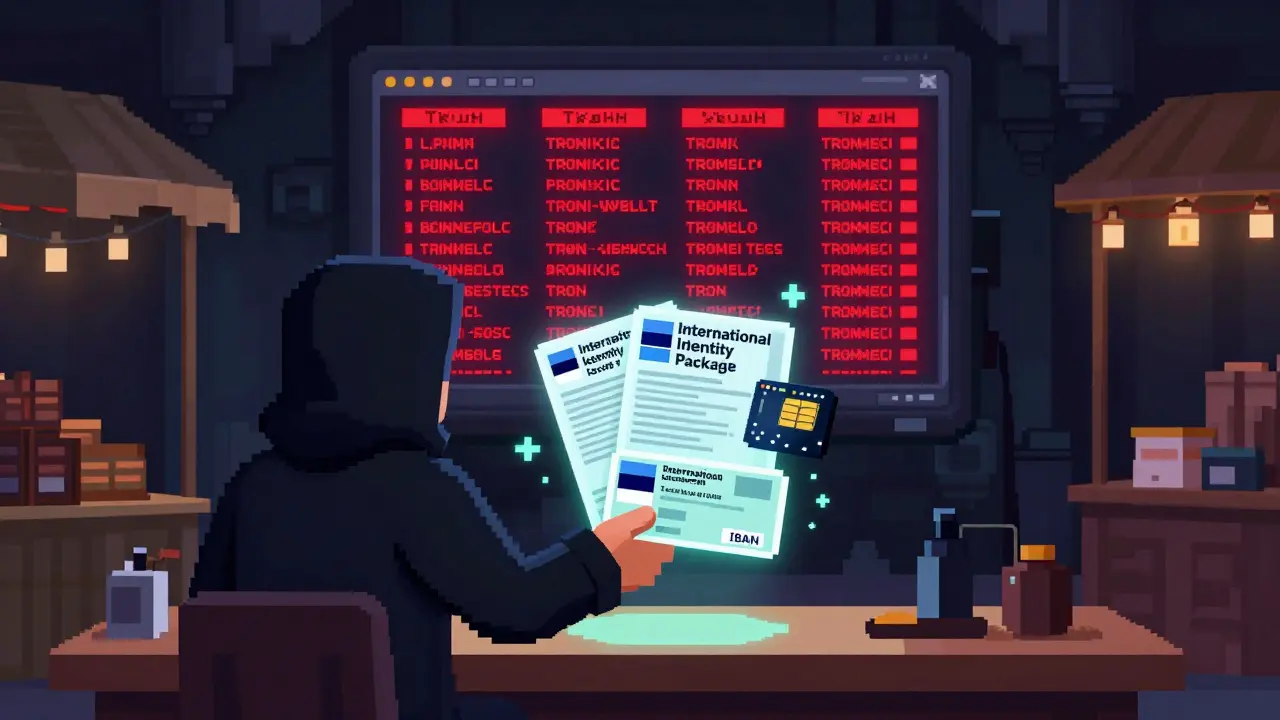
As detection got smarter, so did the response. A black market has sprung up around Iranian crypto users. For $200-$500, you can buy a full “international identity package”:- A fake Estonian or Georgian residency document
- A foreign bank account with an IBAN
- A SIM card from a non-Iranian country for SMS verification
- A step-by-step guide to bypassing KYC on Kraken or Bybit
The TRON Network Trap
Over 87% of all Iranian crypto activity flows through Nobitex. And 67% of that-over $2 billion in 2025-runs on the TRON blockchain. Why? Because TRON transactions are cheap, fast, and easy to hide. But here’s the catch: blockchain analysts now treat TRON as the Iranian crypto trail. Every TRON wallet that sends funds to a Nobitex-linked address gets tagged. Every wallet that receives funds from a known Iranian IP gets flagged. Even if you use a VPN, if your transaction touches TRON and then moves to an exchange, you’re in the system. The result? A chilling statistic: in July 2025, crypto inflows to Iran dropped 76% compared to the same month in 2024. The reason isn’t just regulation. It’s detection. Traders are losing faith. They’re not sure if their money is safe-even if they use the best VPN.
What Happens When Your VPN Drops
The biggest danger isn’t being caught. It’s being caught in real time. Imagine you’re trading on Binance. You’re using a premium VPN. Everything’s fine. Then, for a few seconds, your connection drops. Your real Iranian IP flashes onto the exchange’s servers. Within seconds, your account is locked. No warning. No appeal. Just frozen funds. This isn’t rare. Multiple users reported losing access during critical moments-when they were trying to withdraw during price spikes. Some lost $50,000 in a single second. Exchanges don’t care if it was accidental. They see an Iranian IP, and they act.What’s Next? The End of the VPN Game?
The tools are evolving. Some Iranian traders have started using Hamster Combat, a mobile game that rewards players with cryptocurrency. It’s not a direct exchange. It’s a way to earn crypto without touching a regulated platform. Others are turning to peer-to-peer (P2P) networks, using encrypted messaging apps to trade directly with strangers. But these are temporary fixes. Blockchain intelligence firms are now building AI models trained on Iranian trading patterns. They’re learning to predict behavior before it happens. The next step? Real-time monitoring of electricity usage. Iran’s Ministry of Energy tracks power consumption in real time. Mining rigs use massive amounts of electricity. If your home’s power usage spikes at 2 a.m. and your internet traffic matches crypto patterns, they’ll come for you. The game is changing. VPNs are no longer enough. The only safe strategy now is to minimize exposure: use burner wallets, never reuse addresses, avoid TRON, and never connect to an exchange from a device that’s ever been used on Nobitex.Final Reality: There’s No Perfect Solution
Iranian crypto traders aren’t criminals. They’re people trying to protect their money from inflation, sanctions, and a broken financial system. But the system they’re fighting has become smarter than ever. Detection isn’t just about IP addresses anymore. It’s about behavior, timing, hardware, and history. The days of using a free VPN and hoping for the best are over. The underground economy is growing, but so are the risks. Every step forward in circumvention is met with three steps of countermeasures. If you’re an Iranian crypto user today, you’re not just trading Bitcoin. You’re playing a high-risk game where the rules change every month, and the penalties are permanent.Can I still use Binance in Iran with a VPN?
Technically, yes-but it’s extremely risky. Binance started blocking Iranian IPs in 2021 and has since hardened its detection systems. Even with a premium VPN, your device fingerprint, transaction patterns, and wallet history can trigger an automatic freeze. Many users who thought they were safe lost access to their funds in 2024 and 2025. Binance no longer accepts Iranian users, and there’s no official appeal process.
Why is Nobitex so dangerous for crypto users in Iran?
Nobitex was Iran’s largest crypto exchange and processed over 87% of all Iranian crypto transactions in 2025. But in late 2024, it was revealed that Nobitex had been sharing user data-including wallet addresses and personal details-with Iran Cyber Police (FATA). This led to mass account freezes and a loss of trust. Even if you switch to a foreign exchange, your past activity on Nobitex can still be used to identify you. It’s now considered a surveillance tool, not a trading platform.
Are free VPNs safe for crypto trading in Iran?
No. Free VPNs in Iran are among the biggest risks for crypto traders. Many log your activity, sell your data, or redirect your traffic to phishing sites. Some even steal private keys. In 2025, multiple cases were reported where users lost thousands of dollars after using free services that turned out to be scams. Premium, well-reviewed VPNs with a no-logs policy are the only viable option-but even those can’t guarantee safety.
Can Iranian crypto traders avoid detection entirely?
There’s no foolproof way. Detection now uses device fingerprints, transaction timing, wallet history, and even electricity usage patterns. The most cautious traders use burner wallets, avoid TRON, never reuse addresses, and only connect from devices never used on Iranian platforms. But even then, the risk remains high. The system is designed to catch you, not to let you slip through.
What happened to crypto inflows to Iran in 2025?
Crypto inflows to Iran dropped sharply in 2025. Between January and July, total flows fell by 11% compared to 2024. By June, inflows were down over 50% year-over-year, and by July, the drop exceeded 76%. This collapse followed the Nobitex data leak and the launch of blockchain intelligence programs targeting Iranian wallets. Traders are losing confidence, and the tools that once worked-like simple VPNs-are no longer enough.