
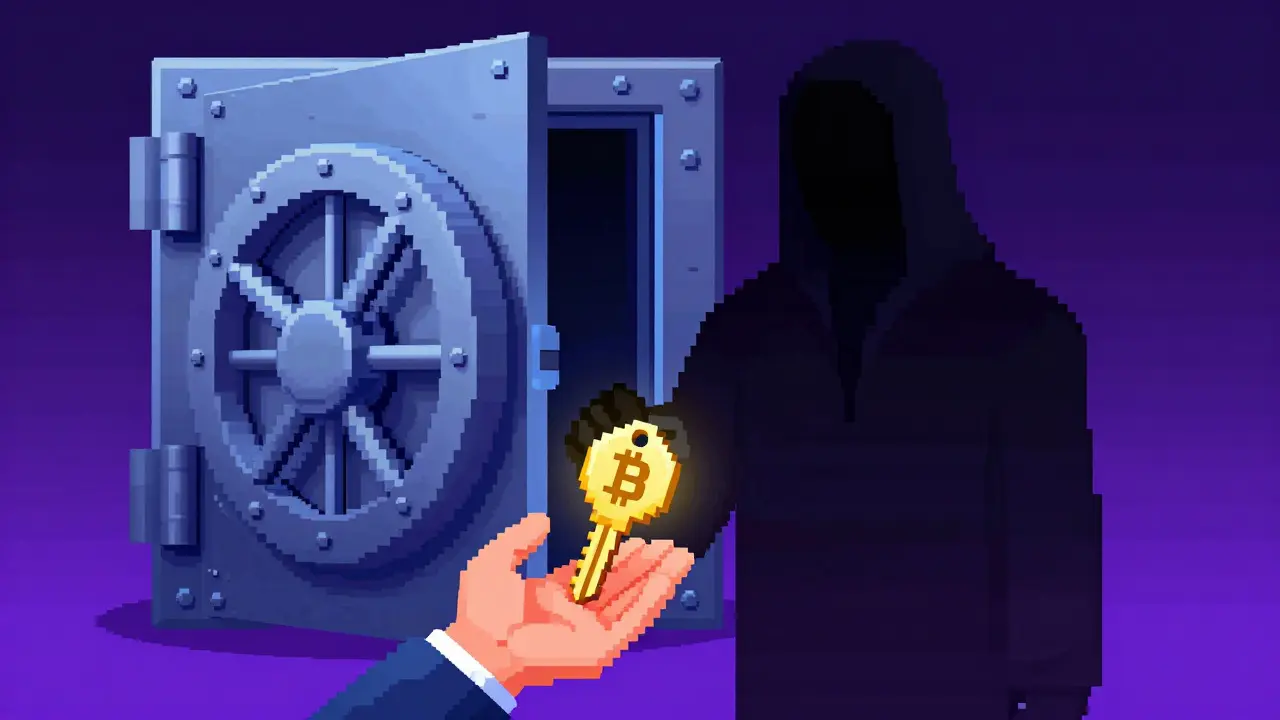
Imagine handing over the keys to your house to a stranger because they promised it would be easier to get in and out. That is exactly what happens when you leave your cryptocurrency on a Centralized Exchange(CEX) is a platform where a central authority facilitates trading and holds user assets in custodial wallets, creating significant security and operational risks for users.. You might think those tokens are yours, but technically, they belong to the exchange until you move them. This fundamental misunderstanding has cost investors billions. In 2023 alone, $3.8 billion was stolen from centralized exchanges, according to Chainalysis. If you hold digital assets on platforms like Binance or Coinbase, you need to understand that convenience comes with a heavy price tag: risk.
The Custodial Trap: Who Really Owns Your Tokens?
The biggest risk isn't just hackers; it's the architecture itself. When you deposit Bitcoin or Ethereum into a centralized exchange, you are using a Custodial ModelA system where the exchange holds the private keys to user funds, meaning users do not have direct control or ownership of their assets while deposited.. In this model, the exchange controls the private keys. Without those keys, you cannot move your money. It’s like having a bank account where the bank can freeze your funds at any moment without your consent.
Consider the collapse of FTX. Millions of users lost access to their funds overnight because the exchange had mismanaged or lent out their deposits. Or look at Mt. Gox, which collapsed in 2014 after losing 850,000 BTC. These aren't just bad luck stories; they are inherent flaws in trusting a third party with your wealth. According to Coinbase's own Terms of Service, funds held in your account are not your property until withdrawn. That legal distinction is crucial. If the exchange goes bankrupt, gets hacked, or decides to ban your country, your tokens are gone. You become an unsecured creditor, standing in line behind everyone else hoping for pennies on the dollar.
Hacking Vulnerabilities: The Weakest Link in Crypto
You might assume big exchanges have impenetrable security. The data says otherwise. A 2023 analysis by OSL Academy found that 97% of high-profile exchange hacks resulted from inadequate security protocols. Let’s break down why these breaches happen so often.
- Poor Multi-Signature Implementation: Only 38% of the top 20 exchanges use true multi-signature (multi-sig) wallets for hot storage. Multi-sig requires multiple keys to authorize a transaction, making it much harder for a single compromised key to drain funds.
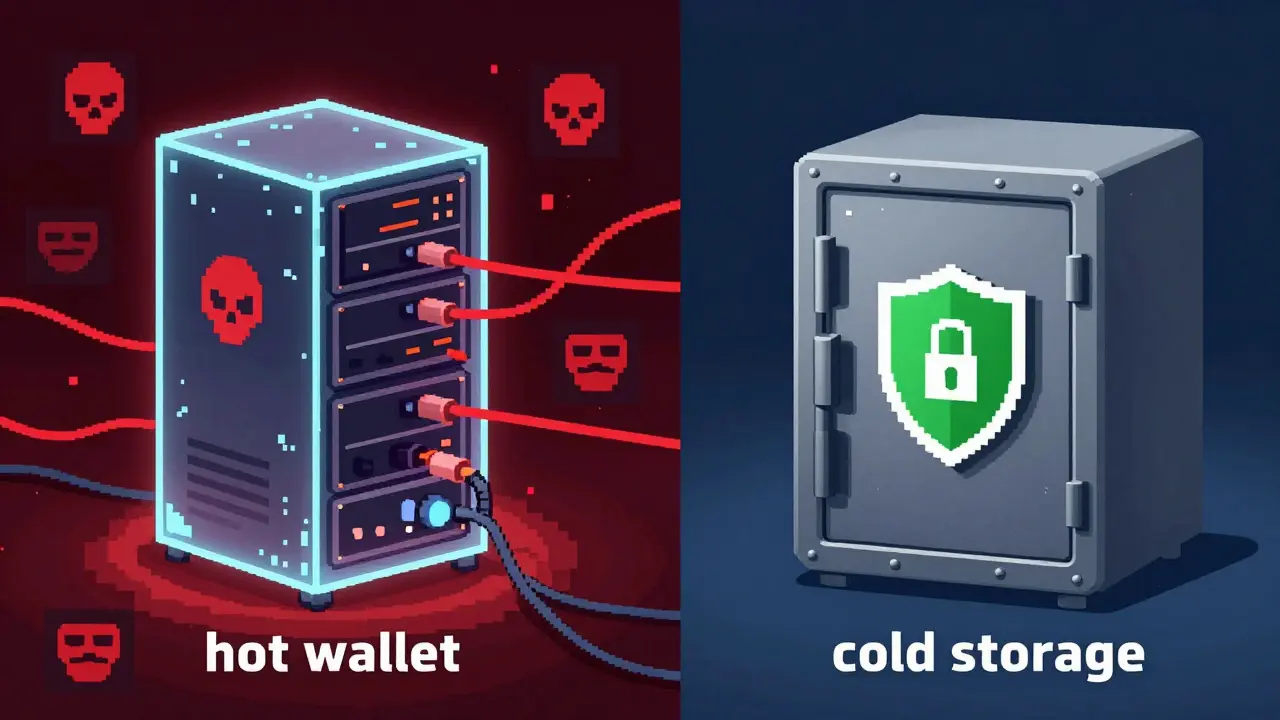
- Inadequate Cold Storage: Experts recommend keeping 95% of assets in offline cold storage. The average exchange only keeps 63% offline. That means nearly 40% of user funds are sitting in internet-connected "hot" wallets, vulnerable to remote attacks.
- Slow Patching: CoinGecko’s 2023 report showed that exchanges take an average of 47 days to fix known vulnerabilities. In cybersecurity, 47 days is an eternity. Hackers exploit zero-day flaws within hours.
Take the WazirX hack in November 2023. Attackers stole $570 million because the exchange failed to secure its API keys properly. Users like u/WazirXVictim on Reddit reported waiting 17 days for customer support to respond, with no compensation offered. This isn't an isolated incident. In 2023, 72% of major exchanges experienced at least one security incident. When you keep your tokens on a CEX, you are betting that their security team is better than the thousands of hackers targeting them every day.
Operational Risks: Withdrawals, Bans, and Delays
Even if no hacker breaks in, centralized exchanges pose daily operational threats. The most common complaint? Withdrawal restrictions. During periods of market volatility, exchanges often pause withdrawals to protect their liquidity. For example, during the May 2021 market crash, Coinbase restricted withdrawals for certain assets, affecting 1.2 million users who couldn't sell or move their coins.
Then there is the risk of regulatory pressure. Exchanges operate in a gray area globally. In 2023, Binance exited Canada due to regulatory scrutiny. If you live in a jurisdiction that suddenly bans crypto or freezes exchange accounts, your funds could be locked indefinitely. Trustpilot reviews highlight this fear: 1,240 complaints in Q1 2024 specifically mentioned "withdrawal delay."
Insurance is another myth many users fall for. A Harris Poll found that 87% of users believed their exchange funds were FDIC-insured. They are not. Most exchanges offer limited insurance that covers only a fraction of assets. Alex Thorn of Galaxy Digital noted that emerging market exchanges typically insure only 15-25% of assets. If a breach exceeds that limit, you lose everything above it. Relying on exchange insurance is like buying a cheap umbrella for a hurricane-it won’t save you.
CEX vs. DEX: Understanding the Trade-Offs
If centralized exchanges are so risky, why do people use them? Because they are convenient. Decentralized Exchanges (DEXDecentralized Exchange allows peer-to-peer trading directly from user wallets without a central intermediary, eliminating custodial risk but often offering lower liquidity.) like Uniswap don't hold your funds. You trade directly from your wallet. However, DEXs currently handle less volume and can be complex for beginners.
| Feature | Centralized Exchange (CEX) | Decentralized Exchange (DEX) |
|---|---|---|
| Custody | Exchange holds keys (High Risk) | User holds keys (No Custodial Risk) |
| Liquidity | Very High ($187B/mo for Coinbase) | Moderate ($54B/mo for Uniswap) |
| Hack Target | Frequent target (97% of hacks) | Rare target (Smart contract bugs only) |
| Fiat On-Ramp | Easy (Bank transfers, cards) | Difficult (Requires crypto first) |
| Regulatory Risk | High (Can freeze accounts) | Low (Permissionless) |
The table shows the clear trade-off. CEXs offer ease of use and high liquidity, which is why they handled 98.7% of all crypto trading volume in early 2024. But DEXs eliminate the single point of failure. If you prioritize safety over convenience, moving to a non-custodial solution is the logical step. Institutional investors already know this: 68% of firms managing over $100 million in crypto use third-party custodians like Fireblocks instead of leaving funds on exchanges.
How to Protect Yourself: Practical Steps
You don't have to quit centralized exchanges entirely, especially if you need fiat on-ramps. But you must change how you use them. Treat a CEX like a casino floor, not a vault. You go there to play (trade), but you never leave your winnings on the table.
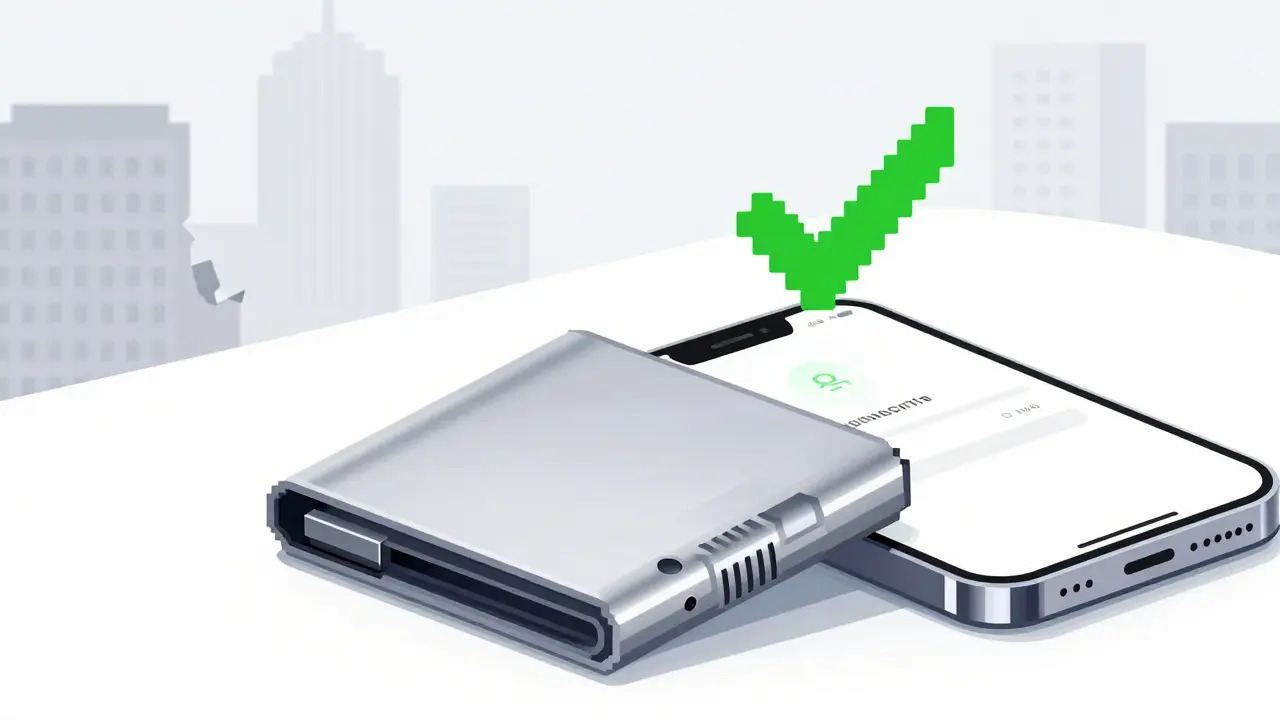
- Use Hardware Wallets: Only 12% of users implement hardware wallets, according to Ledger's 2024 survey. Devices like Trezor or Ledger keep your private keys offline. Move large holdings here immediately after buying.
- Enable Strong 2FA: Never use SMS verification. It is vulnerable to SIM-swapping attacks. Use an authenticator app like Google Authenticator or Authy. Only 41% of users do this correctly.
- Whitelist Withdrawal Addresses: Enable this feature on your exchange account. It ensures funds can only be sent to pre-approved addresses. Even if a hacker gets your password, they can't drain your account to a new wallet.
- Audit Security Monthly: Spend 15 minutes a month reviewing your account settings and checking for unauthorized logins. Most users never do this.
- Diversify Exchanges: Don't keep all your eggs in one basket. Split funds across two reputable exchanges to mitigate the risk of a single platform failing.
These steps take about 3-5 hours to set up initially. It’s a small investment compared to the potential loss of your entire portfolio. Remember, the goal is to minimize exposure. The longer your tokens sit on a CEX, the higher the cumulative risk of a hack, ban, or insolvency.
Regulatory Changes: What’s Coming in 2026?
The landscape is shifting fast. With the EU’s MiCA regulations fully effective since June 2024, exchanges now face stricter capital reserve requirements (€150,000 minimum) and real-time monitoring mandates. In the U.S., the SEC filed 57 enforcement actions against exchanges in 2023, double the previous year. This crackdown will likely force weaker exchanges out of business.
Galaxy Digital predicts that 35-40% of current exchanges will fail or consolidate within five years due to these pressures. For users, this means fewer options but potentially safer remaining platforms. However, regulation doesn't eliminate hacking risk; it just adds compliance costs. Smart contracts and self-custody remain the only true defense against systemic failure. As we move through 2026, expect more exchanges to offer native self-custody integrations, blurring the line between CEX and DEX. Until then, vigilance is your best tool.
Is it safe to keep large amounts of crypto on a centralized exchange?
No. Keeping large amounts on a CEX exposes you to custodial risk, hacking, and insolvency. Use exchanges for trading only, and transfer significant holdings to a hardware wallet for long-term storage.
What happens if my crypto exchange goes bankrupt?
If an exchange goes bankrupt, your funds may be frozen or lost. You become an unsecured creditor, and recovery is rare. Examples include FTX and Mt. Gox, where users lost most or all of their assets.
Are my funds on a crypto exchange insured?
Generally, no. Most exchanges do not offer full FDIC-style insurance. Some provide limited coverage for specific assets, but it rarely covers the total value of your holdings. Always check the specific terms of service.
How can I prevent my exchange account from being hacked?
Use strong, unique passwords, enable two-factor authentication (preferably via an app, not SMS), whitelist withdrawal addresses, and monitor your account regularly for suspicious activity.
Why do decentralized exchanges (DEXs) have lower hack rates?
DEXs are non-custodial, meaning they don't hold user funds. Hacks usually involve smart contract bugs rather than theft of pooled assets. Since users retain control of their private keys, there is no central honeypot for thieves to target.




Sylvia Mossman
June 8, 2026 AT 21:14Here we go again with the same tired narrative. You act like everyone is an idiot for using Binance or Coinbase. Look, I use CEXs because I want to trade efficiently without dealing with gas fees and slippage on Uniswap every five minutes. If you're so smart about security, why are you still posting on Reddit instead of living off-grid in a bunker? The 'not your keys, not your coins' mantra is just fear-mongering for people who can't be bothered to learn how to use a hardware wallet properly.
JEVON HALL
June 9, 2026 AT 09:27Sylvia makes a fair point about convenience but misses the nuance. 🛑 It’s not about being an idiot; it’s about risk management. Most retail users treat their exchange account like a savings account, which is dangerous. I always tell my clients: use the CEX for entry/exit points only. Once you’ve bought, move it to a Ledger or Trezor. It takes 10 minutes to set up. Why leave millions on the table for hackers when you have the tech to secure it yourself? 📉🔐
Alexander DeVries
June 10, 2026 AT 14:56Let’s get one thing straight. This isn’t just advice; it’s a mandate for survival in this space. If you are holding more than $500 on any centralized platform, you are gambling with money you cannot afford to lose. The statistics don’t lie. 97% of hacks happen due to poor protocols. Stop making excuses. Take control of your financial sovereignty now. Your future self will thank you for the discipline.
Madhu Menon
June 11, 2026 AT 18:55The philosophical implication here is profound. We delegate trust to institutions that are inherently flawed. It reminds me of Plato's cave; we see shadows of security but not the reality of custodial risk. :D When we hand over our private keys, we surrender not just assets but agency. Is true ownership possible in a digital age where code is law yet intermediaries hold the gavel?
Narendra Kulkarni
June 12, 2026 AT 11:56hey guys i totally agree with the post. its scary how many ppl dont know this. i used to keep all my btc on binance until i read about ftx. now i use a ledger nano x. its easy once u get the hang of it. dont be lazy like me lol. also whitelisting addresses is super important i forgot to do that last year and almost got hacked. stay safe frnds!
verna kennedy
June 13, 2026 AT 00:17It is frankly embarrassing how many people ignore basic cybersecurity principles. You would never leave your house unlocked, so why do you leave your crypto in hot wallets? The article states clearly that insurance is a myth. Do your own research before losing everything. Ignorance is not bliss; it is bankruptcy.
Kelly Tenney
June 14, 2026 AT 01:09I appreciate the detailed breakdown here. It’s really helpful to see the specific stats on cold storage percentages. I’ve been hesitant to switch to a hardware wallet because I’m worried about losing my seed phrase, but reading about the WazirX hack changed my perspective. Safety first! Has anyone had good luck with the new Ledger models?
Caralee Robertson
June 15, 2026 AT 16:13omg this is so true!! i was just talking to my friend about this yesterday. she keeps her doge on coinbase and i told her its risky but she said its fine. i hope nothing happens to her. i use a paper wallet for my long term holds. its kinda cool writing down the keys. feels like real treasure hunting lol. ty for sharing this info!
Greg Lewis
June 16, 2026 AT 09:18you think you know security but you dont. i work in IT and i see these breaches daily. the problem isnt the exchange its the user. they use password123 and reuse it everywhere. stop blaming the system for your incompetence. if you cant manage a simple authenticator app you deserve to get drained. harsh truth but true.
Dr Lynea LaVoy
June 16, 2026 AT 22:55Greg, while user error is a factor, systemic risks remain critical. As a researcher in fintech, I’ve seen how even perfect user hygiene fails against insider threats or regulatory freezes. The FTX collapse wasn’t about weak passwords; it was about commingling funds. We must advocate for structural changes, not just blame individuals. Education is key, but regulation is the shield.
Matthew Malone
June 17, 2026 AT 04:00This whole crypto movement is a joke. Foreign entities trying to bypass our banking systems. The SEC is right to crack down. If you’re hiding assets from regulators, you’re probably doing something illegal. Stick to traditional banks where your deposits are actually insured by the government. Don’t fall for this decentralized propaganda.
aaliyah zahid
June 17, 2026 AT 10:28Matthew, that’s a very narrow view. Crypto isn’t about evasion; it’s about accessibility for billions who are unbanked. In countries with hyperinflation, these tools save lives. Dismissing it as ‘propaganda’ ignores the global context. Let’s discuss solutions rather than shutting down innovation. We need inclusive financial systems, not exclusionary ones.
Erik Kirana
June 18, 2026 AT 08:53The author’s tone is condescending. ‘Imagine handing over keys to a stranger.’ Really? Most people understand the trade-off. They pay a fee for convenience. You don’t have to use a CEX. But telling others they are stupid for choosing liquidity over self-custody is elitist nonsense. Also, DEXs have rug pulls too. No solution is perfect. 🙄
dan kaffeman
June 19, 2026 AT 02:19You’re all missing the bigger picture. The elite are moving to stablecoins and centralized platforms because they control the narrative. Self-custody is for the little guy who doesn’t matter. When the crackdown comes, your hardware wallet won’t save you from KYC requirements on exchanges. Just accept that you’re a pawn in a larger game. Sad but true.
Meg Gran
June 19, 2026 AT 08:13Wow, Dan, such a dark outlook. 😒 You assume conspiracy at every turn. While skepticism is healthy, cynicism paralyzes action. Yes, regulations are tightening, but that doesn’t mean we should abandon security best practices. Using a hardware wallet doesn’t make you a pawn; it makes you responsible. Stop projecting your distrust onto others.
Alexis Abster
June 20, 2026 AT 20:12I feel for everyone who has lost money. It’s heartbreaking. But let’s focus on empowerment. You have the power to protect yourself. Start small. Buy a Ledger. Write down your seed phrase. Test it with $10. Then scale up. You are capable of securing your future. Don’t let fear stop you. Let’s build a safer community together. 💪❤️