
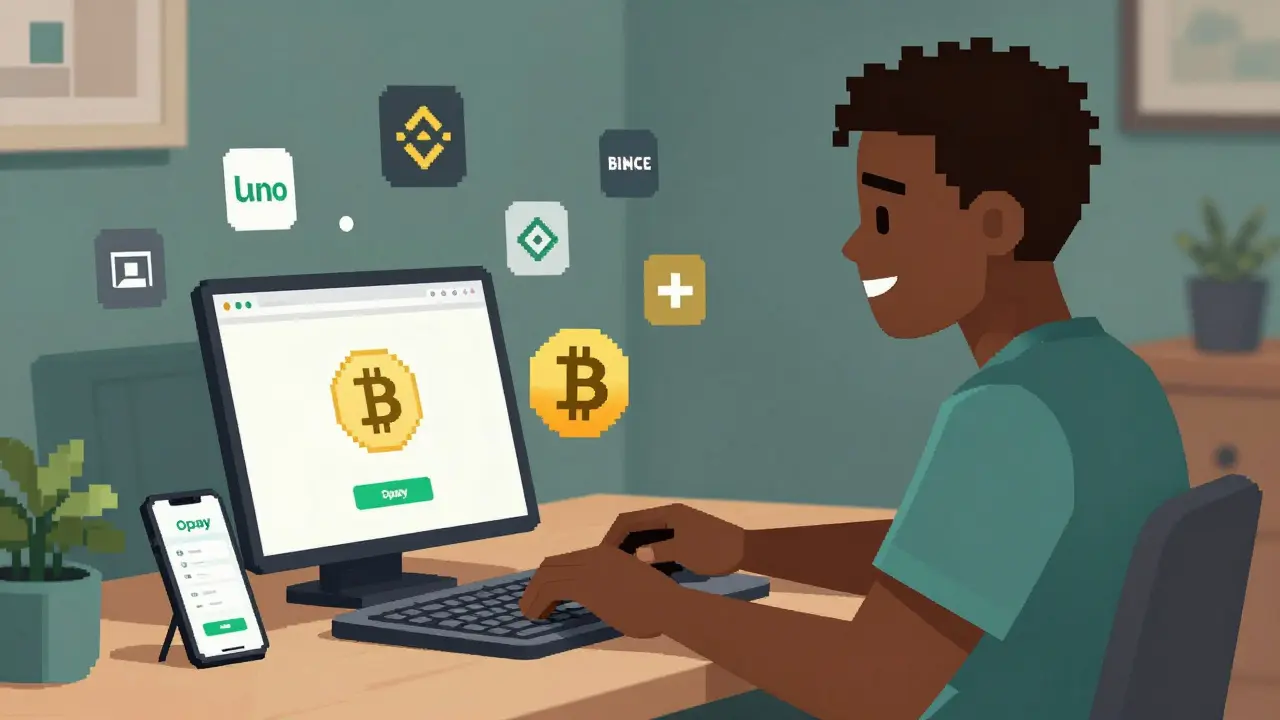
Buying cryptocurrency with Nigerian Naira (NGN) isn’t as simple as it used to be-but it’s still very possible. Since the Central Bank of Nigeria (CBN) restricted banks from handling crypto transactions in 2021, the market didn’t collapse. It adapted. Today, Nigerians have more ways than ever to turn naira into Bitcoin, Ethereum, USDT, and other digital assets, even without direct bank support. The key? Knowing which platforms work, which payment methods to use, and how to stay safe when the rules keep changing.
Choose the Right Platform for Your Needs
Not all crypto platforms are made the same in Nigeria. Your best option depends on whether you want simplicity, lower fees, or more control. There are three main types to consider.Crypto brokers like Luno is a good fit if you’re new. They let you buy crypto directly with naira using bank transfers or debit cards. The interface is clean, the process is fast, and you don’t need to understand trading charts. Luno supports direct NGN deposits and withdrawals, which means no extra conversion steps. It’s not the cheapest option, but it’s one of the most reliable.
Peer-to-peer (P2P) exchanges like Binance, Bybit, and LocalBitcoins are where most Nigerians trade today. These platforms connect buyers and sellers directly. You pick a seller offering Bitcoin or USDT at a certain price, pay them via bank transfer, mobile money, or even cash deposit, and the platform holds the crypto in escrow until you confirm payment. It’s like buying a phone from someone on Facebook Marketplace-but with built-in protection. The rates are often better than brokers because there’s no middleman markup.
OTC platforms like Breet are different. They don’t let you buy crypto. They only let you sell it. If you already own Bitcoin or Ethereum and want to turn it into naira quickly, Breet auto-converts it and sends the cash to your bank account in minutes. It’s fast, secure, and popular with traders who use crypto as a savings tool. But if you’re starting from zero, you’ll need another platform to buy first.
Then there’s Blockchain.com, which launched direct NGN support in March 2025. This was a big deal. Before this, you had to buy USDT or USD first, then swap it. Now you can log in, verify your ID in under 10 minutes, deposit naira, and buy Bitcoin or Ethereum instantly. It’s one of the few global platforms that officially recognize Nigeria’s market-and they’re not backing down.
How to Buy: Step-by-Step
Let’s say you want to buy $100 worth of Bitcoin using your naira. Here’s how it actually works on a real platform like Binance P2P:
- Sign up and verify your identity. You’ll need a valid ID (National ID, driver’s license, or international passport) and a selfie. Most platforms verify this automatically using AI, and it takes less than 5 minutes.
- Go to the P2P section. On Binance or Bybit, click "Buy" and select "NGN" as your currency. You’ll see a list of sellers with different prices, payment methods, and ratings.
- Compare offers. Look for sellers with high completion rates (above 95%) and low dispute rates. Avoid deals that are way below market price-they’re often scams. The average Bitcoin price in NGN is usually 1-3% higher than global rates due to demand and liquidity.
- Choose your payment method. Most sellers accept bank transfer (GTBank, Zenith, Access Bank), mobile money (Opay, Palmpay), or even cash deposit. Bank transfer is fastest and safest. Avoid platforms that ask you to pay via Western Union or MoneyGram-those are red flags.
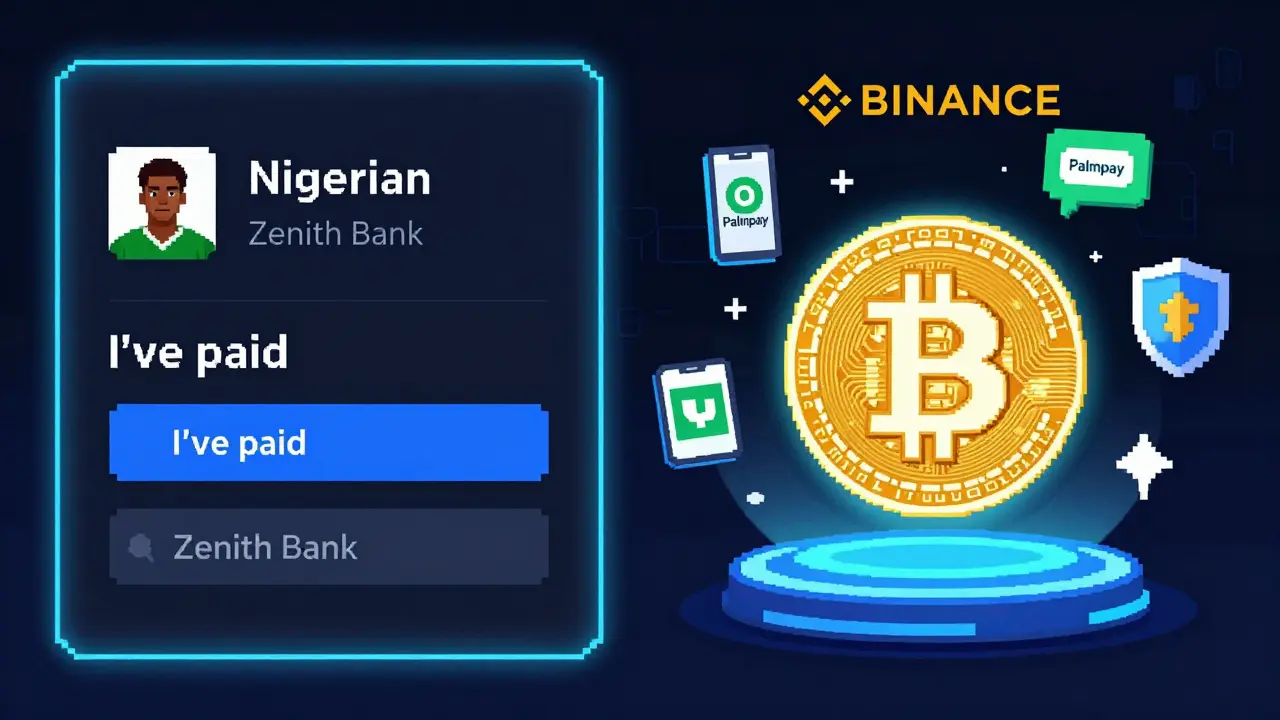
- Pay and wait. Once you select a seller, you’ll get their bank details. Transfer the naira amount exactly as shown. Then click "I’ve paid" and upload a screenshot of your transaction. The crypto will be released to your wallet within minutes if the seller confirms receipt.
If you’re using Blockchain.com or Luno, it’s even simpler. You deposit naira directly, click "Buy Bitcoin," enter the amount, and confirm. The crypto lands in your wallet in under 2 minutes.
Payment Methods That Actually Work
Banks won’t process crypto payments directly, but that doesn’t mean you can’t use your bank account. Here’s what works in 2026:
- Bank transfers - Still the #1 method. Use your personal account. Don’t use business accounts-some sellers reject them.
- Mobile wallets - Opay, Palmpay, and Moniepoint are widely accepted on P2P. You pay the seller’s mobile number, and they confirm receipt instantly.
- Credit/debit cards - Supported by Changelly and Blockchain.com. Visa and Mastercard work fine, but some cards get blocked by Nigerian banks. Try a different card if it fails.
- Apple Pay / Google Pay - Available on Changelly. Fast, secure, and no bank details needed.
- PayPal - Rarely accepted for NGN. Most sellers avoid it due to chargeback risks.
Pro tip: If your bank blocks a transaction, try transferring a small amount first (like ₦100) to test if it goes through. If it does, proceed with the full amount. Some banks allow crypto-related transfers if they’re labeled as "personal payment" or "investment."
Security Tips to Avoid Scams
Scams are common. But most are avoidable if you follow these rules:
- Never skip escrow. Always use platforms that hold the crypto until you confirm payment. Never send money first without the platform holding the asset.
- Don’t trust private messages. If someone contacts you on WhatsApp or Telegram offering "guaranteed low prices," it’s a scam. Legit platforms only operate through their official apps or websites.
- Use 2FA everywhere. Enable two-factor authentication on your wallet and exchange accounts. Google Authenticator is better than SMS.
- Keep your wallet private. Never share your recovery phrase. Never store it on your phone or cloud. Write it on paper and lock it up.
- Check seller history. On P2P, look at the seller’s trade volume, dispute rate, and feedback. Avoid new sellers with fewer than 50 completed trades.
One real story: A user in Lagos lost ₦250,000 because he paid a seller via bank transfer before the crypto was released. The seller disappeared. That’s why escrow matters.
What’s Legal and What’s Not
The CBN hasn’t made owning crypto illegal. You won’t go to jail for buying Bitcoin. But banks can’t process crypto payments. That’s why platforms use P2P and direct fiat gateways-they bypass the banking system entirely.
Foreigners can also buy crypto in Nigeria using the same platforms, as long as they complete KYC. You’ll need your passport and proof of address. Some platforms may ask for a utility bill or bank statement from your home country.
There’s no official tax law on crypto gains in Nigeria yet. But the Federal Inland Revenue Service (FIRS) has signaled it’s watching. Keep records of your buys and sells. If you’re making consistent profits, it’s smart to consult a tax advisor.
Why You Should Have More Than One Platform
Regulations change fast. A platform that works today might freeze withdrawals tomorrow. That’s why smart Nigerians use at least two platforms.
For example: Use Blockchain.com to buy your first Bitcoin. Then use Binance P2P to sell it for naira when you need cash. If Blockchain.com goes down for maintenance, you still have Binance. If Binance limits your daily limit, you can use Luno as backup.
Having options means you’re never stuck. And in Nigeria’s crypto market, flexibility isn’t optional-it’s survival.
What’s Next in 2026?
The market is growing. More global platforms are adding NGN support. Wallet providers are launching local payment integrations. Some fintech startups are even building crypto-based savings apps that pay interest in Bitcoin.
Expect more direct bank partnerships. More mobile wallet integrations. And possibly, clearer government guidelines. But until then, the system works because users found ways around the blocks.
Don’t wait for permission. Learn the tools. Use trusted platforms. Stay cautious. And remember: the goal isn’t to gamble-it’s to protect your money in a country where inflation eats away at the naira every month.
Can I buy Bitcoin with my bank account in Nigeria?
Yes, but not directly through your bank. You can use platforms like Blockchain.com, Luno, or Binance P2P to deposit naira via bank transfer. The platform receives the money, not your bank. Your bank sees it as a regular transfer to a merchant, not a crypto payment.
Is it safe to use P2P exchanges in Nigeria?
Yes, if you follow safety rules. Always use escrow, verify the seller’s history, and never pay before the crypto is locked in escrow. Binance and Bybit have built-in protections that make P2P trading safer than ever. Avoid off-platform deals.
Which crypto should I buy first in Nigeria?
Start with Bitcoin or USDT. Bitcoin is the most liquid and widely accepted. USDT (Tether) is pegged to the US dollar and is the most common trading pair on P2P exchanges. It’s easier to sell USDT for naira later than other altcoins.
Do I need to pay tax on crypto profits in Nigeria?
There’s no official crypto tax law yet. But the FIRS has said they’re monitoring transactions. Keep records of all buys and sells. If you’re making regular profits, consider setting aside 10-15% as a precaution. Tax rules may change in 2026.
Can I use PayPal to buy crypto in Nigeria?
Only on Changelly, and even then, it’s limited. PayPal is risky for sellers because of chargebacks, so most Nigerian P2P traders avoid it. Stick to bank transfers or mobile wallets for better success rates.
Why is Bitcoin more expensive in Nigeria than elsewhere?
Demand is high, and supply is limited. Many Nigerians use crypto to protect savings from inflation and currency devaluation. Since banks won’t help, people turn to P2P, which creates a premium. The price difference is usually 1-5% above global rates.
Gavin Francis
January 28, 2026 AT 19:58Dylan Morrison
January 30, 2026 AT 11:47laurence watson
February 1, 2026 AT 02:16Steven Dilla
February 1, 2026 AT 10:55Jack Petty
February 2, 2026 AT 08:42Akhil Mathew
February 3, 2026 AT 04:34Wayne mutunga
February 3, 2026 AT 07:29Dahlia Nurcahya
February 4, 2026 AT 05:07Raju Bhagat
February 4, 2026 AT 09:10Gurpreet Singh
February 4, 2026 AT 19:05Gareth Fitzjohn
February 5, 2026 AT 03:02Tom Sheppard
February 5, 2026 AT 20:30Brianne Hurley
February 6, 2026 AT 13:39Gary Gately
February 8, 2026 AT 12:19Crystal Underwood
February 10, 2026 AT 01:58Freddy Wiryadi
February 11, 2026 AT 13:22Lori Quarles
February 12, 2026 AT 16:14Jeremy Dayde
February 13, 2026 AT 03:02Kevin Thomas
February 13, 2026 AT 16:47Meenal Sharma
February 13, 2026 AT 17:33Brandon Vaidyanathan
February 14, 2026 AT 18:19