

Turkey Crypto Licensing Calculator
Result
Capital Requirements Table
| Provider Type | Minimum Capital (TL) | Approx. USD Equivalent | Key Additional Obligation |
|---|---|---|---|
| Exchange | 150,000,000 | $4.1 M | Live order-book surveillance |
| Custodian | 500,000,000 | $13.7 M | Cold-storage insurance coverage |
| Broker-Dealer (Hybrid) | 300,000,000 | $8.2 M | Separate AML unit for brokerage activities |
When you hear the phrase Turkey crypto restrictions, you probably picture a country caught between a booming crypto community and a strict regulator. The reality is a carefully crafted set of rules that let Turks buy, sell and hold digital assets, but draw a hard line at using them for everyday payments. Below you’ll find a clear breakdown of what the Central Bank of the Republic of Turkey (CBRT) and its partner agencies demand from users, exchanges, and investors.
Key Takeaways
- The CBRT bans crypto for direct payment of goods, services, or real estate.
- Crypto‑asset trading is legal, but only licensed Crypto Asset Service Providers (CASPs) may operate.
- Licensing requires a minimum capital of 150millionTL for exchanges and 500millionTL for custodians.
- All transactions over 15,000TL must pass strict AML/KYC checks.
- Future plans focus on expanding the Digital Lira and tightening enforcement.
Who’s in Charge? The Regulatory Cast
Central Bank of the Republic of Turkey (CBRT) is the primary authority that defines the prohibition on crypto payments and oversees the broader monetary policy. Capital Markets Board (CMB) issues licences to Crypto Asset Service Providers and monitors market conduct. Financial Crimes Investigation Board (MASAK) enforces anti‑money‑laundering (AML) rules and can levy heavy fines. Scientific and Technological Research Council of Turkey (TÜBİTAK) sets technical standards for blockchain security and smart‑contract audits.
What Exactly Is Banned?
The CBRT’s 2021 decree-still in force in 2025-bars any direct use of cryptocurrencies for paying goods, services, or real‑estate. In practice, this means you must convert crypto to Turkish Lira (TRY) on a licensed exchange before you can settle a coffee bill or buy a apartment. The rule also applies to peer‑to‑peer transfers that aim to bypass fiat conversion.
Legal Ways to Deal with Crypto
While you can’t spend crypto directly, you’re free to:
- Buy and hold Bitcoin, Ether, or local tokens on a licensed platform.
- Trade crypto‑currency pairs on exchanges that have CMB approval.
- Participate in regulated Initial Coin Offerings (ICOs) that meet CMB listing criteria.
- Use crypto‑backed financial products (e.g., futures) only if the instrument is explicitly permitted-most derivative contracts remain prohibited.
Licensing Crypto Service Providers
To operate in Turkey, a firm must become a Crypto Asset Service Provider (CASP) and satisfy two core communiqués released in March2025.
Key licensing conditions include:
- Formation as a joint‑stock company with fully paid‑up cash shares.
- Minimum capital: 150millionTL (≈$4.1M) for exchanges; 500millionTL (≈$13.7M) for custodial services.
- Appointment of a compliance officer and a dedicated AML team.
- Implementation of real‑time transaction monitoring that flags any trade above 15,000TL.
- Regular reporting to the CMB and periodic audits by MASAK.

Capital Requirements at a Glance
| Provider Type | Minimum Capital (TL) | Approx. USD Equivalent | Key Additional Obligation |
|---|---|---|---|
| Exchange | 150,000,000 | $4.1M | Live order‑book surveillance |
| Custodian | 500,000,000 | $13.7M | Cold‑storage insurance coverage |
| Broker‑Dealer (Hybrid) | 300,000,000 | $8.2M | Separate AML unit for brokerage activities |
How Enforcement Looks on the Ground
MASAK doesn’t shy away from penalties. In 2024, it slapped Binance TR with an 8millionTL fine for weak customer‑identification processes. The fine reflected the maximum statutory penalty and signalled that even global players must adapt to Turkish AML standards.
Future enforcement tools under discussion include:
- Instant freezing of bank or crypto accounts linked to suspicious activity.
- Mandatory reporting of any rented or shared exchange accounts.
- Expanded powers for MASAK to conduct on‑site inspections of CASP data centres.
The Digital Lira Project
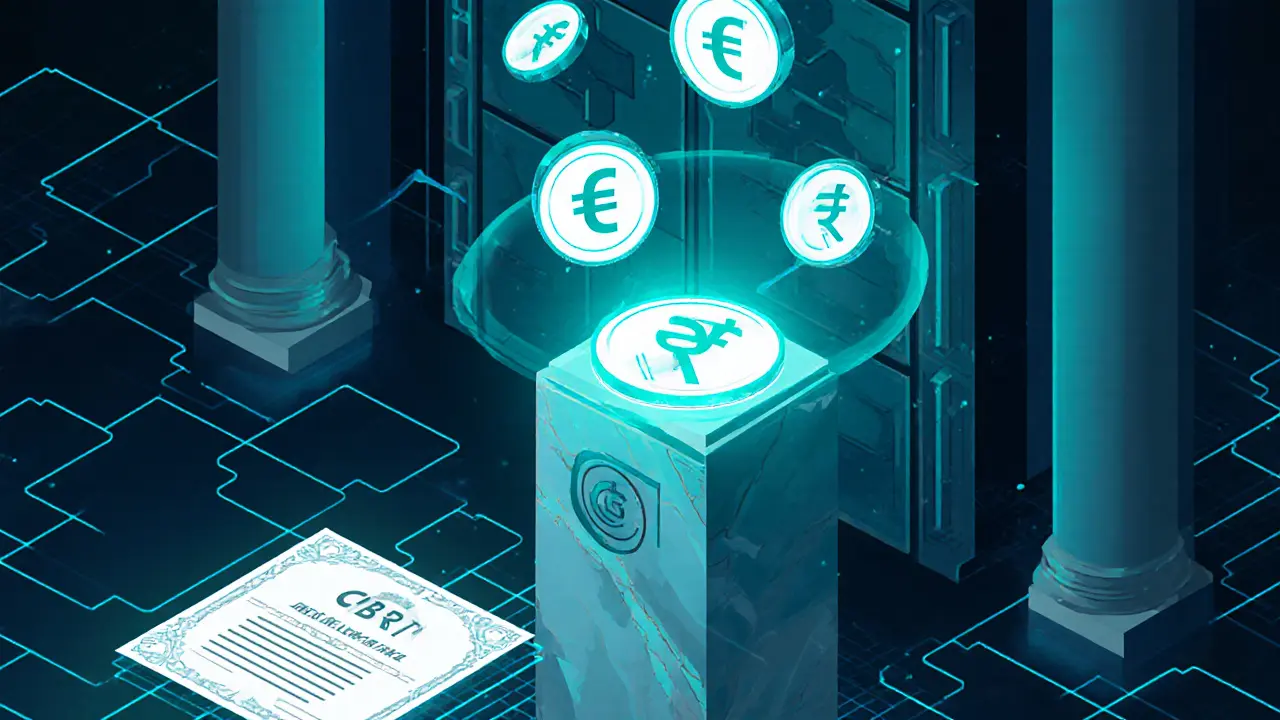
Digital Lira is the CBRT’s central‑bank‑digital‑currency (CBDC) initiative, aiming to offer a state‑backed, token‑based version of the Turkish Lira. While still in pilot mode, the project highlights the CBRT’s belief that digital money can be regulated far more tightly than decentralized crypto.
Key differences between the Digital Lira and private crypto assets:
- The Digital Lira is legal tender-any merchant can accept it without conversion.
- Transactions are recorded on a permissioned ledger overseen by the CBRT.
- Privacy is limited; users must undergo KYC similar to bank accounts.
Why Turkey Keeps the Payment Ban
Turkey’s inflation rate has hovered above 40% in recent years, prompting many citizens to hedge with crypto. However, the CBRT worries that widespread crypto payments could erode monetary policy effectiveness and destabilise the Lira. By allowing trading but blocking payments, regulators keep a watchful eye on capital flows while preserving the Lira’s status as the sole legal tender.
In practice, this creates a “dual‑track” market: a vibrant speculation arena on licensed exchanges, and a parallel underground of users who jump to foreign platforms to bypass AML checks. The latter remains a focal point for MASAK’s future crackdown efforts.
What This Means for Investors and Users
If you’re a Turkish resident looking to dip your toes into crypto, here’s a quick checklist:
- Choose a CMB‑licensed exchange (look for the “CMB‑approved” badge on the homepage).
- Be ready to verify your identity for any trade over 15,000TL.
- Never attempt a direct crypto‑to‑merchant payment; always convert to TRY first.
- Keep records of each transaction-MASAK can request them within 30days.
- Stay informed about new Digital Lira pilot phases that might offer lower‑fee, instant payments.
Looking Ahead: Tokenization and Beyond
Even with the payment ban, Turkey is gearing up for tokenized real‑world assets. Regulations released in late 2025 hint at a framework for tokenizing real estate, gold, and other high‑value assets. Those tokens would still be traded on licensed platforms, but settlement would always revert to TRY, preserving the central bank’s control.
For tech‑savvy investors, tokenization opens a new avenue: you can buy a fraction of a property without the traditional paperwork, yet the transaction remains under CMB oversight. Expect more CASPs to launch dedicated token‑markets in 2026.
Frequently Asked Questions
Can I use Bitcoin to pay my coffee in Istanbul?
No. The CBRT’s payment prohibition means you must convert Bitcoin to Turkish Lira on a licensed exchange before you can settle the bill.
Are foreign crypto exchanges legal for Turkish users?
Turkish residents can access foreign platforms, but MASAK can still pursue AML violations if the exchange does not cooperate with Turkish authorities. Marketing directly to Turkish consumers without a local licence is prohibited.
What capital do I need to start a crypto exchange in Turkey?
The CMB requires at least 150millionTL (about $4.1million) in paid‑up capital for an exchange, plus a compliance framework that meets MASAK’s AML standards.
How does the Digital Lira differ from private crypto?
The Digital Lira is issued by the CBRT, is legal tender, and operates on a permissioned ledger with mandatory KYC. Private crypto assets remain decentralized, are not legal tender, and are subject to the payment ban.
What are the penalties for non‑compliant crypto activity?
MASAK can levy fines up to 8millionTL, order account freezes, and refer criminal cases for money‑laundering violations. In extreme cases, licenses can be revoked.


Mark Camden
January 18, 2025 AT 19:51Regulators have a duty to protect the monetary system, and the Turkish central bank is following that principle by preventing crypto from undermining the lira. By channeling trading through licensed CASPs, they create accountability and reduce the risk of money‑laundering. This approach also safeguards consumers from unvetted platforms that could disappear overnight.
Evie View
January 27, 2025 AT 03:51The whole "let's regulate but not let people pay with crypto" nonsense is a slap in the face to anyone trying to innovate. You force everyone into a fiat‑centric loop while pretending to be progressive. It's infuriating how the authorities claim they'll protect us yet choke the very utility we need.
Kate Roberge
February 4, 2025 AT 11:51Honestly, the ban on payments is just a way for the government to keep its grip on cash flow. If they really cared about innovation they'd let merchants accept crypto and tax it properly. Instead they build a wall and call it consumer protection.
Oreoluwa Towoju
February 12, 2025 AT 19:51For anyone new to the scene, start by picking a CMB‑approved exchange, verify your ID for trades over 15k TL, and always convert to TRY before buying a coffee. Keep records – MASAK can request them within a month.
Jason Brittin
February 21, 2025 AT 03:51Cool article, but let's be real – those licensing fees are huge. 🤷♂️ If you have $4 M, go ahead, set up an exchange. Otherwise, just trade on the big foreign platforms and hope the regulators forget you.
Amie Wilensky
March 1, 2025 AT 11:51Interesting-however, note that the capital requirements: 150,000,000 TL for exchanges, 500,000,000 TL for custodians, and 300,000,000 TL for hybrid broker‑dealers; these figures are non‑negotiable, and compliance officers must be appointed, as stipulated by the CMB.
MD Razu
March 9, 2025 AT 19:51When we examine the Turkish regulatory fabric, we observe a deliberate bifurcation between speculative freedom and transactional prohibition, a duality that reflects centuries‑old monetary conservatism fused with modern technological apprehension. First, the CBRT's 2021 decree unequivocally bars the use of crypto assets for direct payments, compelling conversion to the lira, which serves as a bulwark against potential erosion of monetary policy effectiveness. Second, the CMB's licensing regime imposes steep capital thresholds-150 million TL for exchanges, 500 million TL for custodians, and 300 million TL for hybrid broker‑dealers-thereby filtering out under‑capitalized entrants. Third, MASAK's enforcement mechanisms, exemplified by the 8 million TL fine levied on Binance TR, signal an escalating willingness to penalize non‑compliance. Fourth, the requirement for real‑time monitoring of transactions exceeding 15 000 TL introduces a surveillance layer akin to traditional banking AML protocols. Fifth, the emerging Digital Lira project illustrates the state's intent to provide a regulated digital alternative that retains full KYC oversight, contrasting sharply with decentralized crypto's anonymity. Sixth, future tokenization frameworks for real‑world assets will likely maintain settlement in TRY, preserving central bank control while unlocking fractional ownership. Seventh, the practical upshot for investors is a landscape where speculative trading thrives within licensed venues, yet any attempt to bypass fiat conversion invites legal risk. Eighth, the dual‑track market creates a shadow economy of users seeking offshore platforms, a phenomenon that MASAK aims to clamp down upon through expanded inspection powers. Ninth, the regulatory environment fosters a paradox: a vibrant speculation arena coexists with a restrictive payments regime, shaping user behavior in nuanced ways. Tenth, stakeholders must therefore calibrate their strategies, balancing compliance costs against the potential upside of operating within Turkey's structured crypto ecosystem.
Charles Banks Jr.
March 18, 2025 AT 03:51Wow, a 15‑sentence essay-good luck fitting that on a comment box. Guess they really love their policy manuals.
Ben Dwyer
March 26, 2025 AT 11:51Nice points, but remember to stay calm and keep your trading disciplined. No need to get worked up over regulations.
Lindsay Miller
April 3, 2025 AT 20:51Got it. Use a licensed exchange, verify identity, convert to lira before buying anything. Simple steps keep you safe.
Katrinka Scribner
April 12, 2025 AT 04:51Wow, this is super helpful! 😍 I feel way more confident about trading now.
VICKIE MALBRUE
April 20, 2025 AT 12:51Great overview! Keep those updates coming.
Waynne Kilian
April 28, 2025 AT 20:51I totally agree with the optimism here – the regulated approach may actually pave the way for safer tokenized assets in the future. Let’s hope the authorities keep the process transparent.
Naomi Snelling
May 7, 2025 AT 04:51The government is definitely watching everything.
Michael Wilkinson
May 15, 2025 AT 12:51While the regulations are strict, they do provide a clear framework for compliance; ignoring them only invites harsher penalties.