

Buying Cryptocurrency digital assets like Bitcoin and Ethereum that operate on decentralized networks in Colombia feels like walking a tightrope without a safety net. You can buy it, sell it, and hold it, but the government doesn’t officially protect you if things go wrong. As of May 2026, the situation remains a complex mix of permission and peril. The short answer is: yes, it is legal to own crypto, but no, it is not regulated as money or a security.
This regulatory gray area creates a unique environment for investors. On one hand, you have the freedom to trade without heavy bureaucratic hurdles. On the other, you face significant risks from fraud, tax uncertainty, and a lack of consumer protection. If you are looking to navigate this market safely, understanding exactly where the lines are drawn-and where they aren’t-is critical.
The Core Legal Reality: Property, Not Money
To understand your rights, you first need to know what the law says crypto actually is. The Central Bank of Colombia (Banco de la República) has been clear since 2018: cryptocurrencies are not legal tender. This means a merchant in Bogotá cannot refuse to accept Bitcoin because they aren’t legally required to accept it as payment for goods or services.
Furthermore, the Financial Superintendency of Colombia (SFC) has ruled that cryptoassets are not securities under Law 964 of 2005. This distinction matters because it means banks and supervised financial institutions cannot manage these transactions or offer them as investment products. They fall outside the traditional banking infrastructure.
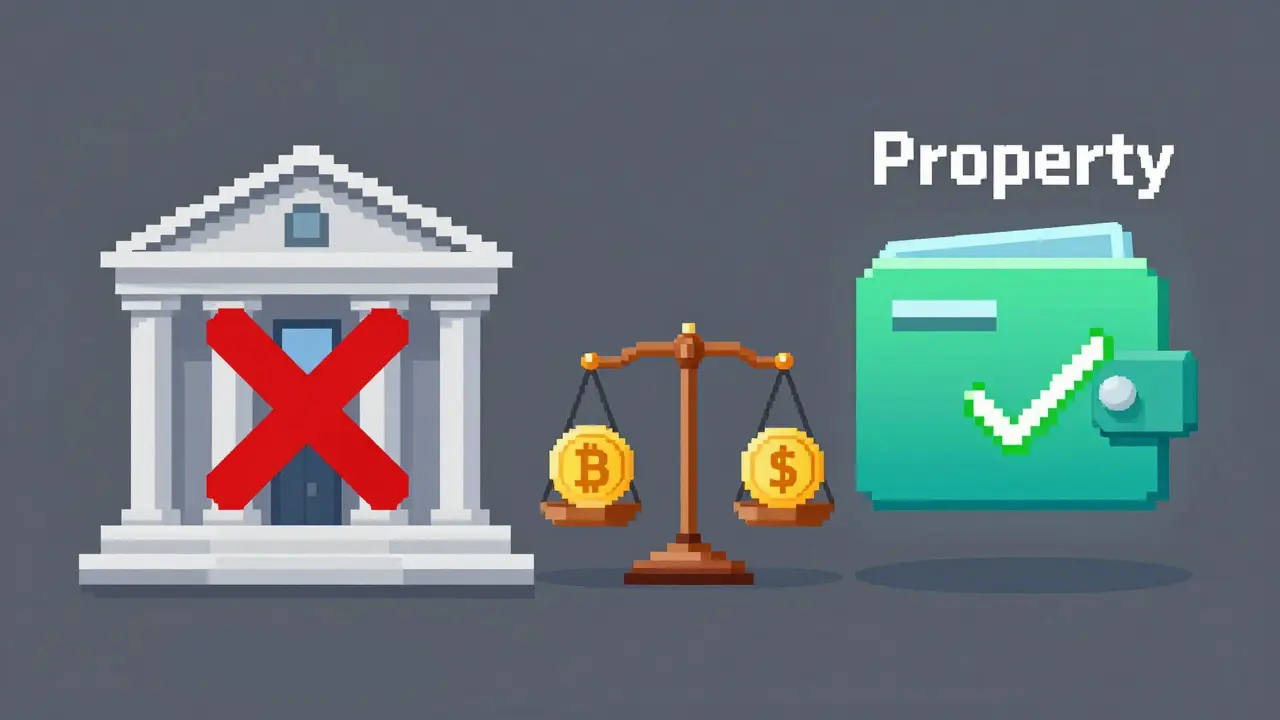
So, what are they? The Central Bank defines them as "digital units capable of being used as a means of payment... stored, traded and transferred electronically." In practical terms, this classifies crypto as unregulated digital property. You own it, just like you own a car or a house, but there is no specific law governing how that property must be handled by third parties.
| Authority | Classification | Implication for Users |
|---|---|---|
| Central Bank of Colombia | Not Foreign Currency / Not Legal Tender | No obligation for merchants to accept; cannot pay debts via exchange rate regime. |
| Financial Superintendency (SFC) | Not Securities | Banks cannot manage trades; no investor protection laws apply. |
| DIAN (Tax Authority) | Taxable Asset | Gains are taxed as income; reporting is mandatory but guidelines are vague. |
Why the Regulatory Vacuum Exists
You might wonder why the government hasn't stepped in to create rules. The answer lies in the tension between innovation and control. Unlike Brazil, which passed its "Bitcoin Law" in 2022, or Venezuela, which created the state-controlled Petro, Colombia has taken a wait-and-see approach.
Dr. Maria Fernanda Camargo, a professor at Universidad de los Andes, noted in 2024 that this vacuum allows innovation to flourish but leaves consumers exposed. Juan Pablo Zárate, CEO of local exchange CryptoMarket, argues that the lack of heavy-handed regulation has helped adoption grow organically at 37% year-over-year since 2022.
However, this freedom comes with a cost. Without specific fintech regulation, companies operating in the space must rely on existing frameworks that weren't designed for digital assets. This leads to compliance uncertainty, especially regarding anti-money laundering (AML) standards influenced by global bodies like the Financial Action Task Force (FATF).
The Real Risks: Fraud and Lack of Recourse
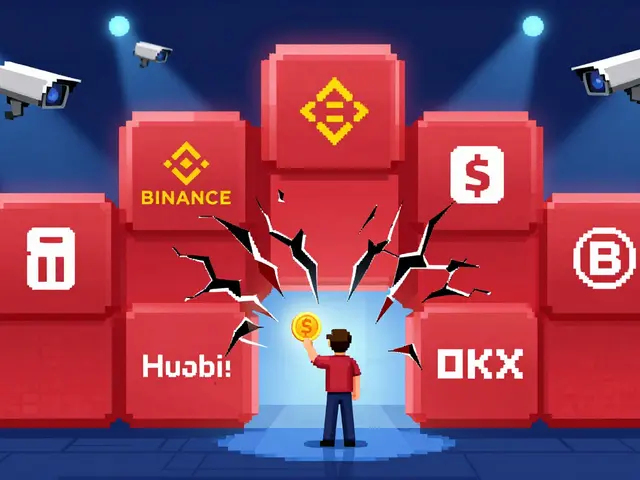
The most dangerous aspect of the current system is the lack of consumer protection. When you deposit money into a regulated bank, you are protected by insurance and oversight. With crypto exchanges in Colombia, you are largely on your own.
Consider the Me Coin case from August 2018. Founders promised guaranteed 50% monthly returns-a classic red flag for fraud-and then disappeared with $60 million in client funds. Because there was no regulatory body overseeing their operations, victims had little recourse. This incident remains the primary cautionary tale cited by regulators and experts alike.
User experiences reflect this duality. On platforms like Reddit’s r/CryptoColombia, many users report smooth transactions using major global exchanges like Binance. However, negative reviews often highlight issues with local peer-to-peer sellers vanishing after payment. According to Trustpilot data from early 2025, 63% of negative reviews mentioned "lack of regulatory protection" as a key concern.
- Fraud Risk: No guarantee of fund recovery if an exchange fails or commits fraud.
- Tax Uncertainty: DIAN has not issued specific crypto guidelines, leading to inconsistent enforcement.
- Volatility Exposure: High price swings combined with no hedging tools available through traditional banks.
Navigating the Market: Exchanges and Tools
Despite the risks, the market is thriving. Kaiko Research reported steady growth in 2025, with over 1.2 million active users in Q1 alone. To participate safely, you need to choose your platform carefully.
Global exchanges like Binance, Bybit, and Kraken dominate the landscape, holding about 68% of the market share. These platforms offer stability and liquidity but require you to handle your own KYC (Know Your Customer) verification. Local options like Bitso Colombia and CryptoMarket provide easier integration with local payment methods like Nequi and Daviplata, but they may have lower liquidity during volatile periods.
When selecting an exchange, prioritize those with:
- Strong reputation and transparent fee structures.
- Local COP pairs for easy deposits and withdrawals.
- Robust customer support with verified response times.
Avoid any platform promising guaranteed high returns. Legitimate crypto investments carry risk, and promises of fixed profits are almost always scams.

Taxes: What DIAN Expects From You
This is where most users get tripped up. While there is no specific "crypto tax law," the National Tax and Customs Directorate (DIAN) treats cryptocurrency gains as taxable income. This means profits from trading or selling crypto are subject to progressive income tax rates, which can reach up to 39%.
The challenge is reporting. DIAN estimates $120 million in unreported crypto gains in 2024 alone. Since there are no specific forms for crypto, you must declare these gains under general capital gains or business income categories depending on your activity level. Failure to report can lead to audits and penalties.
Keep detailed records of every transaction. Use portfolio tracking software to log dates, amounts, and values in COP at the time of transaction. This documentation will be crucial if you are audited.
Future Outlook: Will Regulations Change?
The landscape is shifting. Congressional Bill 325 of 2024 proposes a formal regulatory framework for digital assets, though it faces opposition from fintech groups who fear stifling growth. The Central Bank announced in February 2025 that it would monitor global developments closely.
Most analysts predict partial regulation by 2027, focusing on AML/CTF requirements for exchanges while maintaining crypto's status as unregulated property. This would bring some consumer protections but also increase compliance costs for businesses.
For now, the strategy remains simple: educate yourself, use reputable platforms, keep meticulous records for taxes, and never invest more than you can afford to lose. The opportunity is real, but so are the risks.
Is Bitcoin illegal in Colombia?
No, Bitcoin is not illegal. It is recognized as digital property. However, it is not legal tender, meaning merchants are not required to accept it as payment.
Do I need to pay taxes on crypto gains?
Yes. The DIAN considers crypto gains as taxable income. You must report profits from sales or trades, and they are subject to progressive income tax rates up to 39%.
Can Colombian banks process crypto transactions?
Generally, no. The SFC has stated that cryptoassets are not securities, so supervised financial entities like banks cannot manage or advise on these transactions directly.
What happened in the Me Coin case?
In 2018, the Me Coin platform founders fled with $60 million in user funds after promising unrealistic returns. This case highlights the lack of consumer protection in the unregulated market.
Which exchanges are popular in Colombia?
Major exchanges include Binance, Kraken, LocalBitcoins, Paxful, Bitso Colombia, and CryptoMarket. Binance holds the largest market share due to its liquidity and COP pairs.
Will there be new crypto laws soon?
Congressional Bill 325 is under review, proposing a regulatory framework. Experts predict partial regulation focusing on anti-money laundering measures could arrive by 2027.




Carli Bates
May 3, 2026 AT 03:30so we are just digital property now? how quaint. i suppose next they will tell us our souls are non-fungible tokens
Aaron Zeiler
May 4, 2026 AT 03:41the key thing here is that while it is legal to own crypto you need to understand the tax implications clearly diantreats gains as income so keep records of every transaction in cop value at time of trade this avoids audits later
Kathleen Warren
May 5, 2026 AT 23:21i know this can feel really overwhelming especially with all the talk about fraud and lack of protection but remember you are not alone in navigating this many people find success by sticking to reputable exchanges like binance or kraken which have better security measures for users
Barbara Jones
May 6, 2026 AT 21:18just a quick thought on this whole situation its kinda wild how we trust apps with our money more than banks sometimes but yeah stick to the big names if u dont want to get scammed like those me coin guys lol
Gabrielle Danis
May 8, 2026 AT 19:26it is important to note that the financial superintendency has explicitly stated that cryptocurrencies are not securities under law 964 of 2005 therefore traditional banking institutions cannot offer these assets as investment products which leaves consumers without standard regulatory protections
Abhishek Verma
May 9, 2026 AT 08:31oh look another country figuring out how to regulate nothing while pretending they care about innovation what a surprise i bet your local exchange fees are higher than my rent in mumbai anyway
Brendan Thraxton
May 9, 2026 AT 17:10hey everyone just wanted to add that using portfolio tracking software is super helpful for keeping up with diantax requirements since there are no specific forms yet you can log dates amounts and cop values easily this helps avoid penalties during audits
Janis Naglis
May 11, 2026 AT 04:17let us embrace the decentralized future, shall we? the regulatory vacuum is merely a temporary state of flux before the inevitable harmonization of global fintech standards; however, one must remain vigilant against predatory actors who exploit this ambiguity for personal gain.
Tracy McBurney
May 11, 2026 AT 16:10the notion that colomboia lacks consumer protection is not surprising given their historical approach to financial oversight which prioritizes bureaucratic control over market efficiency resulting in a system where only the most sophisticated investors survive while others are left exposed to systemic risks
Jimmy vasquez
May 12, 2026 AT 06:54hi folks! just a friendly reminder that while crypto is legal in colombia it is crucial to verify any platform you use look for transparent fee structures and strong customer support reviews on trustpilot can be a good starting point for checking legitimacy
Andrew Todd
May 12, 2026 AT 11:24this is typical third world nonsense trying to copy western models without understanding them properly americans do not need such regulations because we have freedom here unlike you people who need hand holding from governments that do not know what they are doing
Ryan Nakielny
May 13, 2026 AT 05:02interesting read though i wonder if the average person actually understands what unregulated digital property means in practice probably not but hey at least they can buy bitcoin without filling out twenty pages of paperwork right?
Sri Astuti
May 15, 2026 AT 00:47:( the situation in colombia reflects a broader trend where emerging markets struggle to balance innovation with regulation leading to environments where fraud thrives due to lack of oversight :( users must be extremely cautious and rely on self-education rather than institutional guarantees :(
Elle Kharitou
May 15, 2026 AT 00:54from an aussie perspective watching this unfold is fascinating 🌏🇦🇺 it highlights how different cultures approach risk and technology 🚀 while some see danger others see opportunity 🌱 the key is finding that middle ground where innovation meets responsibility ✨ always DYOR!
Nitin Gupta
May 16, 2026 AT 01:17i agree with the points raised about the importance of record keeping for tax purposes it might seem tedious but maintaining detailed logs of transactions in cop value can save significant headaches during potential audits by dian in the future