
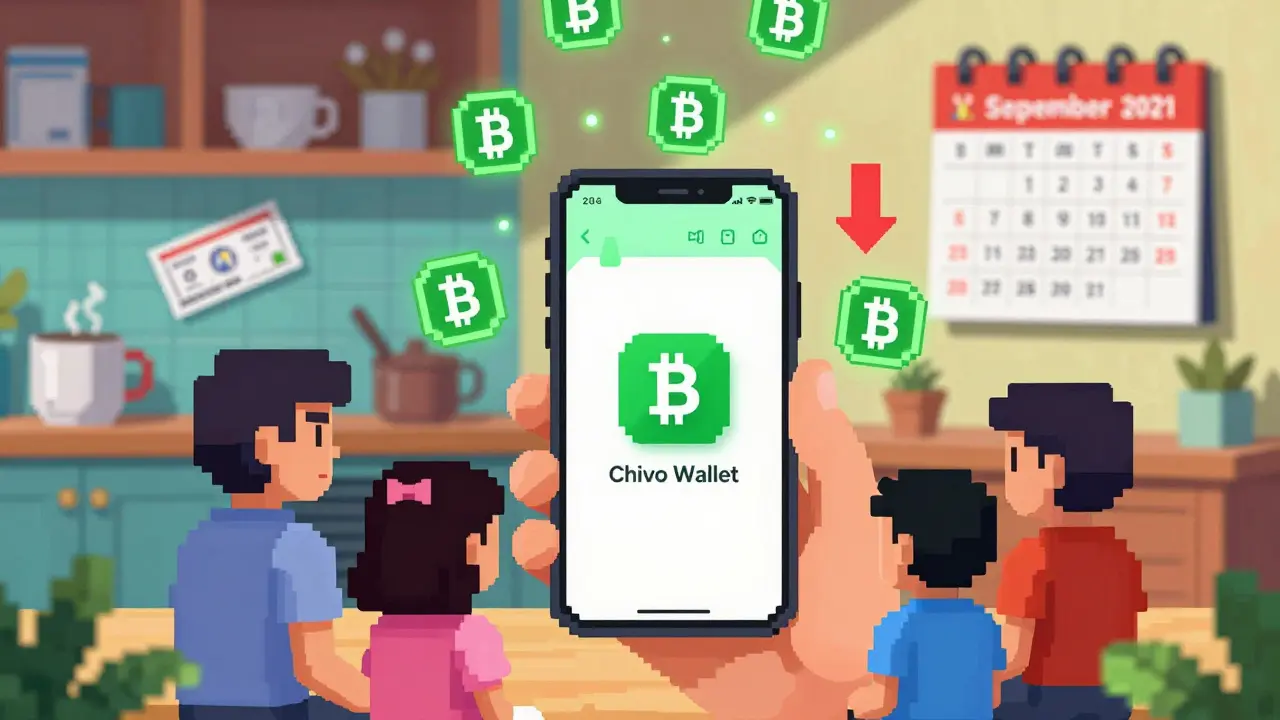
On September 7, 2021, El Salvador did something no other country had ever done: it made Bitcoin legal tender. Alongside that move came the Chivo wallet - a government-built app meant to let every Salvadoran send, receive, and spend Bitcoin for free. At first, it looked like a revolution. The government handed out $30 in Bitcoin to anyone who downloaded the app. Banks didn’t reach most people anyway - 70% of Salvadorans were unbanked. Chivo promised to change that. But by January 2025, Bitcoin was no longer legal tender. What went wrong?
How Chivo Was Supposed to Work
Chivo wasn’t just another crypto app. It was designed as a dual-currency wallet: Bitcoin and US dollars, side by side. No fees for Bitcoin transfers. Instant payments between users. No middlemen. For Salvadorans receiving money from family abroad, this was huge. Remittances made up nearly 20% of the country’s GDP, and traditional services like Western Union charged up to 10% in fees. Chivo promised to cut that to zero. Built by AlphaPoint, the same company that powers major crypto exchanges, Chivo was meant to handle millions of users at once. The government pushed hard. Billboards, TV ads, even free Wi-Fi hotspots in public squares encouraged downloads. Within weeks, 46% of the population had installed the app. That’s higher than most banking apps in developed countries. But installation didn’t mean usage. Most people downloaded it for the $30 bonus - then stopped. The real test was whether they’d use Bitcoin to buy coffee, pay a bus fare, or send money to a cousin. That’s where things broke down.The Technical and Security Problems
Chivo’s infrastructure couldn’t handle the load. Right after launch, the app crashed repeatedly. Users couldn’t access their money. Some got locked out for days. Others reported unauthorized transactions - their wallets drained without their permission. Identity theft became a real concern. The government didn’t have the cybersecurity team or customer support staff to respond. Even simple things were hard. To use Chivo, you needed a smartphone with internet. But in rural areas, mobile networks were spotty. Many older Salvadorans had never used a smartphone before. The app didn’t explain Bitcoin clearly. It didn’t tell users that if the price dropped from $69,000 to $16,000 in a year, their $30 bonus could be worth less than $7. No one warned them. A survey in 2024 found that eight out of ten Salvadorans didn’t use Bitcoin regularly. The $30 incentive was a one-time trick. It didn’t build habits. It didn’t teach financial literacy. It just created a temporary spike in downloads.Bitcoin’s Volatility Hit Hard
The biggest problem wasn’t the app. It was Bitcoin itself. El Salvador’s government bought over 1,000 Bitcoin in 2021 and 2022, spending hundreds of millions of dollars. The idea was to hold it as a reserve asset. But Bitcoin’s price swung wildly. In 2022 alone, it lost over 75% of its value. That meant the government’s own Bitcoin holdings lost billions in paper value. When the country tried to pay public workers in Bitcoin, salaries became unpredictable. A worker earning 500 Bitcoin one month might be paid the equivalent of $8,000. The next month, it could be $2,000. For everyday users, this was terrifying. Imagine buying a meal with Bitcoin on Monday. By Wednesday, that same meal costs twice as much Bitcoin because the price dropped. People didn’t want to hold it. They wanted to convert it to dollars immediately - which meant using Chivo’s exchange feature. But that created more pressure on the system and didn’t solve the core issue: Bitcoin wasn’t stable enough to be money.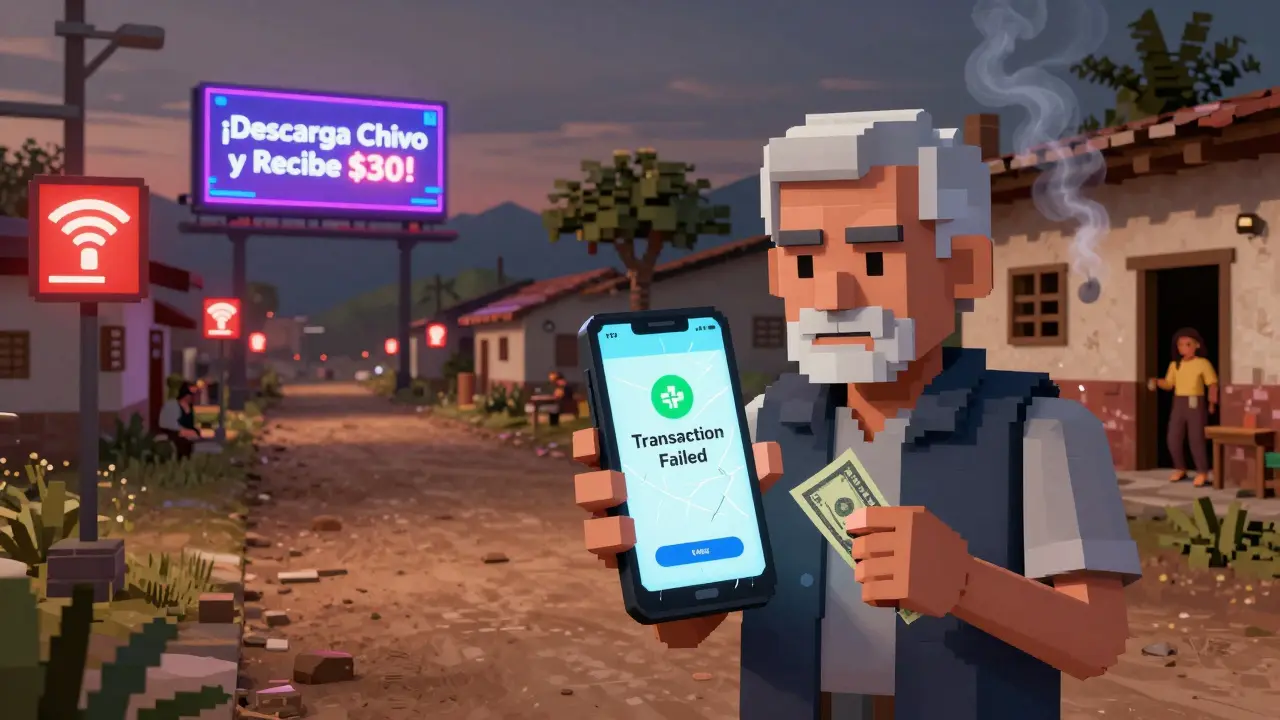
The IMF and the End of Legal Tender
By 2024, El Salvador was in financial trouble. Inflation was rising. The national debt was growing. The International Monetary Fund (IMF) stepped in with a $1.4 billion loan offer - but with a condition: remove Bitcoin as legal tender. The IMF didn’t say Bitcoin was bad. They said it was too risky for a small economy. One currency shock could destabilize the whole system. In January 2025, El Salvador agreed. Bitcoin was no longer legal tender. That didn’t mean Bitcoin was banned. It just meant the government stopped forcing businesses to accept it. The Chivo wallet stayed open - but now as a voluntary tool, not a national mandate. The government also promised to stop buying more Bitcoin for public funds and to wind down its role in the Chivo wallet by July 2025. The wallet would eventually be handed over to private operators.What’s Left After the Experiment?
Despite the rollback, El Salvador didn’t give up on crypto. In January 2025, it hosted PLANB Forum - Central America’s biggest crypto conference. The government still holds over 6,100 Bitcoin, worth around $500 million. That’s a strategic reserve, not daily currency. The Digital Assets Issuance Act (LEAD), passed in 2023, created the National Commission of Digital Assets (CNAD). This body now regulates private crypto businesses - exchanges, mining, token issuance - but only if they’re voluntary. No more forcing people. The Chivo wallet still exists. Around 2 million Salvadorans still use it - mostly for remittances. Some send Bitcoin from the U.S. to family in El Salvador and let the recipient cash out in dollars instantly. That’s still cheaper than Western Union. That’s still useful. But the dream of a Bitcoin-powered economy? That’s over. The lesson wasn’t that Bitcoin can’t work. It’s that you can’t force a currency on people. Money needs trust, stability, and simplicity. Bitcoin has two of those - decentralization and innovation - but not stability. And without stability, it can’t be money for daily life.
Lessons from El Salvador’s Bitcoin Experiment
El Salvador didn’t fail because of technology. It failed because it ignored human behavior. - People don’t want to gamble with their groceries. You can’t make a volatile asset your everyday currency without risking people’s livelihoods. - Incentives don’t create habits. Giving away $30 got downloads. It didn’t get adoption. - Infrastructure isn’t enough. You need education, support, and reliability. Chivo had none of that at scale. - Government mandates backfire. When people feel forced, they resist - even if the tool is free. The real innovation wasn’t Bitcoin. It was proving that financial inclusion can’t be built on mandates. It has to be built on trust, simplicity, and real value. Now, other countries are watching. Not to copy El Salvador - but to avoid its mistakes. Central banks around the world are building their own digital currencies - CBDCs - because they want control, stability, and safety. El Salvador tried to leap ahead. It crashed.Is Chivo Still Useful Today?
Yes - but only for specific cases. If you’re a Salvadoran living in the U.S. and sending money home, Chivo can still be the cheapest option. You send Bitcoin. The recipient gets dollars. No middleman. No 10% fee. That’s real savings. If you’re a tech-savvy Salvadoran who understands Bitcoin and wants to hold it as an investment, Chivo still works. It’s secure enough for that. But if you’re trying to pay your electric bill in Bitcoin? You’ll still get a bill in dollars. If you want to buy bread? You’ll still pay in dollars. The economy didn’t turn into Bitcoin. It just added a new tool - one that works quietly in the background for some, not the front-and-center revolution everyone expected.What Comes Next?
El Salvador is now focused on becoming a crypto hub - not a Bitcoin nation. Private companies can launch crypto exchanges, mining operations, and blockchain startups. The government isn’t involved. It just regulates. The Chivo wallet will likely become a private product - maybe even sold to a fintech company. The $30 bonus is long gone. The mandatory use is over. But the experiment didn’t disappear. It evolved. The world thought El Salvador was trying to replace the dollar. It wasn’t. It was trying to fix a broken financial system. And while Bitcoin didn’t fix it, the push exposed how broken it really was. Now, the real work begins: building a financial system that actually works for the 70% who were left out. That won’t come from Bitcoin. It’ll come from better banks, better apps, and better education. And maybe - just maybe - a few lessons from Chivo.Was Chivo wallet successful?
Chivo had high initial downloads - 46% of the population - but low sustained usage. Only about 20% of Salvadorans used Bitcoin regularly. Most downloaded it for the $30 bonus and stopped. The wallet solved no real problem for most people because Bitcoin’s volatility made it unreliable for daily spending. So while it was a technical success in terms of rollout, it failed as a financial tool for the public.
Why did El Salvador stop making Bitcoin legal tender?
El Salvador removed Bitcoin’s legal tender status in January 2025 after agreeing to terms with the International Monetary Fund (IMF) for a $1.4 billion loan. The IMF said Bitcoin’s price swings posed too much risk to the country’s economic stability. The government agreed to stop forcing businesses to accept Bitcoin and to gradually exit its role in managing the Chivo wallet.
Can I still use Chivo wallet today?
Yes, the Chivo wallet is still operational, but it’s no longer mandatory. It’s now a voluntary app used mostly for sending and receiving Bitcoin remittances. Users can still convert Bitcoin to dollars instantly. The government no longer funds or promotes it, and it’s expected to be handed over to a private company by mid-2025.
Did Chivo reduce remittance fees?
For those who used it correctly, yes. Sending Bitcoin through Chivo cost nothing, compared to Western Union’s 8-10% fees. Families in the U.S. could send money to relatives in El Salvador who cashed out in dollars - saving hundreds of dollars a year. But because most people didn’t use Bitcoin regularly, the overall impact on remittance costs was limited.
What happened to the $30 bonus everyone got?
The $30 was a one-time incentive to get people to download the app. Most users converted it to dollars immediately or spent it within days. It wasn’t meant to be a long-term subsidy. The government didn’t replace it. Once the bonus was gone, so was most of the initial interest.
Is Bitcoin still used in El Salvador at all?
Yes, but only voluntarily. Some businesses accept Bitcoin, especially in tourist areas. Some Salvadorans hold it as an investment. The government still holds over 6,100 Bitcoin as a reserve. But no one is forced to use it. The dollar is still the main currency for wages, prices, and daily life.
Why didn’t more people learn to use Bitcoin?
Many Salvadorans had never used a smartphone before. The app didn’t explain Bitcoin clearly. People didn’t understand volatility - they thought $30 in Bitcoin meant $30 in buying power forever. When prices dropped, they lost trust. There wasn’t enough training, support, or simple education to help them make the leap from cash to crypto.
Could another country try this?
It’s unlikely. El Salvador’s experiment showed that forcing Bitcoin as legal tender doesn’t work. Other countries are focusing on central bank digital currencies (CBDCs) instead - stable, government-controlled digital money. Bitcoin’s volatility and lack of regulation make it unsuitable as everyday money for most economies.


Raja Oleholeh
January 2, 2026 AT 18:52Prateek Chitransh
January 4, 2026 AT 01:19christopher charles
January 4, 2026 AT 04:23Alison Hall
January 4, 2026 AT 22:43Amy Garrett
January 5, 2026 AT 02:16Haritha Kusal
January 6, 2026 AT 12:02Mike Reynolds
January 8, 2026 AT 07:40dayna prest
January 9, 2026 AT 14:51Brooklyn Servin
January 11, 2026 AT 08:49Alex Strachan
January 12, 2026 AT 21:52Antonio Snoddy
January 13, 2026 AT 21:26prashant choudhari
January 15, 2026 AT 10:06Willis Shane
January 15, 2026 AT 19:20Jake West
January 17, 2026 AT 15:58Abhisekh Chakraborty
January 18, 2026 AT 18:01dina amanda
January 20, 2026 AT 15:53Emily L
January 21, 2026 AT 11:15Gavin Hill
January 21, 2026 AT 16:02SUMIT RAI
January 22, 2026 AT 09:38Andrea Stewart
January 24, 2026 AT 04:09Elisabeth Rigo Andrews
January 25, 2026 AT 07:37