
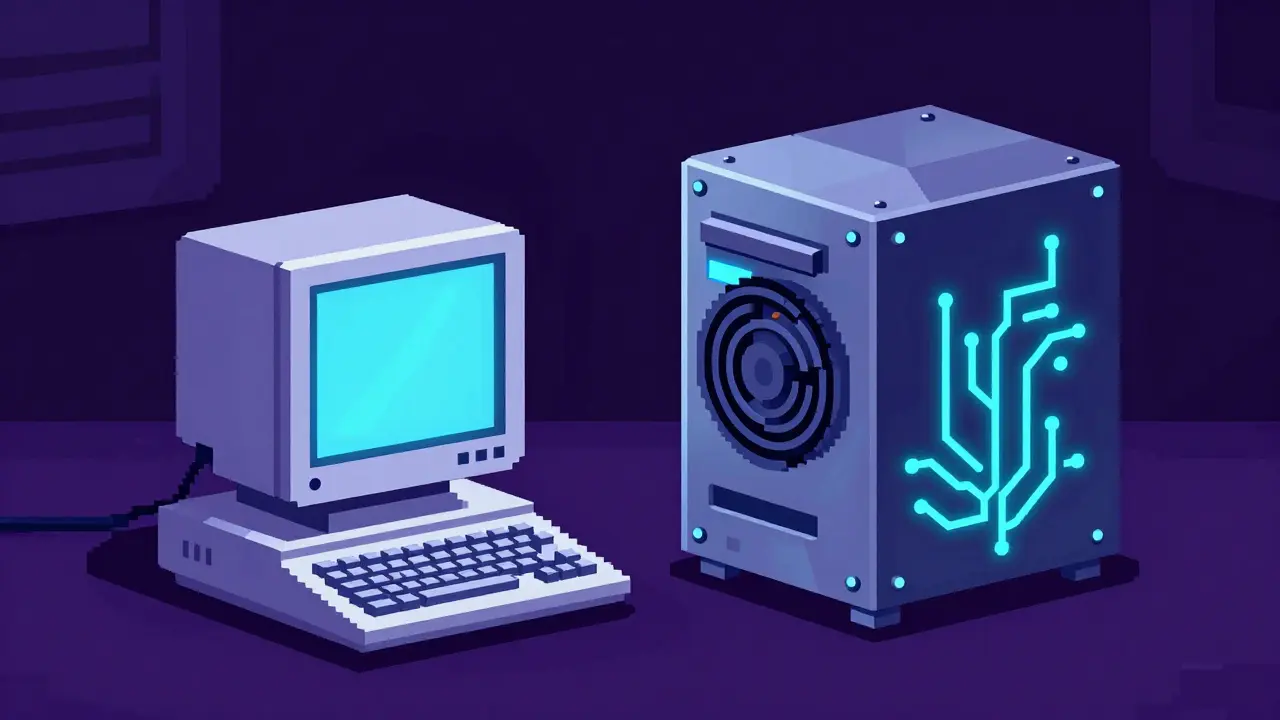
At its core, ASIC miners is specialized hardware designed exclusively to solve the cryptographic puzzles required to secure a blockchain network. Short for Application-Specific Integrated Circuit, these machines aren't computers in the traditional sense. They can't browse the web, play videos, or run a spreadsheet. Instead, they are hardwired to do one thing and one thing only: execute a specific hashing algorithm as fast as humanly possible.
The Evolution of Mining Hardware
In the early days of Bitcoin around 2009, anyone with a laptop could mine coins using their CPU (Central Processing Unit). But as more people joined, the network increased the "difficulty" of the puzzles to keep block times consistent. Soon, miners realized that GPUs (Graphics Processing Units), designed for rendering complex 3D images, were much better at the repetitive math needed for mining.
The real game-changer arrived in 2013. Canaan Creative introduced the Avalon, the first commercial ASIC. Shortly after, Bitmain entered the scene with the Antminer series. These devices didn't just beat CPUs and GPUs; they obliterated them. By stripping away every function that wasn't related to mining, engineers created a machine that could calculate trillions of hashes per second while using far less electricity per unit of work.
How ASICs Actually Work
To understand an ASIC, you have to understand the Hash Rate. This is the speed at which a miner can complete a hash-a mathematical guess at the solution to a block's puzzle. Most ASICs focus on specific algorithms. For example, if you want to mine Bitcoin, you need a machine built for the SHA-256 algorithm. If you try to use a SHA-256 miner on a network that uses Scrypt (like Litecoin), it simply won't work. It's like trying to use a key for a padlock on a digital keypad; the physical architecture just doesn't match.
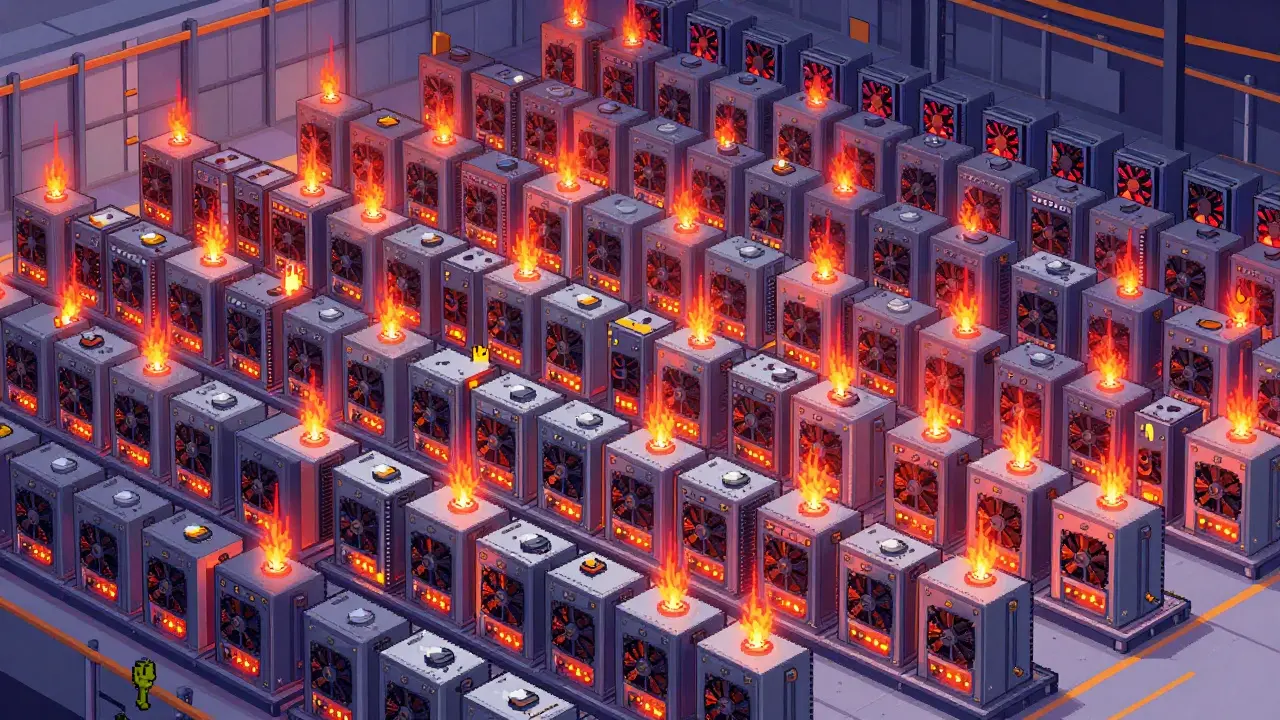
Inside the metal casing, you'll find specialized microchips and a massive cooling system. Because these chips run at maximum capacity 24/7, they generate an incredible amount of heat. This is why industrial mining farms often look like data centers with giant fans or even liquid immersion cooling systems to keep the hardware from melting down.
| Feature | CPU | GPU | ASIC |
|---|---|---|---|
| Versatility | High (Any task) | Medium (Gaming/Mining) | Zero (Mining only) |
| Hash Rate | Very Low | Moderate | Extremely High |
| Energy Efficiency | Poor | Fair | Excellent (per hash) |
| Initial Cost | Low (Existing) | Moderate | High |
| Lifespan | Long | Moderate | Short (Due to obsolescence) |
The High Stakes of ASIC Mining
Entering the world of ASIC miners is a high-risk, high-reward venture. Unlike a GPU, which you can sell to a gamer if mining becomes unprofitable, an ASIC has almost zero resale value once a newer, more efficient model is released. This is known as hardware obsolescence. When Bitmain releases a new generation of Antminers that are 20% more efficient, your older machines suddenly cost more in electricity than they earn in coins.
There is also the issue of centralization. Because ASICs are expensive and require industrial-grade power, mining has shifted away from individuals in their bedrooms and toward massive corporations. This creates a "centralization risk" where a few large mining pools control a huge portion of the network's computational power. While the blockchain is decentralized in theory, the physical hardware used to secure it is increasingly concentrated in a few geographic hubs with cheap electricity.
Is it Profitable for the Average Person?
If you're thinking about buying your first ASIC, you need to run the numbers first. Profitability isn't just about the coin's price; it's a battle against your local electricity rate. In the UK or US, residential power is often too expensive to make small-scale ASIC mining viable. Most successful miners operate in regions with subsidized power or utilize renewable energy sources like hydroelectric dams.
Beyond the power bill, you have to deal with the noise. An ASIC miner sounds like a vacuum cleaner running in your room 24 hours a day. Most hobbyists have to build sound-proof boxes or move their equipment into a garage. If you aren't prepared for the heat, noise, and electrical load, you'll find that owning an ASIC is more of a headache than a goldmine.
Practical Steps for Starting an Operation
If you've checked your electricity costs and decided to move forward, the process follows a specific sequence. You don't just plug it in and start earning. Here is the typical workflow:
- Algorithm Research: Decide which coin you want to mine. Bitcoin (SHA-256), Litecoin/Dogecoin (Scrypt), or perhaps Kaspa. This dictates the hardware you buy.
- Power Audit: Ensure your electrical panel can handle the load. A single high-end ASIC can pull 3,000+ watts. You may need a dedicated 220V circuit.
- Pool Selection: Joining a Mining Pool is essential. Instead of trying to find a block alone (which could take years), you combine your power with others and split the rewards.
- Firmware Setup: Configure the miner's IP address and connect it to your pool. Some users install custom firmware to "underclock" the machine, reducing heat and power consumption for better efficiency.
- Thermal Management: Set up an exhaust system to push hot air out of the room. Without active ventilation, your hardware will thermal-throttle and shut down.
The Future of Specialized Hardware
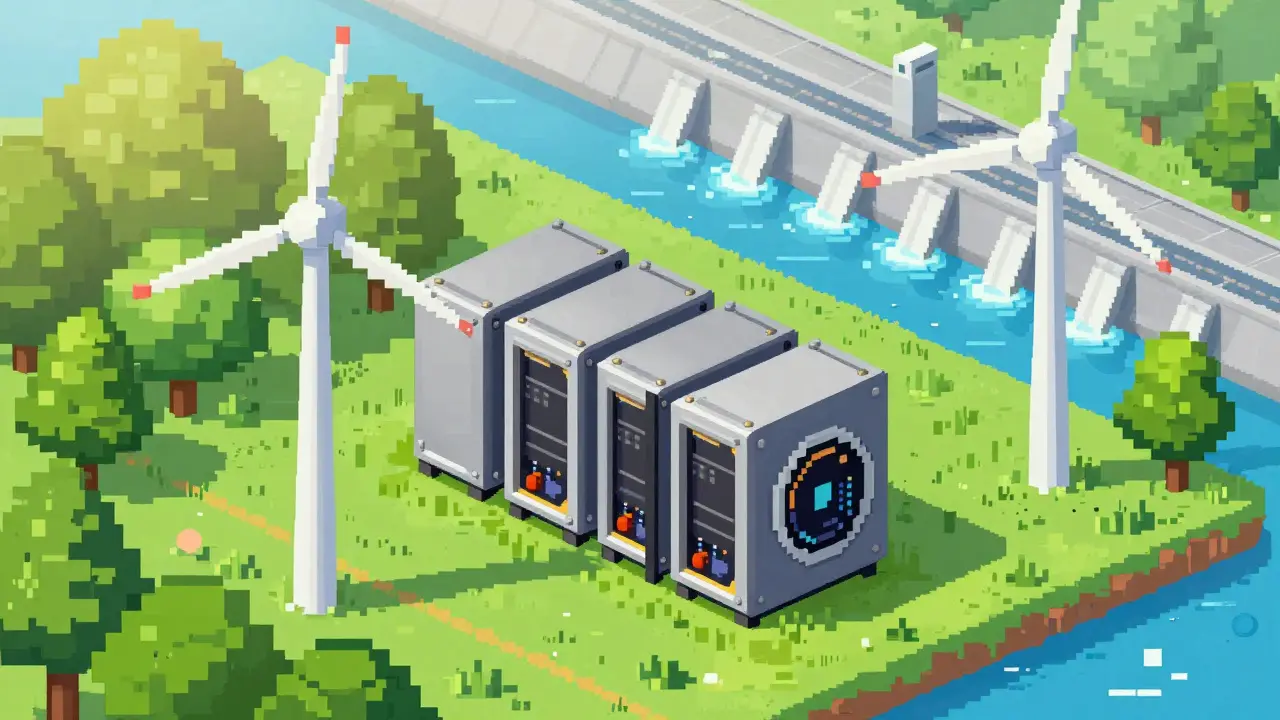
Looking ahead, the industry is moving toward sustainability. The environmental criticism of Proof-of-Work mining has pushed manufacturers to develop chips that produce more hashes per watt. We are seeing a shift toward "green mining," where ASIC farms are built next to wind farms or used to heat greenhouses and swimming pools, turning waste heat into a secondary resource.
There is also the possibility of consensus shifts. While Bitcoin remains committed to Proof-of-Work, other networks have moved to Proof-of-Stake, which eliminates the need for mining hardware entirely. This makes the ASIC market a volatile place; your investment depends entirely on the network's commitment to the algorithm you've purchased hardware for.
Can I use an ASIC miner for any cryptocurrency?
No. ASICs are hardwired for a specific algorithm. A Bitcoin miner (SHA-256) cannot mine Ethereum Classic or Litecoin. You must purchase a machine specifically designed for the algorithm used by the coin you want to mine.
Why are ASIC miners so loud?
They use high-RPM industrial fans to move massive amounts of air across the chips. Because the hardware runs at full capacity constantly, the heat generation is intense, requiring aggressive cooling that creates a loud, constant drone.
Is it better to mine with a GPU or an ASIC?
For major coins like Bitcoin, ASICs are the only viable option due to their massive hash rate. However, GPUs are better for beginners because they are versatile, can mine multiple different coins, and hold their resale value much better.
What happens when an ASIC becomes obsolete?
When newer, more efficient models arrive, the cost of electricity to run an old ASIC may exceed the value of the coins it earns. At this point, the machine becomes a "brick" with very little value, as it cannot be repurposed for anything else.
Do I need a special power outlet for an ASIC?
Yes, most professional ASICs require 220V-240V power, similar to an electric oven or dryer. Plugging them into a standard 110V household outlet can lead to tripped breakers or even fire hazards due to the high current draw.
Next Steps and Troubleshooting
If you are experiencing "hash drops" or frequent restarts, check your power stability first. Voltage sags are a common cause of ASIC instability. If the machine is shutting down due to overheating, ensure your intake air is cool and your exhaust is not recirculating back into the room.
For those just starting, the best move is to use a mining profitability calculator. Input your exact electricity cost per kilowatt-hour (kWh) and the current network difficulty. If the daily profit is less than $1 after power costs, you are better off simply buying the cryptocurrency on an exchange rather than investing thousands in hardware.

Eric Raines
April 23, 2026 AT 10:14Everyone knows that the real play is to hunt for under-market electricity contracts before you even touch the hardware. Most people just buy an Antminer and pray, but if you actually understand the hash-to-watt ratio and the current difficulty adjustment, you'd see that most retail setups are just burning money for the thrill of it.
Yvette P
April 24, 2026 AT 18:05Oh honey, imagine thinking a 220V circuit is a "power audit" and not a fundamental requirement for anyone who isn't just playing house with their mining rig. If you're not calculating your OpEx based on the current LCOE and factoring in the degradation of the hash boards over an eighteen-month cycle, you're basically just donating your capital to the grid in a really loud and inefficient way. It's absolutely adorable that people think they can just "plug and play" into a residential panel without tripping every breaker in the neighborhood or melting their insulation because they didn't realize the thermal load of a high-terahash machine is essentially a space heater on steroids. Honestly, the level of optimism required to start a home-based ASIC operation in a high-cost energy zone is nothing short of a psychological miracle, and I'm just here to watch the fireworks when the first power bill arrives and the realization hits that they're mining at a net loss per kilowatt-hour.
Hannah Rubia
April 25, 2026 AT 17:03It is imperative to remember that the transition to industrial-scale mining is a natural progression of the network's security requirements. While the centralization of hardware is a valid concern, the increased efficiency of ASICs ensures that the network remains robust against certain types of attacks that would be trivial if the hash power were fragmented across less efficient devices.
Benjamin Forg
April 27, 2026 AT 13:19big corporations run the show and you think a guide helps you get in on it. its all a trap to keep us tethered to the grid while they consolidate the real power. probably just a way for the elites to track every single hash through the back door anyway
Jason M
April 28, 2026 AT 22:16LISTEN UP EVERYONE! If you are feeling overwhelmed by the technical jargon, just know that you ARE capable of mastering this! This is an absolute mountain of a challenge, but the view from the top is glorious! Don't let the fear of a noisy garage stop you from chasing your financial freedom! Go get those hashes!
Tony Gurley-Ward
April 29, 2026 AT 03:47The irony is just delicious, isn't it? We've built these digital gold mines that are essentially just very expensive, very loud bricks of silicon. It's a marvelous piece of performance art-spending thousands of dollars on a machine that does exactly one thing, and the moment that one thing is no longer the trend, it becomes a fancy doorstop. Truly a poetic reflection of our disposable consumer culture!
Liz Ariza
April 30, 2026 AT 10:01Total game changer for anyone with a spare shed! 🚀 Just be sure to keep your neighbors happy or they'll be knocking on your door real quick 😅 the hum is a bit wild but the potential is just sparkling! ✨
Matthew Morse
April 30, 2026 AT 23:12too much reading for a basic setup
Tara Aman
May 2, 2026 AT 09:08I totally agree with the point about green mining! It is so inspiring to see people using the heat for greenhouses. Such a win-win for the planet and the profit!
Mary Tawfall
May 4, 2026 AT 01:08It's really great that this guide breaks down the risks so clearly. It helps beginners avoid making costly mistakes with their first purchase.
Mike Word
May 5, 2026 AT 03:30The mention of liquid immersion cooling is interesting. I wonder how that compares to standard air cooling in terms of long-term hardware longevity in humid climates.
debashish sahu
May 5, 2026 AT 15:24The shift toward sustainability is a very positive step for the global community. It is heartening to see technology evolving to reduce its environmental footprint.
Lisa Camp
May 7, 2026 AT 08:43STOP OVERTHINKING AND JUST START! The only thing standing between you and success is the fear of a high power bill! Get the hardware, set up the pool, and GRIND!