

Mexican Crypto Reporting Calculator
Under Mexico's FinTech Law, transactions over $1,500 USD must be reported to the Financial Intelligence Unit (FIU). This calculator determines if your crypto transaction requires reporting.
When you send money through a Mexican fintech app or buy Bitcoin on a local exchange, you’re not just using technology-you’re navigating one of Latin America’s strictest financial legal systems. Mexico’s FinTech Law isn’t just paperwork. It’s a live, evolving system that controls who can operate, what they can do with crypto, and how deeply they must dig into their users’ lives. And as of 2025, the rules are tighter than ever.
How Mexico’s FinTech Law Actually Works
The Ley Fintech, passed in 2018, didn’t just make Mexico the first country in Latin America to create a dedicated fintech law-it turned the entire digital finance landscape upside down. Before this, companies offering digital payments, lending, or crypto services operated in a legal gray zone. Now, they must be licensed by the National Banking and Securities Commission (CNBV) Mexico’s primary financial regulator responsible for overseeing fintech institutions and enforcing compliance with the FinTech Law and monitored by the Bank of Mexico (Banxico) Mexico’s central bank that regulates electronic payment systems and virtual asset transactions.You can’t just launch a crypto wallet app and start taking deposits. You need to prove you have a compliance officer, a chief information security officer, and a backup cloud system that’s not hosted by any foreign SaaS provider without approval. That’s not a suggestion-it’s a legal requirement. And if you fail? Your license gets pulled. No second chances.
There are only three types of fintech licenses in Mexico: crowdfunding platforms, electronic payment fund providers, and sandbox participants (startups testing new models under supervision). If your business doesn’t fit into one of these, you’re operating illegally. Even if you’re just facilitating crypto-to-peso conversions, you need to be licensed. No exceptions.
Cryptocurrency Is Legal-But Only for Some
Let’s clear this up right away: owning Bitcoin, Ethereum, or any other cryptocurrency is legal in Mexico. You can buy it on local exchanges, hold it in your wallet, or even use it to pay for goods if a merchant accepts it. But here’s the catch: financial institutions cannot offer crypto services without strict authorization.That means banks, credit unions, and licensed fintechs can’t let you trade crypto directly through their apps unless they’ve jumped through every regulatory hoop. Even then, they’re not allowed to custody your coins. They can’t act as a crypto exchange. They can’t offer staking. They can’t provide crypto loans. The only thing they’re permitted to do is facilitate fiat-to-crypto purchases through regulated third-party providers-and even that requires full KYC and transaction monitoring.
The Financial Intelligence Unit (FIU) Mexico’s agency responsible for detecting and investigating money laundering and terrorist financing activities involving virtual assets demands every transaction over $1,500 USD be reported. If you’re moving $5,000 in Bitcoin to a foreign wallet? That’s flagged. If you’re a Politically Exposed Person (PEP) trying to buy crypto? Your identity gets triple-checked. All records-every login, every transfer, every ID scan-must be kept for five years. Not three. Five.

Why Compliance Costs Are Killing Startups
The law was designed to protect consumers and prevent money laundering. That’s good. But for small fintechs trying to break into the market, the cost of compliance is a wall.One startup founder in Monterrey told me they spent $180,000 in their first year just to meet the legal requirements: hiring two specialized officers, setting up encrypted data storage, paying for external audits, and training staff on AML protocols. They had 12,000 users. That’s $15 per user just to stay legal. Big players like Nu A leading Mexican neobank and fintech company that operates under the FinTech Law and has successfully scaled under regulatory constraints and Mercado Pago A major fintech platform in Mexico offering digital payments and financial services under CNBV oversight can absorb that. But for a team of five developers with a $50,000 budget? Impossible.
That’s why the number of new fintech licenses issued each year has dropped 40% since 2021. The law didn’t just regulate the market-it froze it for anyone without deep pockets. The National Commission for the Protection and Defense of Financial Service Users (CONDUSEF) Mexico’s consumer protection agency that enforces transparency and disclosure requirements for fintech services requires full disclosure of fees, risks, and terms-but many small apps still don’t make it past the first review because their documentation isn’t perfect.
The Cross-Border Problem
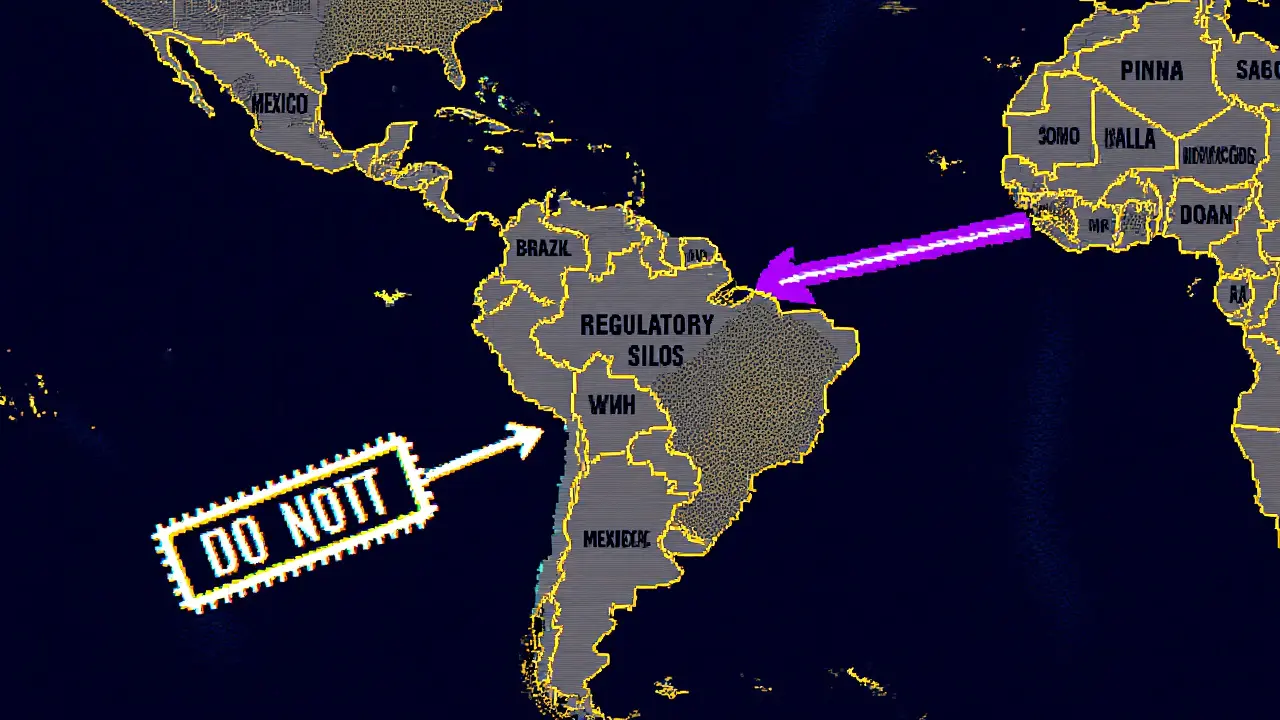
If you’re a Mexican fintech trying to expand into Colombia or Brazil, you’re stuck. Mexico’s rules don’t align with those countries. A payment that’s legal in Mexico might be classified as a money transmitter in Brazil. A crypto wallet that’s approved by CNBV might be outright banned in Chile.Companies like Stori A Mexican fintech offering digital credit and financial services under the FinTech Law framework have built entire teams just to handle cross-border compliance. They’ve had to create separate legal entities in each country, hire local lawyers, and adapt their tech stack to meet different data privacy and reporting rules. It’s expensive. It’s slow. And it’s why most Mexican fintechs stay domestic.
Meanwhile, countries like Brazil and Argentina are rolling out open finance systems that let users share financial data securely between apps. Mexico’s system? Still siloed. You can’t connect your bank account to a budgeting app unless the app is licensed-and even then, the data flow is limited. That’s not innovation. That’s stagnation.
What’s Coming in 2025: The Push for FinTech Law 2.0
There’s a growing consensus among regulators, lawyers, and fintech CEOs: Mexico’s law is outdated. It was built for 2018. The market has moved on.2025 is shaping up to be the year of change. The Securities Market Law Mexico’s legislation governing capital markets, recently amended to ease public offerings and support fintech fundraising was updated to make it easier for fintechs to raise capital through public offerings. That’s a big win. But it doesn’t fix the core problem: the FinTech Law doesn’t recognize new business models like decentralized lending, tokenized assets, or AI-driven credit scoring.
Experts are calling for “FinTech Law 2.0”-a version that allows for regulatory sandboxes to run longer, reduces mandatory staffing requirements for small firms, and creates clearer rules for cross-border crypto transfers. The CNBV has signaled openness to reform. But change moves slowly in government.
Right now, fintechs are stuck in a paradox: the law protects users, but it also protects big players. It prevents fraud, but it also prevents competition. And while the government talks about financial inclusion, over 50% of Mexican adults still don’t have a bank account. Fintech was supposed to fix that. Instead, it’s become a game only the rich can afford to play.
What This Means for You
If you’re a regular user: you’re safe. Your money is protected. Your data is tracked, but that’s the price of legality. Just know that if an app offers “instant crypto withdrawals” or “no KYC,” it’s not licensed. Avoid it.If you’re a startup founder: don’t try to cut corners. The penalties are severe-fines up to 10% of annual revenue, license revocation, and even criminal charges for executives. Budget for compliance from day one. Hire a local fintech lawyer. Don’t rely on templates.
If you’re an investor: look at companies that have already cleared the regulatory hurdle. Nu, Mercado Pago, Stori-they’ve paid the price. Now they’re scaling. The next wave of winners won’t be the flashiest apps. They’ll be the ones with the cleanest compliance records.
The FinTech Law isn’t going away. It’s getting stronger. And in 2025, the only way to survive in Mexico’s digital finance space is to play by the rules-even if they feel unfair.
Is it legal to buy Bitcoin in Mexico?
Yes, individuals can legally buy, hold, and use Bitcoin and other cryptocurrencies in Mexico. However, financial institutions like banks and licensed fintechs can only facilitate crypto purchases through regulated third parties and must follow strict KYC and reporting rules. You cannot trade crypto directly through a bank app unless it’s approved by CNBV.
Can Mexican fintech companies offer crypto wallets or staking?
No. Licensed fintechs in Mexico are prohibited from offering crypto custody, staking, or direct trading services. They can only act as intermediaries to convert pesos to crypto via approved external platforms. Any app offering these services without CNBV authorization is operating illegally.
What happens if a fintech violates the FinTech Law?
Violations can lead to fines up to 10% of annual revenue, immediate suspension of operations, revocation of the operating license, and criminal liability for executives. The CNBV and FIU actively monitor compliance and can shut down non-compliant platforms without warning.
Why are so few new fintechs launching in Mexico?
The cost and complexity of compliance are the main barriers. New companies must hire specialized officers, implement expensive security systems, and pass multi-agency reviews before even launching. Many startups can’t afford the $100,000+ upfront investment required, leading to a market dominated by well-funded players.
Does Mexico have a central bank digital currency (CBDC)?
No. As of 2025, the Bank of Mexico has not launched a digital peso or any official CBDC. While discussions are ongoing, the focus remains on regulating private crypto and fintech services rather than creating a government-backed digital currency.
Can I send crypto from Mexico to another country?
Yes, but only if you’re using a licensed platform that reports cross-border transactions to the FIU. Any transfer over $1,500 USD must be declared. Unregulated platforms or peer-to-peer transfers may bypass reporting, but doing so could violate anti-money laundering laws and expose you to legal risk.




Evelyn Gu
November 26, 2025 AT 13:17Okay, so let me get this straight-you can buy Bitcoin, but you can’t actually hold it in your wallet through an app unless you’re a giant corporation with a legal team bigger than your engineering squad? That’s not regulation, that’s a tax on innovation. I’ve seen startups in Austin fold because they couldn’t afford the compliance audit, and now the only players left are the ones who’ve already got VC funding. So… what’s the point again? To protect users? Or to protect the status quo?
Michael Fitzgibbon
November 28, 2025 AT 09:21It’s a weird balance, isn’t it? On one hand, I get why they’re strict-money laundering’s a real problem. On the other, the system feels like it’s built for 2018, not 2025. If you’re trying to build something new, you’re not just fighting tech challenges-you’re fighting bureaucracy with a sledgehammer. And the worst part? The people who need access the most-unbanked communities-are the ones getting left behind because the gatekeepers are too expensive to reach.
Komal Choudhary
November 29, 2025 AT 08:01Wait wait wait-so if I send $2000 in BTC to my cousin in Brazil, I’m basically a criminal? But if I use a sketchy P2P app that doesn’t ask questions, I’m fine? That makes zero sense. Who’s really being protected here? Not me. Not my cousin. Definitely not the little guy. This law is a joke dressed up in a suit.
Tina Detelj
November 30, 2025 AT 03:55Ohhh, so this is what ‘financial inclusion’ looks like when it’s filtered through the lens of regulatory theater? You want people to be included? Then make the system *accessible*. Not just *legal*. Not just *compliant*. But *usable*. Right now, you’ve created a financial gated community where only the rich can afford the membership fee-and then you wonder why the poor stay poor. The irony is so thick you could spread it on toast. And the worst part? They’re calling this ‘consumer protection.’ No, honey. This is consumer exclusion with a fancy acronym.
Wilma Inmenzo
November 30, 2025 AT 21:40They’re not regulating crypto-they’re tracking it. Every. Single. Transaction. Five years of logs? That’s not compliance, that’s surveillance with a fintech license. And who’s really behind all this? The banks. The big banks who got scared when Coinbase started gaining traction. This isn’t about safety. It’s about control. And if you think the government doesn’t have a backdoor into those ‘secure’ systems? You’re not paranoid. You’re just not paying attention.
priyanka subbaraj
December 1, 2025 AT 18:29They’re killing startups. That’s it. That’s the whole story.
Tom MacDermott
December 2, 2025 AT 17:10Oh, so now we’re pretending that Mexico’s FinTech Law is some kind of global model? Please. It’s a regulatory graveyard. Brazil’s open finance system is lightyears ahead, and here you are treating crypto like it’s contraband. You don’t innovate by burying startups under paperwork. You innovate by letting them fail fast, learn, and adapt. This isn’t regulation-it’s a funeral for competition.
Sam Daily
December 3, 2025 AT 06:42Big props to the founders who made it through this mess-seriously, you’re heroes. 🙌 I’ve seen too many brilliant teams burn out just trying to fill out the same 50-page compliance form 17 times. The system’s broken, but the people? They’re still grinding. Keep pushing. And if you need a coffee chat about navigating CNBV? DM me. I’ve been there. You’re not alone.
Rachel Thomas
December 3, 2025 AT 12:04So wait-you can’t stake crypto? But you can buy it? That’s like saying you can buy a car but you can’t drive it. What’s the point? I’m just here to say: if your app says ‘no KYC’? That’s the one to use. The ‘legal’ ones are just glorified ATMs with extra steps.
Puspendu Roy Karmakar
December 4, 2025 AT 13:54As someone from India, I’ve seen similar stuff here-overregulation that kills small players. But Mexico’s got one thing right: they’re not letting crypto become a free-for-all. The problem isn’t the law-it’s how it’s applied. If they gave tax breaks to startups for compliance costs, or let sandbox apps run for 2 years instead of 6 months, things would change. It’s not impossible. It just needs a little empathy.
imoleayo adebiyi
December 6, 2025 AT 11:45This is the kind of system that looks good on paper but fails in practice. I’ve worked with fintechs in Lagos-same story. The regulators mean well, but they don’t understand how people actually use money. If you want inclusion, you need to meet users where they are-not force them into a system designed for Wall Street.
Angel RYAN
December 8, 2025 AT 01:09There’s a middle ground here. You can protect consumers without strangling innovation. It’s not an either/or. The key is flexibility-sandbox extensions, tiered compliance based on user volume, cross-border recognition agreements. Mexico could lead Latin America if they just stopped treating fintech like a threat and started treating it like a partner.
stephen bullard
December 8, 2025 AT 22:42I think the real question isn’t whether the law is too strict-it’s whether we’re asking the right questions. Are we trying to prevent crime? Or are we trying to control behavior? Because if it’s the latter, then we’ve already lost. Financial freedom isn’t about permission slips. It’s about trust. And right now, the system feels more like a cage than a bridge.
SHASHI SHEKHAR
December 10, 2025 AT 00:23Let me break this down like I’m explaining it to my cousin in Jaipur: 🌍 Mexico’s law says you can own crypto, but you can’t *do* anything with it unless you’re a bank with a billion-dollar budget. So if you’re a small developer with a cool idea for peer-to-peer lending? You’re screwed. The system is built to favor giants. The real innovation? It’s happening in the shadows-on Telegram, on P2P apps, on apps that don’t ask for your ID. The law didn’t stop crypto-it just pushed it underground. And now the FIU is chasing ghosts while real problems grow in the dark. 😔
Vaibhav Jaiswal
December 11, 2025 AT 20:44Imagine if you had to get government approval to open a lemonade stand… and you had to hire a lawyer, install encrypted servers, and submit your grandma’s birth certificate. That’s what this feels like. And the worst part? The kids who just want to send money to their family in Oaxaca? They’re stuck in the middle. The law didn’t help them. It just made everything slower. And more expensive. And less human.
Abby cant tell ya
December 12, 2025 AT 23:15Of course the big banks love this law. They paid for it. You think CNBV just woke up one day and decided to make life hell for startups? Please. This is rent-seeking with a compliance badge. The only thing more predictable than Mexico’s fintech rules? The fact that the same people who wrote them are now running the biggest fintechs. Coincidence? I think not.