

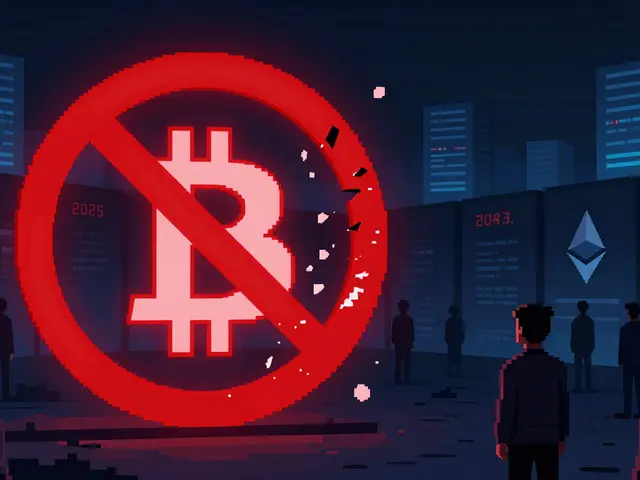
Indonesia lets you buy, sell, and trade cryptocurrency - but you can’t use it to pay for coffee, groceries, or an online order. That’s not a glitch. It’s the law. While crypto trading has exploded across the country, using Bitcoin, Ethereum, or USDT to make payments is strictly forbidden. The reason isn’t about technology or fear of innovation. It’s about control - and the rupiah’s monopoly as Indonesia’s only legal tender.
Why the Ban Exists
The core of Indonesia’s crypto payment ban lies in Bank Indonesia Regulation Number 18/40/PBI/2016 and its 2017 update. These rules don’t just discourage crypto payments - they outlaw them entirely. Every entity that handles money transfers, digital wallets, payment gateways, or electronic settlements is prohibited from processing transactions using virtual currencies. This includes big players like GoPay or OVO, and even small businesses trying to accept crypto directly. The legal backbone? Indonesia’s Currency Law. It states that only the rupiah can be used for payments. That’s non-negotiable. Even as crypto prices soared and global adoption grew, Bank Indonesia held firm. In November 2025, Agusman, Executive Director of Bank Indonesia’s Communication Department, made it clear: “Virtual currency including bitcoin is not recognized as a valid payment instrument.” The warning wasn’t new - it was a repeat of a policy that’s been unchanged since 2017. The reasoning? Financial stability. Bank Indonesia fears that allowing crypto payments could destabilize monetary policy, create untraceable cash flows, and expose consumers to extreme price swings. If someone pays for a laptop with Bitcoin and its value drops 20% the next day, who absorbs the loss? The merchant? The buyer? The banking system? Indonesia chose to cut the risk at the source.The Trading Side: A Different Story
Here’s where it gets complicated. While payments are banned, trading crypto is not just allowed - it’s heavily regulated and growing fast. On January 10, 2025, oversight of crypto assets moved from the Commodity Futures Trading Regulatory Agency (Bappebti) to the Financial Services Authority (OJK). This wasn’t a minor shuffle. It was a major upgrade. Under OJK Regulation No. 27 of 2024, crypto assets were reclassified from “commodities” to “digital financial assets.” That means they’re now treated more like stocks or bonds than soybeans or gold. The change came with strict rules:- Exchanges need at least IDR 50 billion (about $3.2 million) in capital.
- Custodians must hold IDR 25 billion ($1.6 million).
- Token issuers need IDR 10 billion ($640,000).
The Contradiction: Trading Allowed, Payments Banned
This is the heart of the problem. Indonesia has built one of Southeast Asia’s most advanced crypto trading frameworks - but then slapped a hard stop on payments. The result? A split personality in regulation. Businesses are stuck. You can legally trade crypto on Indodax, which handles 58% of Indonesia’s volume, but you can’t use those coins to pay your supplier. So what do people do? They find workarounds. According to a Kaskus forum thread viewed over 47,000 times, 82% of merchants who accept crypto convert it into gift cards, prepaid credits, or rupiah via peer-to-peer (P2P) traders. A merchant might get paid in USDT, instantly sell it to a P2P buyer for rupiah, then use that cash to restock inventory. It’s not illegal - technically - but it’s a loop designed to bypass the ban. User feedback confirms the frustration. On Reddit’s r/IndonesiaCrypto, a merchant named u/JakartaToko said they lost a $12,000 international order because the buyer’s company required payment in USDT - something Indonesian law blocked. “BI’s payment ban cost me three months of revenue,” they wrote. A survey by Indodax in August 2025 found that 74% of users think the payment ban is “outdated,” especially since trading is so tightly regulated. Sixty-three percent admitted to using informal crypto payments anyway.
How Indonesia Compares to Neighbors
Indonesia isn’t alone in restricting crypto payments, but its approach is unusually strict. - Thailand allows crypto payments for select merchants under pilot programs. Singapore permits licensed payment providers to process crypto transactions. Malaysia bans payments but is testing exceptions. Indonesia? No exceptions. No pilots. No gray areas. That makes it more like Vietnam, which also bans payments while regulating trading. But Vietnam lacks a centralized regulator like OJK - meaning its rules are patchy and enforcement is weak. Indonesia’s system is tighter, more structured, and more transparent. Still, the cost is real. A July 2025 analysis by Alvarez & Marsal found Indonesian businesses face 37% higher transaction costs and 3.2 extra business days to settle international payments because they can’t use crypto. They’re forced to use slow, expensive SWIFT transfers or traditional banks.Taxation Shifts: From VAT to Final Income Tax
On August 1, 2025, Indonesia changed how crypto is taxed. The old 1% VAT on crypto transactions was scrapped. Now, a flat 0.21% final income tax applies to every trade - whether you’re buying, selling, or swapping. This shift, under Minister of Finance Regulation No. 50 of 2025, treats crypto like securities, not goods. It’s simpler, easier to track, and aligns with OJK’s new financial asset classification. To enforce it, the Directorate General of Taxes (DJP) created a dedicated Crypto Asset Taxation Unit with 147 auditors. They’re now linked directly to OJK’s SIM IAKD system, giving them real-time access to trading data. If you trade crypto in Indonesia, the tax authority already knows.Market Growth Despite the Ban
Even with the payment ban, Indonesia’s crypto market is booming. In 2024, trading volume hit IDR 127.5 trillion ($8.1 billion) - up 28% from the year before. There are now 14.3 million active users, making it the third-largest crypto market in Southeast Asia after Vietnam and Thailand. Big companies are getting involved too. By Q2 2025, 87% of Indonesia’s top 100 publicly listed companies reported holding crypto assets - up from just 52% in late 2024. That’s not speculation. It’s institutional adoption. The market is dominated by three exchanges: Indodax (58%), Tokocrypto (27%), and Pintu (15%). International players like Binance barely register - less than 0.3% market share - because Indonesia’s licensing rules are too strict for them to operate legally.
Who’s Saying No to the Ban?
Not everyone agrees with the government’s stance. Robby, Chairman of the Indonesian Blockchain Association (ABI), warned in August 2025 that rigid rules are driving talent away. “We’re seeing brain drain,” he told lawmakers. “27 crypto professionals left for Singapore or Dubai in the first half of 2025.” William Sutanto, CTO of Indodax, called the situation “operational schizophrenia.” OJK is building a modern, innovation-friendly system - but Bank Indonesia is holding it back. “You can’t have one foot in the future and one foot in the past,” he said. Academic research backs this up. Professor Budi Suharjo from Universitas Gadjah Mada found that 68% of merchants still accept crypto payments through informal channels - despite the ban. That creates risks: no consumer protection, no dispute resolution, no recourse if a P2P trader vanishes.What’s Next?
There’s talk of change. Indonesia’s House of Representatives is reviewing Draft Law No. 12/2025 on Digital Rupiah Integration. It could one day allow crypto to interact with the central bank’s digital currency (CBDC) - maybe as a bridge for cross-border payments. But Bank Indonesia Governor Perry Warjiyo made it clear in October 2025: “Any relaxation of the payment prohibition would require comprehensive assessment of monetary policy transmission mechanisms.” Translation? Don’t expect changes anytime soon. For now, Indonesia walks a tightrope: embrace crypto as an asset class, but lock it out of everyday payments. The trading market thrives. The payment economy doesn’t. And millions of users are caught in between.Frequently Asked Questions
Can I use Bitcoin to pay for anything in Indonesia?
No. Under Bank Indonesia regulations, no business or individual can legally accept Bitcoin, Ethereum, or any other cryptocurrency as payment for goods or services. This applies to online stores, physical shops, restaurants, and even freelance services. Violating this rule can lead to penalties for payment system operators.
Is trading crypto legal in Indonesia?
Yes. Since January 2025, crypto trading has been fully regulated by the Financial Services Authority (OJK). Exchanges must be licensed, meet strict capital requirements, and follow anti-money laundering rules. Over 14 million Indonesians trade crypto legally through platforms like Indodax and Tokocrypto.
Why did Indonesia move crypto regulation from Bappebti to OJK?
The shift in January 2025 reclassified crypto from a commodity (like gold or soybeans) to a digital financial asset - similar to stocks or bonds. OJK, which oversees banks and securities, has more experience managing financial risk and investor protection than Bappebti, which focused on futures trading. This change brought clearer rules, better oversight, and stronger consumer safeguards.
What’s the tax rate on crypto in Indonesia?
As of August 1, 2025, crypto transactions are taxed at 0.21% of the transaction value as a final income tax. This replaced the previous 1% VAT. The tax applies to every trade - buying, selling, or swapping - and is automatically tracked through OJK’s monitoring system.
Can I send crypto from Indonesia to another country?
You can send crypto internationally as an asset transfer - for example, moving Bitcoin to a wallet abroad. But you cannot use it to pay for goods or services outside Indonesia if the recipient expects payment in crypto. Cross-border payments must still go through traditional banking channels to comply with the ban.
Are there penalties for using crypto as payment?
Yes. Payment system operators - like wallet providers or payment gateways - that process crypto payments can be fined up to IDR 5 billion ($320,000) per violation. Individuals who accept crypto directly aren’t typically targeted, but businesses doing so risk losing their operating licenses or facing legal action from Bank Indonesia.
Will Indonesia ever allow crypto payments in the future?
Not soon. While a draft law on Digital Rupiah integration is being reviewed, Bank Indonesia has stated any change would require a full assessment of its impact on monetary policy. For now, the payment ban remains firm. The government is focused on building a central bank digital currency (CBDC) rather than allowing private crypto to function as money.




roxanne nott
December 24, 2025 AT 20:41Dan Dellechiaie
December 26, 2025 AT 16:08Amit Kumar
December 27, 2025 AT 09:14Tyler Porter
December 29, 2025 AT 04:07Lloyd Yang
December 30, 2025 AT 20:52Janet Combs
January 1, 2026 AT 16:34Radha Reddy
January 1, 2026 AT 21:01Jayakanth Kesan
January 3, 2026 AT 00:06Ashley Lewis
January 4, 2026 AT 15:32Charles Freitas
January 6, 2026 AT 11:22Melissa Black
January 7, 2026 AT 23:14Sheila Ayu
January 8, 2026 AT 20:29Dusty Rogers
January 10, 2026 AT 15:16Vijay n
January 12, 2026 AT 12:42Collin Crawford
January 13, 2026 AT 21:33Shubham Singh
January 15, 2026 AT 02:48Megan O'Brien
January 16, 2026 AT 19:50Rachel McDonald
January 17, 2026 AT 12:03Zavier McGuire
January 19, 2026 AT 00:38vaibhav pushilkar
January 19, 2026 AT 14:51Sarah Glaser
January 21, 2026 AT 09:55Kevin Karpiak
January 21, 2026 AT 17:04Rebecca F
January 22, 2026 AT 01:44Brian Martitsch
January 23, 2026 AT 20:51