Remember June 2021? The crypto market was on fire, Dogecoin was making headlines daily, and everyone seemed to be hunting for the next big thing. Amidst this frenzy, a specific event caught the eye of many: the ElonDoge (EDOGE) x CoinMarketCap Mission airdrop. It wasn't just another giveaway; it was a $20,000 promotional campaign designed to bridge the gap between a niche meme coin and one of the world's largest cryptocurrency data platforms. If you were there, you might remember the excitement. If you weren't, understanding how these partnerships worked back then helps explain why so many tokens from that era have faded into obscurity today.
The Anatomy of the ElonDoge x CoinMarketCap Partnership
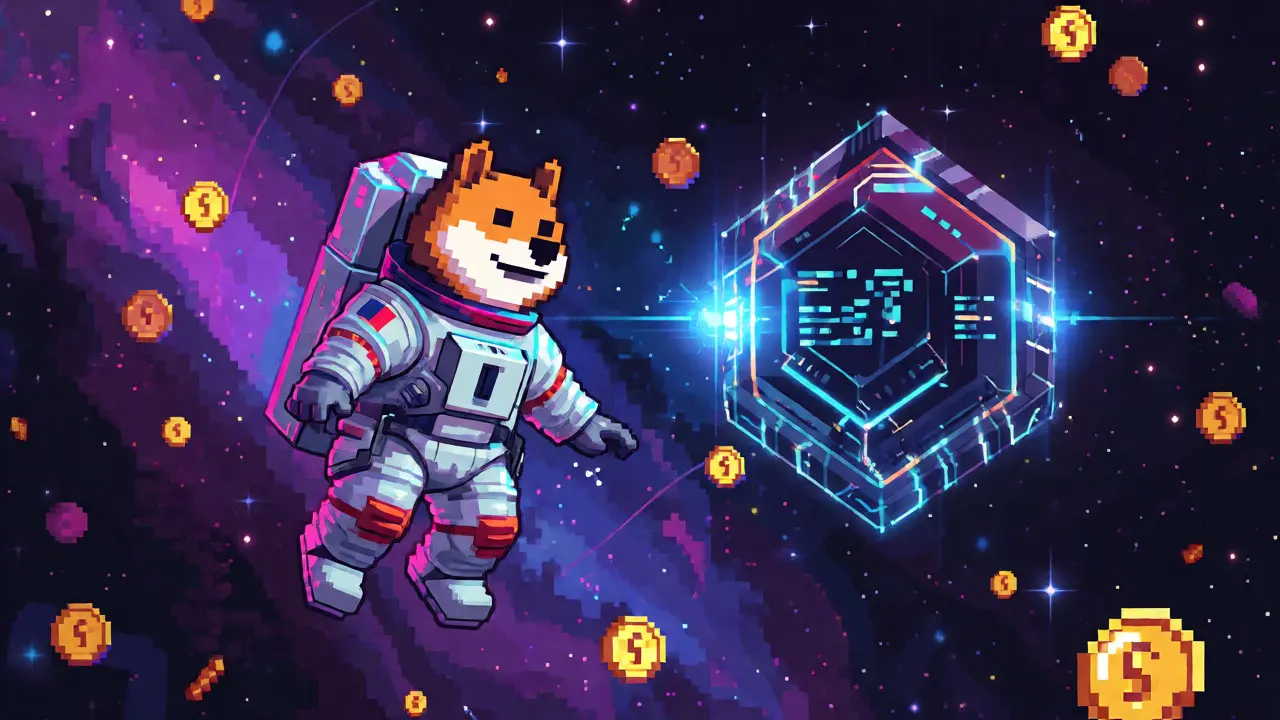
This collaboration was structured as a five-day campaign, leveraging CoinMarketCap's massive user base to distribute EDOGE tokens. The platform, founded by Brandon Chez in 2013, positioned the partnership with playful branding, calling it an "interplanetary partnership with the CoinMarketCap station." This space-themed language wasn't accidental. It aligned perfectly with the branding of Dogecoin derivatives, which often leaned heavily into lunar and Martian metaphors to capture the imagination of retail investors.
The core mechanic was simple yet effective. Users engaged with educational content or completed specific tasks on CoinMarketCap to qualify for their share of the $20,000 token pool. This approach served two purposes. First, it increased awareness for ElonDoge, a project trying to carve out its own identity separate from the original Dogecoin. Second, it reinforced CoinMarketCap's role not just as a data aggregator, but as an educational hub. By tying rewards to learning, they ensured that participants weren't just grabbing free money-they were actually engaging with the project's narrative.
Understanding the ElonDoge Ecosystem and EDAO
To grasp the value of the airdropped tokens, you need to look at what they represented. ElonDoge didn't exist in a vacuum. It launched alongside a governance token called ElonDoge DAO (EDAO). Launched on PancakeSwap in June 2021, EDAO had a genesis supply of 100,000 tokens. Only 2% of this supply went toward liquidity, a tight constraint that aimed to stabilize early trading but also limited immediate accessibility.
The DAO structure was meant to give holders real power. EDAO holders could vote on NFT auctions, manage reserves, and decide on partnerships through the associated ElonFuel launchpad. This was a common trend in 2021: meme coins trying to shed their "joke" status by adding decentralized governance layers. However, the complexity often outweighed the utility for casual users. Most people participating in the airdrop wanted quick gains, not voting rights on NFT reserve management.
| Entity | Type | Launch Date | Primary Function | Current Status (2026) |
|---|---|---|---|---|
| ElonDoge (EDOGE) | Meme Token | June 2021 | Speculative Asset / Community Meme | Trading at ~$0.000000004163 USD |
| ElonDoge DAO (EDAO) | Governance Token | June 2021 | Voting on NFTs, Partnerships, Launchpad | Low activity, minimal volume |
| CoinMarketCap | Data Platform | May 2013 | Crypto Data Aggregation & Education | Active leader in crypto data |
| PancakeSwap | DEX | Sept 2020 | Liquidity Provision & Trading | Major BNB Chain DEX |

The Broader Context of 2021 Crypto Airdrops
The ElonDoge campaign wasn't unique. In 2021, airdrops were the primary marketing tool for new projects. Why spend millions on traditional advertising when you can distribute tokens directly to your target audience? Platforms like CoinMarketCap became ideal partners because they already had the traffic. They didn't need to find users; they just needed to direct them.
CoinMarketCap has continued this strategy with its "Learn and Earn" campaigns. For instance, they've run YouTube launches offering USDT and diamonds for completing quizzes. These modern iterations are more refined, focusing heavily on education. But back in 2021, the focus was often more on hype than substance. The ElonDoge airdrop capitalized on the peak of the meme coin craze, following Dogecoin's surge earlier that year. It was a time when sentiment drove prices, and community engagement mattered more than technical fundamentals.
What Happened to the Value?
Let's be honest about the outcome. Today, in September 2026, EDOGE trades at roughly $0.000000004163 USD. That's a fraction of a cent, with minimal 24-hour trading volume. If you held onto your airdropped tokens since 2021, you likely experienced significant depreciation. This isn't unusual for meme coins launched during bull markets. The initial promotional value-$20,000 spread across thousands of users-created a temporary spike in interest, but sustained demand requires more than just a catchy name and a partnership.
Compare this to other Doge-themed tokens. MOONDOGE trades around $0.0000828 USD with modest volume, while others like the Doge-1 Mission to the Moon token maintain small but active communities with over 2,000 holders. ElonDoge's struggle highlights a critical lesson: partnerships boost visibility, but they don't guarantee longevity. Without continuous development, marketing, and genuine utility, even well-funded airdrops fade away.

Lessons for Modern Crypto Participants
If you're looking at airdrops today, the ElonDoge story offers several takeaways. First, check the ecosystem. Does the token have a purpose beyond speculation? The EDAO governance model was ambitious, but did it attract enough active voters to make a difference? Often, the answer is no. Second, consider the partner. CoinMarketCap is a reputable platform, but their involvement doesn't validate the underlying asset's long-term potential. They provide reach, not financial advice.
Third, understand the timing. Airdrops during peak hype cycles often lead to higher sell pressure immediately after distribution. People grab the free tokens and dump them for profit. This creates a downward price spiral that few projects recover from. The five-day duration of the ElonDoge campaign suggests a rapid distribution phase, which likely contributed to immediate selling.
The Current State of Crypto Airdrops
As of late 2026, CoinMarketCap's airdrop infrastructure shows signs of reduced activity compared to the 2021 boom. Their current interface displays zero active campaigns and loading statuses for historical data, indicating either maintenance or a strategic shift. The industry has matured. Airdrops are now more selective, often tied to proof-of-work or specific on-chain activities rather than simple social media tasks.
For investors, this means fewer opportunities for easy wins but potentially higher-quality distributions. The days of spraying tokens to anyone with a Twitter account are fading. Projects are now targeting users who actually use their protocols. This shift aims to build stronger, more committed communities-a lesson learned painfully from the post-2021 crash where many airdropped tokens lost 90%+ of their value.
Was the ElonDoge airdrop successful?
In terms of distribution and initial awareness, yes. It successfully placed $20,000 worth of tokens into the hands of users via CoinMarketCap. However, in terms of long-term value retention and community sustainability, it struggled. The token price dropped significantly, and trading volume remains low years later.
What is EDAO and how does it relate to ElonDoge?
EDAO (ElonDoge DAO) is the governance token for the ElonDoge ecosystem. Launched on PancakeSwap in June 2021, it allows holders to vote on decisions regarding NFT auctions, partnerships, and the ElonFuel launchpad. It was designed to add utility and decentralization to the meme coin project.
Why do meme coin airdrops often lose value?
Meme coin airdrops often suffer from high sell pressure immediately after distribution. Recipients may not believe in the long-term vision and sell for quick profit. Additionally, if the project lacks continuous development or real-world utility, demand dries up once the initial hype fades.
How did CoinMarketCap benefit from this partnership?
CoinMarketCap benefited by reinforcing its position as a key player in crypto education and discovery. By hosting the airdrop, they drove traffic to their platform and demonstrated their ability to connect emerging projects with mainstream audiences. It also aligned with their mission to make cryptocurrency accessible worldwide.
Are there still active airdrops on CoinMarketCap in 2026?
The frequency of large-scale, high-value airdrops like the ElonDoge mission has decreased. CoinMarketCap now focuses more on targeted "Learn and Earn" campaigns and smaller, consistent distributions. Check their current listings for the most up-to-date information on active campaigns.