
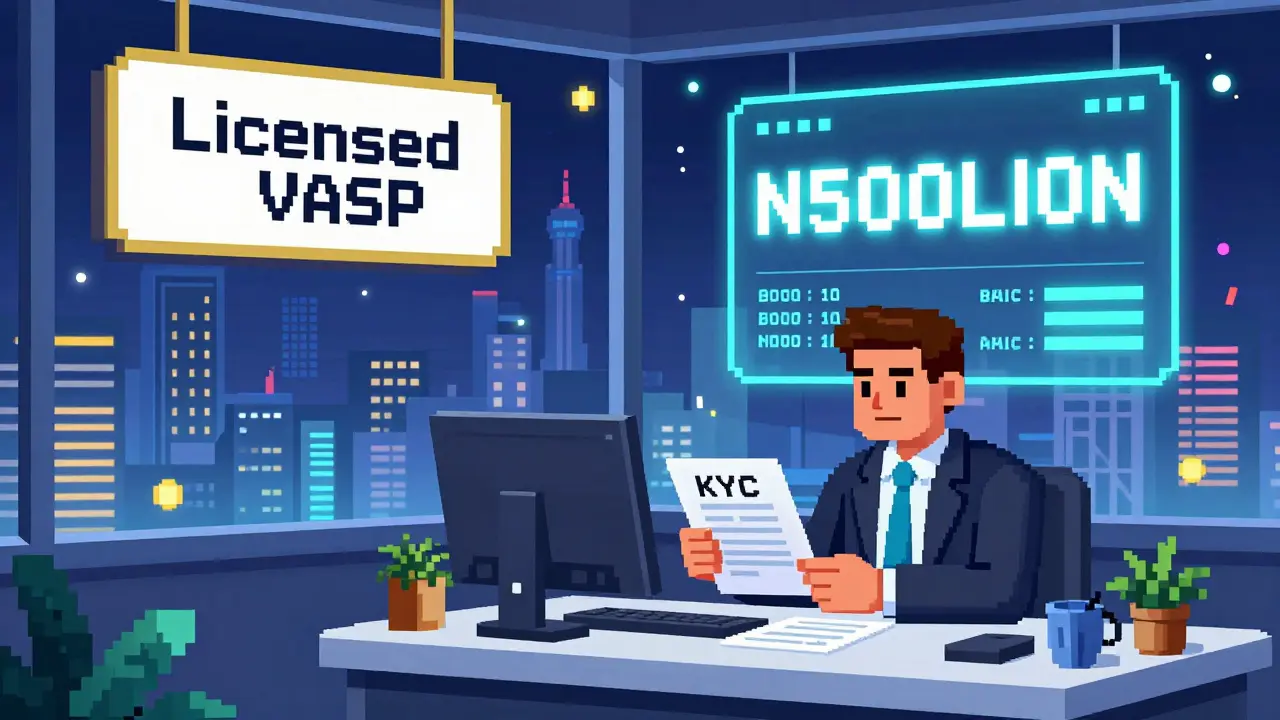
What Is a VASP License in Nigeria?
A VASP (Virtual Asset Service Provider) license in Nigeria is the only legal way for crypto businesses to operate after the 2025 Investments and Securities Act. Before this, crypto companies worked in a gray zone-banks blocked them, customers used peer-to-peer apps, and regulators stayed silent. Now, the Securities and Exchange Commission (SEC) requires every crypto exchange, wallet provider, staking platform, or mining operation to get licensed. Without it, you’re breaking the law.
The license covers everything from buying and selling Bitcoin to running a crypto payment gateway or distributing tokens through airdrops. If your business touches virtual assets in Nigeria, you need this license. There’s no workaround. Even if you’re based overseas but serve Nigerian customers, you still have to apply.
Minimum Capital Requirement: N500 Million
The biggest hurdle for most startups is the N500 million (about $325,000 USD) paid-up capital requirement. This isn’t a suggestion-it’s a hard rule. You must show proof that this money is actually in your company’s bank account, not just promised. The SEC doesn’t accept loans or investor pledges as proof. You need audited financial statements showing the full amount as equity.
This requirement is among the highest in Africa. Compare it to Kenya or Ghana, where capital requirements are under $50,000. Nigeria’s goal is clear: keep out fly-by-night operators. Only companies with serious funding can survive the compliance load. Many small exchanges have already shut down because they couldn’t meet this threshold.
Corporate Registration and Local Presence
You can’t apply for a VASP license unless your company is legally registered with the Corporate Affairs Commission (CAC). That means you need a Certificate of Incorporation, Memorandum and Articles of Association (MEMART), and a current CAC status report. These aren’t paperwork formalities-they’re gatekeepers.
But here’s the catch: you must also have a physical office in Nigeria. Not a PO box. Not a co-working space. A real office with a sign, a receptionist, and a director who lives in Nigeria. The SEC wants someone on the ground who can be summoned for meetings or investigations. This kills remote-only models. International crypto firms either hire a local director or partner with a Nigerian entity.
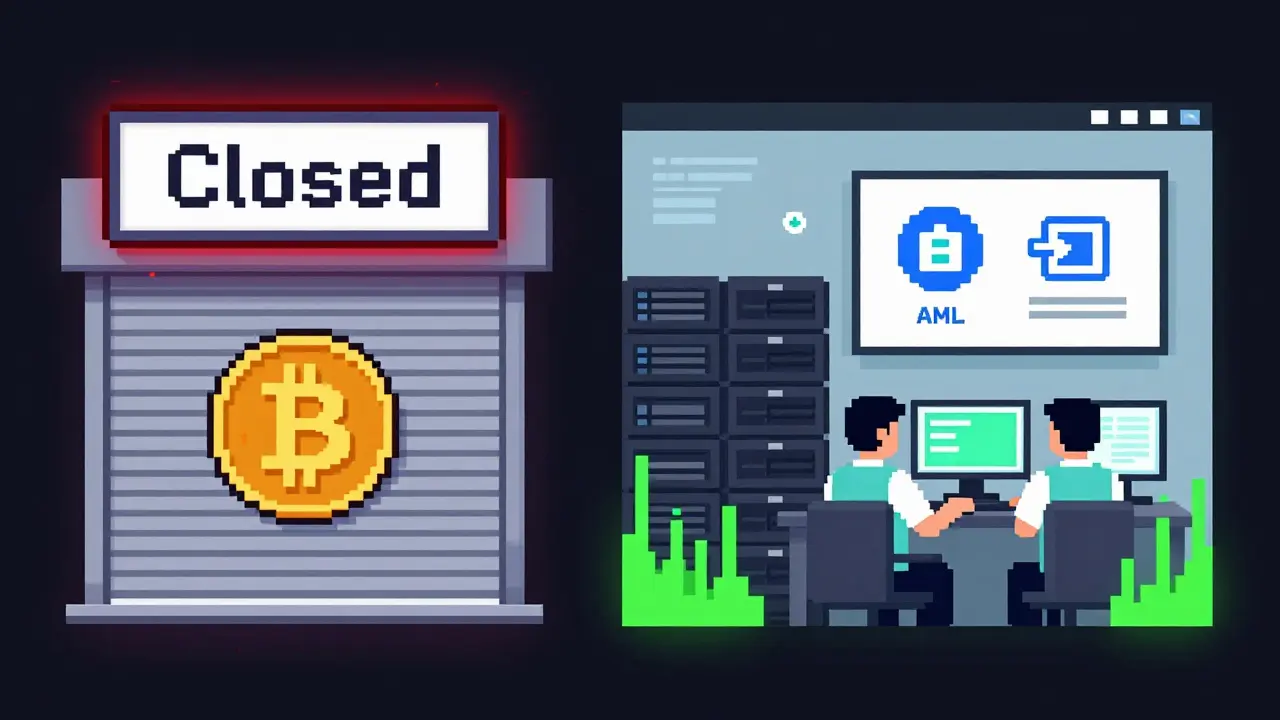
Operational Compliance: KYC, AML, and Record Keeping
Once you’re incorporated and funded, you need to prove you can run a secure, compliant business. The SEC demands full Know Your Customer (KYC) and Anti-Money Laundering (AML) systems. That means:
- Verifying every user’s ID with government-issued documents
- Collecting proof of address and source of funds
- Blocking anonymous transactions
- Monitoring for suspicious patterns (like rapid deposits followed by withdrawals)
You also need to keep all customer records for seven years-emails, transaction logs, ID scans, even chat logs with support teams. That’s longer than most banks. Failure to maintain these records can lead to license suspension or fines.
Your system must also be secure. The SEC’s Technology Risk Management guidelines require firewalls, encryption, two-factor authentication, and regular penetration testing. If you’ve ever been hacked, you won’t get approved.
The Two Paths: Standard License vs. ARIP
Nigeria offers two routes to get licensed:
- Standard Application: Submit everything at once-capital proof, documents, policies, tech specs. The SEC takes 4-8 months to review. Most companies fail here because they miss one small detail.
- Accelerated Regulatory Incubation Program (ARIP): This is for serious players who want to start fast. You apply with a basic business plan, proof of incorporation, and a Nigerian office. The SEC gives you preliminary approval in principle. You can begin operating under supervision while you finish the rest.
ARIP isn’t a shortcut-it’s a probation period. You must submit quarterly progress reports. At month 10, the SEC checks your progress. At month 12, you either get your full license or get told to shut down. Many startups use ARIP to test the market before spending millions on full compliance.
Documentation You Must Submit
Here’s the full checklist the SEC expects:
- CAC Certificate and Status Report
- Audited financial statements or statements of affairs
- Business model document explaining your service, revenue model, and target users
- Complete KYC and AML policy manuals
- Risk management framework covering fraud, cyber threats, and operational failures
- Investor protection rules and dispute resolution process
- Staffing plan showing compliance officers, tech team, and customer support
- Technical infrastructure specs (servers, data centers, backup systems)
- Letters of no objection from CBN or other regulators (if applicable)
- Sworn undertaking signed by director/company secretary
Missing one item? Your application gets returned. No second chances. The SEC doesn’t give feedback unless you ask-and even then, responses are slow.
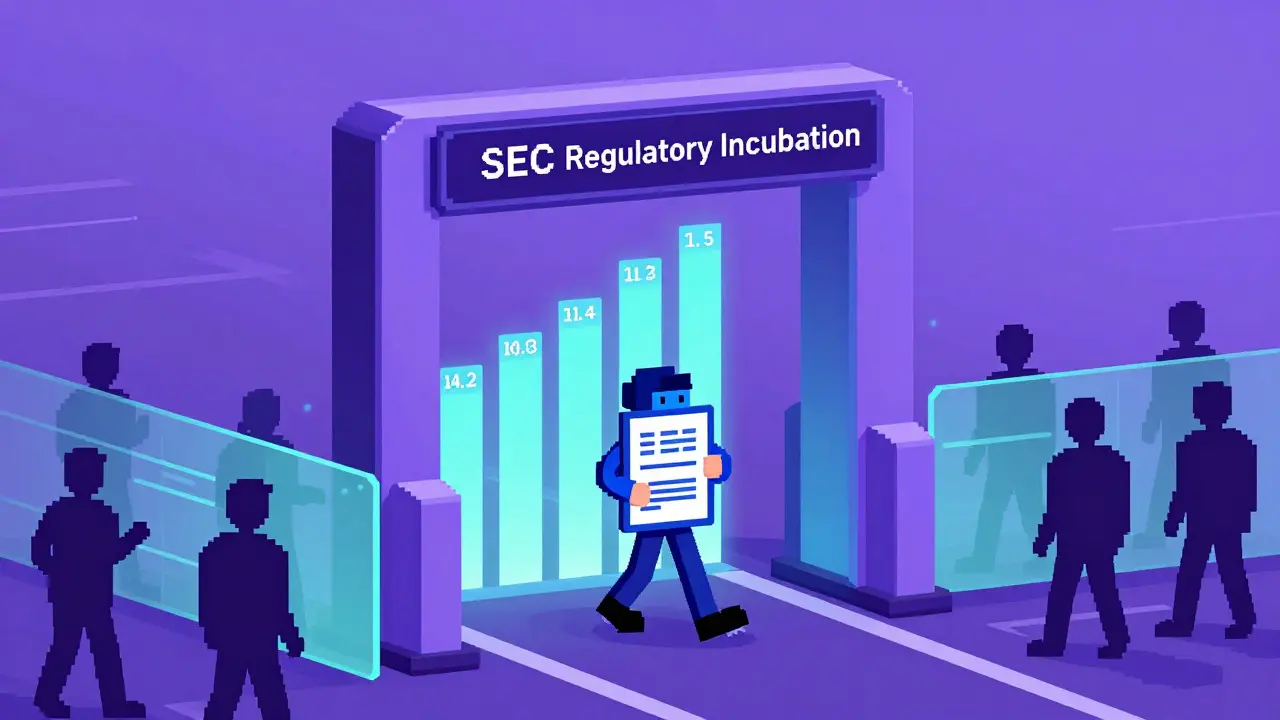
Why This Matters for the Nigerian Crypto Market
This isn’t just about regulation-it’s about survival. Before 2025, Nigeria had the highest crypto adoption in Africa. People used Bitcoin to send remittances, pay for goods, and protect savings from inflation. But banks refused to work with crypto firms. Now, licensed VASPs can open bank accounts. They can partner with fintechs. They can get insurance. They can grow.
But the cost is high. Compliance expenses for a medium-sized exchange now run over N20 million per year. That’s rent, salaries, audits, software, legal fees. Many small players can’t afford it. The market is consolidating. Only big firms with VC backing or foreign investment will survive.
The government’s goal? Tax revenue. Nigeria wants to pull crypto into the formal economy. Right now, less than 10% of GDP comes from taxes. They aim for 18% by 2027. Crypto transactions were invisible. Now, every trade is tracked. Every profit is taxable.
What Happens If You Don’t Apply?
If you’re operating without a license, you’re at risk. The SEC can:
- Order banks to freeze your accounts
- Block your website from Nigerian ISPs
- Impose fines up to N100 million
- Prosecute directors for operating an unlicensed financial business
Several unlicensed exchanges have already been shut down. Their owners received warning letters. Some were summoned for interviews. Others got their domains seized. There’s no grace period anymore.
Is This the Future for Africa?
Nigeria is leading the way. Ghana, Kenya, and South Africa are watching closely. If this system works-stable, secure, and tax-compliant-it could become the model for the whole region. But it’s not perfect. Critics say it favors big players and pushes innovation underground. Supporters say it brings legitimacy and protects users from scams.
The truth? It’s a trade-off. You trade freedom for safety. You trade speed for stability. And if you’re serious about building a crypto business in Nigeria, you have no choice but to play by these rules.

Rajappa Manohar
December 29, 2025 AT 23:20They just want to kill innovation.
Jacky Baltes
December 30, 2025 AT 13:59prashant choudhari
January 1, 2026 AT 12:22Willis Shane
January 1, 2026 AT 23:10Jake West
January 2, 2026 AT 23:51Shawn Roberts
January 3, 2026 AT 11:16Finally someone’s trying to make crypto legit in Africa!
Yeah it’s tough but if you’re serious you’ll make it work
And hey-taxes mean the system’s working 🚀
Abhisekh Chakraborty
January 4, 2026 AT 21:45dina amanda
January 6, 2026 AT 06:02Emily L
January 6, 2026 AT 10:26Andrea Stewart
January 7, 2026 AT 05:21Monty Burn
January 8, 2026 AT 10:41But we also don’t trust you to be responsible
So we build cages made of forms
And call them safety
Kenneth Mclaren
January 10, 2026 AT 08:38Raja Oleholeh
January 11, 2026 AT 05:53Prateek Chitransh
January 12, 2026 AT 05:32Amy Garrett
January 12, 2026 AT 12:14Haritha Kusal
January 13, 2026 AT 21:10Phil McGinnis
January 15, 2026 AT 14:06Ian Koerich Maciel
January 16, 2026 AT 03:19Andy Reynolds
January 17, 2026 AT 05:46Alex Strachan
January 18, 2026 AT 16:30Rick Hengehold
January 19, 2026 AT 03:57Antonio Snoddy
January 19, 2026 AT 05:59Ryan Husain
January 20, 2026 AT 23:02