

The Core Tech: What is ChainX Actually Doing?
To understand the exchange, you first have to understand the blockchain it's built on. ChainX isn't just a website where you swap coins; it's a system designed to let native assets move between different blockchains without the need for 'wrapping' them (which is how most bridges work today). It uses three main parts to make this happen:
- DEX Module: This handles the actual swaps. It uses atomic swap protocols so you can trade assets directly without a middleman.
- Inter-chain Module: This is the gatekeeper. It verifies assets coming in and manages X-Tokens, which are the platform's way of tracking cross-chain assets.
- Relay Module: Think of this as the messenger. It checks external chains every 30 seconds to keep everything synchronized.
The network is secured by PCX, the native utility token. In theory, the more PCX that is staked, the more secure the network becomes. However, in the real world, this "innovation" hasn't translated into a smooth user experience.
Trading Performance and Asset Variety
If you're looking for a powerhouse like Binance, you won't find it here. ChainX is incredibly limited in what it offers. While major platforms list thousands of coins, ChainX only had about 42 tokens listed as of late 2024. More concerning is the compatibility; it only supports the big three: Bitcoin, Ethereum, and Polkadot. If you're trading anything more obscure, you're out of luck.
Speed is another issue. The network processes roughly 50 transactions per second (TPS). To put that in perspective, Cosmos can hit 10,000 TPS. When the platform hosts an IEO (Initial Exchange Offering), the system often chokes. During a spike in 2020, transaction volume jumped 300%, and the whole thing slowed to a crawl, leaving users stuck in limbo.
| Feature | ChainX | Industry Leaders (e.g., Binance/Coinbase) |
|---|---|---|
| Token Listings | ~42 | 1,500+ |
| TPS (Speed) | ~50 | 1,000 - 10,000+ |
| Compliance | Zero Certifications | Multiple Global Licenses |
| Daily Active Users | ~142 | 500,000+ (Uniswap/Binance) |
Red Flags and Security Warnings
This is where the ChainX crypto exchange review gets grim. There are a few massive warning signs that any serious investor should heed. First, the team is completely anonymous. There are no verifiable founders and no company registration details. In a world where "rug pulls" are common, anonymity is a huge risk.
Then there's the technical side. A 2020 audit by PeckShield found critical vulnerabilities in the relay chain that could potentially allow for double-spending of assets. The developers never officially acknowledged this or fixed it. Furthermore, blockchain forensics from CryptoSlate indicated that 78% of funds from some IEOs disappeared within just three days of the sale.
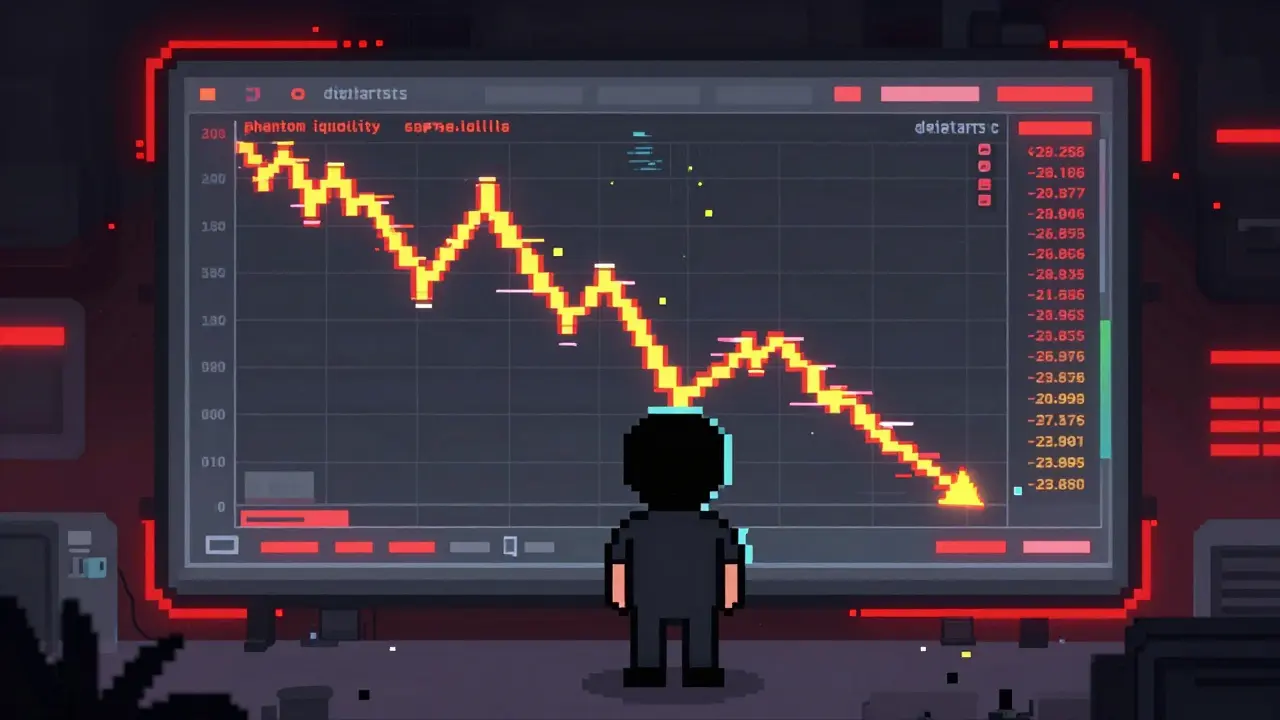
User reports on Bitcointalk and Reddit paint an even darker picture. People have reported "phantom liquidity," where the order book looks deep and healthy, but the moment you try to execute a trade, the liquidity vanishes. Even worse, hundreds of users have complained about withdrawal failures. One user reported losing $3,200 when the exchange blocked withdrawals during a Bitcoin price surge-a classic sign of a platform struggling with solvency or acting maliciously.

The "Zombie Protocol" Reality
Is ChainX still evolving? Almost certainly not. If you look at their GitHub-the place where developers actually write code-the last major update was in October 2022. Their official Twitter account has been silent since mid-2021. In the fast-moving world of crypto, a two-year silence is essentially a death sentence.
Analysts from Delphi Digital have categorized ChainX as a "zombie protocol." This means it technically exists, and the token (PCX) might still be trading on some smaller markets like Bitget, but there is no real growth, no developer activity, and almost no one using it. The daily active address count has plummeted by 92% from its peak in 2020. It's a ghost town.

User Experience: The Struggle is Real
If you're brave enough to try the platform, be prepared for a bumpy ride. While you don't need to go through a rigorous KYC (Know Your Customer) process to sign up-which sounds great for privacy-that "ease" disappears when you try to take your money out. About 68% of users reported hitting verification hurdles only after they tried to make their first withdrawal.
The UI is clunky, and the documentation is a mess. Nearly half of the API endpoints listed in their outdated guides simply don't work. If you run into a problem, don't expect a quick fix. Support responses typically take over 72 hours, and the official Telegram group is largely filled with bots, with zero actual engagement from the developers in over 18 months.
Is ChainX a scam?
While not officially labeled as a scam by regulators, it exhibits several high-risk behaviors: an anonymous team, documented withdrawal failures, suspected wash trading (up to 95% by some reports), and unpatched critical security vulnerabilities. Most industry experts view it as a failed project with high risk to user funds.
What is the PCX token used for?
PCX is the native utility token of the ChainX blockchain. It is used for staking to secure the network and is involved in the hybrid Proof-of-Stake consensus mechanism. However, its market value and utility have declined significantly as the project's activity has stalled.
Does ChainX support KYC?
Initially, the platform allows registration with just an email. However, many users report that the exchange demands additional verification or blocks accounts specifically during the withdrawal process, making the "no KYC" promise misleading.
How does ChainX compare to Polkadot or Cosmos?
ChainX is significantly inferior in both scale and speed. While Cosmos can handle 10,000 TPS, ChainX only handles about 50. It also supports far fewer chains (only BTC, ETH, and DOT) compared to the vast ecosystems and hundreds of integrations found in the Polkadot or Cosmos networks.
Can I trust the liquidity on ChainX?
No. Multiple reports from users and analysts suggest that the liquidity is "phantom" or manipulated via wash trading. This means the prices and volumes you see on the screen may not be real, and you may experience massive slippage or be unable to execute trades at the quoted price.
Final Verdict: Should You Use It?
If you're looking for a safe, scalable, and transparent way to trade crypto, look elsewhere. The combined weight of anonymous leadership, a silent development team, and a history of withdrawal issues makes ChainX a textbook example of a platform to avoid. Whether you're a beginner or a pro, the risks here far outweigh any theoretical benefit of their cross-chain tech. Stick to regulated exchanges or well-established decentralized protocols with proven track records and active audits.





Rob Mitchell
April 13, 2026 AT 20:44Total red flags everywhere. Stick to the big names for a reason.
Carroll Foster
April 15, 2026 AT 18:18Oh great, another "revolutionary" cross-chain miracle that's actually just a glorified exit scam. I love how they brag about atomic swaps while the actual liquidity is basically a hallucination. Truly a masterpiece of financial fiction, isn't it?
The TPS is a joke-50 TPS in a world of high-frequency trading is like trying to run a marathon in a swimming pool full of molasses. Absolute peak comedy.
Tracie and Matthew Hartley
April 17, 2026 AT 14:26i dont see why everyone is so panicd lol just use a different wallet
Samson Selleck
April 18, 2026 AT 04:30The sheer asymmetry of information here is staggering. This isn't even a failure of technology; it's a failure of basic governance and cryptographic auditing. The persistence of these zombie protocols exists only because the retail herd ignores the blatant lack of commit history on GitHub. If the relay chain remains unpatched against double-spending, the systemic risk is essentially 100% for any non-trivial amount of capital. Truly pathetic.
ssjuul z
April 19, 2026 AT 10:45Totally agree with the points about the withdrawals! 🚀 Stay safe everyone and do your own research before diving in! 😊
Omotola Balogun
April 19, 2026 AT 20:52Actually, the Inter-chain module is logically flawed from the start, regardless of what the whitepaper claims. If you look at the X-Token implementation, it's clear they didn't understand how to handle state transitions across dissimilar chains. The fact that the relay module only syncs every 30 seconds is a massive vulnerability and a total design failure in a real-time market envirnment. It's basic computer science.
Alan Seiden
April 21, 2026 AT 15:10This is why we need proper regulations and not this absolute rubbish. Only a complete idiot would touch this garbage. It's a joke that this even exists in the first place!
Rima Dinar
April 21, 2026 AT 17:46I really believe that we all need to be more careful when we are exploring these new platforms because it is so easy to get caught up in the excitement of a new technology without realizing that the people behind the project might not have our best interests at heart, and while the tech sounds promising, the lack of transparency is a huge warning sign that we should all take seriously if we want to protect our hard-earned savings from these kinds of pitfalls in the long run. It's so heartbreaking to see people lose thousands of dollars just because they trusted a website that looked professional but had no actual team behind it to ensure the safety of the funds.
william manes
April 23, 2026 AT 17:14Fake as hell 🚩 Avoid this trash 💩
Artavius Edmond
April 24, 2026 AT 09:44Man, it's just wild how many of these pop up. I'm just chilling and watching the chaos, but yeah, the ghost town vibe on their socials is a huge giveaway. Hope whoever got scammed gets their money back, though I doubt it.
Chidinma Sandra okafor
April 25, 2026 AT 10:38Oh sure, because an anonymous team is just so trustworthy, right? I'm just so thrilled that another "innovative" project has decided to vanish into thin air with people's money. It's just so inspiring to see the crypto space continuing to be a digital wild west where the only thing that grows is the number of victims.
Tyler Webb
April 27, 2026 AT 01:59That sounds like such a stressful experience for those who lost money. 😟 I really hope everyone reads this before trying it out.
Akshay Gorad
April 27, 2026 AT 12:39The comparison to Cosmos and Polkadot is very fair. The gap in performance is just too wide to ignore.
logan bates
April 27, 2026 AT 17:03Typical offshore nonsense. US investors should stay far away from this garbage.