Have you ever stumbled upon a cryptocurrency platform that promises innovation but feels eerily quiet? That is exactly what happens when you look at CarbonSwap, a decentralized exchange operating on the Energy Web Chain with negligible trading volume and no active market presence as of 2026. If you are reading this because you found the token in your wallet or saw it mentioned in an old forum post, you might be wondering if it is still alive. The short answer? Probably not in any meaningful way.
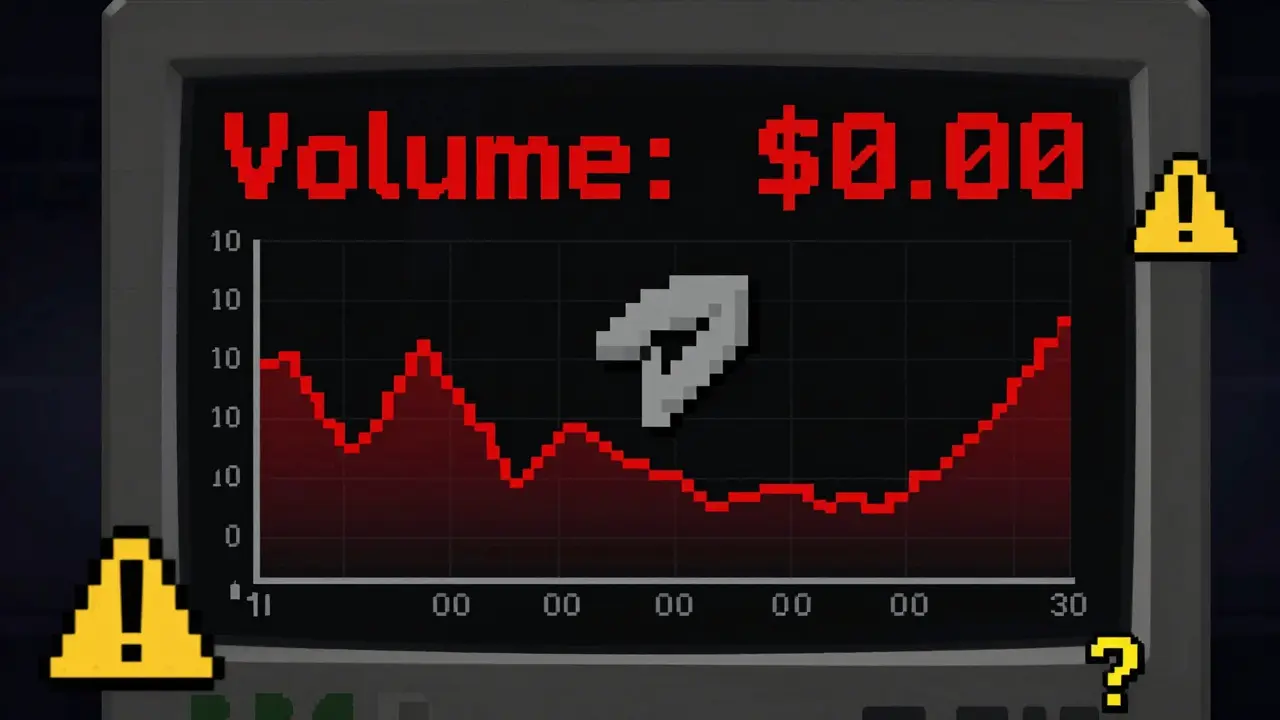
In the world of crypto, silence is rarely a good sign. Most legitimate exchanges buzz with activity-traders buying and selling, liquidity pools updating, and developers pushing code changes. CarbonSwap, however, shows zero trading volume and a token price of $0.00 according to major trackers like LiveCoinWatch. This article breaks down what CarbonSwap actually is, why it lacks credibility compared to giants like Kraken or Uniswap, and what you should do if you hold its tokens today.
What Exactly Is CarbonSwap?
To understand why CarbonSwap isn't making headlines, we first need to define what it claims to be. CarbonSwap is classified as a Decentralized Exchange (DEX). Unlike centralized platforms such as Coinbase or Binance, which act as intermediaries holding your funds, a DEX allows peer-to-peer trading directly through smart contracts. CarbonSwap specifically operates on the Energy Web Chain (EWC), an Ethereum-compatible blockchain designed specifically for the energy sector to enable green energy trading and carbon credit verification.
The Energy Web Chain itself is a legitimate project backed by serious players in the renewable energy space. However, just because the underlying blockchain is real doesn't mean every app built on it is functional. CarbonSwap was described in minimal listings on CoinMarketCap as a "long-term creator vision- and community-driven effort" with a weighted token-based governance model. That sounds fancy, but without users, liquidity, or trades, governance is mostly theoretical.
Here is the hard truth: there is no verifiable technical documentation, whitepaper, or developer repository publicly available for CarbonSwap. You cannot find security audits, API docs, or even a clear roadmap. For a financial platform, this absence of transparency is a massive red flag. When you compare this to established DEXs like Uniswap, which publishes detailed GitHub repositories and undergoes regular third-party audits, CarbonSwap looks less like a financial tool and more like a ghost town.
The Data Problem: Zero Volume and No Liquidity
If you want to trade crypto, you need two things: buyers and sellers. This is called liquidity. Without it, you can't sell your assets quickly, and the price becomes meaningless. As of May 2026, CarbonSwap shows absolutely no measurable trading volume. LiveCoinWatch lists its price at $0.00. This doesn't necessarily mean the token is worthless in a philosophical sense, but it does mean there is no market for it.
Let's put this in perspective. Major exchanges handle millions of transactions daily. Binance, for instance, handles over 1.4 million orders per second during peak times. Even smaller, niche DEXs usually have some daily turnover. CarbonSwap has none. Why does this matter? Because if you try to swap your CarbonSwap tokens for something else, you likely won't find anyone willing to take them. There are no liquidity pools to draw from, meaning your assets are effectively stuck.
This lack of activity also raises questions about the platform's infrastructure. Are the servers running? Is the smart contract deployed and functional? Without recent transaction data on the blockchain explorer for Energy Web Chain, we simply don't know. But in the fast-moving crypto world, a platform that hasn't processed a trade in months-or years-is generally considered dead.
How CarbonSwap Compares to Trusted Exchanges
You might be thinking, "Why should I care about big exchanges when I'm asking about CarbonSwap?" The comparison helps highlight what makes an exchange safe and usable. Let's look at how CarbonSwap stacks up against reputable platforms recommended in 2026 analyses, such as Kraken and eToro.
| Feature | CarbonSwap | Kraken | Uniswap (DEX) |
|---|---|---|---|
| Type | EWC DEX | Centralized (CEX) | Ethereum DEX |
| Trading Volume | $0.00 (Inactive) | Billions monthly | Billions monthly |
| Security Audits | None public | Regular third-party audits | Regular third-party audits |
| Fees | Unknown | 0% - 0.40% | 0.30% standard |
| User Support | Non-existent | 24/7 Dedicated support | Community/GitHub only |
| Insurance/Cold Storage | No evidence | Cold storage for majority of assets | User-controlled keys |
As you can see, the gap is enormous. Kraken offers spot margin trading, futures contracts, and robust customer support. Uniswap provides deep liquidity across thousands of pairs. CarbonSwap offers... nothing currently. The Benzinga list of trusted exchanges for 2026 includes platforms like Robinhood and eToro, all of which have verifiable user bases and regulatory compliance. CarbonSwap is absent from these lists entirely.
This isn't just about preference; it's about risk management. Using an exchange with no security history means you have no guarantee your funds are safe. With Kraken, you know they use cold storage and have insurance coverage for certain holdings. With CarbonSwap, if the smart contract has a bug, there is no team to call, no insurance to claim, and no backup plan.
Is CarbonSwap a Scam or Just Abandoned?
This is the question most people really want answered. Is someone stealing money, or did the developers just give up? Based on the available evidence, it leans heavily toward "abandoned." A scam typically involves hype, fake promises, and then a sudden disappearance after raising funds. CarbonSwap never had significant hype. It appears to have been a small, community-driven experiment that failed to gain traction.
However, "abandoned" doesn't mean "safe." An abandoned project is risky because there is no one maintaining the code. If the Energy Web Chain updates its protocol, CarbonSwap's smart contracts might break. If a new vulnerability is discovered in the underlying technology, no one will patch CarbonSwap. Your assets could become inaccessible forever.
Furthermore, the lack of user feedback is telling. Major exchanges generate thousands of reviews on Trustpilot, Reddit, and app stores. You can find complaints about high fees on Coinbase or slow withdrawals on other platforms. But for CarbonSwap? Silence. No Reddit threads, no Twitter mentions, no YouTube tutorials. This suggests that either no one uses it, or those who tried it gave up immediately due to poor functionality.
Tax Implications: What Summ Says
Even if you aren't actively trading, owning tokens on an inactive platform can have tax implications. The tax software company Summ includes CarbonSwap in its guides, noting that "transactions on CarbonSwap require specific tax filing procedures." This confirms that tax authorities recognize CarbonSwap as a taxable event source, even if the platform is dormant.
If you acquired CarbonSwap tokens through a trade, airdrop, or early participation, you may need to report their fair market value at the time of receipt. Since the current price is $0.00, this might seem easy, but historical valuations matter. If you traded another crypto asset for CarbonSwap tokens in the past, that was a taxable disposal event. You would need to calculate the capital gain or loss based on the value of the tokens at that time versus what you gave up.
Don't ignore this just because the exchange seems dead. Tax laws apply to all digital assets, regardless of whether they are currently tradable. Keep records of any transactions involving CarbonSwap, including dates, amounts, and the value of the assets exchanged. If you're unsure, consult a tax professional familiar with cryptocurrency regulations in your jurisdiction.
What Should You Do With CarbonSwap Tokens?
If you find CarbonSwap tokens sitting in your wallet, here is your practical game plan:
- Do Not Expect Profit: With zero liquidity and no trading volume, there is no realistic path to selling these tokens for a profit. Any website claiming to buy CarbonSwap at a high price is likely a scam trying to steal your private keys.
- Secure Your Wallet: Ensure the wallet holding these tokens is secure. Use a hardware wallet like Ledger or Trezor if possible. Do not connect your wallet to unknown dApps or websites promising to "activate" your CarbonSwap tokens.
- Monitor for Changes: Occasionally check the Energy Web Chain explorer for any new activity related to the CarbonSwap contract address. If development resumes, it will show up there first. However, set low expectations.
- Consider Writing Off Losses: If you invested money to acquire these tokens, you may be able to claim a capital loss on your taxes since the asset is now worthless. Consult a tax advisor for guidance on reporting worthless cryptocurrencies.
- Avoid New Investments: Do not invest more money into CarbonSwap hoping for a comeback. There is no evidence of a roadmap, team activity, or community growth that would justify further investment.
Alternatives for Green Crypto Trading
If you were interested in CarbonSwap because of its connection to the Energy Web Chain and sustainable energy, there are better options. The EWC ecosystem has grown, and other projects focus on carbon credits and green energy trading with actual utility and liquidity.
For example, platforms integrated with Polygon (a network providing faster and cheaper transactions for Ethereum-based applications) or Solana (a high-performance blockchain supporting decentralized apps and crypto currencies) often offer lower fees and higher speeds for eco-conscious trading. Additionally, centralized exchanges like Kraken and Coinbase now list various carbon credit tokens and green-focused assets, providing the liquidity and security you need.
Instead of chasing inactive DEXs, consider using established platforms that support environmental initiatives. Look for exchanges that publish sustainability reports, use renewable energy for their operations, or offer dedicated green asset categories. This ensures your crypto journey aligns with your values without sacrificing financial safety.
Final Thoughts on CarbonSwap
CarbonSwap represents a cautionary tale in the crypto world. It started with a vision tied to the innovative Energy Web Chain but failed to build the necessary community, liquidity, and technical foundation to survive. Today, it stands as an inactive shell with no trading volume, no security audits, and no user base.
While it is technically still "out there," treating it as a viable investment or trading platform is dangerous. Stick to exchanges with proven track records, transparent operations, and active communities. Your capital deserves a platform that works, not one that whispers in the dark corners of the blockchain.
Is CarbonSwap a scam?
There is no evidence that CarbonSwap is a malicious scam designed to steal funds directly. Instead, it appears to be an abandoned or inactive project. The risk lies in the potential loss of value due to lack of liquidity and maintenance, rather than intentional fraud by operators.
Can I sell my CarbonSwap tokens?
Currently, you cannot sell CarbonSwap tokens on any major exchange or liquidity pool. The trading volume is zero, and the price is listed as $0.00. Attempting to sell them may result in total loss if you interact with unverified third parties.
What blockchain does CarbonSwap use?
CarbonSwap operates on the Energy Web Chain (EWC), a blockchain focused on the energy sector. This is distinct from Ethereum, Bitcoin, or Solana, though EWC is compatible with Ethereum tools.
Why is CarbonSwap not listed on major exchanges?
Major exchanges like Binance, Kraken, and Coinbase require significant trading volume, liquidity, and security audits before listing a token. CarbonSwap lacks all these criteria, showing no active trading or verified security measures.
Are my funds safe if I keep them in a CarbonSwap wallet?
If you hold the tokens in a self-custody wallet (like MetaMask configured for EWC), your private keys are safe. However, the tokens themselves have no value and may become inaccessible if the smart contract breaks due to lack of maintenance.
Should I invest in CarbonSwap hoping for a revival?
No. Investing in an inactive project with no development updates, user base, or liquidity is extremely high-risk. There is no indication of future plans or team activity to suggest a revival is likely.