
GameSwift (GSWIFT) isn't just another crypto coin. It's a blockchain built for gaming - and it's trying to remove the biggest barrier holding back Web3 games: complexity. If you've ever tried to join a blockchain game and got stuck setting up a wallet, signing transactions, or paying gas fees, GameSwift is designed to make that disappear. You don't need to know what a blockchain is to play a GameSwift game. That’s the whole point.
How GameSwift Works - No Wallet Required
Most Web3 games force you to connect a wallet like MetaMask, buy crypto, and pay fees just to start playing. GameSwift flips that. Instead, it uses something called an "invisible blockchain." Players sign up with just an email. That’s it. Behind the scenes, GameSwift handles all the blockchain stuff automatically. Your character, items, and earnings are still stored on-chain, but you never see the code, the keys, or the transactions.
This isn’t magic. It’s built on Optimism’s OP Stack, which connects GameSwift to other fast, low-cost blockchains like Base. The network uses zkEVM technology to process transactions quickly and cheaply - about 40% cheaper than Ethereum mainnet. Transactions finish in under 2 seconds, and the network can handle 3,500 per second. That’s enough for real-time multiplayer games without lag or bottlenecks.
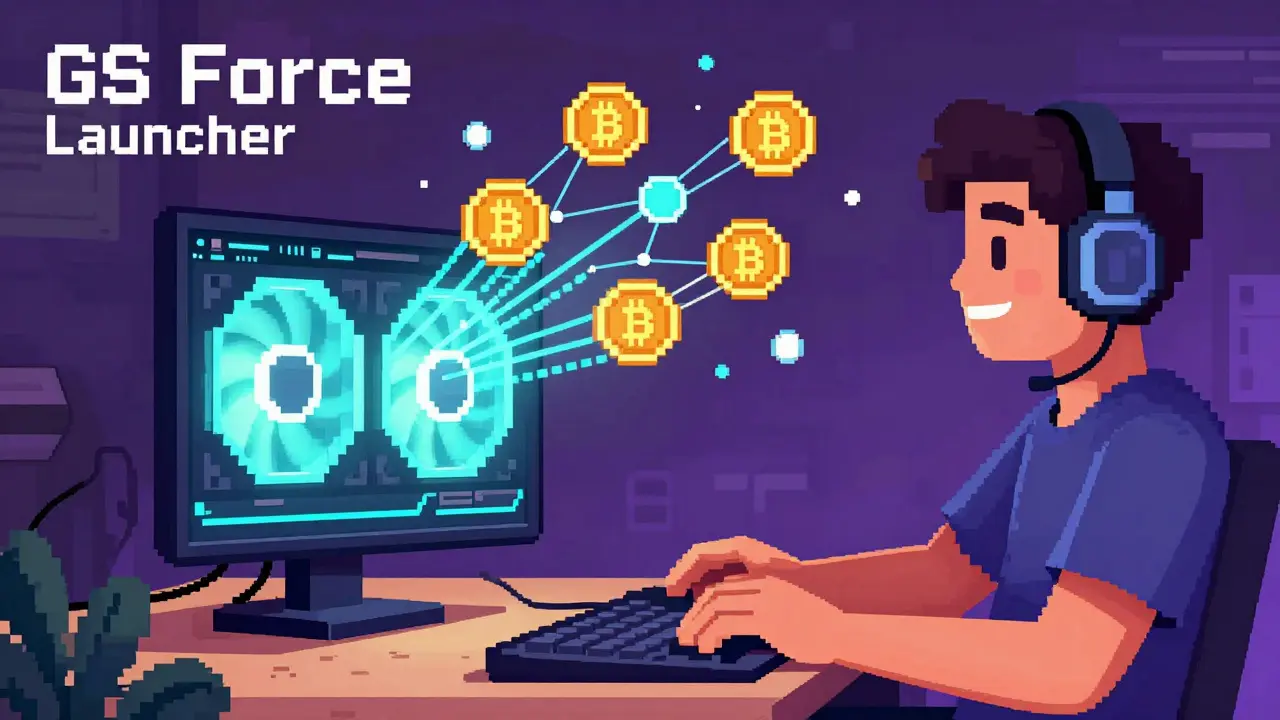
GameSwift also includes tools like GS Pay for in-game purchases, GS Vault for staking, and GS Force Launcher that lets you rent out your PC’s GPU power while playing. If your system is powerful enough, you can earn crypto just by running games - and 85% of that revenue goes straight to you.
GSWIFT Token: What It’s Used For
The GSWIFT token is the fuel for the ecosystem. It’s used to pay for gas fees, stake for rewards, and access premium features. But here’s the catch: it doesn’t have a lot of uses beyond that.
There are 771.11 million GSWIFT tokens in total. About 360.76 million are in circulation right now. The token price as of December 2025 was around $0.001298, down 80.7% from its public sale price of $0.0144. That drop isn’t unusual for early-stage crypto projects, but it does signal weak demand.
Token allocation breaks down like this:
- 35% - Ecosystem Development (funding new games, tools, grants)
- 25% - Team & Advisors (vested over 2 years)
- 20% - Strategic Partnerships (used to attract studios)
- 12% - Private Sale
- 5% - Public Sale (raised $50,000 in July 2023)
- 3% - Community Initiatives
That means only 5% of the total supply was ever sold to regular people. The rest went to insiders. Critics say this structure favors early investors over players. And since GSWIFT is mostly used to pay for gas, not to buy items or vote in governance, many wonder if it has long-term value.
Who’s Using GameSwift - And Who Isn’t
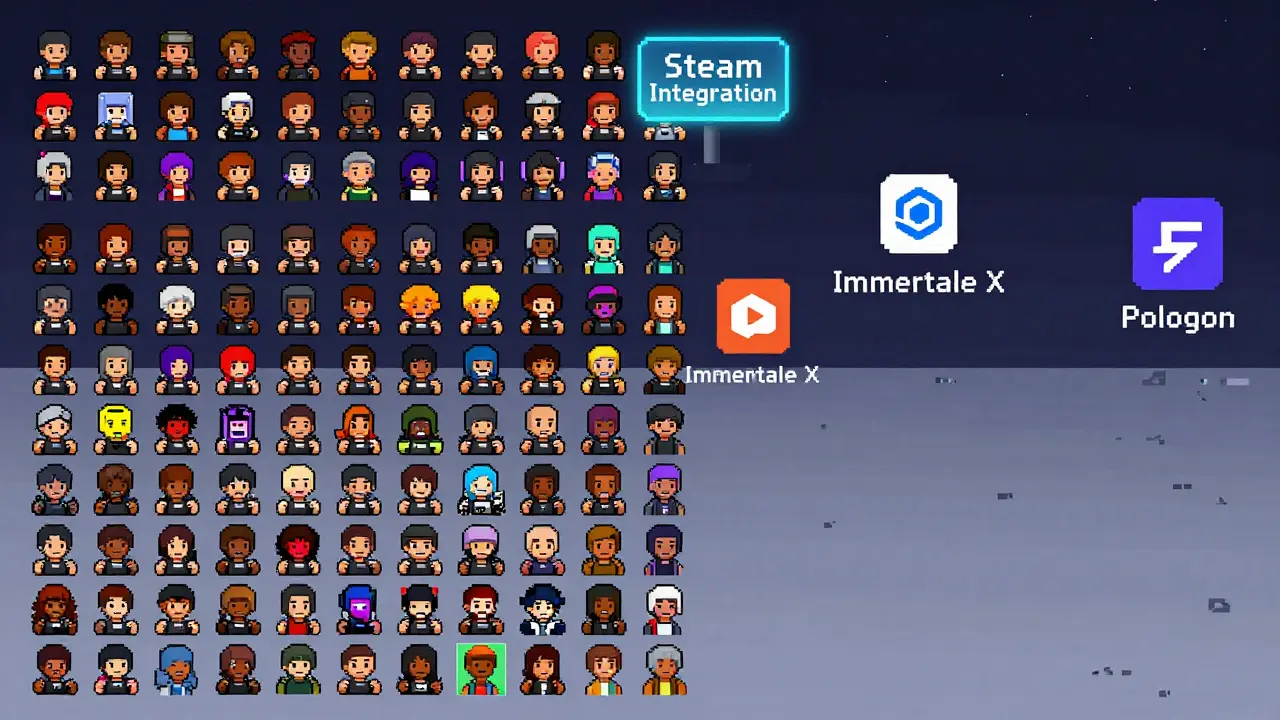
GameSwift’s biggest win is its user base. As of late 2025, it had over 150,000 monthly active users. And 70% of them had never used crypto before. That’s way higher than competitors like Immutable X (45%) or Polygon (35%).
Players love the one-click signup. One non-crypto user on Trustpilot said: “Finally a blockchain game my husband can play without me setting up his wallet!”
But crypto-savvy users aren’t as impressed. On CoinGecko, one user wrote: “GSWIFT tokenomics look terrible - only 5% public sale, massive team allocation, and no clear utility beyond gas fees.”
There’s a split: casual gamers are happy. Crypto traders are skeptical.
GameSwift vs. The Competition
GameSwift isn’t alone. Other chains like Polygon, Immutable X, and Gala also target blockchain gaming. But they do it differently.
| Feature | GameSwift | Immutable X | Polygon |
|---|---|---|---|
| Primary Focus | Onboarding non-crypto gamers | NFT minting and trading | General scaling for dApps |
| Monthly Active Users | 150,000 | 80,000 | 300,000 |
| Non-Crypto Users | 70% | 45% | 35% |
| Games Available | 45 | 300+ | 800+ |
| TPS (Transactions/sec) | 3,500 | 9,000 | 7,000 |
| Finality Time | 2 seconds | 15 minutes | 2.5 seconds |
| Market Cap (Dec 2025) | $451K | $1.2B | $9.8B |
GameSwift wins on ease of use. But it loses on scale. Polygon and Immutable X have hundreds of games. GameSwift has 45. That’s not enough to keep players engaged long-term.
Developer Experience - Easy to Use, Hard to Scale
For developers, GameSwift is surprisingly simple. The SDK lets you port a Unity or Unreal game into the ecosystem in about 40 hours. Compare that to 120+ hours for building a standalone blockchain game. GameSwift handles the wallet, the gas, and the blockchain logic - so devs can focus on gameplay.
But there’s a catch. Most game studios won’t touch it unless there’s a big user base. And right now, there isn’t one. Only two major studios - PixelForce Studios and Neon Games - have fully integrated. That’s why GameSwift offers a $500,000 monthly grant program to attract new titles.
Their AI-powered GS Force Launcher is another unique feature. It lets players earn crypto by lending their GPU power. But some experts, like Stanford’s Dr. Fei-Fei Li, warn it could open security holes if users’ hardware is hijacked.
The Big Risks
GameSwift has real innovation. But it’s also a high-risk bet.
- Token utility is weak. If GSWIFT is only used for gas fees, demand will dry up when fees drop.
- Game pipeline is thin. 45 games won’t sustain a community. You need hundreds.
- Market cap is tiny. At $451K, it’s one of the smallest gaming tokens. A single exchange delisting could crash it.
- Regulatory risk. The SEC has flagged projects like GameSwift for potentially creating unregistered securities through tokenized in-game assets.
Analysts at Delphi Digital give it a 65% chance of failing within two years. Others, like Bitkraft Ventures, believe its user-first design could be the breakthrough Web3 gaming needs - if it lands a major studio partnership soon.
What’s Next for GameSwift
GameSwift’s roadmap for 2026 includes:
- GameSwift Chain 2.0 (launched Nov 2025): improved speed and lower fees
- Integration with Steam (announced Dec 2025): bringing games to millions of PC players
- Layer-3 rollups for individual games (Q1 2026): letting each game run on its own mini-blockchain
- Expanded GS Force AI network: turning idle GPUs into a decentralized compute market
If they deliver on these, especially Steam integration, they could explode. If not, they’ll fade into obscurity like dozens of other crypto gaming projects.
Should You Buy GSWIFT?
If you’re a casual gamer: try the games. Play for free. See if you like them. You don’t need to buy GSWIFT to play.
If you’re an investor: tread carefully. The token’s value is tied to user growth, not utility. With only 29,590 holders and a trading volume under $32,000 daily, liquidity is low. It’s easy to get stuck if you try to sell.
The All-Time High for GSWIFT was $0.81 - over 62,000% higher than today’s price. That’s a warning sign. It’s not a sign of future growth - it’s a sign of how wild the hype was.
GameSwift is trying to do something important: make blockchain gaming accessible. That’s worth supporting. But don’t confuse a good idea with a good investment.
Chris Thomas
February 15, 2026 AT 13:07Let’s be real - GameSwift’s ‘invisible blockchain’ is just abstraction layer theater. You’re not removing complexity, you’re hiding it behind a veneer of email signups. Under the hood, you still have zkEVM, OP Stack, and gas fees - it’s just someone else’s problem now. And let’s not pretend 3,500 TPS is groundbreaking when Immutable X does 9K with actual NFT utility. This isn’t innovation. It’s obfuscation dressed up as accessibility.
James Breithaupt
February 15, 2026 AT 15:21Honestly? I’m impressed. The fact that 70% of users are non-crypto folks is huge. Most Web3 projects treat newbies like they’re broken code. GameSwift just… lets them play. No wallet drama. No gas panic. Just pick up a controller and go. That’s not dumbing down - that’s democratization. And yeah, the token’s utility is thin, but maybe it doesn’t need to be the star. The game is the product. The token’s just the grease.
Alex Williams
February 17, 2026 AT 01:15For devs: the SDK is a game-changer. Porting a Unity game in 40 hours? That’s faster than some Shopify themes. And GS Force Launcher? Genius. My rig’s been idle since 2022 - now I’m earning $3/week just by playing Elden Ring. Not life-changing, but passive crypto? Sign me up. The real win is the onboarding. I’ve got cousins who think ‘blockchain’ is a type of VPN. Now they’re farming NFTs without knowing what a private key is. That’s magic.
Tokenomics? Yeah, 5% public sale stings. But if the ecosystem grows, the token’s value follows. Look at Solana’s early days - same story. It’s about adoption first, speculation second.
Sarah Shergold
February 17, 2026 AT 01:26Andrew Edmark
February 17, 2026 AT 12:27Just tried one of their games last night - no wallet, no fuss, no panic. My 68-year-old dad played for 2 hours and asked if he could ‘cash out’ his rewards. I didn’t even have to explain what a blockchain was. That’s the real win. Token value? Maybe it’s trash. But the product? That’s the future. Don’t confuse the fuel with the car.
Also - GS Force? I’m running it on my old RTX 3060. It’s like a crypto hamster wheel. Quiet. Efficient. Kinda cute.
Dominica Anderson
February 18, 2026 AT 14:08sruthi magesh
February 19, 2026 AT 09:58Lisa Parker
February 21, 2026 AT 01:53Nova Meristiana
February 21, 2026 AT 20:50Aileen Rothstein
February 21, 2026 AT 23:59I’m not here to dunk on this - I’m here to ask: what if this actually works? What if the ‘invisible blockchain’ isn’t a gimmick, but a gateway? Imagine a world where your grandma plays a blockchain RPG, earns NFTs, and never once types ‘0x’ into a console. That’s not dumbing down - that’s evolution. The token might be weak now, but if the user base grows, utility follows. Look at how Ethereum’s use cases exploded after 2017. This could be the same.
JJ White
February 22, 2026 AT 11:35Nicole Stewart
February 22, 2026 AT 22:51Alan Enfield
February 24, 2026 AT 01:12Interesting take. I like that they’re prioritizing user experience over token speculation. The fact that devs can port games in 40 hours is huge. Most chains make it feel like you’re doing brain surgery just to deploy a simple game. And GS Force? That’s a smart way to incentivize hardware owners. Not perfect, but it’s a step in the right direction - even if the token’s a mess.
Jennifer Riddalls
February 24, 2026 AT 07:19Just wanted to say - I’m a mom of two teens who hate ‘crypto stuff’. We tried GameSwift last weekend. They played for 3 hours straight. Didn’t ask about wallets. Didn’t care about tokens. Just… played. That’s the win. The rest? The token, the supply, the allocations - those are grown-up problems. The kids don’t care. And honestly? Maybe they’re right.
Kyle Tully
February 24, 2026 AT 18:33kieron reid
February 25, 2026 AT 07:07Ian Plunkett
February 25, 2026 AT 07:11Look - I’ve been in crypto since 2017. I’ve seen 1000+ chains die. GameSwift? It’s not dead yet. But it’s on life support. The user growth is real - 70% non-crypto is insane. But the token? It’s a ghost. No governance. No staking rewards beyond gas. No DeFi integration. It’s a single-function coin in a multi-function world. And when gas fees hit zero? What’s left? Nothing. It’s a house with no foundation. Beautiful facade. Hollow inside.
Avantika Mann
February 26, 2026 AT 20:25I love that GameSwift is making games accessible to people who’ve been left out. I’ve taught elders in my community how to play - and they’re thrilled. They don’t need to know zkEVM. They just need to know they can win something. The token might be messy, but the experience? Pure gold. Let’s not let perfect tokenomics ruin something beautiful.
Also - GS Force is genius. My neighbor runs it on her old laptop while watching Netflix. She says it’s like ‘earning while chilling’. That’s the future right there.
yogesh negi
February 28, 2026 AT 00:13Guys, I’m from India, and I’ve seen so many crypto projects crash here. But GameSwift? I think it’s different. Why? Because it’s not trying to make you rich. It’s trying to make you play. And in a country where 80% of gamers don’t even own a crypto wallet, this is revolutionary. Yes, the tokenomics are lopsided - but the product? It’s solving a real pain. Maybe the token will evolve. Maybe not. But the games? They’re here to stay.
Also - I’ve been using GS Force for 3 weeks. I earn 0.5 GSWIFT/day just by playing Valorant. That’s enough for a chai and samosa. Not bad, right? 😊
Nikki Howard
February 28, 2026 AT 04:14Their ‘user-first’ narrative is a facade. They’re not onboarding players - they’re onboarding data points. Email signups mean they own your identity. No wallet means no self-custody. No transparency means no accountability. And the ‘invisible blockchain’? It’s just a centralized server with a blockchain-shaped sticker. This isn’t Web3. It’s Web2.1 - with more buzzwords and less trust.
And the SEC is watching. They’ll come for this. Mark my words.
Chris Thomas
March 1, 2026 AT 04:28Replying to @1906 - ‘utility follows adoption’? That’s the myth that killed 90% of DeFi projects. Utility doesn’t magically appear. It’s engineered. GSWIFT has zero governance, zero staking incentives beyond gas, no yield, no liquidity mining. It’s a single-use key. Once gas fees drop (and they will), demand evaporates. Adoption doesn’t create value - utility does. This is a classic trap: confusing user growth with economic sustainability.