
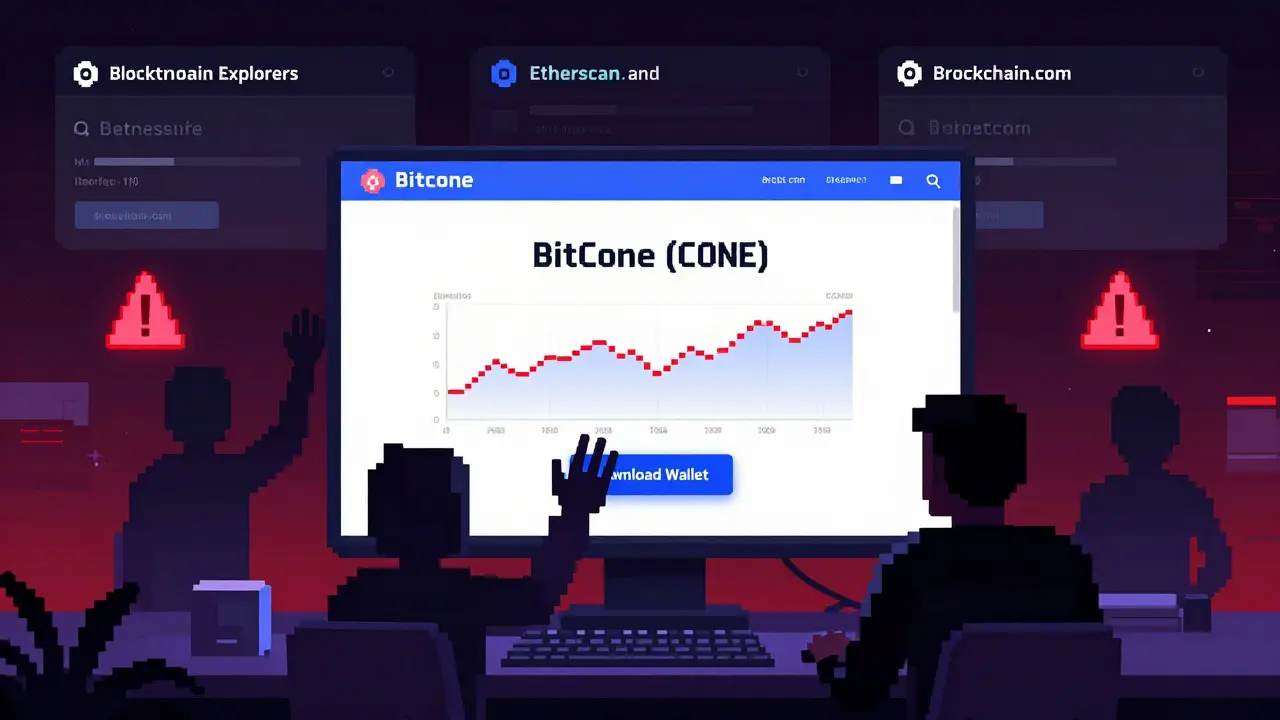
There’s no such thing as BitCone (CONE) as a real cryptocurrency. If you’ve seen ads promising huge returns, fake exchange listings, or a ‘wallet’ you need to download - you’re being targeted by a scam. This isn’t a new coin waiting to explode. It’s a well-worn fraud pattern that’s cost people millions.
BitCone doesn’t exist on any blockchain
Real cryptocurrencies run on public blockchains. Bitcoin uses its own chain. Ethereum has its own. You can look up every transaction, every wallet address, every block. Go to Etherscan, Blockchain.com, or BscScan - type in "CONE" or "BitCone" and you’ll get nothing. Zero results. No addresses. No transactions. No miners. No nodes. That’s not a glitch. That’s the red flag. A legitimate coin must have a blockchain. BitCone has none. It’s just a name slapped on a website.It’s not listed anywhere real
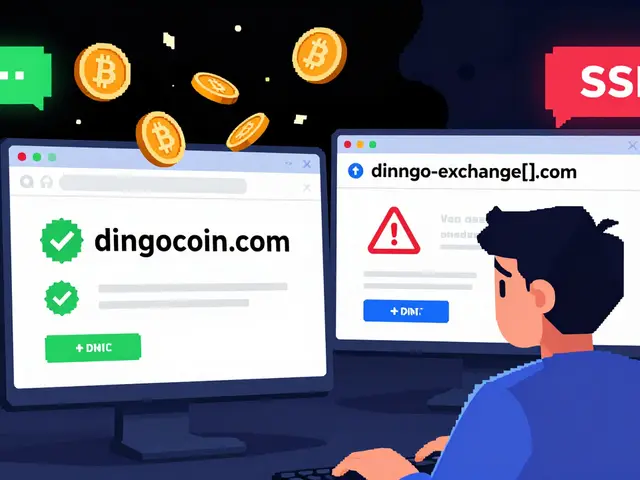
You might see BitCone listed on "GlobalCoinTrade" or "CryptoExPro" - sites that look like Binance or Coinbase. But those are fake. They’re cloned pages built to steal your login details or trick you into sending crypto. Check CoinGecko or CoinMarketCap - the two biggest trusted trackers of real crypto assets. BitCone isn’t there. Not even as a footnote. Legitimate coins get listed after rigorous checks. BitCone skips that step entirely because it doesn’t need to. It just needs you to believe it’s real.The "Bit" prefix is a known scam trigger
Scammers love to use "Bit" in fake coin names - BitCone, BitConne, BitConeX, BitCoinPro. Why? Because it tricks people into thinking it’s connected to Bitcoin. Bitcoin is trusted. Bitcoin is valuable. So they slap "Bit" on something worthless and hope you don’t notice. Chainalysis found that 38% of new tokens with "Bit" in the name in 2022 were outright scams. In 2024 alone, over 400 "Bit"-prefixed tokens were flagged as fraud. BitCone fits perfectly into that pattern. It’s not an accident. It’s a strategy.They’ll ask you to pay to get your money back
This is the classic exit scam move. You send crypto to buy BitCone. Then you’re told you need to pay a "verification fee" - 0.5 BTC, 1 BTC, even 2 BTC - to unlock your "funds." They’ll say it’s for KYC, tax, or compliance. But real exchanges don’t ask you to pay more crypto to withdraw your own money. Kaspersky Lab found over 1,200 malware samples tied to BitCone wallets in late 2025. These aren’t wallets. They’re digital pickpockets. Once you enter your seed phrase, your entire crypto stash is gone.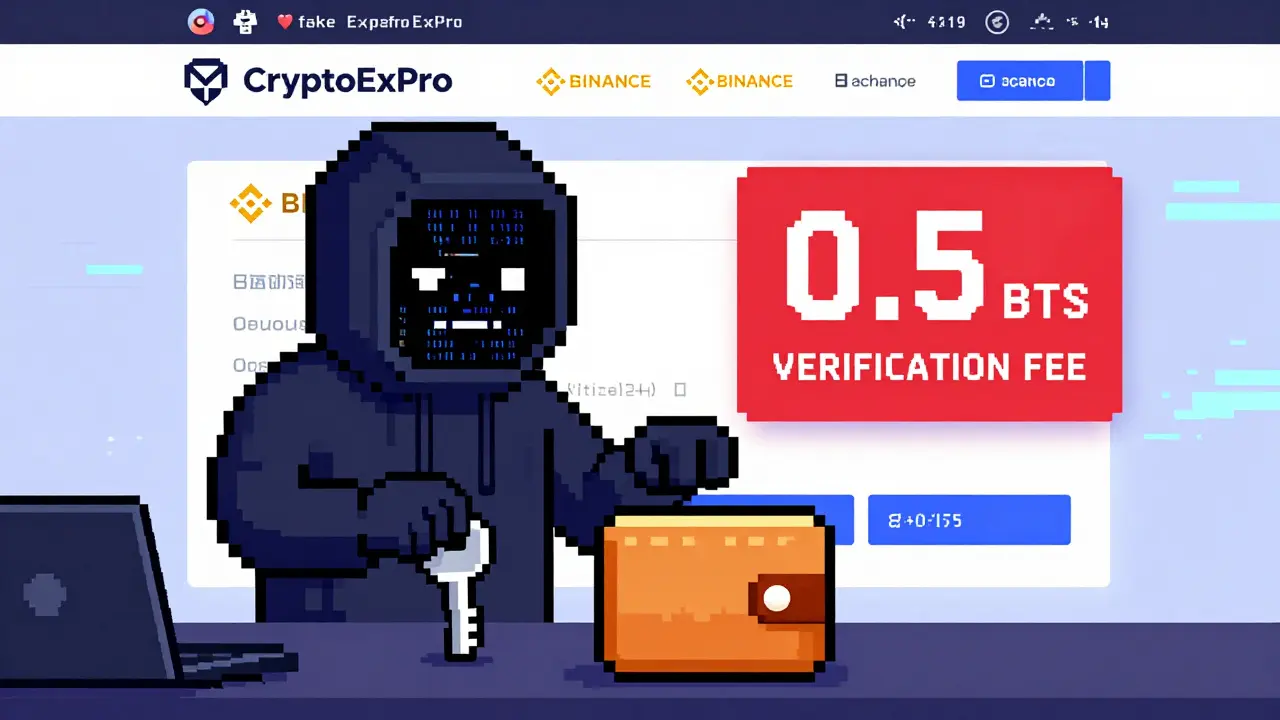
There’s zero developer activity
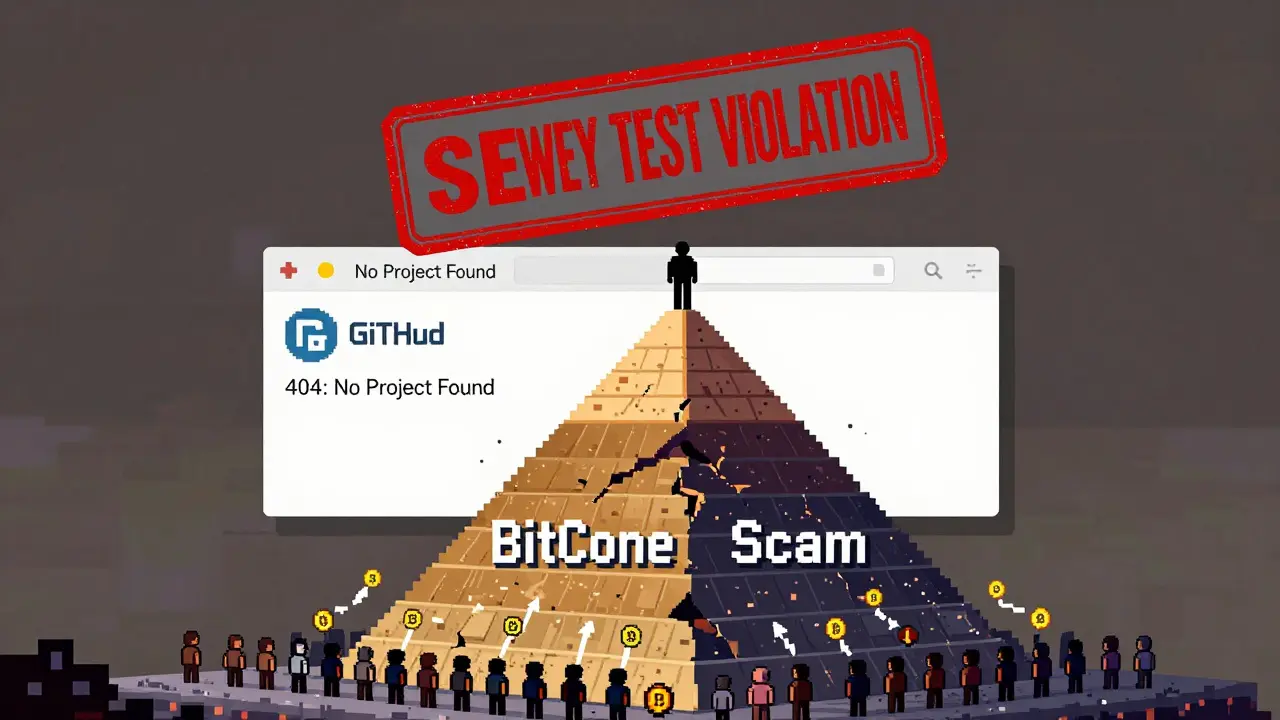
Look at real crypto projects. Bitcoin has thousands of contributors. Ethereum has hundreds of active developers pushing updates every week. Solana pushes out new code daily. You can see it on GitHub - commits, pull requests, issue trackers. Search GitHub for "BitCone." Nothing. Zero repositories. No code. No updates. No team. No documentation. That’s not a startup. That’s a ghost.People are losing thousands - and reporting it
On Reddit’s r/CryptoScams, over 80 posts since mid-2024 describe losing money to BitCone. One user lost 2.3 ETH - worth over $6,700 at the time - after depositing into a "BitConeWallet.online" site. Support vanished. The site went dark. Trustpilot has 147 reviews for BitCone-related sites. The average rating? 1.2 out of 5. The most common complaint? "I sent money. I never got anything back. They disappeared." The Better Business Bureau logged 89 complaints in 2025. Median loss? $3,250. The FBI received over 1,200 reports on BitCone scams in 2025 - totaling $23.8 million in losses.It’s not a coin. It’s a security scam
The U.S. Securities and Exchange Commission (SEC) uses the Howey Test to spot illegal investment schemes. BitCone meets all four criteria:- You invest money (crypto)
- In a common enterprise (the fake project)
- With the expectation of profit
- Based solely on the efforts of others (the scammers)
What should you do if you’ve been targeted?
If you’ve sent crypto to a BitCone site:- Stop sending more money - no matter what they say
- Don’t reply to emails or DMs from "support"
- Report it to the FBI’s IC3 (internetcrime.gov)
- Warn others - share your story on Reddit or Twitter
- Check your other wallets - if you used the same seed phrase anywhere else, move your funds immediately
How to spot fake crypto coins in the future
Before you even think about buying any new coin:- Check CoinGecko and CoinMarketCap - if it’s not there, it’s not real
- Search GitHub - no code? No project
- Look for a whitepaper - real projects explain how their tech works
- Verify the team - real teams have LinkedIn profiles, past projects, public identities
- Never trust a site that asks for your seed phrase or private key
- Be extra cautious of coins with "Bit," "Coin," or "Pro" in the name - they’re scam magnets
Bottom line: BitCone is a scam. Period.
There’s no hidden truth. No underground network. No future launch. BitCone (CONE) is a fraud. It exists only to take your money. The same pattern has played out hundreds of times before. The same people are behind it. The same victims keep falling for it. Don’t be one of them. If it sounds too good to be true - and it’s got "Bit" in the name - it is.Is BitCone (CONE) a real cryptocurrency?
No, BitCone (CONE) is not a real cryptocurrency. It has no blockchain, no development team, no wallet addresses on public explorers like Etherscan or Blockchain.com, and it’s not listed on any legitimate exchange like Coinbase or Binance. All evidence points to it being a scam.
Why do people think BitCone is real?
Scammers use fake websites, cloned exchange logos, and misleading social media posts to make BitCone look legitimate. They often impersonate celebrities like Elon Musk with deepfake videos and create fake trading volume using bots. The name "BitCone" is designed to sound like Bitcoin, tricking people into trusting it.
Can I buy BitCone on Coinbase or Binance?
No, you cannot buy BitCone on Coinbase, Binance, or any other legitimate exchange. These platforms only list coins that meet strict security and transparency standards. BitCone fails every check - it’s not listed because it doesn’t exist as a real asset.
What should I do if I sent crypto to a BitCone site?
Stop sending more money immediately. Report the scam to the FBI’s IC3 at internetcrime.gov. Warn others on social media or forums like Reddit’s r/CryptoScams. Check your other wallets - if you used the same seed phrase anywhere, move your funds to a new wallet. Unfortunately, recovered funds are extremely rare in these cases.
Are there any legitimate coins similar to BitCone?
No. Any coin with "Bit" in the name that isn’t Bitcoin is extremely high-risk. Even if it seems real, most are scams or low-quality tokens with no future. Stick to well-known projects like Bitcoin, Ethereum, Solana, or Cardano - ones with transparent teams, public code, and real trading volume.
How do I protect myself from fake crypto coins?
Always verify a coin on CoinGecko or CoinMarketCap. Check its GitHub for active development. Never enter your seed phrase on any website. Avoid coins with exaggerated promises or names that mimic Bitcoin. If it’s not on major exchanges and has no public team, it’s not worth the risk.

Hannah Campbell
January 17, 2026 AT 20:15Bryan Muñoz
January 19, 2026 AT 06:09Stephanie BASILIEN
January 20, 2026 AT 09:34Haley Hebert
January 21, 2026 AT 06:28Jill McCollum
January 23, 2026 AT 00:41Hailey Bug
January 24, 2026 AT 12:16Dustin Secrest
January 25, 2026 AT 14:11myrna stovel
January 26, 2026 AT 00:05Rod Petrik
January 26, 2026 AT 06:09Sarah Baker
January 27, 2026 AT 20:34Pramod Sharma
January 29, 2026 AT 01:12Andre Suico
January 29, 2026 AT 14:38Katherine Melgarejo
January 29, 2026 AT 15:05Michael Jones
January 31, 2026 AT 02:19Lauren Bontje
February 1, 2026 AT 16:49Deb Svanefelt
February 2, 2026 AT 05:11Alexandra Heller
February 3, 2026 AT 05:15