
Have you heard the buzz about the Celestial airdrop? You aren't alone. In the world of cryptocurrency, "airdrop" is a magic word that promises free money. But when it comes to Celestial (CELT), a blockchain project that launched its tokens back in September 2021, the reality is quite different from the hype.
If you are looking for a simple click-to-claim button that drops thousands of dollars into your wallet, you might be disappointed. The truth is more complex. Celestial didn't run a traditional mass giveaway like some newer projects. Instead, they used a structured release system for early investors and participants. This article breaks down exactly what happened with the CELT distribution, why the price looks so different today compared to launch day, and how to avoid confusing this project with others.
What Actually Happened With the Celestial Distribution?
To understand if there is still an opportunity, we first need to look at how the tokens were originally handed out. The project completed its Token Generation Event on September 30, 2021. At that time, the total supply was set at 4.92 billion CELT tokens.
The funding came from three main sources: an Initial DEX Offering (IDO), an Initial Coin Offering (ICO), and private sales. The pre-sale round alone raised $1.40 million. If you bought in then, you paid $0.002 per token. That sounds cheap now, but let's look at the math later.
Here is the key detail regarding the "airdrop": Celestial allocated 700 million tokens-which is about 14.21% of the total supply-to private and pre-sale investors. These weren't given away randomly to random Twitter users. They went to people who put up real capital early on.
The distribution model had specific rules:
- No lockup for some: Certain allocations could be traded immediately.
- Structured releases: Other distributions started releasing monthly after launch. An initial 20% dropped right away, followed by linear monthly releases of 10% over nine months.
This means the "free" aspect was limited to those who participated in the fundraising rounds. For the general public looking for a retroactive airdrop years later, the window has largely closed or never existed in the traditional sense.
The Stark Reality of CELT Price Performance
Let's talk numbers, because they tell a harsh story. When Celestial launched, the token had significant momentum. Early participants saw a massive spike, with prices hitting an all-time high that represented a 72.11x return (+7,111%) on their initial investment. That kind of gain makes headlines and attracts attention.
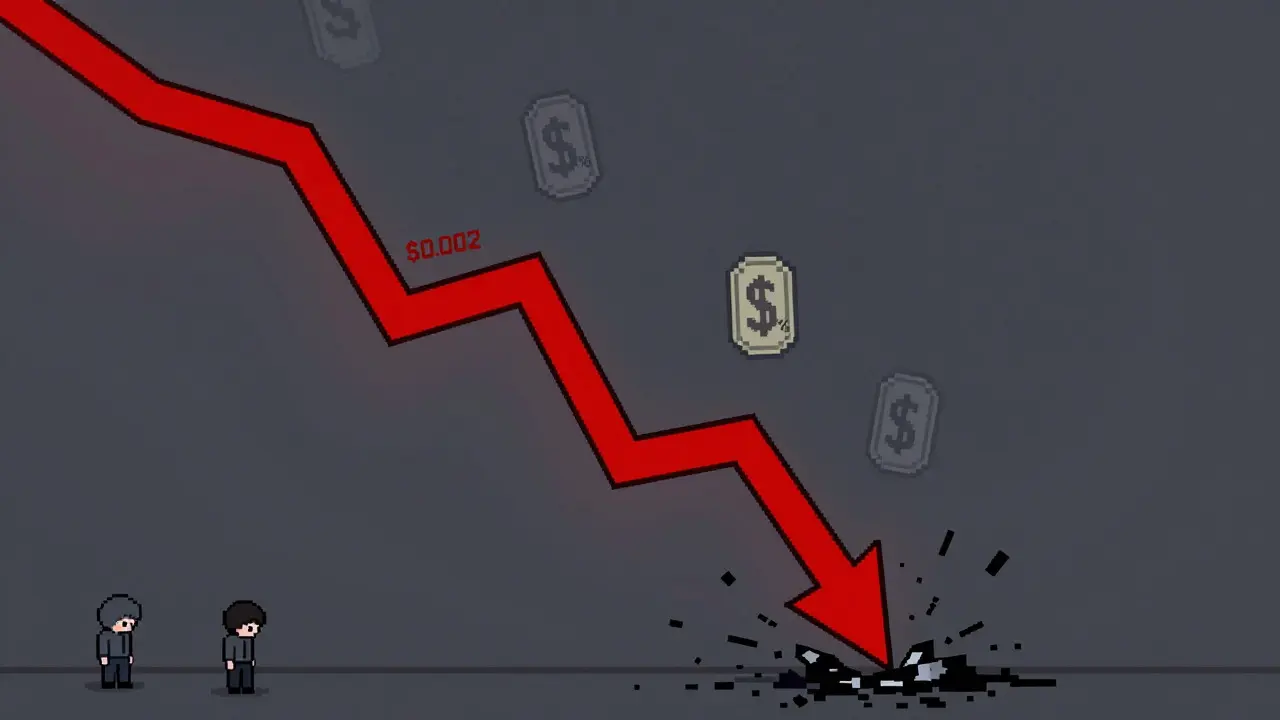
But where is it now? As of mid-2026, the market tells a different tale. The current market capitalization hovers around $109,290. The individual token price sits at approximately $0.00003674. Let's compare that to the pre-sale price of $0.002. That is a drop of roughly 98%.
If you bought at the pre-sale price, you have lost nearly all your value. If you bought at the peak, the loss is even steeper. This dramatic decline highlights the volatile nature of many altcoins that fail to maintain community engagement or technological relevance after the initial hype fades.
| Metric | Value |
|---|---|
| Total Supply | 4.92 Billion CELT |
| Pre-Sale Price (2021) | $0.002 |
| All-Time High Return | +7,111% (72.11x) |
| Current Price (2026) | ~$0.00003674 |
| Market Cap | ~$109.29K |
| Backer | ZBS Capital (Tier 3 VC) |
Celestial (CELT) vs. Celestia (TIA): Don't Get Confused
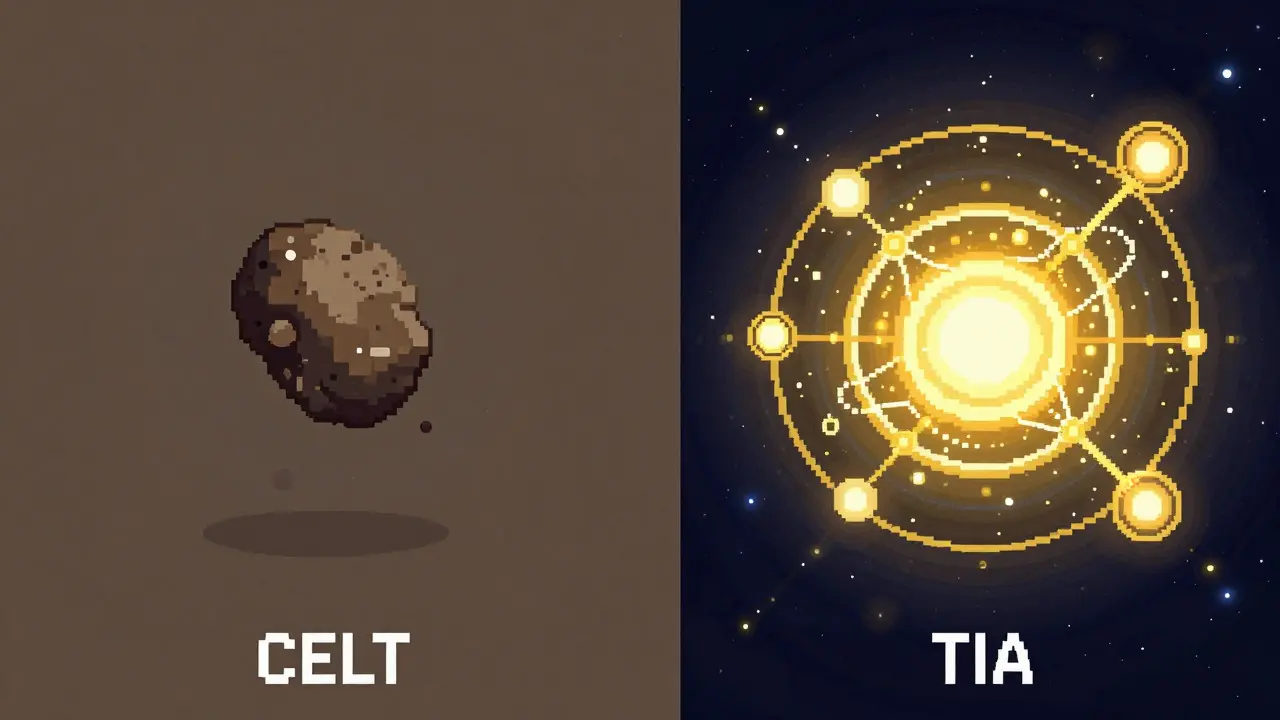
This is perhaps the most critical point for anyone researching this topic. There is a massive amount of confusion between Celestial (CELT) and Celestia (TIA). They sound similar, but they are completely different projects with vastly different outcomes.
Celestia (TIA) is a modular blockchain focused on data availability. It gained huge traction and conducted a legitimate, highly publicized airdrop of 60 million TIA tokens to ecosystem users and developers. TIA tokens have seen strong performance, reaching prices around $17 from an initial range near $2. People holding TIA are currently looking at staking rewards and potential secondary airdrops from projects built on the Celestia network, such as AltLayer and Dymension.
Celestial (CELT), on the other hand, is the project discussed here. It does not share the same technology stack, market cap, or success story. If you are searching for "Celestial airdrop" hoping to find information about the popular Celestia rewards, you are looking at the wrong asset. Always check the ticker symbol. CELT is not TIA.
Where Can You Trade CELT Today?
If you still believe in the long-term potential of Celestial despite the price drop, or if you hold old tokens from 2021, you can trade them. The primary venue for this activity is the Bitget exchange.
Bitget offers several ways to interact with CELT:
- Spot Trading: Buy and sell the actual tokens.
- Bitget Convert/Swap: Quick conversion from other assets.
- Futures Trading: USDT-M and Coin-M futures allow for leveraged bets on price direction (high risk).
- Earn Programs: Some platforms offer yield opportunities, though liquidity may be low.
However, before you jump in, consider the circulating supply. Some data sources show 0 CELT in active circulation, while others cite the full 4.92 billion. This discrepancy often indicates low trading volume or technical reporting issues. Low liquidity means you might struggle to sell large amounts without crashing the price further.
Is There Any Future Value in CELT?
Investing in cryptocurrencies with a 98% drawdown requires extreme caution. The project received backing from ZBS Capital, a Tier 3 venture capital firm, which provided some institutional credibility during its development phase. However, VC backing doesn't guarantee long-term survival, especially in the crypto winter that followed the 2021 bull run.
The lack of detailed public information about new development milestones, community growth initiatives, or partnerships suggests that the project may have stalled. Without active development or a clear roadmap, the token relies entirely on speculative buying.
For most retail investors, the risk outweighs the reward. The "airdrop" era for Celestial is effectively over. The structured releases to early investors have likely concluded. What remains is a low-cap token with thin liquidity.
Practical Steps for Your Research
If you are determined to explore this further, follow these steps to protect yourself:
- Verify the Contract Address: Never buy based on a name alone. Find the official contract address on a trusted block explorer to ensure you aren't buying a scam copycat token.
- Check Liquidity Depth: Look at the order book on Bitget. Can you sell 1,000 tokens without slipping the price by 5%? If not, exit carefully.
- Distinguish from Celestia: Bookmark this distinction. Search for "TIA airdrop" if you want mainstream opportunities; search for "CELT" only if you are specifically interested in this distressed asset.
- Review Official Channels: Check the project's latest GitHub commits or official Discord announcements. Silence is a red flag.
In the end, the Celestial airdrop story is a lesson in timing and specificity. The early birds got the worm-and a massive profit. The latecomers found a hollow shell. Always do your own due diligence, verify the ticker symbols, and remember that past performance, whether great or terrible, is not a guarantee of future results.
Did Celestial (CELT) have a free airdrop for everyone?
No, Celestial did not conduct a traditional mass airdrop for the general public. The token distribution was primarily structured for private investors, ICO participants, and IDO buyers. Approximately 14.21% of the supply was allocated to these groups with specific vesting schedules, rather than being given away freely to random wallet holders.
What is the difference between Celestial (CELT) and Celestia (TIA)?
They are two completely different projects. Celestia (TIA) is a successful modular blockchain that offered a major airdrop to users and has a high market cap. Celestial (CELT) is an older project from 2021 that has seen a significant price decline and lacks the same level of adoption or recent airdrop activity. Confusing the two can lead to buying the wrong asset.
How much is 1 CELT token worth in 2026?
As of mid-2026, the price of one CELT token is approximately $0.00003674. This represents a decrease of about 98% from its pre-sale price of $0.002 in 2021. The market capitalization is roughly $109,000, indicating very low trading volume and liquidity.
Can I still get free CELT tokens?
It is highly unlikely. The primary distribution phases, including the structured releases to early investors, have been ongoing since 2021. There is no public evidence of active, free airdrop campaigns for new users. Be wary of scams claiming to offer free CELT tokens, as these are often phishing attempts.
Where can I buy or sell Celestial (CELT)?
You can trade CELT on the Bitget exchange. Options include spot trading, Bitget Convert, and various futures markets. However, due to low liquidity, traders should exercise caution regarding slippage and the ability to execute large orders.