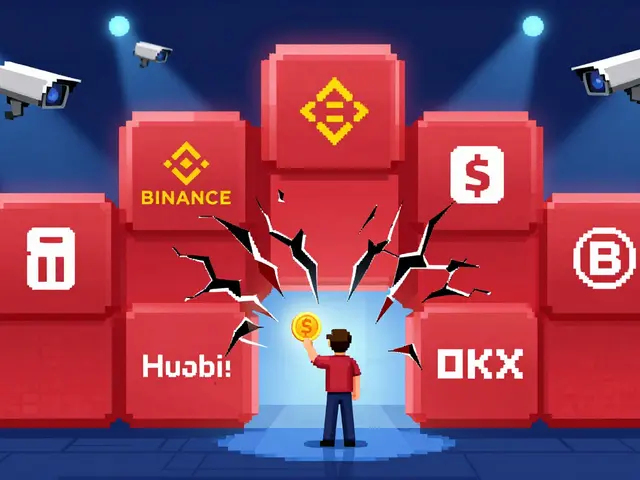

Imagine trying to buy a cup of coffee in Seoul but being told you can’t use your foreign credit card because the merchant only accepts payments linked to a local identity. Now scale that up to buying Bitcoin or Ethereum. That is the reality for many international users looking at South Korea's cryptocurrency market.
If you are wondering how to trade crypto in South Korea, the short answer is: it depends entirely on whether you have a Korean residency status and a matching bank account. The country operates one of the strictest regulatory frameworks in the world, known as the real-name bank account system. This system forces every digital asset transaction to be tied directly to a verified human identity through specific banking partnerships.
The Real-Name System Explained
To understand why this matters, you need to look back to January 2018. Back then, the government was threatening to ban cryptocurrencies entirely. After over 220,000 citizens signed a petition against the ban, the approach shifted from prohibition to regulation. The Financial Services Commission (FSC) introduced the real-name system to stop money laundering and boost trust.
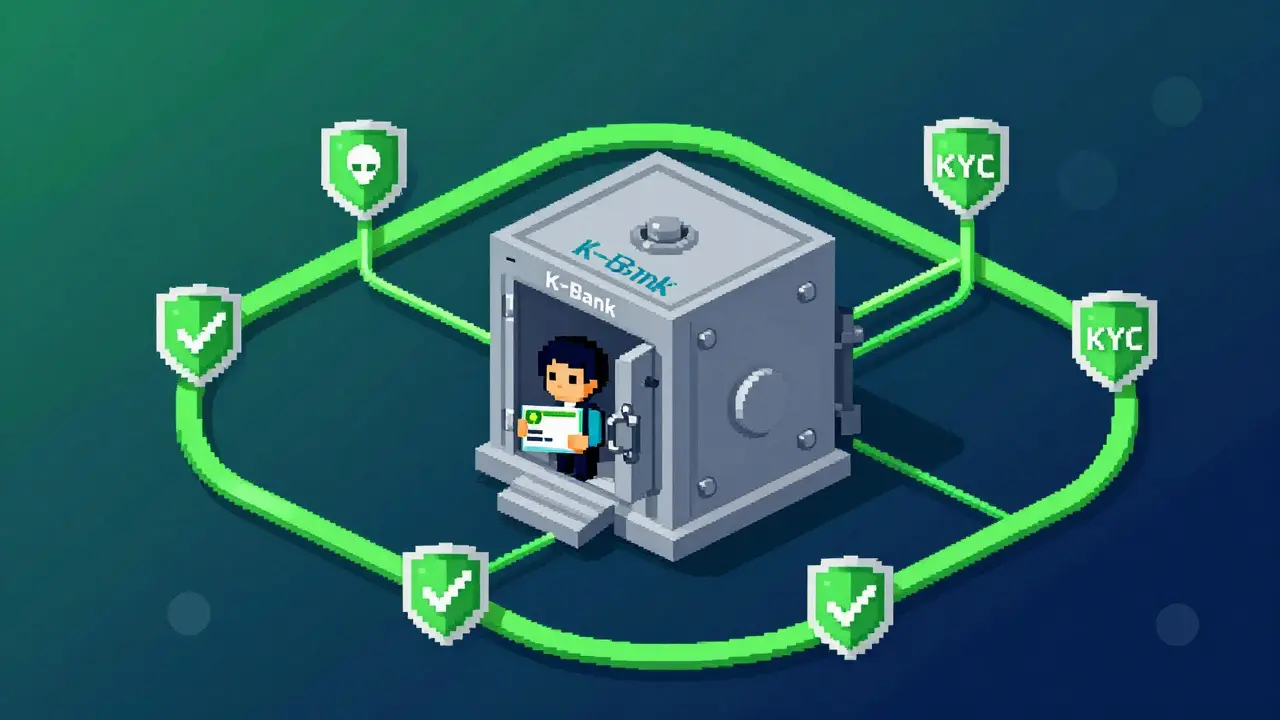
Here is how it works in practice. You cannot just deposit money from any random bank into a crypto exchange. Instead, the exchange must have a partnership with a specific bank. If you use Upbit, you must use K-Bank. If you use Bithumb, you need Kookmin Bank. The money moves between your bank account and your exchange wallet within that same banking ecosystem. This creates a closed loop where every movement of funds is traceable.
This setup ensures that Know Your Customer (KYC) rules are followed strictly. The banks receive transaction data from the exchanges. If an exchange refuses to share this data, the bank halts the transactions. For locals, this means higher security. For outsiders, it means a wall they often cannot climb.
Who Can Actually Trade?
Let’s get straight to the point about accessibility. If you are a South Korean citizen or hold permanent residency, you can trade. You will need your legal name, a Korean mobile number, and a bank account with one of the partnered institutions. The process involves linking your personal bank account to the exchange. Once verified, deposits usually clear within 30 minutes.
If you are a foreigner without long-term residency, things get complicated. You generally cannot open a real-name bank account required for these exchanges. The barriers include:
- Residency Requirements: You typically need a long-term visa or permanent residency status.
- Alien Registration Card: Most banks require this physical ID document to open an account.
- Korean Mobile Number: Verification codes are sent via SMS to local numbers.
- Bank-Exchange Lock-In: International banks do not participate in this system. You cannot link a Chase or HSBC account to Upbit.
Because of these restrictions, most non-residents rely on international platforms like Binance or Kraken, which operate outside the Korean Won (KRW) direct-deposit system. They use fiat on-ramps from other countries or peer-to-peer methods, avoiding the Korean real-name infrastructure entirely.
Approved Exchanges and Partnerships
Not every crypto platform can operate in South Korea. The Financial Intelligence Unit (FIU) oversees who gets to play. As of April 2025, only five exchanges have received full verification for real-name bank accounts. However, 28 Virtual Asset Service Providers (VASPs) have completed registration filings, meaning they are in the system but may not have full banking integration yet.
| Exchange | Partner Bank | Status |
|---|---|---|
| Upbit | K-Bank | Fully Verified |
| Bithumb | Kookmin Bank | Fully Verified |
| Korbit | Shinhan Bank | Fully Verified |
| Coinone | Kakao Bank | Fully Verified |
These platforms dominate the local market. Upbit, for instance, handles a massive portion of the daily trading volume in Asia. Because they are tightly regulated, they offer high liquidity for major pairs like BTC/KRW and ETH/KRW. But remember, you can only access this liquidity if you have the right bank account.
Tax Changes Coming in 2027
Regulation isn't just about who can trade; it's also about what you pay. For years, South Korea had a tax holiday for individual crypto gains. That ends soon. Starting in 2027, income earned by individuals from trading digital assets will be taxed under the amended Income Tax Act.
For corporations, the rules are already stricter. The Corporate Tax Act now categorizes income earned by foreign corporations from Korean sources as domestic source income. This means if you run a crypto business targeting Korean users, you likely owe taxes there, even if your servers are overseas.
Additionally, the government has announced plans to collect up to 24.2% of corporate and local income taxes from local exchanges. These compliance costs are passed down to the industry, which might lead to higher fees for traders in the future.
Why So Strict? The Security Argument
Critics argue that the real-name system stifles innovation and excludes foreigners. Supporters say it prevents crime. South Korea has been a target for cyberattacks on crypto exchanges in the past. By tying trades to real identities, the government aims to:
- Prevent Money Laundering: Criminals cannot easily move illicit funds through anonymous wallets.
- Enhance Accountability: If an exchange fails, regulators can trace user funds more easily.
- Build Trust: Retail investors feel safer knowing their counterparties are verified humans.
Industry analysts project that despite these hurdles, the market will grow. Revenue is expected to reach USD 635.4 million by 2030, growing at an annual rate of 16.1%. Over 12 million South Koreans are projected to use cryptocurrencies by 2025. The demand is clearly there; the government is just controlling how it flows.

Navigating the System as a Foreigner
If you are not a resident, don't give up on Korean crypto markets, but adjust your strategy. You won't be able to use KRW direct deposits. Instead, consider these options:
- International Exchanges: Use platforms that support your home currency and offer crypto trading. Look for ones with high liquidity for BTC and ETH.
- Peer-to-Peer (P2P): Some platforms allow P2P trading where you can buy crypto from Korean users using local payment methods, though this carries counterparty risk.
- Stablecoins: Convert your fiat to USDT or USDC internationally, then trade on global platforms. Avoid trying to bridge into the Korean banking system directly unless you have the proper documentation.
Be wary of services promising to bypass the real-name requirement. Many are scams or violate terms of service, leading to frozen funds. Stick to compliant paths.
Future Outlook
The landscape is evolving. The FIU continues to accept registrations for new VASPs, suggesting the door isn't fully closed to new entrants. However, the core principle remains: identity verification is non-negotiable. As global standards like FATF (Financial Action Task Force) guidelines tighten, South Korea's model may become the norm rather than the exception.
For now, the balance tips toward security over accessibility. If you are inside the system, enjoy the safety and liquidity. If you are outside, plan accordingly. The walls are high, but the market behind them is vibrant.
Can I trade crypto in South Korea without a Korean bank account?
No, not on local exchanges. The real-name system requires a direct link between a Korean bank account and the exchange. Without a local bank account, you cannot deposit KRW or withdraw funds from platforms like Upbit or Bithumb. You must use international exchanges instead.
What documents do I need to open a real-name crypto account?
You need a valid Alien Registration Card (for foreigners), a Korean mobile number, and a bank account with one of the partner banks (e.g., K-Bank for Upbit). Citizens only need their national ID and a partner bank account.
When does crypto tax start in South Korea?
Individual taxation on crypto trading income begins in 2027. Prior to this, many individuals benefited from a tax holiday. Corporations are already subject to stricter rules regarding domestic source income.
Which exchanges are officially registered in South Korea?
As of April 2025, major verified exchanges include Upbit, Bithumb, Korbit, and Coinone. While 28 VASPs have filed registrations, only a few have full real-name bank account integrations approved by the FIU.
Is it safe to trade on Korean exchanges?
Yes, they are among the safest due to strict KYC and regulatory oversight. However, no exchange is immune to technical failures or hacks. Always use two-factor authentication and keep records of your transactions.