
It is March 2026. If you run a crypto business in Australia and aren't fully compliant with AUSTRAC, you are operating illegally. The deadline for full registration under the expanded Anti-Money Laundering and Counter-Terrorism Financing (AML/CTF) framework has passed. This isn't just paperwork; it's a complete overhaul of how digital assets are treated under Australian law. For years, only fiat-to-crypto exchanges needed to register. Now, that net has tightened to include crypto-to-crypto swaps, custody wallets, token issuers, and even peer-to-peer transfer facilitators.
The stakes have never been higher. In July 2025, AUSTRAC's cryptocurrency taskforce made headlines by refusing to renew the registration of one crypto ATM provider and forcing others to pause operations after identifying scams targeting vulnerable Australians. The message was clear: the era of passive observation is over. Australia has shifted to proactive enforcement. If you are wondering whether your specific business model falls under these rules, or how to survive the implementation costs, this guide breaks down exactly what you need to what you face.
Who Needs to Register? The Expanded Regulatory Perimeter
The biggest change in the Australian regulatory landscape is the definition of who counts as a reporting entity. Under the AML/CTF Amendment Act 2024, which came into force in stages leading up to March 2026, the scope now aligns strictly with Financial Action Task Force (FATF) Recommendation 15. You must register with AUSTRAC if you provide any of the following services:
- Exchanges between virtual assets and fiat currencies: This includes traditional crypto-to-AUD swaps.
- Exchanges between virtual assets: Pure crypto-to-crypto trading platforms (e.g., swapping Bitcoin for Ethereum) are now explicitly included.
- Transfer of virtual assets: Services that facilitate the movement of tokens from one wallet to another on behalf of customers.
- Safekeeping and administration: Custody wallet providers and custodial services.
- Participation in issuance: Token issuers and those involved in initial coin offerings (ICOs) or similar fundraising mechanisms.
Note what is excluded. Digital game currencies like Candy Crush tokens and customer loyalty points such as FlyBuys are not considered virtual assets under this act. However, if your platform allows users to trade these points for real money or other cryptocurrencies, you likely cross the threshold into regulated territory.
| Service Type | Status Before March 2026 | Status After March 2026 |
|---|---|---|
| Fiat-to-Crypto Exchange | Registered & Compliant | Enhanced Monitoring Required |
| Crypto-to-Crypto Exchange | Grey Area / Unregulated | Mandatory Registration |
| Custody Wallet Provider | Unregulated | Mandatory Registration |
| Token Issuer | Unregulated | Mandatory Registration |
| P2P Transfer Facilitator | Unregulated | Mandatory Registration |
The Travel Rule: What It Means for Your Transactions
If there is one rule that keeps compliance officers awake at night, it is the Travel Rule. Effective March 2026, all value transfers above AUD 1,000 must include complete originator and beneficiary information. This applies regardless of whether the transaction happens via blockchain, SWIFT, or other payment rails.
In practical terms, when User A sends AUD 1,500 worth of Bitcoin to User B, both the sending and receiving Virtual Asset Service Providers (VASPs) must exchange specific data points. This includes names, account numbers, and physical addresses. Unlike the United States, which implemented similar FinCEN requirements back in 2021, Australia is bringing this into force now. The technology-neutral approach means you cannot hide behind the complexity of decentralized ledgers. If you control the interface through which the transfer occurs, you are responsible for the data flow.
For smaller transactions below AUD 1,000, the requirements are lighter, but you still need robust systems to detect structuring-where users break large transfers into small chunks to avoid scrutiny. AUSTRAC’s analytics tools are designed to flag these patterns automatically.

Customer Due Diligence (CDD): Beyond Onboarding
Gone are the days when a quick ID check at sign-up was enough. The new AML/CTF Rules mandate ongoing monitoring throughout the entire customer relationship. You must implement Enhanced Due Diligence (EDD) for high-risk customers. Who qualifies as high-risk?
- Politically Exposed Persons (PEPs)
- Customers from jurisdictions blacklisted by the FATF
- Users engaging in complex or unusually large transactions without apparent economic purpose
This means your compliance software needs to be active, not static. You need continuous screening against updated sanctions lists and adverse media databases. According to industry feedback from late 2025, small exchanges spent an average of AUD 185,000 just on compliance software upgrades to meet these CDD standards. While painful, this investment is non-negotiable. Failure to identify a high-risk customer can lead to immediate deregistration and criminal liability for directors.
Implementation Costs and Timeline Reality
Let’s talk numbers. Implementing a fully compliant AML/CTF program for a mid-sized crypto exchange typically costs between AUD 120,000 and AUD 350,000. This covers technology infrastructure, legal advice, and staff training. The average timeline to achieve compliance is 6 to 9 months. Since the deadline was March 2026, businesses that started preparing in early 2025 were able to finish comfortably. Those who waited until late 2025 faced significant stress and potential gaps in coverage.
Key skills you need in-house or outsourced include:
- AML Compliance Expertise: Specifically in digital asset typologies (mixers, tumblers, DeFi protocols).
- Blockchain Analytics: Ability to trace funds across multiple chains and identify illicit sources.
- FATF Standard Interpretation: Understanding how global standards translate to local Australian law.
AUSTRAC established a dedicated crypto helpdesk in 2025, handling around 1,200 queries monthly with an average response time of 3.2 business days. Don’t wait until the last minute to ask questions. Use this resource to clarify ambiguous scenarios regarding your specific business model.
The DeFi Gap and Future Outlook
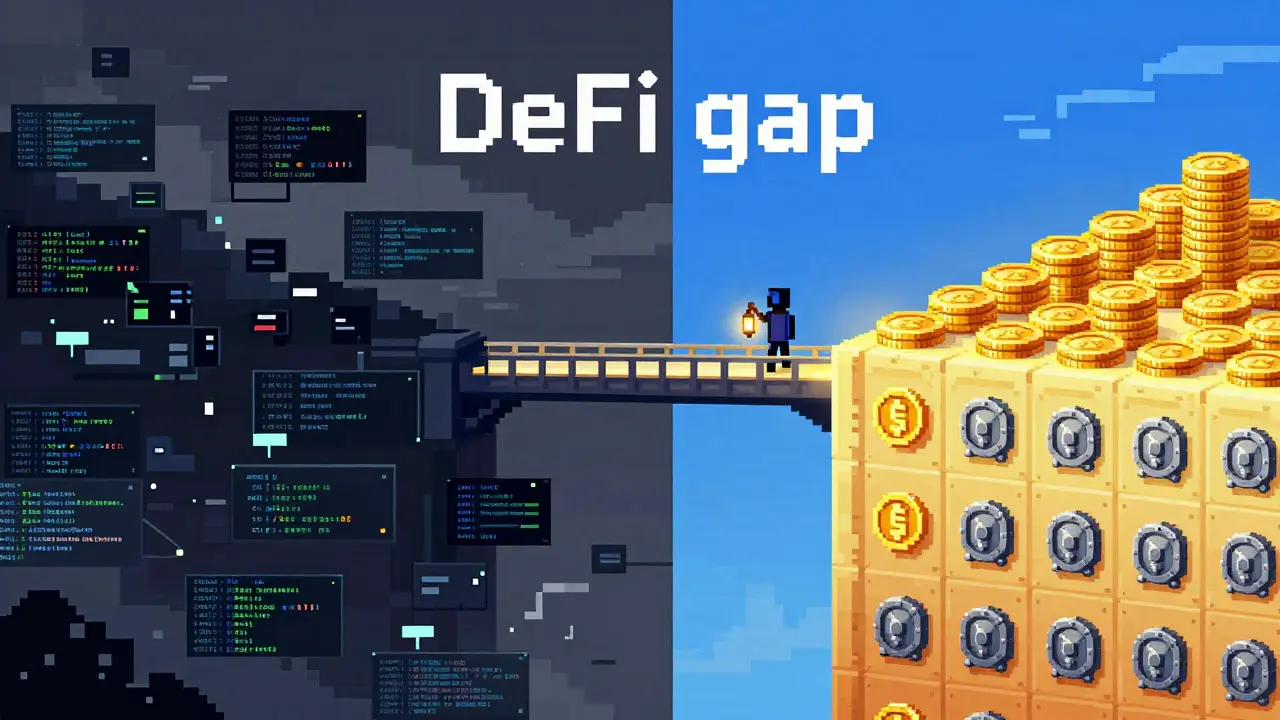
Here is where things get tricky. While centralized exchanges and custodians have clear paths to compliance, Decentralized Finance (DeFi) platforms remain largely unaddressed in the current regulations. A September 2025 survey by the Australian Digital Commerce Association found that 68% of crypto businesses were concerned about the lack of guidance for DeFi. If you operate a non-custodial protocol where users interact directly with smart contracts, the line between "service provider" and "technology tool" is blurry.
However, don’t assume you are safe. Regulators are watching. The Commonwealth Government’s 'Statement on Developing an Innovative Australian Digital Asset Industry' released in March 2025 outlined plans for a regulatory sandbox review. This suggests that clearer rules for DeFi and stablecoins are coming. The focus will likely shift to regulating the interfaces and front-ends that make DeFi accessible to retail users, rather than the underlying code itself.
Looking ahead, the Reserve Bank of Australia noted in September 2025 that Australia has the institutional capacity to become a regional leader in regulated digital asset markets-if implementation proceeds smoothly. With the market size projected to reach AUD 7.3 billion by 2027, being compliant isn't just about avoiding fines; it's about accessing institutional clients. Independent Reserve, for example, reported a 22% increase in institutional clients after achieving full AUSTRAC compliance in Q1 2025. Trust is the new currency.
What happens if I don't register with AUSTRAC by the March 2026 deadline?
Operating without registration is a serious criminal offense under the AML/CTF Act. Penalties can include substantial fines for the company and imprisonment for individuals responsible. Additionally, AUSTRAC can issue infringement notices and pursue civil penalties. Your bank accounts may also be frozen if financial institutions detect non-compliant activity.
Do I need to comply if I only offer crypto-to-crypto swaps?
Yes. As of March 2026, pure crypto-to-crypto exchanges are explicitly included in the definition of Virtual Asset Service Providers (VASPs). You must register with AUSTRAC and implement full AML/CTF programs, including Customer Due Diligence and Transaction Monitoring.
How much does it cost to become compliant with AUSTRAC?
Costs vary based on business size and complexity. For a typical mid-sized exchange, expect to spend between AUD 120,000 and AUD 350,000. This includes compliance software (like Chainalysis or Elliptic), legal fees, and staffing. Smaller startups may spend closer to AUD 50,000-$100,000 if they leverage existing SaaS solutions, while larger enterprises may exceed AUD 500,000 due to custom integration needs.
Does the Travel Rule apply to transactions below AUD 1,000?
No, the mandatory exchange of originator and beneficiary information applies to transactions above AUD 1,000. However, you must still monitor lower-value transactions for signs of structuring or layering techniques used to evade detection. Suspicious matters must be reported regardless of amount.
Are DeFi platforms currently regulated by AUSTRAC?
Currently, non-custodial DeFi protocols where users retain control of their private keys are in a grey area. However, any centralized interface, front-end, or service that facilitates access to these protocols may be considered a VASP. Regulators are actively reviewing this space, and future guidelines are expected to clarify obligations for DeFi-related services.