
KAT Token Value Estimator
How Karat Token Value Works
KAT's value comes from protocol usage, not speculation. For every verification request, users stake 500 KAT. If DApps pay $0.01 per verification, the token could gain utility-based value.
Results
Note: These are theoretical calculations based on the article's data. Actual value depends on adoption and DApp adoption.
Karat (KAT) isn’t just another cryptocurrency. It’s a protocol built to solve a problem most people don’t even know they have: how to prove who you are online without handing over your personal data to Big Tech or centralized servers. At its core, KAT powers a system that links your social media accounts, email, and even verified ID documents directly to your crypto wallet - all while keeping your data private and under your control. This isn’t theory. Over 300,000 users have already created what’s called a Karat ID, connecting their Web2 identities to Web3 wallets. But here’s the twist: the KAT token itself has lost 99% of its value since its peak, and trading volume is barely above $10,000 a day. So what’s really going on?
How Karat (KAT) actually works
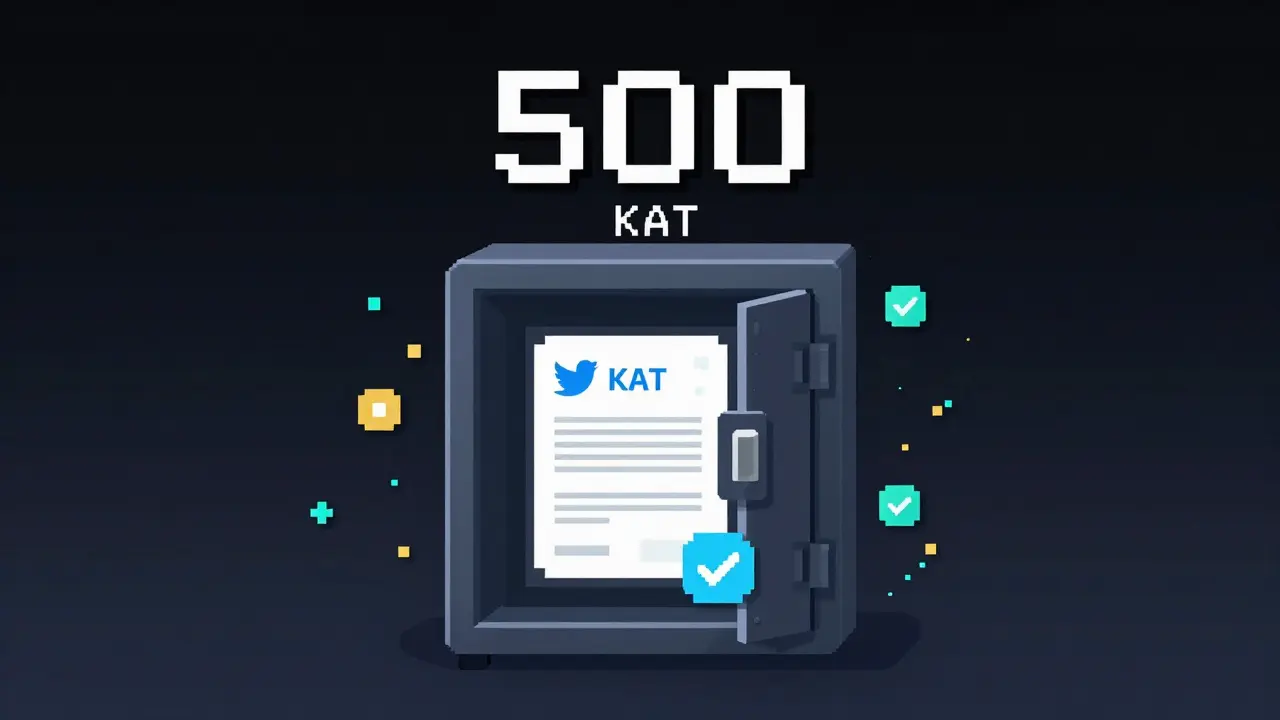
Karat doesn’t store your email, Twitter handle, or passport scan on a server. Instead, it uses something called Multi-Party Computation (MPC) and Zero-Knowledge proofs. Think of it like this: you give parts of your data to different encrypted pieces, and only when you give permission do those pieces come together to verify something - without revealing what the data actually is. Your Twitter handle? It’s locked in a digital safe only you can open. A DApp wants to know if you’re a real person? It asks Karat’s network: "Is this wallet linked to a verified Twitter account?" The system says yes or no - but never shows you the username.This data is stored on IPFS, a decentralized file system, not on a blockchain. That means it’s not public. Only the proof of verification is recorded on-chain. And to use it, you need to stake KAT tokens. To create your own Karat ID, you lock up 500 KAT for seven days. That’s about 25 cents at today’s price. Content creators get 50 KAT for each new user who joins their private chat room. It’s a simple incentive: use the system, earn tokens.
Why Karat runs on ZKSync
Karat chose ZKSync, a Layer-2 blockchain built for speed and low fees. Why? Because identity verification needs to be fast, cheap, and reliable. On Ethereum mainnet, sending a simple verification could cost $5-$10. On ZKSync, it’s a fraction of a cent. That’s why Karat became the largest protocol on ZKSync - over 300,000 wallets are actively using it. Other identity projects like Polygon ID or Civic run on Ethereum or other chains, but they don’t have the same level of adoption on a single Layer-2 network. Karat’s edge isn’t just tech - it’s scale. More than 100 other crypto projects have already asked to use Karat’s verified user data during their alpha testing. That’s not hype. That’s real demand.Tokenomics: Supply, staking, and the 10% fee
The total supply of KAT is capped at 2 billion tokens. As of late 2024, about 255 million are in circulation - just 12.9% of the total. That means 87% of the supply is still locked up, waiting to be released over time. This isn’t unusual for crypto projects, but it does mean the market cap can swing wildly if even a small portion of those tokens starts trading.Staking is mandatory to use the network. Regular users stake 500 KAT to mint a Karat ID. Validators - the ones who run the nodes that verify identities - need to stake 350,000 KAT. That’s around $178 at current prices. It’s a high barrier, but it ensures only serious participants run the network. There’s also a 10% withdrawal fee if you unstake early. That’s designed to discourage short-term speculation and encourage long-term participation.
Price history and market reality
Karat hit its all-time high of $0.05802 in August 2023. Today, it trades around $0.0005082. That’s a 99.1% drop. The market cap has fallen from over $100 million to just $130,000. Trading volume? Around $11,600 per day. That’s less than 9% of its market cap. In healthy crypto markets, volume should be 20-100% of market cap. Karat’s low volume suggests very few people are buying or selling the token - even though hundreds of thousands are using the protocol.This disconnect is the biggest question mark. Why would so many users join a system if the token is practically worthless? The answer might be simple: they don’t care about the token. They care about the identity. They want to prove they’re real online. The KAT token is just the fuel. And right now, that fuel is cheap.
Who’s behind Karat?
The team includes senior engineers from Apple and Google, plus a serial entrepreneur named in Forbes’ 30 Under 30 list. That’s not a coincidence. This isn’t a group of anonymous devs. These are people who’ve built products used by millions. Their goal wasn’t to make a quick buck. It was to build infrastructure for the next generation of apps - ones that need to know who you are without knowing your name, email, or phone number. Investors like Bitmart, Emurgo Capital, and NEO Eco have backed them. That kind of institutional support doesn’t happen without serious technical credibility.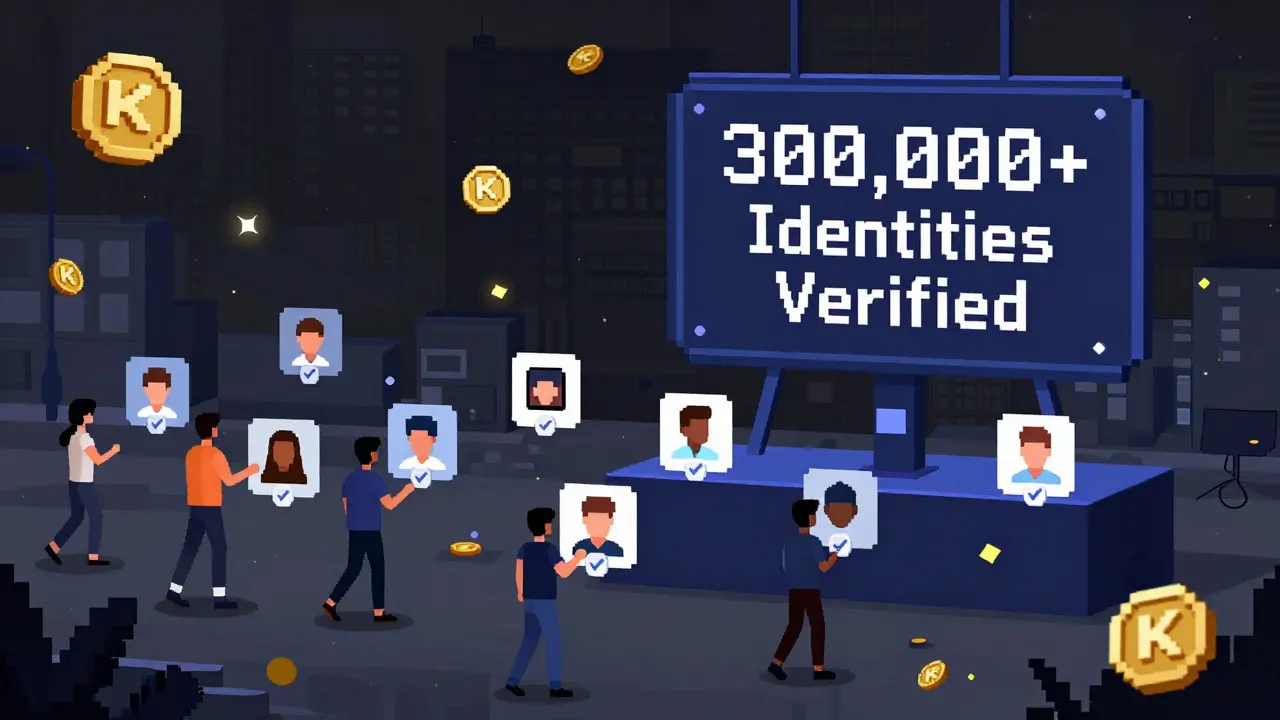
Who is Karat for?
Karat isn’t for traders looking to flip a coin. It’s for:- Developers building social DApps that need verified users
- Content creators running private communities and wanting to block bots
- Users tired of logging in with Google or Facebook
- Projects needing KYC without storing sensitive data
If you’re a crypto user who wants to join a private Discord server, and the admin says, "Prove you’re not a bot," Karat lets you do that without handing over your email. If you’re a startup building a decentralized LinkedIn, Karat gives you access to 250,000 verified identities - no middleman needed.
The big risk: low liquidity
Karat’s biggest weakness isn’t the tech. It’s the token. With such low trading volume, it’s nearly impossible to buy or sell large amounts without crashing the price. If someone tries to cash out even $10,000 worth of KAT, the price could drop 30% in minutes. That’s why most users aren’t selling. They’re holding - not because they think it’ll go to $1, but because they’re using the protocol and don’t need to move the token.Analysts at CoinCodex say KAT is in an "oversold" position, with an RSI of 18.51. That means it’s been hammered hard - and could bounce. But that’s technical noise. The real story is adoption without liquidity. If Karat can find a way to unlock value from its 300,000 users - maybe by charging DApps a small fee to access verified data - the token could gain purpose beyond staking. Until then, it’s a fascinating experiment in decentralized identity… with a token nobody wants to trade.
What’s next for Karat?
The protocol is still in its early stages. The fact that over 100 projects are testing access to its data means the demand is real. The next step? Monetization. If Karat starts charging DApps to query verified identities - even a tiny fee per request - that could create a revenue stream that actually supports the token’s value. Right now, the token is a utility. Soon, it might become a revenue-sharing asset.For now, Karat is like a highway with millions of cars driving on it - but no toll booths. The infrastructure is there. The users are there. The question is: when will they start charging?