Have you ever wanted to borrow money against your crypto assets without paying interest every single day? That is exactly what Beraborrow is designed to do. It is a decentralized borrowing protocol built on the Bera Chain network. If you are holding tokens on this chain, Beraborrow lets you unlock liquidity instantly while keeping your original assets working for you. The governance token behind this system is called POLLEN. This guide breaks down how the protocol works, what makes it different from other lending platforms, and whether the POLLEN token has real value.
How Beraborrow Works: The Core Concept
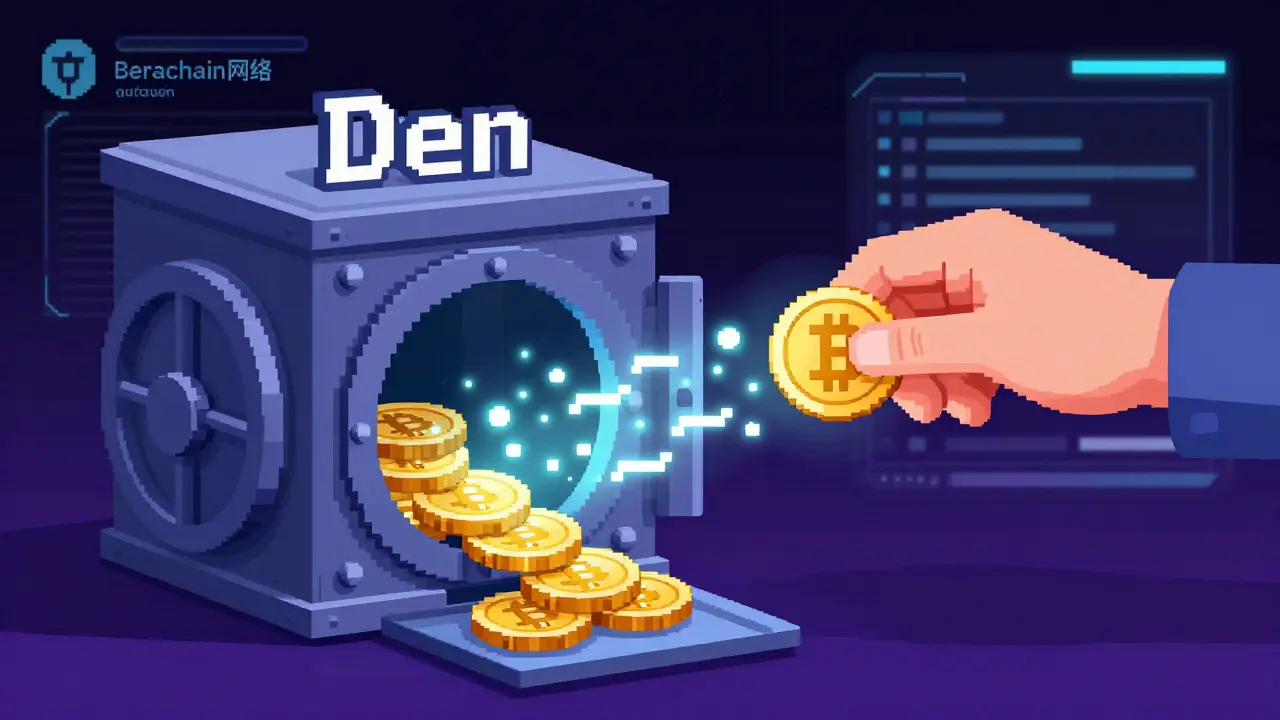
At its heart, Beraborrow is a Collateralized Debt Position (CDP) protocol. Think of it like a pawn shop, but digital and permissionless. You depositing your crypto into a vault called a "Den." In exchange, you can mint a stablecoin called Nectar (NECT). Here is the catch: you must deposit more value than you borrow. This is called over-collateralization. For example, if you want to borrow $100 worth of NECT, you might need to lock up $150 worth of assets in your Den.
The biggest selling point here is that these loans are interest-free. Unlike traditional banks or even many DeFi protocols where interest rates fluctuate based on supply and demand, Beraborrow charges a one-time fee when you take out the loan. As long as you keep your collateral ratio above a certain safety threshold, you don't pay any ongoing interest. This makes it highly attractive for users who want short-term liquidity without worrying about rising rates eating into their profits.
Once you have minted NECT, you can use it anywhere in the Berachain ecosystem. You can swap it for other tokens, provide liquidity, or simply hold it. When you are ready to close the loan, you repay the NECT plus the initial fee, and your collateral is returned to you. Simple, efficient, and transparent.
The Role of the POLLEN Token
If NECT is the tool for borrowing, then POLLEN is the key to controlling the house. POLLEN is the governance token of the Beraborrow ecosystem. Holding it gives you a voice in how the protocol operates. Specifically, POLLEN holders can vote on critical parameters such as which assets are accepted as collateral, what the borrowing fees should be, and how rewards are distributed.
But it goes deeper than just voting. Beraborrow uses a mechanism called vePOLLEN (vote-escrowed POLLEN). By locking your POLLEN tokens for a set period, you gain more voting power and a share of the protocol's revenue. According to early data, vePOLLEN holders are entitled to 60% of the protocol fees generated by the platform. This creates a strong incentive for long-term holders to participate actively rather than just trading the token on the open market.
Additionally, POLLEN serves as the vehicle for capturing value from Berachain's unique consensus mechanism. Because Beraborrow integrates deeply with the network's infrastructure, POLLEN helps align the incentives between borrowers, lenders, and the underlying blockchain validators.
Berachain and Proof of Liquidity (PoL)
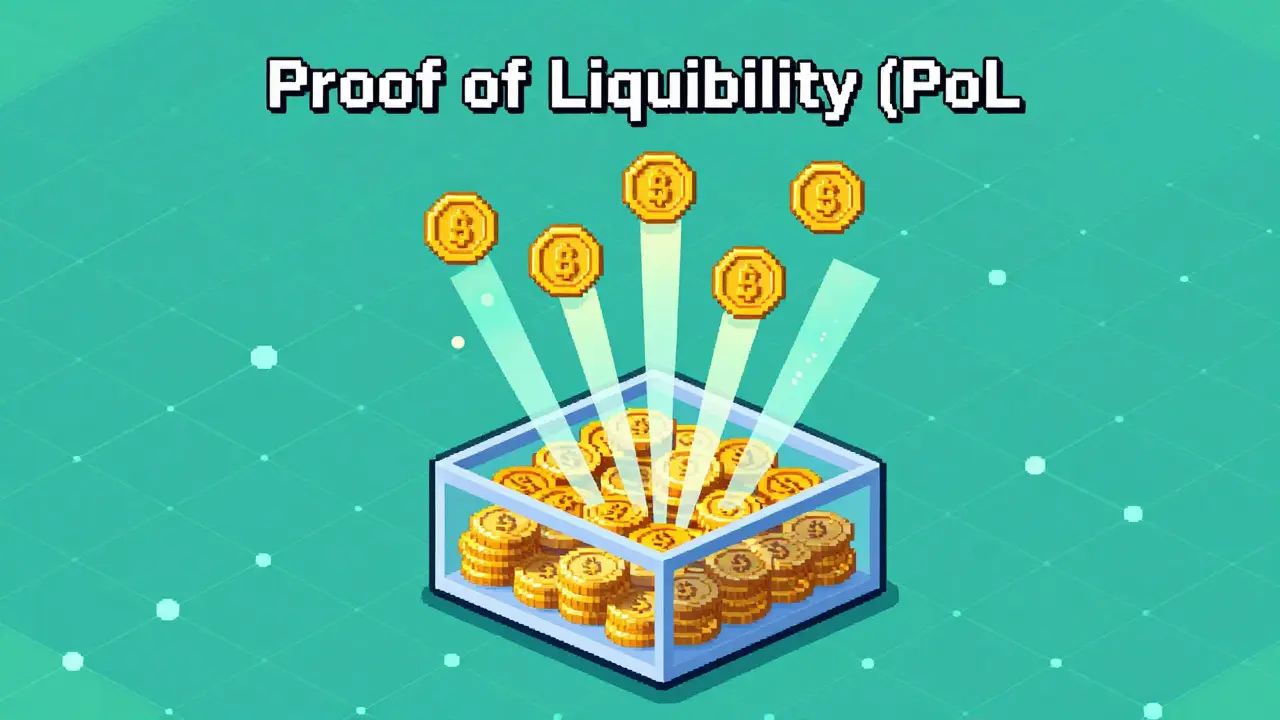
To truly understand why Beraborrow matters, you need to look at the network it sits on: Berachain. Most blockchains use Proof of Work or Proof of Stake to secure the network. Berachain uses something different called Proof of Liquidity (PoL). Instead of rewarding miners or stakers, PoL rewards liquidity providers. If you provide liquidity to pools on Berachain, you earn native rewards directly from the consensus layer.
Beraborrow leverages this beautifully. When you deposit assets into a Den to borrow NECT, those assets often continue to earn PoL rewards. So, you get two benefits: you have liquid cash (NECT) to use elsewhere, and your locked-up collateral is still generating yield. This dual-yield model is rare in the DeFi space and is a major reason why developers and investors are watching Berachain closely.

Tokenomics and Supply Details
Let's look at the numbers behind POLLEN. The token has a fixed maximum supply of 420,000,000 units. There will never be more than this amount created. The distribution was structured to balance community growth with investor and team incentives:
- Community Allocation: 37.4% of the total supply is reserved for the community, ensuring broad distribution.
- Seed and Strategic Investors: 31.6% went to early backers who helped fund development.
- Team and Advisers: 18% is allocated to the core team, typically subject to vesting schedules.
- Treasury: 5% is held in reserve for future operational needs.
- Liquidity Pool: 5% ensures there is enough depth for trading.
- Public Offering: 2.5% was sold during the public sale.
- Community Round: 0.5% was available in a specific community round.
This structure suggests a focus on decentralization and long-term sustainability rather than quick profit extraction by insiders. The public offering raised around $1 million USD, valuing the project at an initial fully diluted valuation (FDV) of $42 million. Since then, the token has traded on various decentralized exchanges, experiencing significant volatility typical of new DeFi projects.
Security and Technical Risks
No financial product is risk-free, and Beraborrow is no exception. One of the most complex aspects of the protocol is its support for Liquid Staking Tokens (LSTs) and Liquidity Provider (LP) tokens as collateral. While this allows for higher capital efficiency, it introduces pricing challenges. If the price feed for an LP token is inaccurate, it could lead to arbitrage opportunities that drain value from the protocol.
Security researchers identified a vulnerability related to how LP tokens were priced using standard oracle feeds. To mitigate this, Beraborrow switched to a more robust oracle solution called Chronicle and increased minimum redemption fees. These changes help protect users from exploitation but also highlight the importance of technical diligence in DeFi. Always check the current security audits and monitor official announcements before depositing large amounts of capital.
Comparison with Other Protocols
| Feature | Beraborrow | Aave | Liquity |
|---|---|---|---|
| Interest Model | Interest-free (one-time fee) | Variable/Stable interest rates | Interest-free (one-time fee) |
| Underlying Network | Berachain | Ethereum, Polygon, Arbitrum, etc. | Ethereum |
| Stablecoin Minted | Nectar (NECT) | Various (USDC, DAI, etc.) | LUSD |
| Collateral Types | Bera assets, LSTs, LP tokens | Wide variety across chains | ETH only |
| Yield on Collateral | Yes (via PoL rewards) | Yes (supply APY) | No direct yield on ETH collateral |
As you can see, Beraborrow occupies a unique niche. It combines the interest-free model of Liquity with the multi-chain versatility of Aave, but specifically tailored for the Berachain ecosystem. Its main advantage is the integration with Proof of Liquidity, which adds an extra layer of yield generation that competitors on other chains cannot easily replicate.
Is POLLEN Right for You?
Deciding whether to engage with Beraborrow depends on your goals. If you are already active in the Berachain ecosystem and want to leverage your holdings without selling them, Beraborrow offers a powerful tool. The ability to borrow NECT interest-free while earning PoL rewards on your collateral is a compelling strategy for sophisticated DeFi users.
For investors looking at the POLLEN token itself, consider the risks. The token has experienced high volatility since its launch in 2025. Like all governance tokens, its value is tied to the success and adoption of the protocol. If Berachain grows and Beraborrow becomes the primary lending hub, POLLEN could benefit significantly. However, if the ecosystem struggles or security issues arise, the token price could suffer.
Start small. Connect your wallet, explore the interface, and perhaps mint a small amount of NECT to understand the mechanics. Participate in governance discussions to see if the community direction aligns with your values. DeFi moves fast, so staying informed is your best defense against unexpected changes.
What is the maximum supply of POLLEN?
The maximum supply of POLLEN is fixed at 420,000,000 tokens. No new tokens will be minted beyond this limit.
Do I have to pay interest on my Beraborrow loans?
No, Beraborrow loans are interest-free. You pay a one-time borrowing fee when you mint NECT, but there are no ongoing daily or monthly interest charges as long as you maintain the required collateral ratio.
Can I use ETH as collateral on Beraborrow?
You cannot use native Ethereum directly because Beraborrow runs on Berachain. However, you can use Liquid Staking Tokens (LSTs) representing ETH or BTC derivatives that are supported within the Berachain ecosystem.
What happens if my collateral value drops too low?
If the value of your collateral falls below the minimum required ratio, your position may be liquidated. This means the protocol will sell your assets to repay the NECT debt. To avoid this, you can add more collateral or repay some of the loan.
How does Proof of Liquidity (PoL) benefit me?
Proof of Liquidity rewards users who provide liquidity to the network. When you lock assets in Beraborrow, those assets can continue to earn PoL rewards, meaning your collateral generates yield even while it is securing your loan.
Where can I buy POLLEN?
POLLEN is primarily traded on decentralized exchanges (DEXs) within the Berachain ecosystem, such as Kodiak V3. It is not currently listed on major centralized exchanges like Binance or Coinbase, so you will need a compatible wallet and bridge funds to Berachain first.