

Iran doesn’t have a simple list of banned crypto exchanges like you’d find in a government press release. Instead, Iranian users face a dual wall: one built by their own government, and another by international companies scared of U.S. sanctions. It’s not about which exchange is blocked-it’s about whether you can move money in or out at all.
The Iranian government controls the flow, not the platforms
On December 27, 2024, Iran’s Central Bank cut off all cryptocurrency-to-rial payment gateways. That meant no more buying Bitcoin with Iranian rials through local websites. At first, it looked like a full ban. But by January 2025, the rules changed. The government didn’t lift the ban-it rewrote it. Now, only exchanges that connect to a government-controlled API can operate. That API gives authorities full access to every trade, every wallet, every user. It’s not about stopping crypto. It’s about owning it. This isn’t a ban on exchanges like Binance or Coinbase. It’s a ban on freedom. If you’re using Nobitex, the biggest local exchange, you’re still trading-but only if your data flows through the state’s system. You can’t move money freely. You can’t hedge against inflation without permission. And if the government decides to freeze your account? There’s no appeal.International exchanges won’t touch Iranian users
While Iran controls who can trade domestically, global exchanges have their own rules. Most major platforms-Binance, Kraken, Coinbase-don’t even let Iranian users sign up. Why? Because of U.S. sanctions enforced by the Treasury’s Office of Foreign Assets Control (OFAC). If a U.S.-based company serves an Iranian customer, it risks billions in fines. Bittrex, once a top exchange, froze all Iranian accounts in 2023. One Iranian user, Ghader, sued for $88 million after losing access during the 2021 Bitcoin rally. The court didn’t rule in his favor. Why? Because Bittrex’s Terms of Service gave them the right to block users for compliance reasons. That’s the reality: if you’re Iranian, you’re not a customer-you’re a compliance risk.Tether’s freeze changed everything
The biggest shock came on July 2, 2025. Tether, the company behind USDT (the world’s most used stablecoin), froze 42 Iranian-linked addresses. More than half of them were tied to Nobitex. These weren’t random wallets. They were connected to addresses previously flagged by Israeli counter-terror finance units as linked to the Islamic Revolutionary Guard Corps (IRGC). That freeze wasn’t just about one exchange. It was a warning. Tether had blocked thousands of Iranian accounts before, but this was the largest single action in its history. Overnight, Iranian users saw their USDT holdings vanish. Some lost months of savings. Others scrambled to swap USDT for DAI on the Polygon network, a workaround that became the new norm. Tasnim News, a state-aligned outlet, warned users that Tether could freeze more funds at any time. The message was clear: if you hold USDT in Iran, you’re playing with fire.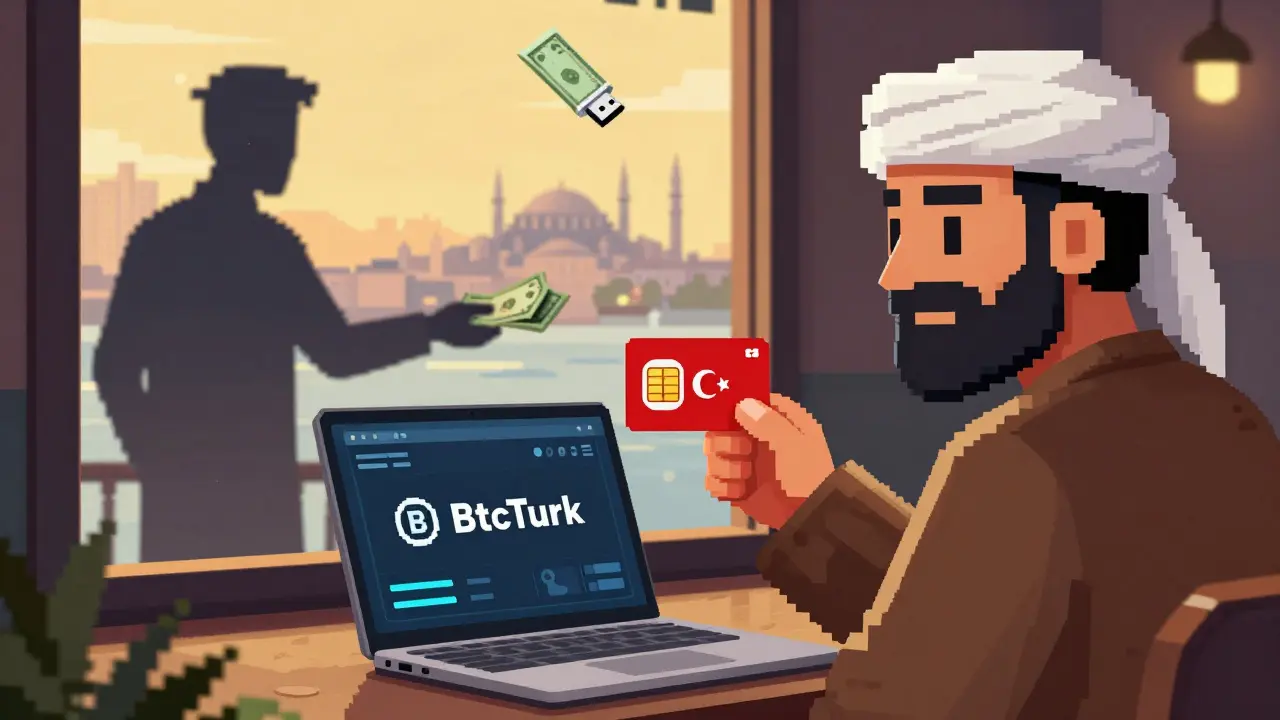
Stablecoin limits: ,000 a year, ,000 max
In September 2025, Iran’s Central Bank didn’t just restrict exchanges-it restricted how much you could even own. The new rule: no individual or business can buy more than $5,000 worth of stablecoins per year. And you can’t hold more than $10,000 total in your wallet at any time. That’s not a regulation. It’s a ceiling. For a country where inflation hit 50% in 2024, $10,000 isn’t protection-it’s a drop in the ocean. This rule forced Iranians to split holdings across multiple wallets, use intermediaries, or move funds abroad. It also pushed people toward less traceable assets like Monero or privacy coins, even though those are harder to trade locally.Advertising ban: silence as control
In February 2025, Iran banned all cryptocurrency advertising. No YouTube videos. No Instagram posts. No billboards. No influencer endorsements. Even discussing crypto on Telegram channels became risky. This wasn’t just about stopping new users-it was about erasing crypto from public view. The goal? Make crypto feel illegal, even if it’s still technically possible to trade. Without ads, new users don’t learn how to buy Bitcoin. Without influencers, trust fades. And without visibility, crypto becomes a niche tool for the desperate-not a mainstream option.Taxation: the government wants a cut
On August 15, 2025, Iran passed its first law taxing crypto profits. The Law on Taxation of Speculation and Profiteering treated Bitcoin and Ethereum the same as gold, real estate, and forex trades. If you made a profit, you paid capital gains tax. The rate? Up to 35%. This wasn’t a step toward legalization. It was a step toward control. The government didn’t want to stop crypto. It wanted to tax it. To track it. To profit from it. Now, every trade you make could be audited. Every wallet, every transfer, every profit-subject to scrutiny.


Brandon Vaidyanathan
February 2, 2026 AT 05:54So let me get this straight - Iran’s government isn’t banning crypto, they’re just making it a surveillance state with extra steps? Bro, that’s not regulation, that’s digital feudalism. 😅
Calvin Tucker
February 2, 2026 AT 06:50The structural irony here is profound: the state seeks to monopolize the very technology designed to dismantle centralized control. By forcing compliance through API integration, Iran transforms decentralized finance into a bureaucratic apparatus - a paradox that reveals the limits of authoritarian adaptation to cryptographic autonomy.
It is not merely censorship; it is co-optation. The regime does not fear Bitcoin - it fears what Bitcoin represents: the erosion of its monopoly on value, identity, and transactional truth.
When a government taxes capital gains on digital assets at 35%, it is not legitimizing them - it is acknowledging their power, and attempting to domesticate it. This is the same logic that once taxed gold ownership in the 1930s.
The real tragedy is not the freezing of Tether addresses, but the normalization of it. Iranians are not merely users - they are subjects in a controlled experiment on financial repression.
And yet, the persistence of P2P networks, Turkish bridges, and Monero migrations reveals an undeniable truth: human beings will always find a way to transact when survival demands it.
This is not a crypto story. It is a human story - about dignity, desperation, and the quiet rebellion of private finance.
Pamela Mainama
February 3, 2026 AT 09:31It’s sad how survival becomes a full-time job.
Rachel Stone
February 3, 2026 AT 22:12So Iran bans ads but not crypto? Bold move. Next they’ll ban oxygen and call it ‘air management’.
Aaron Poole
February 4, 2026 AT 11:31People forget that crypto wasn’t invented to make rich guys richer - it was meant to give people like Iranians a way out. The fact that they’re still finding ways to trade, even with all this pressure, says more about human resilience than any government policy ever will.
Those $5k/year limits? That’s not a cap on wealth - it’s a cap on hope.
Lori Quarles
February 4, 2026 AT 22:27Let me tell you something - this isn’t just about money. It’s about freedom. Iranians are using crypto like oxygen. They don’t care if it’s ‘legal’ - they care if it keeps their families fed. The world needs to stop pretending this is just a ‘regulatory issue’.
When your inflation hits 50%, you don’t wait for permission to survive. You find a way. And damn if that isn’t the most beautiful thing about this whole mess.
Akhil Mathew
February 6, 2026 AT 16:42Interesting how the same sanctions meant to punish regimes end up hurting ordinary people the most. The US doesn’t want Iranian banks accessing SWIFT, so Iranians turn to crypto. Then Tether freezes wallets because of Israeli flags on some addresses. Who’s really being punished here?
And yet - the workaround culture is incredible. Turkish residency, Polygon swaps, Monero trades - it’s like a digital underground railroad. People aren’t just trading coins, they’re trading dignity.
Maybe the real innovation isn’t blockchain - it’s the ingenuity of people forced to outsmart systems designed to trap them.
Moray Wallace
February 7, 2026 AT 15:46It’s worth noting that the Iranian government’s approach mirrors what authoritarian states have always done: control the medium to control the message. Crypto, by design, resists that. So they didn’t ban it - they made it a tool of their own surveillance.
The fact that Nobitex still operates under state API is less a loophole and more a surrender of autonomy. Users aren’t trading Bitcoin - they’re trading trust in a system that can erase them at will.
Gareth Fitzjohn
February 7, 2026 AT 23:48Hard to believe this is 2026. We’ve got AI assistants, quantum computing, and yet here we are - people risking arrest to move USDT across borders because their own currency is collapsing. The world’s technological progress feels hollow when basic financial freedom is still a luxury.
Will Pimblett
February 9, 2026 AT 18:32Oh please. The West acts like it’s shocked Iran is doing this. Look at China’s digital yuan. Look at Russia’s workarounds. This isn’t unique - it’s predictable. The only difference? Iran’s people are still fighting back. Most others just accepted the cage.
And let’s not pretend Tether’s freeze was about ‘IRGC links.’ That’s just the excuse. They froze those wallets because they could. Because they’re scared of U.S. regulators. Because profit > principle.
laurence watson
February 11, 2026 AT 05:12I keep thinking about the woman who lost her life savings when Tether froze her wallet. Not because she was doing anything illegal - just because she wanted to protect her family from inflation. And now? She’s probably working three jobs and praying no one asks where the money went.
This isn’t finance. It’s trauma with a blockchain.
Tom Sheppard
February 11, 2026 AT 14:20bro i just found out some iranian traders are using pokemon go gps spoofing to bypass geo-blocks on p2p apps 😅
like... they’re literally standing in turkey while physically in tehran just to make a trade
we’re all just trying to survive, but some of us are doing it with a side of absurdity
Meenal Sharma
February 13, 2026 AT 00:58Let’s be honest - this entire narrative is a Western psyop. The U.S. sanctions are the real villain. Tether’s freeze? A corporate puppet move. The Iranian state is merely responding to external aggression. Crypto is being weaponized to destabilize sovereign nations - and now they’re blaming the victims.
Who gave the West the right to dictate who can hold USDT? The UN? The Geneva Conventions? No. It’s corporate imperialism dressed in blockchain.
And don’t you dare call this ‘surveillance.’ It’s defense. If foreign actors can freeze your savings with a click, you don’t have freedom - you have vulnerability.
The real crime isn’t Iran’s API. It’s the fact that a single private company in New York holds the power to erase the wealth of millions.
Katie Teresi
February 14, 2026 AT 23:24Of course Iran’s doing this. They’re a theocratic dictatorship that hates freedom, privacy, and capitalism. And now they’re trying to steal Bitcoin like it’s their state oil? Pathetic.
If you want to trade crypto, move to a country that doesn’t jail people for using a VPN. Stop acting like this is some heroic resistance. It’s just another authoritarian regime trying to control everything.
Sunil Srivastva
February 15, 2026 AT 01:42One thing no one talks about: the kids. Teenagers in Tehran are learning how to use Tor and wallets before they learn how to drive. They’re not just trading - they’re building a parallel economy. And they’re doing it with zero support from their government.
Maybe the future of crypto isn’t in Silicon Valley. Maybe it’s in the basement of a Tehran apartment, where a 16-year-old is swapping DAI for gold tokens while her mom cooks dinner.
Elizabeth Jones
February 15, 2026 AT 16:30The deeper tragedy isn’t the freezing of wallets or the taxation of profits - it’s the erasure of possibility. For decades, crypto promised liberation. But here, it’s become a tool of control, a mirror of the very systems it was meant to dismantle.
What happens when the revolution becomes the regime? When the tool of the oppressed becomes the weapon of the state? We are witnessing the corruption of an ideal - not by malice, but by necessity.
Iranians didn’t choose this. They were forced into it. And in their adaptation, we see the true cost of global inequality: not just lost wealth, but lost autonomy.
Rico Romano
February 15, 2026 AT 23:12Let’s not romanticize this. Iranians aren’t ‘resisting oppression’ - they’re gambling with assets that are literally controlled by a New York-based company. If Tether decides to freeze your wallet, you’re SOL. That’s not freedom. That’s delusion.
And the idea that ‘privacy coins’ are the answer? Monero isn’t magic. It’s still traceable. It’s still risky. And it’s still subject to the same sanctions. You’re not outsmarting the system - you’re just playing a harder version of the same game.
Real freedom isn’t hiding your coins. It’s living in a country where you don’t have to.
Gustavo Gonzalez
February 16, 2026 AT 01:29Wait - so you’re telling me that after all this, Iranians are still using P2P platforms? Bro, you know half those buyers are scammers, right? Or worse - government honey pots? You think your ‘secure’ trade isn’t being logged?
And you call this ‘resistance’? It’s just a trap with better UX. You think you’re free? You’re just another data point in a database owned by someone who doesn’t care if you live or die.
Stop glorifying this. This isn’t rebellion. It’s desperation with a crypto wallet.