
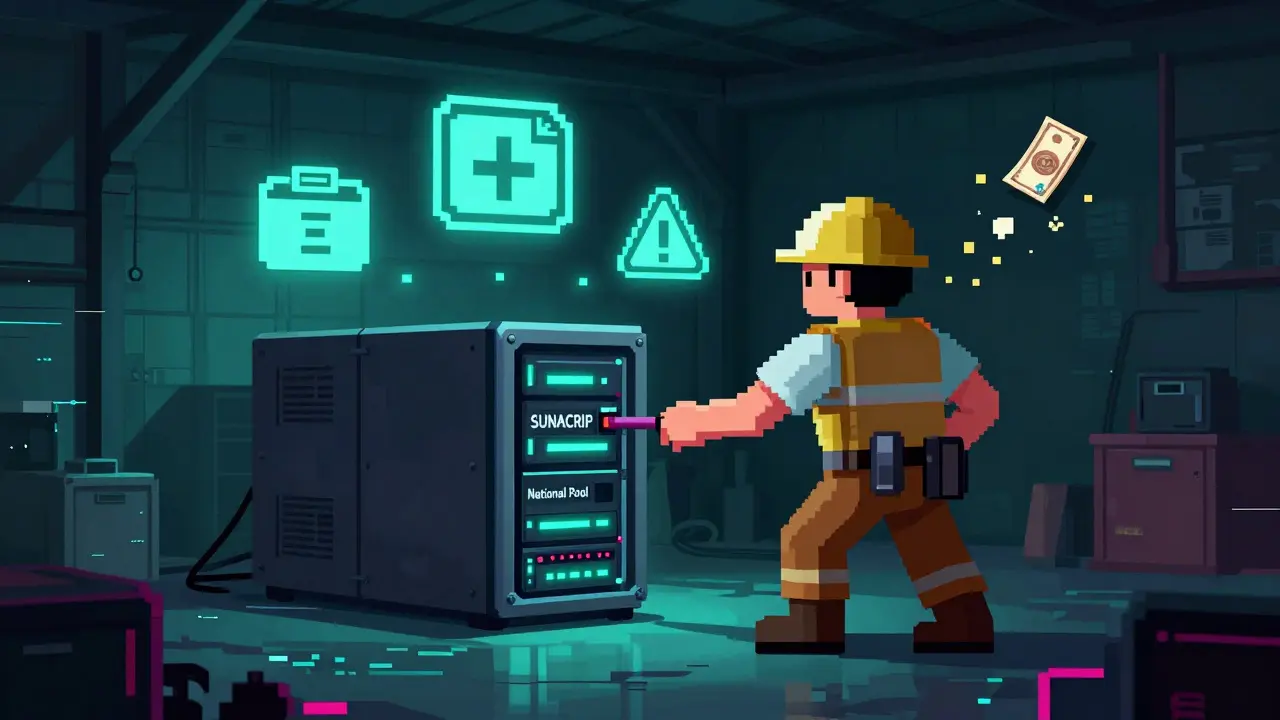
If you're thinking about mining cryptocurrency in Venezuela, you need to understand one thing upfront: you don't get to choose how you mine. The government doesn't just regulate mining-it owns the process. Since 2020, Venezuela has forced every miner, big or small, into a single, state-controlled system called the National Digital Mining Pool. This isn't a suggestion. It's the law. And if you ignore it, your equipment gets seized, your bank accounts frozen, and you could face legal action.
Who Controls Crypto Mining in Venezuela?
The entire system runs through SUNACRIP-the National Superintendency of Crypto Assets and Related Activities. Created in 2018 and restructured in March 2024 after a major corruption scandal, SUNACRIP is the only body that can legally approve mining operations. It doesn't just issue licenses; it controls every step: who can import mining rigs, how much power you can use, and even when you get paid. In 2023, SUNACRIP shut down completely after officials were caught embezzling over $3 million in mining funds. By early 2024, mining was officially banned. Then, without warning, the agency reopened under a new structure. That’s the reality here: rules change overnight. There’s no stable legal framework-just shifting political priorities.How to Get a License (If You Can)
To legally mine in Venezuela today, you must:- Register your business with Venezuela’s commercial registry
- Submit a detailed application to SUNACRIP, including equipment specs, power usage estimates, and financial projections
- Enroll in the Integral Miners Registry (RIM)
- Join the National Digital Mining Pool
- Wait 3 to 6 months for approval
The National Digital Mining Pool: What It Really Means
This is the heart of Venezuela’s control. All mining rewards-whether from Bitcoin, Ethereum, or any other coin-are funneled into a single government-run system. Your mining hardware doesn’t earn coins for you. It earns points. Those points are converted into payments, but only when the government decides to release them. Miners report payment delays lasting months. Some say their accounts were frozen without notice. Others were told their rewards were “reallocated” due to “system adjustments.” There’s no appeal process. No transparency. The government doesn’t publish payout schedules, mining difficulty levels, or reward distribution formulas. You just get paid-or you don’t. And here’s the catch: even if you’re paid, you’re not getting Bitcoin or Ethereum in your wallet. You’re getting bolivars, Petro (Venezuela’s failed state cryptocurrency), or a digital token tied to the government’s system. Converting that into usable money is another bureaucratic nightmare.Equipment Import Rules: A Bureaucratic Maze
You can’t just order a mining rig from Amazon and have it shipped to Caracas. All mining hardware must be imported through SUNACRIP-approved channels. That means:- Every device must be declared in advance
- Customs fees are unpredictable and often change mid-shipment
- Equipment is subject to random inspection and confiscation
- Only certain brands and models are approved
Taxes: It’s Not Just One Tax, It’s a Stack
Even if you get your license and your equipment, you’re still on the hook for taxes:- IGTF (Large Financial Transactions Tax): Up to 20% on any crypto transaction not in bolivars or Petro
- ISLR (Income Tax): Applied to mining profits, even if you haven’t sold your coins
- VAT: 16% on exchange fees, mining service contracts, and equipment maintenance
Record Keeping: 10 Years of Paperwork
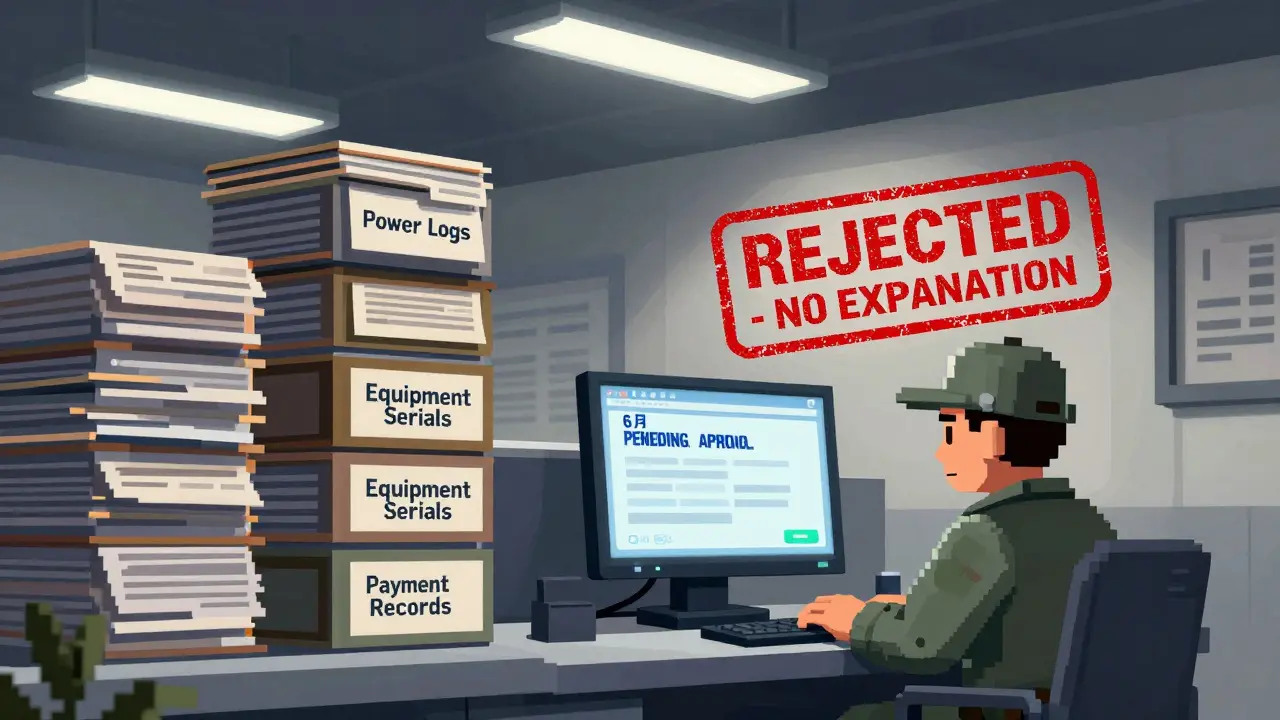
You’re legally required to keep every single record of your mining activity for a decade. That includes:- Power consumption logs
- Equipment serial numbers and maintenance records
- Every payment received from the National Pool
- Communication with SUNACRIP
- Proof of equipment import and customs clearance
Who’s Actually Mining Legally?
The truth? Very few. Most miners operate underground. Why? Because the system is broken.- Power outages last 8-12 hours a day in many regions
- Electricity rates for businesses are higher than in the U.S.
- The bolivar lost 99% of its value since 2018
- Bank accounts are routinely frozen for “suspicious activity”
What Happens If You Get Caught Mining Illegally?
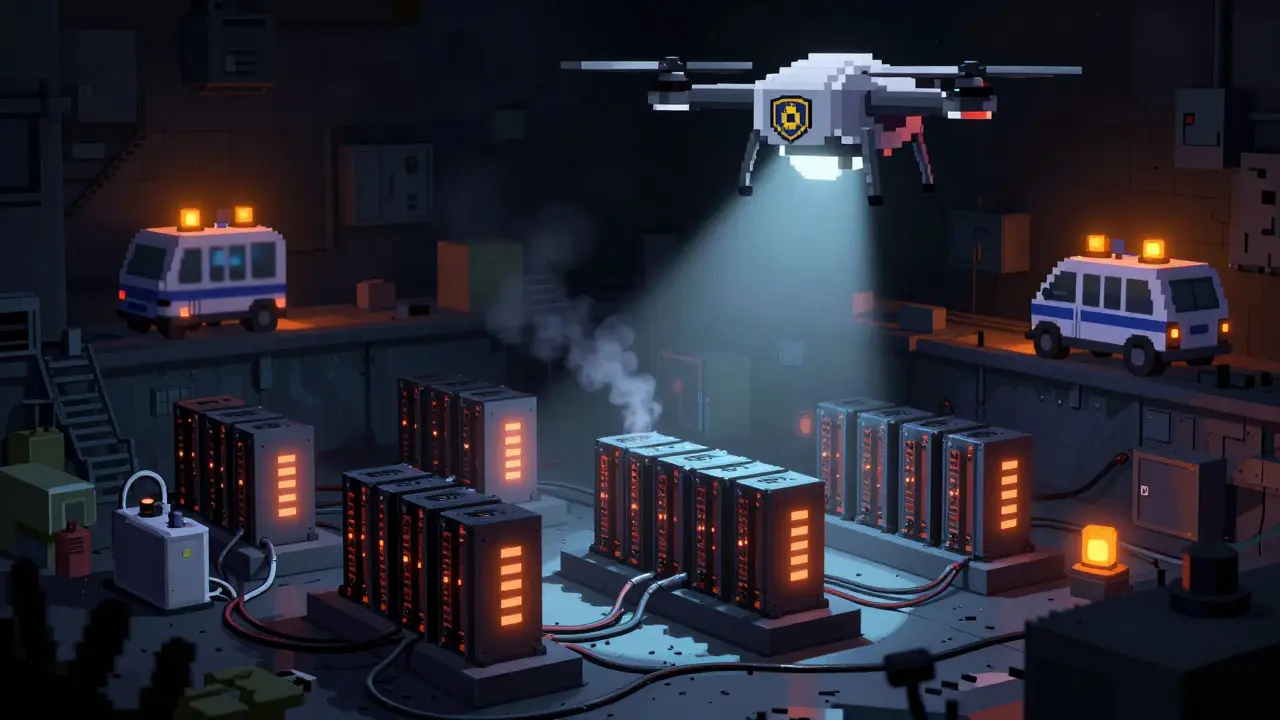
The penalties are severe:- Equipment confiscated without compensation
- Bank accounts frozen
- Travel bans imposed
- Fines up to 10 times the value of mined crypto
- Criminal charges for “economic sabotage”
Is It Worth It?
If you’re looking to make money from crypto mining in Venezuela in 2026, the answer is no-not legally. The system isn’t designed to help miners. It’s designed to control them. Every rule, every tax, every delay, every freeze serves one purpose: to extract value from miners and funnel it into state coffers. Some miners say they’ve made a few thousand dollars over two years after paying all fees and taxes. Others say they lost $20,000 on imported hardware that was never released from customs. The math doesn’t add up. The real winners? The government. They get your electricity, your hardware, your labor, and your crypto-all without lifting a finger. And if you complain? You’re labeled a criminal.What’s Next?
SUNACRIP claims it’s working with CAVEMCRIP, a new private-sector group, to improve the system. But no one knows what that means. No documents. No public meetings. No changes in practice. The U.S. and EU have placed sanctions on Venezuela’s crypto ministry. The International Criminal Court is investigating top officials for crimes against humanity. Mining here isn’t just risky-it’s politically toxic. If you’re serious about crypto mining, look elsewhere. There are better places to mine. Cheaper power. Clearer rules. Real ownership of your coins. Venezuela doesn’t offer any of that. The state-licensed system isn’t a path to profit. It’s a trap disguised as opportunity.Can I mine cryptocurrency legally in Venezuela without joining the National Digital Mining Pool?
No. All legal mining operations in Venezuela are required to join the National Digital Mining Pool. Mining outside the system is illegal and punishable by equipment seizure, fines, and criminal charges. There are no exceptions, even for personal or small-scale mining.
How long does it take to get a crypto mining license in Venezuela?
The application process typically takes between 3 and 6 months, but delays are common. Many applicants report waiting over 8 months with no response. SUNACRIP does not guarantee approval, and applications can be rejected without explanation.
What happens if my mining equipment is confiscated by authorities?
If your equipment is seized, you have no legal recourse to recover it. Confiscations are final and non-negotiable. There is no appeals process, no compensation, and no public record of seized assets. Many miners report losing entire operations overnight after a surprise raid.
Are there any taxes on crypto mining income in Venezuela?
Yes. Miners must pay the Large Financial Transactions Tax (IGTF) of up to 20% on crypto transactions not in bolivars or Petro, Income Tax (ISLR) on mining profits, and 16% VAT on related services. SENIAT enforces these taxes using blockchain tracking and exchange data, and penalties for non-compliance are severe.
Can I use my own wallet to store mined cryptocurrency in Venezuela?
Technically, no. All mining rewards must be routed through the government’s National Digital Mining Pool. You do not receive direct cryptocurrency deposits into your personal wallet. Payments are made in bolivars, Petro, or a government-controlled digital token, which you then must convert through state-approved channels.
Is it safe to invest in mining hardware for Venezuela’s legal system?
No. The regulatory environment is unstable, enforcement is arbitrary, and equipment imports are frequently delayed or confiscated. Many investors have lost tens of thousands of dollars on hardware that never reached their facilities. The risk of total financial loss is extremely high.
What is the role of CAVEMCRIP in Venezuela’s crypto mining system?
CAVEMCRIP is a newly formed private-sector advisory group introduced in March 2024 to provide input to SUNACRIP. However, it has no authority to enforce rules or override government decisions. Its influence is unclear, and no public changes to regulations have resulted from its involvement.
Why did SUNACRIP shut down in 2023?
SUNACRIP was suspended in March 2023 following a corruption investigation that uncovered the misappropriation of over $3 million in mining funds by senior officials. The agency was reorganized in March 2024, but its operational credibility remains in question among miners and international observers.




Charlotte Parker
January 7, 2026 AT 20:22So let me get this straight - you pay for hardware, electricity, and paperwork, and in return, the government gives you Bolivars that buy less than a burrito? And if you complain, you’re labeled a criminal? Brilliant. Absolute brilliance. This isn’t crypto mining - it’s feudalism with USB ports.
I’d rather dig for gold in my backyard with a spoon.
At least then I’d know who’s stealing my labor.
Also, SUNACRIP? More like SUN-ACRIP-TO-GET-RICH.
And CAVEMCRIP? Sounds like a medieval torture device. I’m not surprised.
Someone please tell me this is satire. I need to believe in humanity again.
Frank Heili
January 9, 2026 AT 16:40Let’s break this down practically. Even if you somehow get a license, the power grid in Venezuela averages 8–12 hours of blackouts daily. ASICs don’t pause. They overheat. They die. You’re burning through $3,000 rigs just to keep them cool enough to not melt.
Plus, the exchange rate on Petro? Meaningless. It’s not a currency - it’s a government IOU scribbled on a napkin.
And the tax stack? IGTF + ISLR + VAT? That’s over 50% before you even touch your ‘earnings.’ You’re mining for the state. Not for yourself.
There’s no ROI here. Only risk. And the only thing that’s ‘mined’ is your sanity.
If you’re thinking of doing this - walk away. Save your money. Buy a used GPU and mine in Canada or Georgia. At least there, you own your coins.
Veronica Mead
January 10, 2026 AT 04:22It is both morally and economically indefensible for a sovereign state to expropriate the fruits of private labor under the guise of regulatory oversight. The National Digital Mining Pool constitutes a form of digital serfdom, wherein individuals are compelled to surrender the output of their capital investment to an opaque, corrupt, and unaccountable bureaucracy.
Furthermore, the imposition of multiple, overlapping taxes - IGTF, ISLR, VAT - without transparent accounting or recourse, violates the most fundamental tenets of fiscal justice.
One must ask: if the government is so concerned with cryptocurrency regulation, why does it not first establish a stable monetary policy? Why does it not ensure reliable energy infrastructure? Why does it not honor property rights?
This is not innovation. This is exploitation dressed in blockchain jargon. It is, quite simply, a crime against economic liberty.
Tiffani Frey
January 10, 2026 AT 15:20It’s heartbreaking, really. People are risking everything - their savings, their equipment, their safety - for a system that doesn’t care if they live or die.
I’ve spoken to miners in Caracas via encrypted forums. One woman said she’s been waiting seven months for a payout. Her rig’s been running 24/7. She’s feeding her kids with canned beans. She doesn’t even know if her hardware is still alive.
And the record-keeping? Ten years? For a single ASIC? That’s not compliance - it’s psychological warfare.
They don’t want you to mine. They want you to break.
I wish I could send them a power bank. Or a VPN. Or just… hope.
But the system doesn’t allow hope. Only silence.
Ritu Singh
January 10, 2026 AT 21:58kris serafin
January 12, 2026 AT 16:55Bro. This is wild. 😳
You’re literally paying to work for the government and getting paid in digital ghost money 💸
Imagine grinding 24/7 on your ASIC… only to get a notification: ‘Reward reallocated due to system adjustments.’ 🤡
Meanwhile, the guy running SUNACRIP is sipping tequila in Miami with your Bitcoin.
Don’t do it. Just don’t. 🚫⛏️
Go to Paraguay. Low taxes. Stable power. No drama.
Or better yet - just HODL. Let someone else do the heavy lifting.
Rahul Sharma
January 13, 2026 AT 15:10This is a very serious situation. The government of Venezuela has created a legal framework that is not only complex but also highly unstable. The risk of financial loss is extremely high. The equipment import process is unpredictable. The tax system is layered and difficult to comply with. The lack of transparency in payment distribution makes it impossible to plan.
For any individual or business considering mining, I strongly advise against it. The cost of failure is total. There is no safety net. There is no recourse. There is no justice.
It is better to wait until the political and economic environment stabilizes. Or to seek opportunities in countries with clear, fair, and predictable regulations.
Respect the law. Protect your assets. Choose wisely.
Gideon Kavali
January 13, 2026 AT 20:34Let me be perfectly clear: This isn’t ‘mining.’ This is slavery with a digital interface. The Venezuelan regime has turned its citizens into human batteries - forced to generate wealth for a corrupt dictatorship that doesn’t even have the decency to pay them in real money.
And you call this ‘regulation’? No. This is theft. This is economic terrorism. This is the state weaponizing blockchain to enslave its own people.
Anyone who defends this system is complicit. Anyone who participates is a fool. Anyone who invests is signing their own death warrant.
The U.S. and EU sanctions? They’re too late. The damage is already done. The people of Venezuela are being bled dry - and the world is watching, silent.
Wake up. This is not crypto. This is fascism with a blockchain logo.
Brittany Slick
January 14, 2026 AT 23:58I know it sounds bleak - but hear me out.
There are still people out there - quiet ones - who are mining in basements, behind curtains, with solar panels and stolen Wi-Fi. They’re not doing it for the money. They’re doing it because they believe in something bigger: autonomy.
Even if they get paid in Bolivars, they’re still holding onto a piece of freedom. A digital spark. A way to say, ‘I won’t be erased.’
Maybe it’s not profitable. Maybe it’s dangerous. But it’s brave.
And sometimes… that’s enough.
Keep going. Keep mining. Keep believing.
You’re not alone.
And your work? It matters.
Andy Schichter
January 15, 2026 AT 22:41Wow. What a shocker. A government that steals your crypto and calls it ‘policy.’
Next they’ll be charging you rent for breathing air.
Anyway, I’m just here because I got bored. This is like watching a car crash in slow motion… and someone’s live-streaming it.
I’ll just… go back to my couch now.
Someone please tell me this is a meme.
Caitlin Colwell
January 16, 2026 AT 07:20Emily Hipps
January 17, 2026 AT 11:26Look - I know this sounds like a nightmare. And it is.
But here’s the thing: You don’t have to be a miner to be part of the movement.
Share this post. Talk about it. Tell your friends. Don’t let this be ignored.
There are people out there risking everything just to keep a spark alive - and they need to know the world sees them.
You don’t need hardware to fight back.
You just need to speak up.
And if you’re one of those quiet miners out there? We see you. We honor you. Keep going.
One day, this will be a chapter in a history book. And you? You’ll be the reason it changed.
Jessie X
January 18, 2026 AT 17:41