Is TOKENCAN the hidden gem for your crypto portfolio, or is it a risky platform you should avoid? If you are looking for a straightforward place to trade Bitcoin or Ethereum without complex fee tiers, TOKENCAN might catch your eye. It offers a simple 0.20% flat rate for both makers and takers. However, simplicity often comes with trade-offs. Before you deposit any funds, you need to know where this exchange stands in terms of security, accessibility, and trust.
This review breaks down what TOKENCAN actually offers, who can use it, and how it compares to industry giants like Binance or Coinbase. We will look at the hard data on fees, the lack of user feedback, and the critical restrictions that might keep you from signing up.
What Is TOKENCAN?
TOKENCAN is a centralized cryptocurrency exchange (CEX) designed for spot trading of digital assets. Unlike decentralized exchanges (DEXs) where you control your private keys, TOKENCAN holds custody of your funds while facilitating trades between buyers and sellers. This model is similar to traditional stock brokerages but operates 24/7 for cryptocurrencies.
The platform supports a wide array of cryptocurrencies. You can trade major coins like Bitcoin (BTC) and Ethereum (ETH), alongside numerous altcoins and exotic tokens. This broad selection is appealing if you want to access smaller-cap projects without juggling multiple exchange accounts. However, this "open door" policy for new tokens carries inherent risks. Established exchanges often vet projects rigorously before listing them. TOKENCAN’s inclusion of many lesser-known altcoins means users must perform their own due diligence to avoid potential scam projects or highly volatile assets.
Fees and Trading Costs
Cost is a major factor when choosing an exchange. TOKENCAN uses a flat fee structure, which is easy to understand but not necessarily the cheapest option available today.
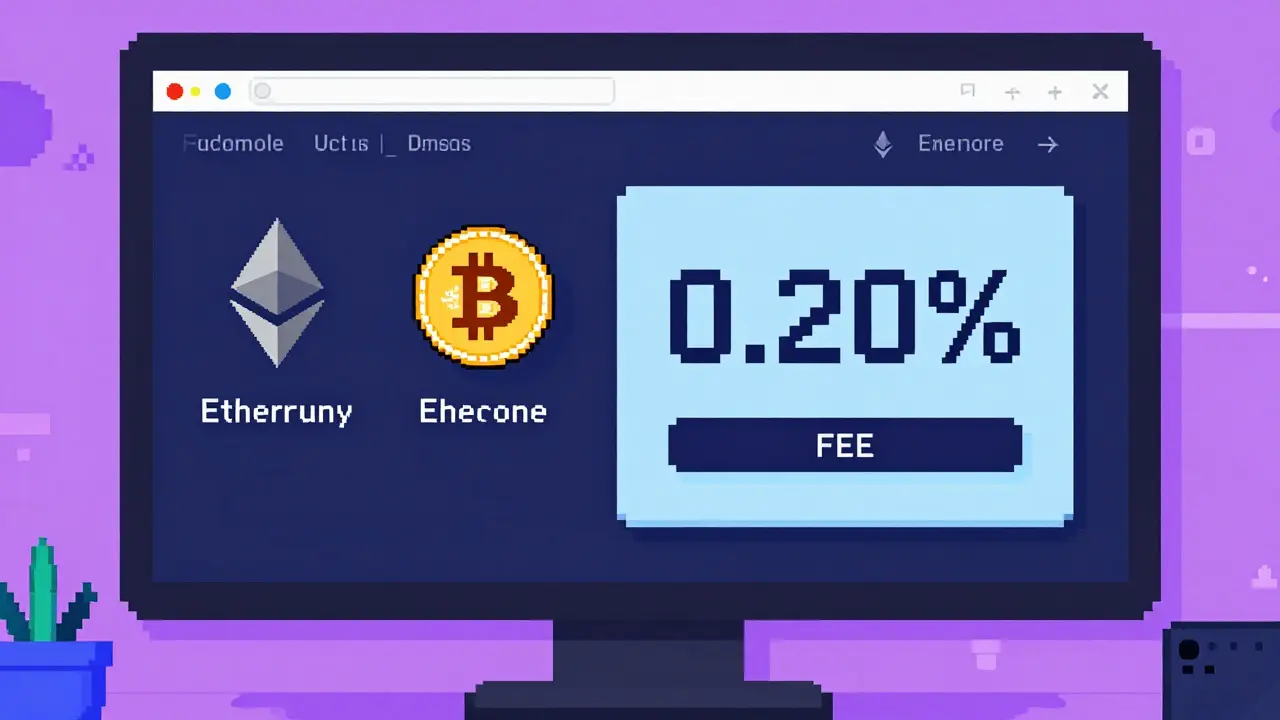
- Maker Fee: 0.20%
- Taker Fee: 0.20%
In the crypto world, a "maker" adds liquidity by placing a limit order that doesn't execute immediately, while a "taker" removes liquidity by executing an existing order instantly. Most major exchanges reward makers with lower fees to encourage market depth. For context, industry averages sit around 0.162% for makers and 0.215% for takers. TOKENCAN’s uniform 0.20% rate places it squarely in the middle-neither the most expensive nor the most competitive.
Compare this to platforms like MEXC, which offer significant discounts for holding their native token, or NDAX, which charges 0.2% but waives deposit fees. TOKENCAN does not appear to have a native token loyalty program or tiered fee reductions based on trading volume. If you are a high-volume trader, these extra costs can add up quickly over time.
| Exchange | Maker Fee | Taker Fee | Native Token Discount |
|---|---|---|---|
| TOKENCAN | 0.20% | 0.20% | No |
| Binance | 0.10% | 0.10% | Yes (BNB) |
| Kraken | 0.16% | 0.26% | No |
| MEXC | 0.00% | 0.02% | Yes (MX) |
Security and Trust Issues
When handing over your money to a centralized entity, security is non-negotiable. Unfortunately, TOKENCAN lacks transparency in this critical area. There is no public documentation regarding:
- Cold storage percentages (how much of your asset is kept offline)
- Third-party security audits
- Insurance coverage for user funds
- Regulatory compliance status
Major competitors like Coinbase and Kraken publish detailed security reports and hold billions in client assets with clear regulatory frameworks. The absence of this information for TOKENCAN is a red flag. In an industry where hacks and insolvencies happen, knowing your exchange has robust protections is essential. Without proof of these measures, users assume higher risk.
User Experience and Reputation
A platform’s reputation is built on community feedback. Here, TOKENCAN struggles significantly. Data from comparative analysis sites shows TOKENCAN has a user rating of only 3.0 out of 5 stars. More concerning is that this score is based on just one single review.
This lack of social proof suggests either a very small user base, recent launch, or limited marketing reach. Contrast this with Binance or Coinbase, which have millions of users and thousands of reviews across various platforms. When you cannot find extensive discussions, tutorials, or support threads from other users, troubleshooting issues becomes difficult. You are essentially flying blind.
Geographical Restrictions: No US Users
If you reside in the United States, TOKENCAN is not an option. The exchange explicitly prohibits US investors from accessing its platform. This restriction is common among international exchanges trying to avoid the complex regulatory landscape enforced by the SEC and CFTC.
For US-based traders, this means you must stick to compliant platforms like Coinbase, Kraken, or Gemini. These platforms may have slightly different fee structures or feature sets, but they offer legal protection and recourse that offshore exchanges cannot provide. Trying to bypass these geo-restrictions using VPNs often leads to frozen accounts and lost funds, so it is best to choose a platform that legally serves your region.
Is TOKENCAN Right for You?
TOKENCAN fills a niche for traders outside the US who want a simple interface with a wide variety of altcoins and don’t mind paying average fees. It is not designed for advanced traders seeking low-latency execution, staking rewards, or institutional-grade security guarantees.
If you prioritize:
- Simplicity: The flat fee structure is easy to calculate.
- Altcoin Access: You get exposure to many smaller projects.
- Non-US Residency: You live in a supported jurisdiction.
Then TOKENCAN might be worth a small trial deposit.
However, if you value:
- Security Transparency: Look elsewhere; TOKENCAN provides little info.
- Low Fees: Competitors like MEXC or Binance offer better rates.
- Community Support: The lack of reviews means less peer help.
In those cases, established exchanges remain the safer choice.
Frequently Asked Questions
Can I use TOKENCAN if I live in the USA?
No. TOKENCAN explicitly prohibits users from the United States from accessing its platform. US residents should consider regulated alternatives like Coinbase, Kraken, or Gemini.
How much does TOKENCAN charge for trading?
TOKENCAN charges a flat fee of 0.20% for both maker and taker orders in spot trading. This rate is consistent regardless of your trading volume or whether you add or remove liquidity.
Is TOKENCAN safe to use?
There is limited public information regarding TOKENCAN's security measures. Unlike major exchanges, it does not publish details about cold storage, insurance, or third-party audits. Users should exercise caution and start with small amounts.
Does TOKENCAN have a mobile app?
While specific app store listings are not prominently featured in major reviews, most modern centralized exchanges offer mobile applications for iOS and Android. Check the official TOKENCAN website for direct download links to ensure you are getting the legitimate app.
What cryptocurrencies can I trade on TOKENCAN?
TOKENCAN supports a large number of cryptocurrencies, including major assets like Bitcoin and Ethereum, as well as many altcoins and exotic tokens. This broad selection allows access to smaller-cap projects but requires careful research to avoid risky assets.
Why are there so few reviews for TOKENCAN?
TOKENCAN appears to have a small user base or limited marketing presence. Comparative sites show only a handful of reviews, which makes it difficult to gauge long-term reliability compared to established giants like Binance or Kraken.