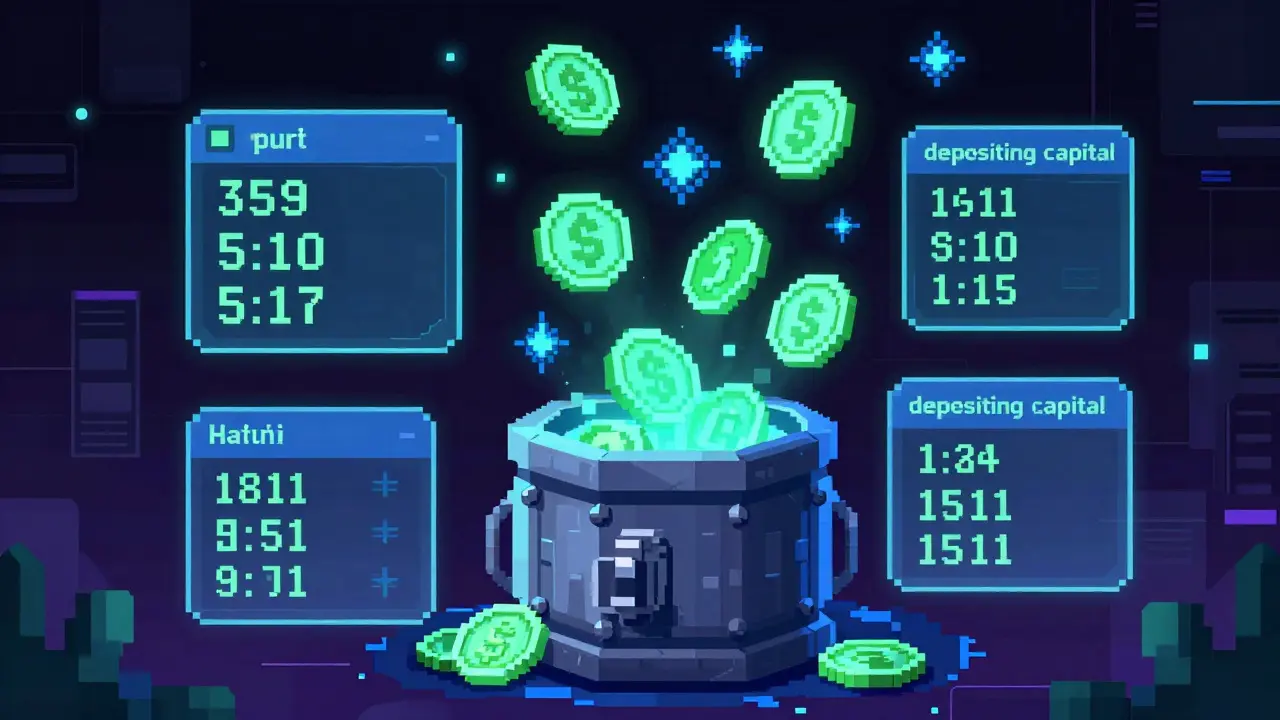
You put your crypto into a pool. You watch the numbers go up. Then you check again later, and suddenly, half your value is gone. This isn’t a glitch. It’s the harsh reality of being a Liquidity Provider in the world of Decentralized Finance (DeFi).
If you are looking to earn passive income by supplying assets to trading pairs, you need to understand how protocols pay you. The days of simple 'deposit and forget' strategies are over. As of early 2026, the landscape has shifted from wild, unsustainable token emissions to more structured, albeit complex, reward mechanisms. Understanding these protocol incentives is the difference between building wealth and losing capital to impermanent loss.
What Are Protocol Incentives?
At its core, a protocol incentive is a payment made by a decentralized platform to users who provide capital. Think of it like renting out your house. You own the asset (the capital), and the tenant (the trader) pays you rent (fees or tokens) to use it. Without these incentives, there would be no liquidity. No liquidity means high slippage, which makes trading expensive and inefficient.
In traditional finance, market makers are professional firms that hold inventory and take risks to ensure orders get filled. In DeFi, this role is crowdsourced. Anyone with capital can become a market maker. But why would you risk your money? Protocols answer this with two main types of rewards:
- Trading Fees: A cut of every swap that happens in your pool. If you provide liquidity for ETH/USDC, you get a percentage of the fee paid by traders swapping those assets.
- Token Emissions: New governance tokens created by the protocol and distributed to providers. This is often called 'liquidity mining.'
Historically, platforms like Uniswap relied heavily on fees, while others like Curve Finance used aggressive token emissions to attract capital. Today, most successful protocols use a hybrid model.
The Hidden Cost: Impermanent Loss
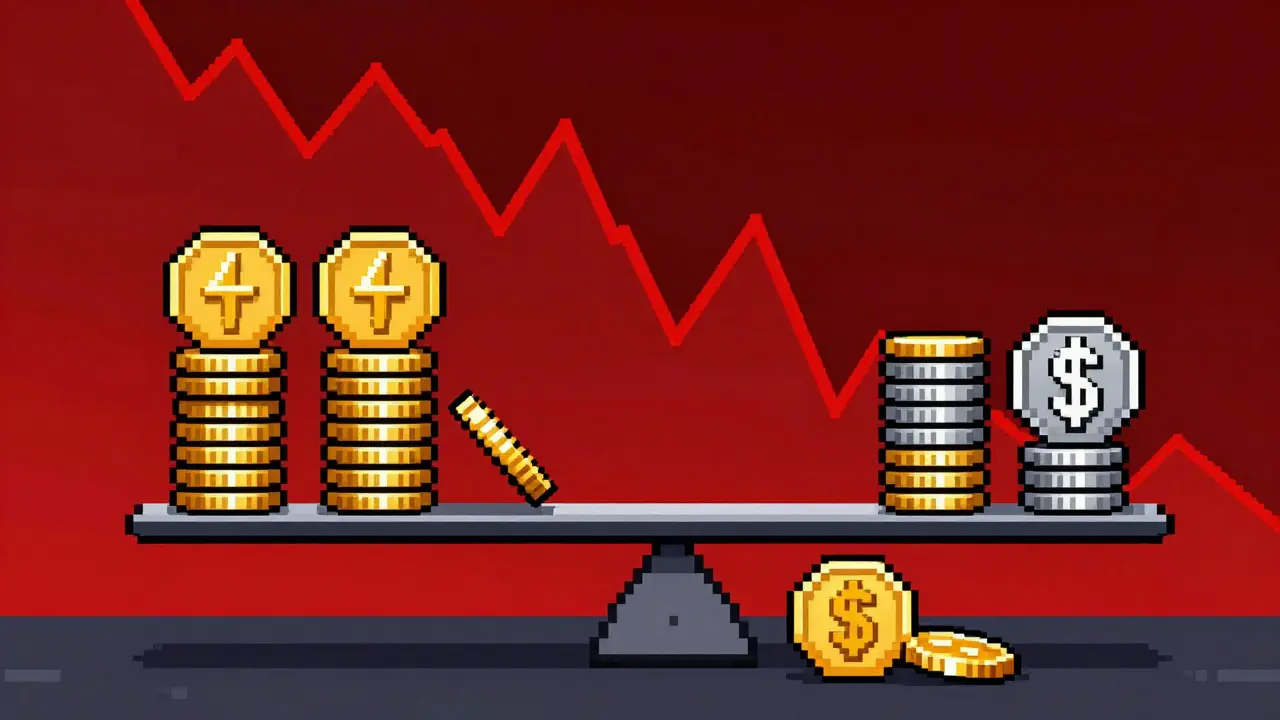
Before you chase high APYs, you must understand the biggest risk facing any LP: impermanent loss (IL). This occurs when the price of your deposited assets changes compared to when you deposited them. Because AMMs maintain a constant product formula (like x * y = k), you end up holding more of the depreciating asset and less of the appreciating one.
Let’s look at a real scenario. Imagine you deposit $1,000 worth of ETH and $1,000 worth of USDC into a pool. If ETH doubles in price, a simple holder would have $3,000 total ($2,000 ETH + $1,000 USDC). An LP, however, would have roughly $2,828 due to the rebalancing mechanics of the pool. That $172 difference is impermanent loss.
To make providing liquidity profitable, your protocol incentives (fees + token rewards) must exceed this loss. According to data from late 2025, about 68% of single-asset stakers experienced impermanent loss that wiped out their reward yields. This is why choosing the right pool matters more than chasing the highest advertised rate.
From Liquidity Mining to Protocol-Owned Liquidity
The industry has undergone a significant shift. Early DeFi was dominated by 'liquidity mining,' where protocols printed millions of tokens to bribe users into depositing funds. While effective for growth, this often led to death spirals. When the token price crashed, the APY looked great in percentage terms but terrible in dollar value. Users left, liquidity dried up, and the protocol struggled.
Enter Protocol-Owned Liquidity (POL). Instead of renting liquidity from users forever, protocols now aim to buy it. They use bonding curves or treasury funds to acquire LP positions directly. Once owned, the protocol controls the liquidity, reducing volatility and ensuring depth without relying on fickle user incentives.
OlympusDAO pioneered this with its OHM/DAI pair, achieving nearly 99.8% protocol ownership of its primary liquidity. Other platforms like Tokemak offer 'Liquidity as a Service,' directing institutional capital to specific pools. For individual providers, this means fewer opportunities for easy, high-yield mining, but potentially safer, more stable environments if you choose protocols with strong POL models.
How to Evaluate Reward Structures
Not all incentives are created equal. Here is how to break down what you are actually getting:
- Fee Tiers: Check the base fee. Uniswap V3 allows concentrated liquidity, meaning you can set a price range. Narrower ranges mean higher capital efficiency and higher fees, but also higher risk of impermanent loss if the price moves out of range.
- Emission Schedules: Look at the annual inflation rate. If a protocol emits 15% of its total supply annually to LPs, the token will likely deflate over time. Sustainable models cap emissions lower or tie them to revenue.
- Lockup Requirements: Some platforms, like Curve’s veCRV model, require you to lock your governance tokens for up to four years to maximize rewards. This reduces accessibility but aligns long-term interests.
- Rebates and Discounts: Platforms like PancakeSwap may offer fee rebates for long-term commitments. Calculate if the rebate outweighs the opportunity cost of locking your funds.
| Platform | Primary Incentive Type | Avg. Fee APY (ETH/USDC) | Key Risk Factor |
|---|---|---|---|
| Uniswap V3 | Trading Fees | 0.5% - 1.2% | High Impermanent Loss in volatile pairs |
| Curve Finance | Token Emissions (CRV) | Variable (Stablecoin pairs low IL) | Token devaluation; Lockup complexity |
| SushiSwap | Hybrid (Fees + MAGIC/SUSHI) | 8% - 15% (Incentivized) | High provider churn; Token volatility |
| Tokemak | Protocol-Controlled Liquidity | Varies by Reactor | Smart contract risk; Minimum budget requirements |

Risk Management Strategies for LPs
Being a liquidity provider is not passive investing; it is active portfolio management. To survive in 2026, you need a strategy.
Stick to Stablecoins for Low Risk: Pairs like USDC/USDT or DAI/USDC have near-zero impermanent loss because the assets track each other closely. While yields are lower (often under 5%), they are much safer. User reports from late 2025 show consistent net APYs around 9% on Curve stablecoin pools with minimal principal loss.
Use Concentrated Liquidity Wisely: If you use Uniswap V3, don’t just set a wide range. Monitor the price. If you believe ETH will stay between $3,000 and $3,500, set your range there. You’ll earn significantly more fees. However, if ETH breaks out, your position becomes entirely one asset, exposing you to full market risk. Tools like Gamma Strategies can automate this rebalancing.
Diversify Across Protocols: Don’t put all your capital in one ecosystem. Smart contract risks are real. Even audited protocols face exploits. Spreading capital across Ethereum L1, Arbitrum, and Polygon reduces the impact of a single hack.
Hedge Your Bets: Advanced providers use derivatives to hedge against impermanent loss. For example, if you are long ETH in a pool, you might short ETH on a perpetual exchange to neutralize price exposure, keeping only the fee yield. This requires advanced knowledge and carries liquidation risks, so proceed with caution.
The Future of Liquidity Incentives
The trend is clear: sustainability over speculation. Regulators are watching. The SEC’s guidance in early 2025 classified certain mining rewards as securities, forcing many U.S.-accessible platforms to implement KYC checks. This raises the barrier to entry but adds legitimacy.
Technological upgrades are also helping. Ethereum’s upcoming Pectra upgrade aims to reduce staking costs, making it cheaper to secure networks and participate in DeFi. Cross-chain solutions like Tokemak’s Reactor 2.0 promise to reduce bridging costs, allowing liquidity to flow more freely between chains without fragmenting capital.
For the average user, the era of 'free money' via reckless token printing is ending. The future belongs to providers who understand tokenomics, manage risk actively, and choose protocols with healthy treasuries and diversified revenue streams. If you can navigate these complexities, the rewards are still substantial. If you treat it like a savings account, you will likely lose money.
What is the safest way to provide liquidity in 2026?
The safest method is providing liquidity to stablecoin pairs (e.g., USDC/USDT) on established protocols like Curve Finance. These pairs have minimal impermanent loss because the assets maintain parity. While yields are lower than volatile pairs, the risk of principal loss is significantly reduced.
How do I calculate if my rewards cover impermanent loss?
You need to compare the annual percentage yield (APY) from fees and tokens against the potential impermanent loss based on price volatility. Use online IL calculators to estimate losses for different price scenarios. If your expected APY is 10%, but a moderate price swing causes 15% IL, you will lose money. Generally, you need an APY that exceeds the historical volatility of the pair.
What is Protocol-Owned Liquidity (POL)?
POL is a model where the protocol buys and owns its own liquidity positions rather than renting them from users. This reduces reliance on volatile token incentives and provides more stable market depth. Examples include OlympusDAO and Tokemak. For users, this means fewer high-yield mining opportunities but potentially more resilient ecosystems.
Are liquidity mining rewards taxable?
In many jurisdictions, including the US and UK, liquidity mining rewards are considered taxable income at the fair market value when received. Additionally, selling the tokens later triggers capital gains tax. Always consult a local tax professional, as regulations are evolving rapidly in the DeFi space.
Can I lose all my money providing liquidity?
Yes. Risks include smart contract hacks, rug pulls (where developers abandon the project), extreme impermanent loss combined with token devaluation, and bridge exploits. Never invest more than you can afford to lose, and always verify the security audits and reputation of the protocol before depositing funds.