
Have you ever tried to swap tokens on a decentralized exchange only to watch your transaction fee eat up half your profit? It is frustrating, especially when the network is congested. That is exactly why projects like SwapX, a decentralized exchange (DEX) built on the Sonic blockchain designed for high-speed trading and efficient capital utilization, are generating so much buzz in the crypto community right now.
If you have been following the evolution of DeFi, you know that the days of simple, one-size-fits-all liquidity pools are fading. Traders want speed. Liquidity providers want efficiency. SwapX attempts to solve both problems by combining the high-performance infrastructure of the Sonic blockchain with advanced concentrated liquidity technology derived from Algebra Finance V4. But does it actually deliver on its promises, or is it just another shiny new protocol?
What Is SwapX and How Does It Work?
At its core, SwapX is not just another place to trade Bitcoin for Ethereum. It is a specialized Concentrated Liquidity Automated Market Maker (CLAMM). To understand why this matters, we need to look at how traditional exchanges work versus how SwapX operates.
In older models like Uniswap V2, your liquidity is spread out across every possible price range. If you provide $1,000 worth of ETH/USDC liquidity, that money sits idle even if the price of ETH is nowhere near your entry point. SwapX changes this dynamic. By using Algebra Finance V4 technology, it allows liquidity providers to concentrate their capital within specific price ranges where most trading activity happens.
This means higher returns for liquidity providers because their capital is working harder. For traders, it translates to tighter spreads and less slippage. The platform runs natively on the Sonic L1 blockchain, which utilizes novel consensus mechanisms to ensure faster transaction speeds and significantly lower fees compared to legacy networks like Ethereum mainnet.
The Power of the Sonic Blockchain
You cannot talk about SwapX without talking about its home base: the Sonic blockchain. Why did the developers choose Sonic instead of building on Ethereum or Solana?
The answer lies in performance. DeFi requires rapid finality. When you are swapping assets, waiting minutes for confirmation is unacceptable. Sonic was architected specifically to handle high throughput with minimal latency. This creates an optimal environment for a DEX like SwapX.
Here is what this means for you as a user:
- Lower Gas Fees: Transactions cost a fraction of what they would on Ethereum, making small trades economically viable.
- Faster Confirmations: Your swaps execute almost instantly, reducing the risk of front-running or failed transactions due to network congestion.
- Security: Sonic employs advanced cryptographic techniques to maintain decentralization while boosting speed.
For a project aiming to be the primary liquidity layer for the Sonic ecosystem, this native integration is a massive strategic advantage. It ensures that as more protocols build on Sonic, SwapX becomes the default gateway for liquidity.
Understanding the ve(3,3) Tokenomics Model
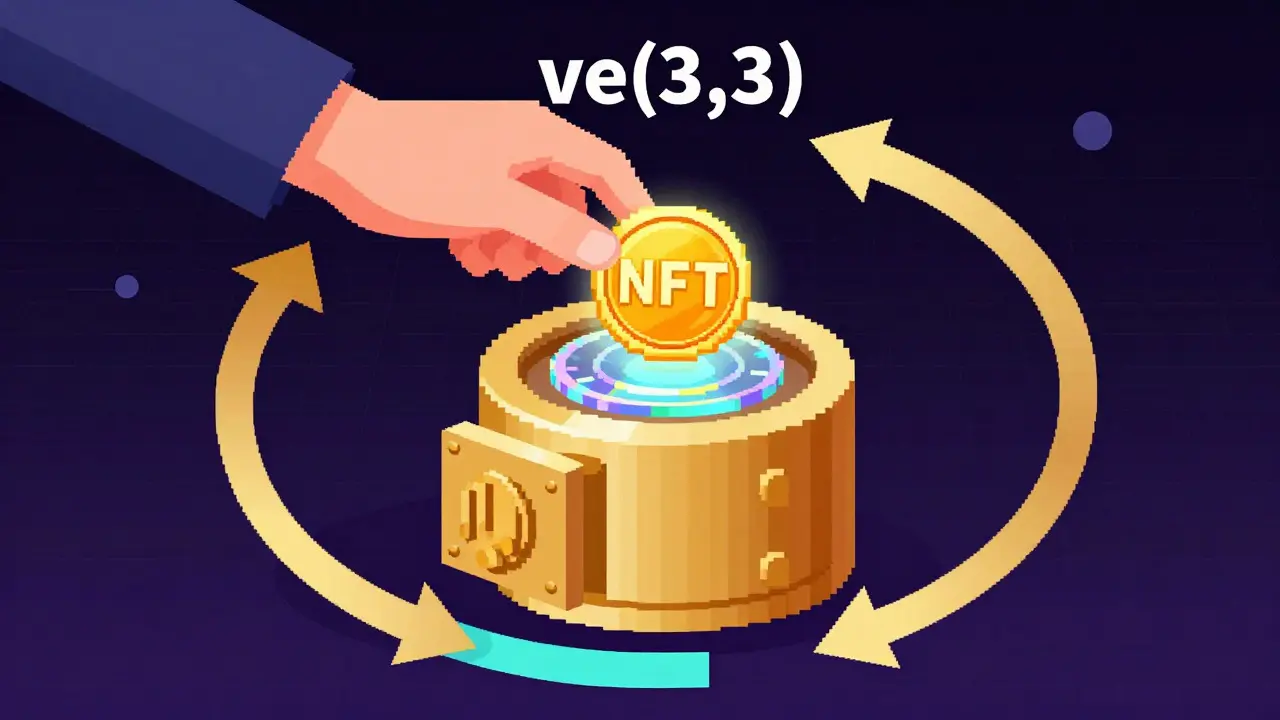
Tokenomics can often feel like gibberish, but it is crucial for understanding whether a project will survive long-term. SwapX uses a sophisticated economic system known as the ve(3,3) model, popularized by Andre Cronje in earlier DeFi iterations.
Let's break down how this works for the average user. The native token is called SWPx. It is an ERC-20 utility token. However, simply holding SWPx doesn't give you all the benefits. You have to lock them up.
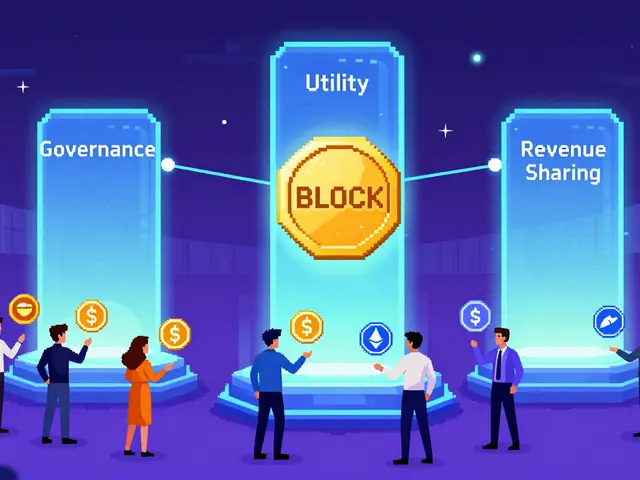
When you lock your SWPx tokens, you receive veSWPx, an ERC-721 NFT that represents your voting power. The longer you lock and the more you lock, the greater your influence. Here is the catch-and-the-reward structure:
- Locking Period: You can lock tokens for up to two years.
- Voting Rights: veSWPx holders vote weekly on how emissions are distributed. They decide which liquidity pools get rewarded.
- Rewards: Initially, liquidity providers receive up to 87% of all emitted tokens. This percentage decays over time, eventually settling around 62%, with the rest going to rebasing, referrals, and treasury.
- Transferability: Unlike some models, veSWPx can be transferred or sold on NFT marketplaces like PaintSwap, adding liquidity to the governance token itself.
This model aligns incentives perfectly. Long-term holders want the protocol to succeed, so they vote to reward deep, stable liquidity rather than quick flips. It creates a flywheel effect where good liquidity attracts traders, who generate fees, which attract more liquidity.
SwapX vs. Competitors: A Head-to-Head Comparison
How does SwapX stack up against established giants like Uniswap or PancakeSwap? Let's look at the data.
| Feature | SwapX | Uniswap V3 | PancakeSwap V3 |
|---|---|---|---|
| Base Blockchain | Sonic | Ethereum (and L2s) | BNB Chain |
| Liquidity Model | Concentrated (CLAMM) | Concentrated | Concentrated |
| Core Technology | Algebra Finance V4 | Uniswap Core | PancakeSwap Core |
| Tokenomics | ve(3,3) Governance | No Native Token (V3) | CAKE Staking |
| Transaction Speed | High (Native Sonic) | Variable (Network Dependent) | High |
| Primary Use Case | Sonic Ecosystem Liquidity | General DeFi Trading | BNB Chain Trading |
As you can see, SwapX isn't trying to replace Uniswap globally. Instead, it is carving out a niche as the dominant force within the Sonic ecosystem. Its use of Algebra Finance V4 gives it a technical edge in terms of code optimization and feature set compared to older AMM versions.
User Experience and Practical Usage
Does the tech translate to a smooth experience? Early feedback suggests yes. The interface is designed to be accessible, even if you are not a DeFi veteran. Swapping tokens feels familiar if you have used other modern DEXs. You connect your wallet, select your tokens, and approve the transaction.
However, there is a learning curve for liquidity providers. Because SwapX uses concentrated liquidity, you must actively manage your positions. If the price of a token moves outside your chosen range, you stop earning fees until you rebalance. This requires more attention than "set and forget" models, but the potential yields are significantly higher.
To start using SwapX, you need to bridge assets to the Sonic network. You can do this via official bridges or through wallets that support multi-chain interactions, such as the Binance Web3 Wallet. Once your assets are on Sonic, interacting with SwapX is straightforward.
Risks and Considerations
No investment is without risk. Before you dive into SwapX, keep these factors in mind:
- Smart Contract Risk: While SwapX uses battle-tested Algebra V4 code, smart contracts can still contain bugs. Always check for audits and monitor the project's security updates.
- Impermanent Loss: Concentrated liquidity amplifies impermanent loss if prices move sharply against your position. This is a standard DeFi risk but is heightened here.
- Token Volatility: The SWPx token has seen low valuations in early trading phases. Like any governance token, its value depends on the success of the protocol and the strength of the ve(3,3) flywheel.
- Ecosystem Dependency: SwapX's success is tied to the growth of the Sonic blockchain. If Sonic fails to attract developers and users, SwapX may struggle to maintain volume.
Is SwapX Worth Your Attention?
If you are already invested in the Sonic ecosystem, SwapX is likely your best option for trading and providing liquidity. Its integration with Algebra Finance V4 and the ve(3,3) model puts it ahead of many generic DEXs launching on newer chains. The focus on capital efficiency means that serious liquidity providers can earn more per dollar deployed compared to traditional AMMs.
For casual traders, the low fees and fast speeds on Sonic make it an attractive alternative to congested networks. Just remember to do your own research, especially regarding the management of concentrated liquidity positions. The tools are powerful, but they require active participation to maximize benefits.
What is the SWPx token used for?
The SWPx token is the native utility token of the SwapX protocol. Users lock SWPx to receive veSWPx, which grants them voting rights to direct weekly token emissions to various liquidity pools. It also provides access to recurrent rewards and governance privileges within the SwapX ecosystem.
How does SwapX differ from Uniswap?
While both use concentrated liquidity, SwapX is built on the Sonic blockchain for higher speed and lower fees, whereas Uniswap primarily operates on Ethereum and its Layer 2 solutions. SwapX also utilizes the ve(3,3) tokenomics model for governance and incentives, unlike Uniswap V3 which lacks a native governance token in its core protocol.
What is the ve(3,3) model?
The ve(3,3) model is a tokenomics framework where users lock governance tokens to receive voting power (veTokens). These votes determine how rewards are distributed among different liquidity pools. It incentivizes long-term commitment by rewarding those who stake for longer periods with greater influence and higher yields.
Is SwapX safe to use?
SwapX leverages proven technology from Algebra Finance V4 and runs on the secure Sonic blockchain. However, as with any DeFi protocol, users should be aware of smart contract risks and impermanent loss. It is recommended to start with small amounts and verify the latest audit reports before committing significant capital.
How do I start using SwapX?
To use SwapX, you first need a web3 wallet compatible with the Sonic blockchain. You will need to bridge assets from other networks to Sonic or acquire tokens directly on the network. Once funded, you can connect your wallet to the SwapX interface to swap tokens or provide liquidity to concentrated pools.



Dominic Greco
August 11, 2026 AT 07:31They are watching us through the blockchain 🕵️♂️ Every transaction is a fingerprint left for the deep state to track. Sonic isn't about speed, it's about surveillance efficiency. They want you to move fast so you don't have time to think about where your money is actually going. It's all part of the great reset plan for digital currency control. Wake up sheeple! 👁️
Sean Rowland
August 12, 2026 AT 10:21The notion that concentrated liquidity is inherently superior is a fallacy propagated by those who wish to obfuscate the inherent volatility of such mechanisms. One must consider the systemic risk introduced by narrow price bands. Furthermore, the reliance on Algebra Finance V4 suggests a derivative nature rather than true innovation. The ve(3,3) model is merely a rebranding of failed incentive structures from previous cycles. We are witnessing the commodification of governance under the guise of decentralization.
Sus Sawyer
August 13, 2026 AT 19:03hey guys! i just tried swapping on sonic and wow the speed is insane!! 🔥 like seriously no waiting around for confirmations anymore. if u havent tried swapx yet ur missing out big time. the fees are super low too which is awesome for small trades. just make sure u lock yer tokens if u wanna get those rewards tho. its a bit tricky at first but once u get the hang of it its pretty cool. go check it out!
amy miranda
August 15, 2026 AT 18:11It is morally reprehensible how these protocols exploit the average user's desire for yield while hiding complex risks behind jargon. The impermanent loss mentioned here is not a minor detail; it is a predatory feature designed to drain retail investors. Why should we trust a system built on speculation and tokenomics that benefit only the early insiders? This entire ecosystem feels devoid of ethical grounding. People need to stop chasing numbers and start asking who truly benefits from this chaos.
Pernelia Wahkan
August 16, 2026 AT 14:34The technical architecture of SwapX is genuinely fascinating when you peel back the layers. Using Algebra Finance V4 on Sonic creates a synergy that most L2 solutions fail to achieve. I have been analyzing the gas costs versus Ethereum mainnet, and the difference is stark. For high-frequency traders, this reduction in latency is not just convenient; it is essential. The ve(3,3) model also introduces a layer of governance stability that pure staking models lack. It is a well-thought-out protocol.
Billy Cunningham
August 16, 2026 AT 21:54I feel empty inside after reading this 😔 My portfolio is down again because I didn't read enough whitepapers. Does anyone else feel like they are always one step behind? The market moves so fast it hurts my soul. Just want to hold my coins and cry quietly in the corner. 📉💔
Ed Wallace
August 18, 2026 AT 12:46Consider the philosophical implications of locking value to gain voice. Is governance truly democratic when power is weighted by capital duration? SwapX presents an interesting paradox: it democratizes access to high-speed trading while centralizing decision-making among long-term holders. This tension between accessibility and exclusivity defines modern DeFi. Perhaps the real question is whether efficiency outweighs equity in a decentralized ledger. Food for thought indeed.
Joshua Hofford
August 20, 2026 AT 04:49This looks like a solid opportunity for anyone looking to diversify their DeFi strategy! The Sonic ecosystem is growing rapidly, and being an early adopter of SwapX could pay off nicely. Remember, every journey begins with a single swap. Don't let fear of impermanent loss stop you from exploring new technologies. Stay positive and keep learning! 🚀
Don Fizy
August 20, 2026 AT 23:01If you're struggling with the concept of concentrated liquidity, think of it like parking in a busy city. Instead of leaving your car anywhere (full range), you park right in front of the store (specific range). You save time and effort, but you have to move your car if the store closes or moves. SwapX makes this process smoother on Sonic. Good luck everyone! 👍
Subhash Kashyap Dm
August 22, 2026 AT 17:06smart contract audits are basically theater put on for the masses. nobody reads them. the code is open source but that doesnt mean its safe. algebra v4 is just another wrapper around uniswap logic with different variable names. dont trust the devs. they will rug pull eventually. watch the treasury flows. that is where the truth lies. stay paranoid.
Marcia Albert
August 24, 2026 AT 11:02I've been watching the charts and the volume seems steady. Not gonna lie, the interface is clean and doesn't look like those clunky old DEXs. Might dip my toes in with a small amount just to see how the slippage feels compared to PancakeSwap. No rush though, crypto is a marathon not a sprint. Sitting this one out for now but keeping an eye on it. 🧐
Emma Smith
August 25, 2026 AT 21:15the veil of decentralization is thin here really. when you lock tokens you are essentially selling your freedom for potential gains. is it worth it? maybe. but remember the house always wins. the ve model is just a sophisticated way to extract value from believers. wake up to the matrix of finance.
Michael Mostyn
August 26, 2026 AT 23:30The integration of Algebra Finance V4 technology appears to be a significant competitive advantage for SwapX within the Sonic ecosystem. By leveraging concentrated liquidity, the protocol addresses the inefficiencies prevalent in earlier AMM iterations. However, one must remain cognizant of the operational complexity required for optimal position management. The data presented regarding transaction speeds and fee structures is compelling, suggesting a viable alternative for users seeking lower costs.
Ken G
August 28, 2026 AT 18:00another scam wrapped in fancy words. they call it innovation i call it theft. the rich get richer by voting on emissions while the poor lose their shirts to impermanent loss. it is rigged from the start. do not believe the hype. they want you addicted to the green candles. stay away from this garbage.
Lorraine Surringer
August 29, 2026 AT 23:34Honestly im so tired of reading these long reviews lol. Just tell me if i can make money or not 😩 But seriously if the fees are low why not try it? Im all ears if someone has a simple guide. Dont judge me for being lazy ok? Just want easy profits without doing homework. Help a girl out please? 💅✨