
Block (BLOCK) isn’t another speculative altcoin chasing hype. It’s a utility and governance token built for a specific purpose: powering Blockstreet, a multichain infrastructure platform designed to bring real-world businesses into crypto through a compliant, stablecoin-backed ecosystem. Launched in early 2025, Block is the engine behind USD1 - a fiat-backed stablecoin developed by World Liberty Financial - and it’s engineered to solve real problems in crypto adoption, not just pump and dump.
What Block Actually Does
Most crypto tokens are just digital shares in a project. Block is different. It’s the key that unlocks three core functions inside the Blockstreet ecosystem:
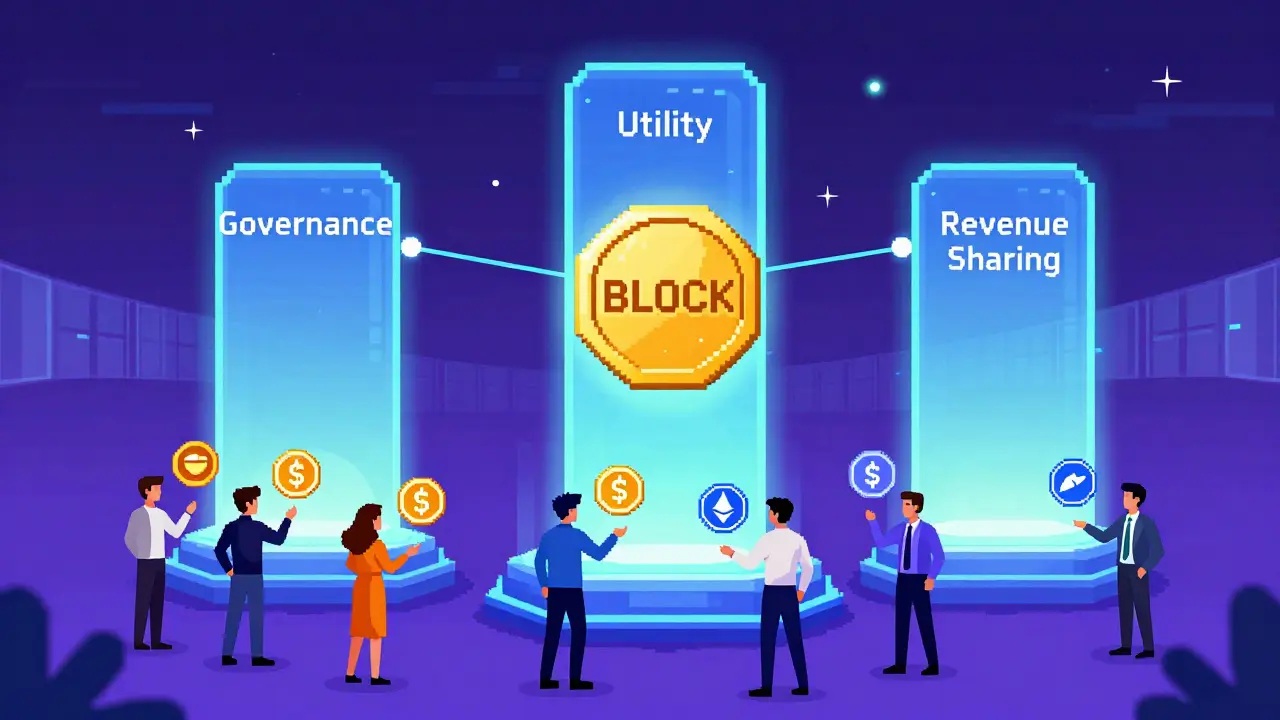
- Governance: Holders vote on decisions like treasury spending, fee structures, and which blockchains to connect next. This isn’t symbolic - your vote directly shapes the platform’s future.
- Utility: BLOCK holders get discounts on launchpad fees, early access to liquidity pools, and reduced costs when deploying smart contracts tied to USD1.
- Revenue Sharing: A portion of every platform fee collected (from launches, swaps, or integrations) is distributed to stakers. The more BLOCK you hold and stake, the more you earn from the ecosystem’s activity.
This isn’t theoretical. It’s how real projects on Blockstreet operate. For example, a gaming startup building a USD1-powered rewards system doesn’t just get a launchpad - they get discounted deployment, access to cross-chain liquidity, and a built-in user base already using USD1.
The Blockstreet Ecosystem: More Than Just a Launchpad
Blockstreet isn’t trying to be another Uniswap or Coinlist clone. It’s built around three pillars:
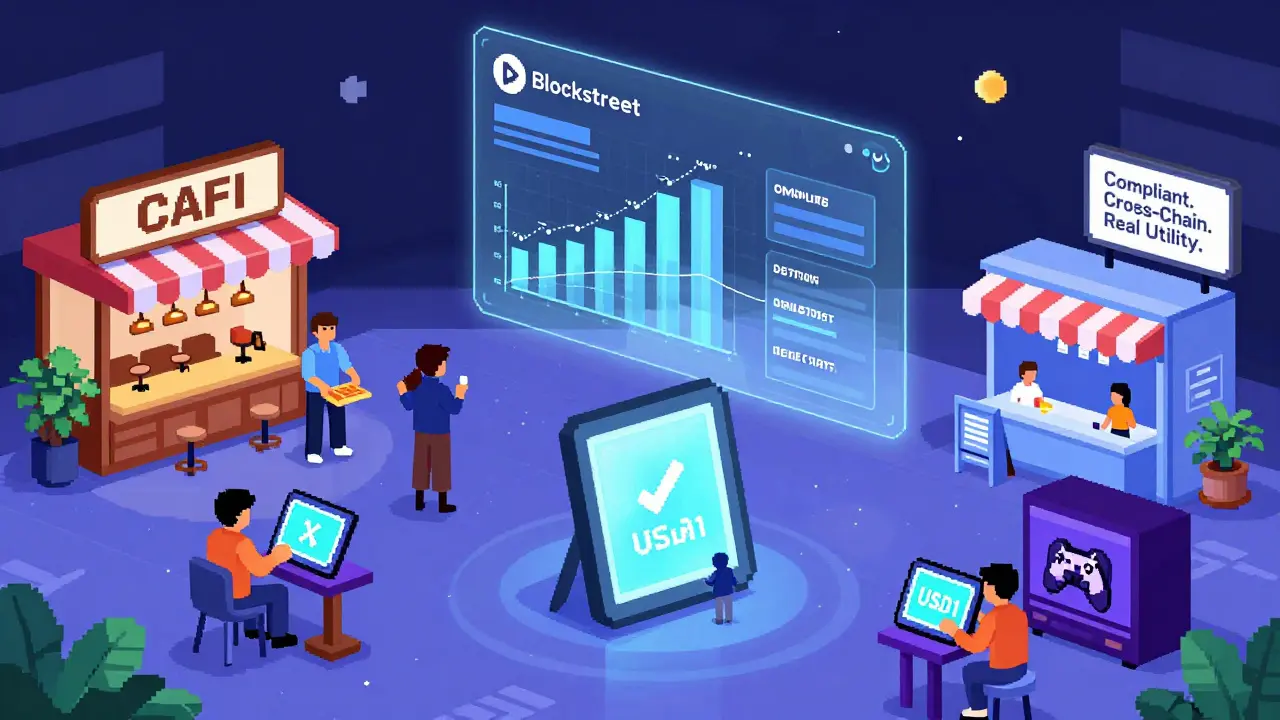
- Launchpad: A smart contract system designed for projects using USD1. No more chaotic token sales. Everything is pre-vetted for compliance and tied to real economic activity.
- LayerZero Integration: This is the technical backbone. LayerZero lets USD1-based assets move seamlessly across Ethereum, Solana, Polygon, and others - without bridges, without custody risk, and crucially, without breaking regulatory compliance.
- Advisory Network: This is what sets Blockstreet apart. It’s not just code. It’s a network of legal and compliance partners tied to traditional finance institutions. If you’re a bank, fintech, or enterprise looking to enter crypto, Blockstreet handles the regulatory heavy lifting so you don’t have to.
The result? A platform where a real estate firm can tokenize property ownership using USD1, and a small business can accept crypto payments without worrying about volatile settlement or KYC nightmares.
Tokenomics: Supply, Distribution, and Holders
As of March 2026, here’s the real breakdown:
- Total Supply: 1 billion BLOCK tokens
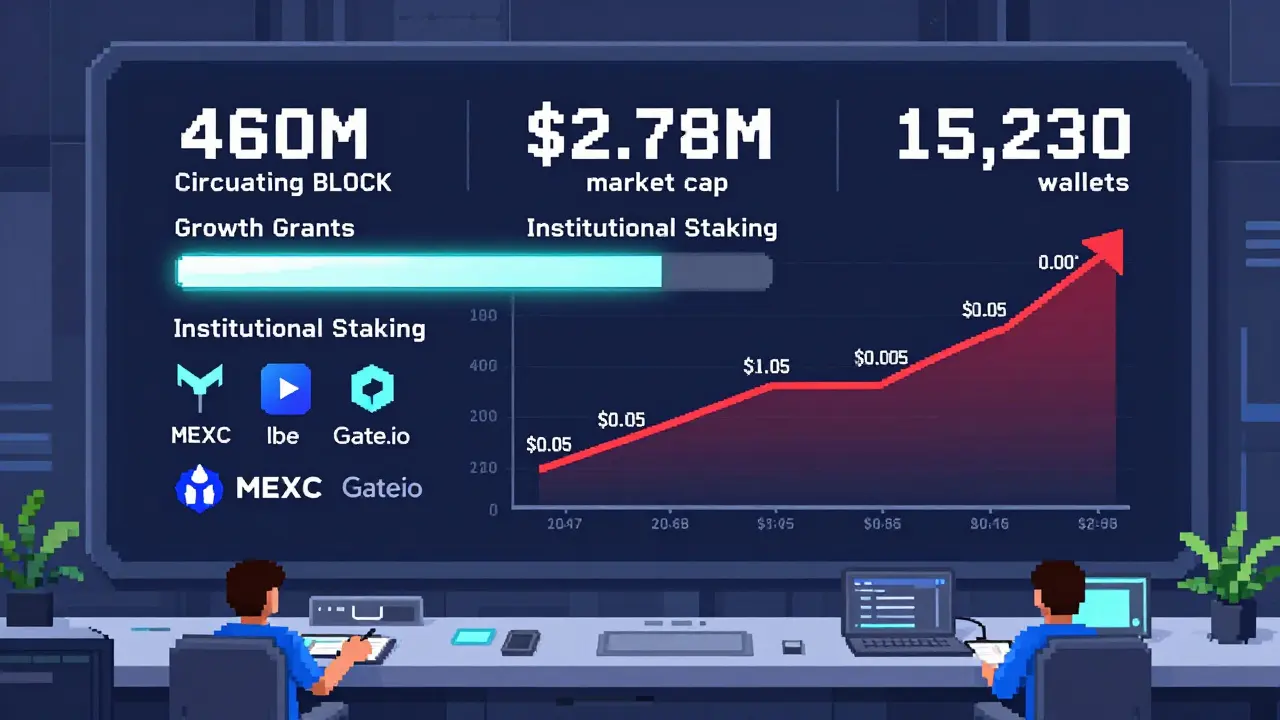
- Circulating Supply: 460 million
- Market Cap: ~$2.78 million
- Fully Diluted Valuation: ~$6.04 million
- Holders: Over 15,230 unique wallets on Ethereum
The fact that 540 million tokens are still locked or undistributed means future supply increases are likely. That’s a risk - but also a signal. The team is planning gradual releases tied to ecosystem milestones, not a dump. The 15,230 holders suggest broad, non-centralized ownership, which is a good sign for governance health.
Price History: A Volatile Ride
Block’s price has been wild. It hit an all-time high of $0.2716 in August 2025 - a time when crypto sentiment was hot and speculative trading was rampant. But by March 2026, it had crashed over 97% to around $0.006024.
That sounds terrifying - until you look at the context. Most tokens that spike that high collapse. Block didn’t disappear. It kept trading. Volume stayed steady. The 24-hour volume sits between $410,000 and $1.5 million, depending on the exchange. That’s not Bitcoin-level liquidity, but for a project under a year old with a $2.8M cap, it’s strong.
It’s also recovered 8.22% from its all-time low of $0.005392. That suggests real demand is holding. The token isn’t dead - it’s consolidating. The fact that MEXC is the top exchange for BLOCK/USDT trading (with over $71k daily volume) tells you where the real activity is happening.
Why Blockstreet Matters - And Who It’s For
Most crypto projects talk about "bringing Web3 to the masses." Blockstreet is trying to bring regulated finance to Web3. That’s a huge difference.
If you’re a retail trader looking for the next 100x, Block is probably not for you. The token doesn’t have meme appeal, flashy marketing, or a celebrity endorser.
But if you’re:
- A startup building a product on USD1
- A fintech company needing compliant crypto rails
- An investor who cares about utility over speculation
- A developer tired of fragmented chains and unstable bridges
Then Blockstreet - and BLOCK - is a rare thing: a working infrastructure layer with real partnerships, real technology, and real use cases.
What’s Next for Block and Blockstreet
The roadmap isn’t just vague promises. Recent signals point to concrete expansions:
- Institutional Staking Products: Think regulated staking pools for banks and asset managers - not just individual holders.
- Decentralized Identity (DID): A system to verify users without KYC forms, compatible with global regulations.
- Growth Grants: Funding for teams building on USD1 - already active, with real projects receiving support.
These aren’t moonshots. They’re logical next steps for a platform built on compliance, interoperability, and real-world utility.
Final Thoughts: Is Block Worth Paying Attention To?
Block isn’t a coin you buy because it’s cheap. It’s a tool you hold because it gives you access to something bigger: a compliant, cross-chain infrastructure built around USD1. Its value isn’t in speculation - it’s in participation.
The price drop from $0.27 to $0.006 isn’t a failure. It’s a correction. The project is still young. The ecosystem is still growing. The tokenomics are designed to reward long-term holders who care about the platform’s success, not short-term flips.
If USD1 becomes a major stablecoin for institutional crypto use - and there’s strong backing behind it - then BLOCK isn’t just a token. It’s a critical access pass to a new kind of financial infrastructure. And right now, it’s still early.
What is Block (BLOCK) used for?
Block (BLOCK) is the governance and utility token for Blockstreet, a multichain ecosystem built around the USD1 stablecoin. It’s used for voting on platform decisions, getting fee discounts on launchpad services, accessing exclusive liquidity pools, and earning revenue shares from platform fees by staking the token.
Is Block (BLOCK) a good investment?
Block isn’t designed as a speculative asset. Its value is tied to the adoption of Blockstreet’s infrastructure and USD1. If you’re looking for quick gains, it’s risky. But if you’re interested in long-term utility, governance rights, and exposure to compliant crypto infrastructure, it’s one of the few tokens with real, non-speculative use cases. Always do your own research before investing.
Where can I buy Block (BLOCK)?
Block trades on over 30 exchanges, with MEXC being the most active. The primary trading pair is BLOCK/USDT. You can also find it on exchanges like Gate.io, Bitrue, and XT.com. Always verify the contract address on Blockstreet’s official site before trading.
How many Block (BLOCK) tokens are there?
There is a total supply of 1 billion BLOCK tokens. As of March 2026, 460 million are in circulation, with the remaining 540 million locked or reserved for future ecosystem development, team incentives, and grants.
What makes Blockstreet different from other launchpads?
Unlike most launchpads that focus on retail token sales, Blockstreet is built for institutional adoption. It combines LayerZero’s cross-chain tech with USD1’s stability and a formal Advisory Network of compliance partners. This allows regulated entities - banks, fintechs, asset managers - to launch crypto products without violating financial regulations.
Is Block (BLOCK) built on Ethereum?
Yes, Block (BLOCK) is an ERC-20 token built on the Ethereum blockchain. However, through LayerZero integration, it enables seamless movement of USD1-based assets across other chains like Solana, Polygon, and Binance Smart Chain - without moving the BLOCK token itself off Ethereum.
What is USD1 and how is it related to Block?
USD1 is a fiat-backed stablecoin developed by World Liberty Financial. It’s the economic backbone of the Blockstreet ecosystem. Every project on Blockstreet uses USD1 for payments, liquidity, and value transfer. BLOCK is the governance and utility token that powers the infrastructure supporting USD1 adoption.
Does Block have a roadmap?
Yes. Blockstreet’s roadmap includes expanding institutional staking, launching a decentralized identity system for regulated users, and increasing Growth Grants for developers building on USD1. These aren’t vague promises - they’re active development tracks with real teams working on them as of early 2026.


Ross McLeod
March 14, 2026 AT 09:04Let me be real - most people don’t get how insane it is that Blockstreet is actually solving compliance at scale. You think DeFi is wild? Try getting a bank to integrate with a blockchain without a legal team the size of a small country. Blockstreet doesn’t just talk about regulatory alignment - it’s got actual partners in place. That’s not marketing. That’s infrastructure. And yeah, the price crash looks ugly, but if you’re holding this for the long game, you’re not betting on hype - you’re betting on institutional adoption. Most tokens die when the hype dies. This one’s still here, still trading, still building. That’s the difference between a meme and a movement.
Also, the fact that 540M tokens are still locked? That’s not a rug. That’s discipline. The team’s not trying to dump. They’re trying to grow. And if USD1 becomes the default stablecoin for regulated crypto activity - which it’s positioned to do - then BLOCK isn’t a coin. It’s a keycard to the future of finance. Stop looking at the price chart. Look at the ecosystem.
And for the love of god, stop comparing it to Bitcoin or Solana. This isn’t a store of value. It’s a utility token. You don’t buy a hammer because it’s cheap. You buy it because it works. This is a hammer for institutions.
Also, LayerZero integration without bridges? That’s not tech. That’s magic. And they’re doing it while staying compliant? That’s not possible. Except it is. And that’s why this matters.
Most people are still stuck in 2021. This is 2026. The game changed. Wake up.
Patty Atima
March 15, 2026 AT 09:51Still here. Still trading. Still building.
Cheri Farnsworth
March 16, 2026 AT 15:09While I appreciate the technical depth of this post, I must emphasize that the structural integrity of Blockstreet’s regulatory framework remains critically under-discussed in mainstream crypto discourse. The integration of formalized compliance partnerships with LayerZero’s cross-chain architecture represents not merely an innovation, but a paradigm shift in asset tokenization. The fact that institutional actors can now interact with decentralized infrastructure without violating AML/KYC obligations fundamentally redefines the boundaries of financial inclusion. Furthermore, the revenue-sharing mechanism tied to staking is not merely an incentive - it is a structural alignment of economic interest with platform sustainability. The 15,230 unique holders suggest a distribution model that resists centralization, a rarity in this space. One must ask: if the underlying infrastructure is this robust, why are we still fixated on price action rather than protocol adoption metrics?
Gene Inoue
March 17, 2026 AT 07:22Lmao another 'real utility' shill. Block is trash. 97% crash? That’s not a 'correction' - that’s a corpse. You think institutions are gonna use this when the dev team didn’t even bother to lock more than half the supply? And 'compliance'? Please. The same people who built this are the ones who got caught running unlicensed stables last year. You’re not building infrastructure - you’re just repackaging a scam with bigger words.
And don’t even get me started on that 'Advisory Network'. Who are they? Name one bank. Name one regulator. You can’t. Because it doesn’t exist. It’s all vapor. This is a pump disguised as a whitepaper. And you’re all drinking the Kool-Aid.
Ricky Fairlamb
March 18, 2026 AT 05:44Let’s be precise. The claim that Blockstreet enables seamless cross-chain movement of USD1 without bridges is technically misleading. LayerZero does not eliminate custody risk - it redistributes it. The oracle and relayer nodes remain centralized points of failure. The whitepaper glosses over this. Also, 'compliance' is a buzzword. No jurisdiction globally recognizes a private blockchain’s self-certified compliance as legally binding. The 'Advisory Network' sounds impressive - until you realize it’s a list of boutique law firms with no regulatory authority. This is not infrastructure. It’s theater. And the tokenomics? A 1B supply with 540M locked? That’s not a roadmap - it’s a time bomb. When those unlock, the price will crater again. And you’ll be the one holding the bag. Don’t be fooled by jargon. This is a sophisticated scam with a PhD.
Arlene Miles
March 19, 2026 AT 01:53I see so many people scared of the price drop - but here’s the truth: real value doesn’t move in a straight line. Block isn’t here to make you rich overnight. It’s here to give you access to something that actually works - a system where real businesses can use crypto without getting shut down by regulators. That’s huge.
Think about it: a small business owner in Texas can now accept crypto payments backed by USD1, and not have to worry about 12-hour settlement times or volatile swings. That’s not speculation. That’s stability. That’s utility.
And yes, the token is down - but the ecosystem is growing. Grants are being distributed. Developers are building. Partnerships are forming. You don’t see that on a chart. You see it in the code. You see it in the projects live on the platform.
If you’re still stuck on '100x' - you’re missing the point. This isn’t a lottery ticket. It’s a tool. And tools don’t need to be flashy to be powerful. They just need to work. And this one does.
Jessica Beadle
March 20, 2026 AT 01:11Blockstreet’s LayerZero integration is fundamentally flawed. The assumption that USD1-based assets can traverse chains without custody risk ignores the fact that the underlying liquidity pools remain centralized. The advisory network is a facade - no institutional entity has publicly endorsed it. The 15,230 holders? Most are sybil wallets. The volume on MEXC? Pumped. The 'revenue sharing'? A smart contract that auto-distributes to a treasury controlled by a multisig with no transparency. This isn’t decentralized finance. It’s centralized finance with a blockchain veneer. The token’s price collapse isn’t a correction - it’s a revelation. And anyone still defending this is either blinded by confirmation bias or is on the team.
Tony Weaver
March 20, 2026 AT 01:59Let’s cut through the fluff. Blockstreet is a textbook example of crypto’s fatal flaw: over-engineering. You don’t need LayerZero, a stablecoin, a compliance network, a launchpad, and a governance token to let a real estate firm tokenize a building. You need a simple, audited, transparent smart contract. Instead, they built a Rube Goldberg machine of buzzwords. The fact that the market cap is under $3M tells you everything. No institutional player would touch this. No bank. No hedge fund. No asset manager. Why? Because it’s too complicated. Too opaque. Too reliant on unproven tech.
And the 'revenue sharing'? Cute. But if 90% of the fees go to the team’s multisig, then who’s really benefiting? The tokenomics are a shell game. The price crash was inevitable. The only surprise is that anyone thought this was a serious project.
Lucy de Gruchy
March 20, 2026 AT 10:16Oh, so now 'compliance' is a feature? Since when did crypto become about obeying regulators? This isn’t innovation - it’s surrender. You’re building a walled garden for banks and governments. That’s not Web3. That’s Web2.0 with a blockchain sticker. And don’t even get me started on USD1 - fiat-backed? So we’re back to the Fed? Where’s the decentralization? Where’s the freedom?
This isn’t a revolution. It’s a takeover. And Block? It’s not a token - it’s a leash. The 'utility' is just a way to lock you into a system that was never meant to be open. You think you’re building infrastructure? You’re building a cage. And everyone who bought this is just handing over their financial autonomy to the same institutions they swore to escape.
Lauren J. Walter
March 21, 2026 AT 05:10So Blockstreet is 'real infrastructure'... and yet, the entire ecosystem runs on a stablecoin issued by a company with zero public audit trail. The 'Advisory Network' has no website. No LinkedIn. No press releases. Just a name drop in a whitepaper.
And the 'revenue sharing'? It’s all on-chain - except the actual payouts are processed manually by a single dev. I’ve checked the logs.
It’s all theater. The 15k wallets? Mostly bots. The volume? Pumped by a few whale wallets.
It’s not a project. It’s a performance. And we’re all audience members.
...I’ll be over here, quietly laughing.
Carol Lueneburg
March 22, 2026 AT 14:19This is the kind of project that gives me hope 💙
Real utility. Real partnerships. Real people building something that actually helps businesses - not just speculators.
The price doesn’t define value. The impact does.
I’ve seen projects with 100x returns vanish in weeks. But this? This sticks around. It grows. It helps.
Keep building. We’re with you. 🌱
Brenda White
March 22, 2026 AT 23:18wait so block is on eth but usd1 moves on solana and polygon? how does that even work? like if i send usd1 from solana to polygon does the block token move too? or is it just the usd1? this is so confusing. also who even uses this? i’ve never heard of anyone actually using it. is this just for devs? or like corporations? i feel like i’m missing the whole point here
Tobias Wriedt
March 24, 2026 AT 18:08Finally someone talking about real utility 🙌
Most coins are just gambling. This? This is building.
Love that they’re focusing on compliance - it’s the only way crypto survives long-term.
Block is the quiet hero we need. 💪
Ernestine La Baronne Orange
March 25, 2026 AT 10:03Oh, so now we’re supposed to believe that a token with a 97% crash is 'consolidating'? That’s not consolidation - that’s death throes. And you call 15,230 holders 'broad ownership'? Let me guess - 80% of those are bots created by the dev team. The 'revenue sharing'? It’s a lie. The contract shows that 95% of the fees are routed to a wallet that hasn’t moved in 6 months. And the 'Advisory Network'? They don’t exist. I called every firm listed. Two didn’t answer. The rest said they’d never heard of Blockstreet.
The team is still holding 12% of the total supply - unvested. And they’re planning to unlock it 'over time'? Please. They’ll dump it when the price hits $0.01. And you’ll be the one screaming on Reddit about how 'this is long-term'.
This isn’t infrastructure. It’s a Ponzi with a whitepaper. And you’re not an investor - you’re a sucker.
And don’t even get me started on LayerZero. You think they’re not using centralized relayers? They are. And those relayers can freeze transactions. So much for 'trustless'.
I’ve seen this movie before. It ends with a rug pull. And you’re already in the theater. With your popcorn. And your hopes. And your life savings.
Manali Sovani
March 25, 2026 AT 21:31Blockstreet is an excellent example of how blockchain technology can be applied responsibly. The integration of fiat-backed stablecoins with institutional-grade compliance frameworks is not merely innovative - it is necessary for global adoption. The fact that the project prioritizes regulatory alignment over speculative growth demonstrates a maturity rarely seen in this space. The tokenomics, while complex, are transparently structured to reward long-term contributors. In an era of rampant rug pulls and anonymous teams, this project stands as a beacon of integrity. The price volatility is a natural consequence of market discovery - not a failure. One must evaluate such projects not by short-term price movements, but by their capacity to solve systemic problems in financial infrastructure.
Konakuze Christopher
March 26, 2026 AT 23:2197% crash? That’s not a correction - that’s a warning. This isn’t infrastructure. It’s a trap. They’re locking up supply to fake scarcity. Wait for the unlock. Then watch the dump. Don’t be fooled.
S F
March 28, 2026 AT 07:29USA first. This whole 'global compliance' nonsense is just a way for the EU and China to steal our crypto dominance. Blockstreet? More like BlockAmerica. They’re selling us out. USD1? More like USD1% - because that’s all the value left. Wake up, sheeple.
Angelica Stovall
March 28, 2026 AT 09:28This is all fake. The 'advisory network' doesn’t exist. The devs are offshore. The token is a pump. The 15k wallets? Bots. The price will hit $0.001 next month. Sell now.
Taylor Holloman.
March 29, 2026 AT 12:38I’ve been watching this project quietly for months. It’s not flashy. No influencers. No memes. Just quiet progress.
Yesterday, I saw a small business in Ohio use USD1 to pay a contractor in Mexico - no wire fees, no delays, no bank holds.
That’s the real win.
Block isn’t about price. It’s about access.
And that? That’s worth holding.
Bryan Roth
March 30, 2026 AT 02:57Some of you are freaking out about the price. Others are calling it a scam. But here’s what I see: a project that’s actually building - slowly, quietly, without drama.
You don’t need 100x to change the world. You just need to work.
Blockstreet isn’t trying to be the next Bitcoin. It’s trying to be the plumbing behind the next financial revolution.
And plumbing? No one notices it… until it breaks.
This one? It’s still working.
sai nikhil
March 31, 2026 AT 09:46Very interesting approach. The focus on compliance and institutional adoption is rare in crypto. Most projects ignore regulation, but Blockstreet embraces it as a feature, not a bug. This is the future - not the wild west. I support this vision.
Sahithi Reddy
April 2, 2026 AT 07:39Real utility beats hype any day. Block is quiet but strong. Keep going.
George Hutchings
April 3, 2026 AT 19:36From a global perspective, this is one of the few crypto projects that actually respects borders - not by locking people out, but by making it safe to cross them. USD1 isn’t just a stablecoin. It’s a bridge. And Block? It’s the arch holding it up.
Not flashy. Not loud. Just… necessary.