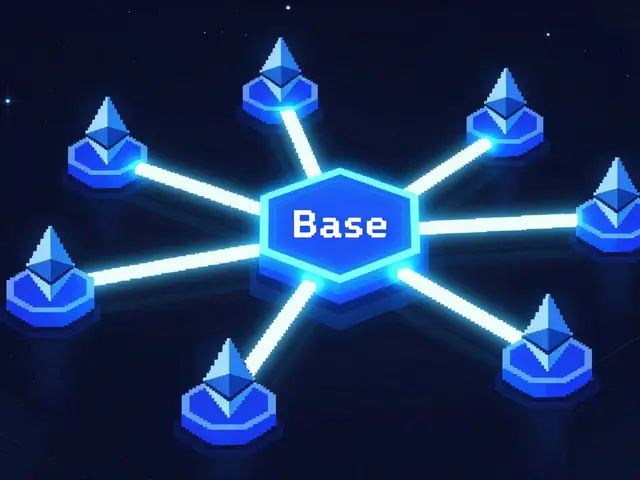
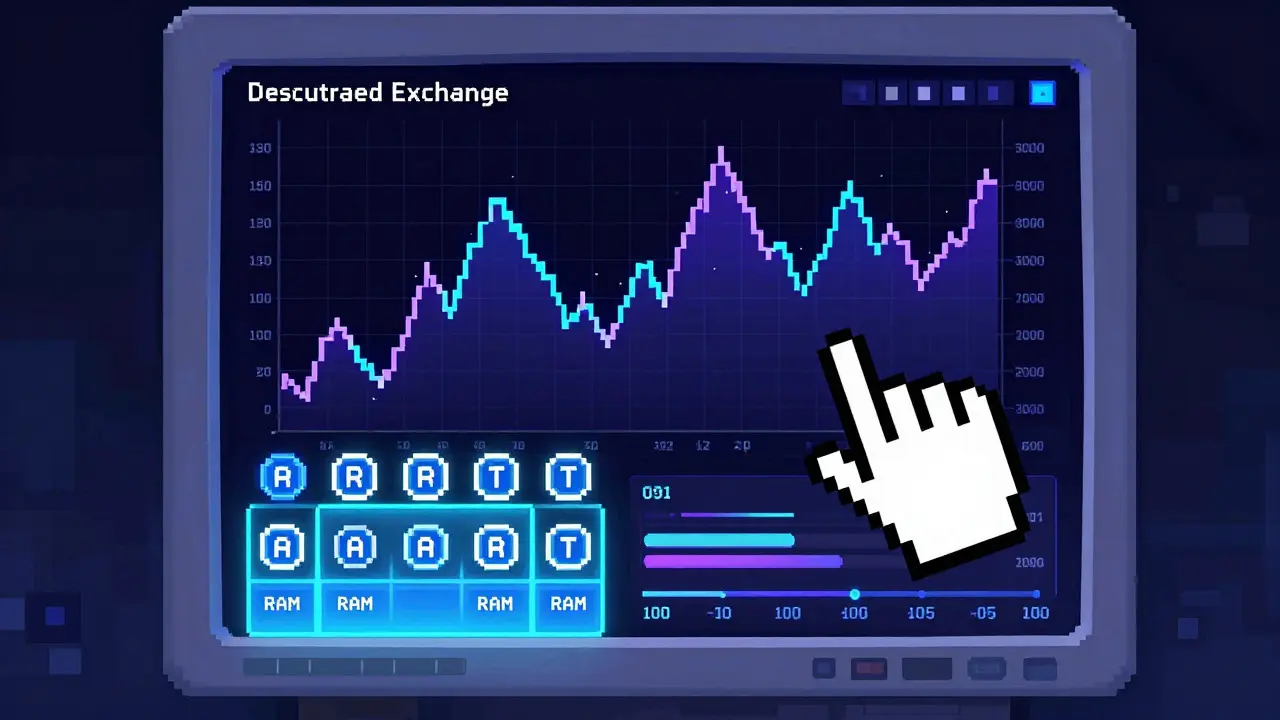
Have you ever tried to provide liquidity on a decentralized exchange only to watch your returns get diluted by endless new incentives? It’s a frustrating cycle that has plagued DeFi since the yield farming boom. That is exactly the problem Ramses is trying to solve. As a decentralized exchange (DEX) built primarily on the Arbitrum blockchain ecosystem, Ramses isn’t just another copy of Uniswap. It combines two powerful but complex ideas: concentrated liquidity from Uniswap v3 and the governance-heavy ve(3,3) tokenomics model originally pioneered by Andre Cronje.
If you are looking for a simple place to swap tokens with zero learning curve, this might not be it. But if you want to understand how modern DeFi protocols are attempting to align long-term community interests with short-term trading needs, Ramses is one of the most interesting case studies in 2025 and 2026. This review breaks down how the platform works, who it is for, and whether the complexity pays off.
What Is Ramses Exchange?
Ramses operates as an automated market maker (AMM). In plain English, this means there are no order books or middlemen matching buyers and sellers. Instead, traders swap tokens against pools of liquidity provided by other users. The protocol was initially developed to serve as the central liquidity hub for Arbitrum, a popular Layer 2 scaling solution for Ethereum.
However, Ramses has evolved beyond its initial scope. By June 2025, the protocol expanded its reach by deploying on HyperEVM. This move signals a strategic shift toward a multi-chain approach, allowing Ramses to capture liquidity from different ecosystems while maintaining its core technical identity. The platform aims to restore three core tenets that were often lost in earlier DeFi iterations: Community, Decentralization, and Functionality.
The Core Technology: ve(3,3) Meets Concentrated Liquidity
To understand Ramses, you need to look at its two main technological pillars. These aren't just buzzwords; they fundamentally change how you interact with the platform.
| Feature | Traditional AMM (e.g., Uniswap v2) | Ramses Exchange |
|---|---|---|
| Liquidity Model | Full range (0 to infinity) | Concentrated Liquidity (Uniswap v3 style) |
| Governance & Rewards | Simple staking or none | ve(3,3) Model with veNFTs |
| Incentive Distribution | Fixed emissions per pool | Voting-based emissions + Bribes |
| Token Utility | Trading fees only | Governance, Anti-dilution, Fee Share |
1. Concentrated Liquidity
Ramses borrows the concentrated liquidity mechanic from Uniswap v3. In traditional exchanges, your capital is spread across every possible price point, which is inefficient. With concentrated liquidity, you choose a specific price range where you want to provide liquidity. This makes your capital work harder, potentially generating higher fees for you. However, it also requires more active management. If the price moves out of your chosen range, you stop earning fees until you rebalance.
2. The ve(3,3) Tokenomics Model
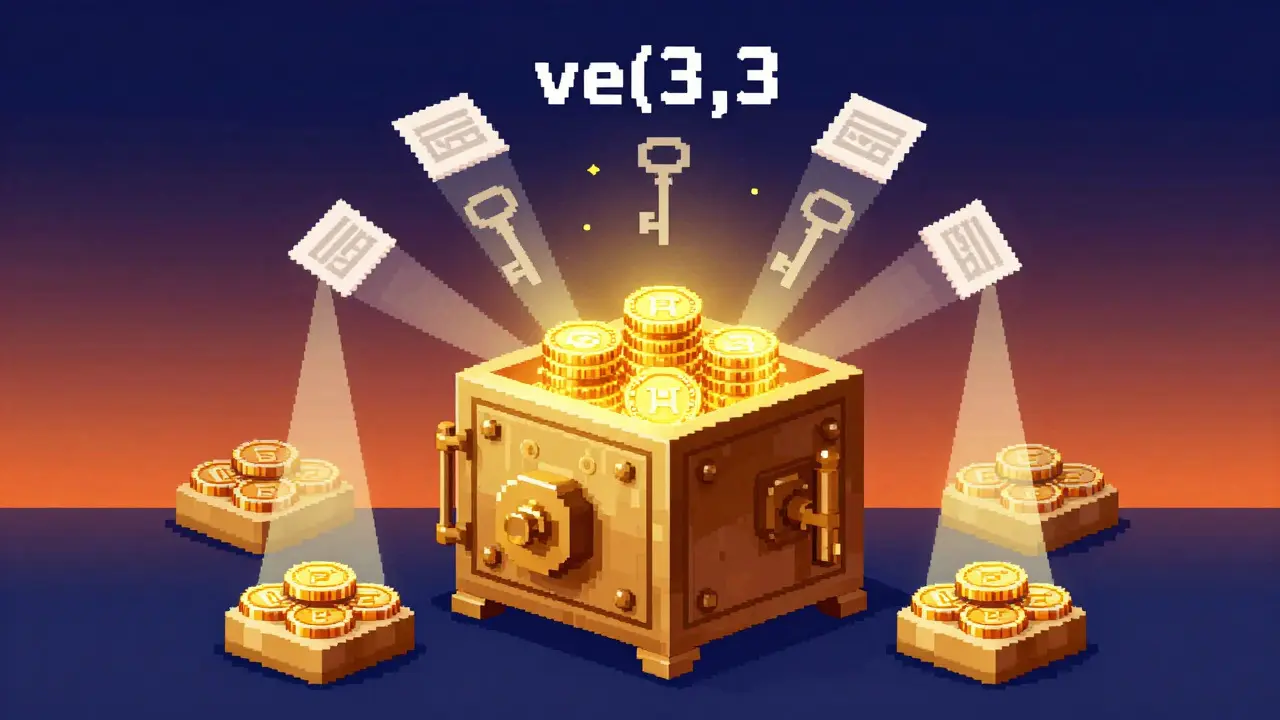
This is where Ramses gets complicated-and potentially profitable. The ve(3,3) model is designed to encourage long-term commitment. Here is how it works:
- Locking Tokens: Users lock their native RAM tokens for a set period (usually up to four years).
- Receiving veNFTs: In return, they receive vote-escrowed Non-Fungible Tokens (veNFTs). These NFTs represent voting power.
- Governance Rights: Holders use these votes to decide which liquidity pools receive protocol rewards and trading fee distributions.
- Anti-Dilution: Lockers also benefit from rebases that protect them from inflation as new RAM tokens are emitted.
The key difference here is that Ramses doesn't just give fees to everyone. It allocates swap fees specifically based on the pools that users vote to support. This creates a dynamic ecosystem where large stakeholders have a direct say in where the money flows.
Understanding the RAM Token
The engine behind Ramses is the RAM token. According to data from CoinCarp, the maximum supply of RAM is capped at 200,000,000 tokens. As of mid-2025, approximately 60% of this supply (120,000,000 RAM) was already in circulation. This relatively high initial circulation can impact price volatility, so it’s something to keep in mind before locking up significant capital.
The value of holding RAM comes from its utility within the ve(3,3) system. Without locked RAM, you are just a trader paying fees. With locked RAM, you become a governor influencing the protocol's direction and capturing a share of those fees. The longer you lock, the more voting power you get, creating a strong incentive for long-term holders.
The "Bribe" Mechanism: Why Projects Pay You
One of the most unique features of Ramses is the "bribing" feature. Imagine a new project launching on Arbitrum. They need liquidity immediately to ensure their token can be traded smoothly. On Ramses, they can offer bribes-often in the form of their own tokens or stablecoins-to veNFT holders.
These bribes incentivize voters to direct the protocol's native emissions toward the new project's liquidity pool. For you, the user, this means extra rewards on top of standard trading fees. It turns governance into a revenue stream. However, it also adds a layer of complexity. You need to analyze which bribes are sustainable and which are just short-term hype.
Security and Partnerships
When dealing with sophisticated smart contracts, security is paramount. Ramses emphasizes the use of "battle-tested technologies," leveraging code bases that have been audited and used extensively in the broader DeFi space. The protocol maintains a community-led emergency response capability, allowing for rapid decision-making during potential security threats.
The strength of Ramses is also reflected in its partnership ecosystem. It has integrated with major DeFi protocols including:
- Liquity
- Frax Finance
- Yearn
- Olympus DAO
- 1inch
- Paraswap
- LayerZero
- Axelar
These integrations suggest strong institutional confidence. Being listed on aggregators like 1inch and Paraswap means Ramses pools are often the best source of liquidity for traders using those platforms, driving consistent volume and fees.

User Experience: The Learning Curve
Let’s be honest: Ramses is not beginner-friendly. If you are new to crypto, the terms "veNFT," "concentrated liquidity," and "impermanent loss" will feel overwhelming. User feedback indicates that while people appreciate the high yields, the mental load required to manage positions is substantial.
To succeed on Ramses, you typically need to:
- Acquire RAM tokens.
- Decide on a locking period (balancing reward rates against liquidity needs).
- Select liquidity pools to vote for (analyzing bribe offers and fee potential).
- Actively monitor your liquidity positions to ensure they remain within the desired price range.
The protocol provides comprehensive documentation, but mastering optimal strategies takes time. Many users rely on community resources and third-party analytics tools to make informed decisions about where to vote and provide liquidity.
Is Ramses Right for You?
Ramses occupies a specific niche in the decentralized exchange landscape. It competes directly with other ve(3,3) models like Velodrome and traditional giants like Uniswap v3. Its expansion to HyperEVM in 2025 shows ambition, but its heart remains in the Arbitrum ecosystem.
You should consider Ramses if:
- You are experienced with DeFi and understand impermanent loss.
- You want to participate in governance and influence protocol rewards.
- You are looking for higher-than-average yields and don't mind active management.
- You trade frequently on Arbitrum and want to access deep liquidity.
You might want to stick to simpler exchanges if:
- You prefer "set and forget" investing.
- You are uncomfortable with the risk of smart contract complexity.
- You don't want to deal with voting periods and bribe analysis.
Future Outlook
The success of ve(3,3) protocols depends heavily on maintaining active governance participation. If too many users disengage, the system loses its decentralization and efficiency. Ramses seems aware of this risk, focusing on UI improvements and educational resources to lower barriers to entry. With its multi-chain strategy and strong partner network, Ramses is well-positioned to remain a key player in the DEX sector, provided it can continue to innovate in incentive design and maintain community trust.
What is the minimum amount to start using Ramses Exchange?
There is no strict minimum deposit to simply swap tokens on Ramses. However, to participate in the ve(3,3) governance model and earn enhanced rewards, you need to acquire and lock RAM tokens. The practical minimum depends on the current price of RAM and how much voting power you wish to accumulate. For providing concentrated liquidity, you need enough capital to cover gas fees and create a meaningful position size to offset transaction costs.
Which blockchains does Ramses support?
As of 2026, Ramses primarily operates on Arbitrum, serving as a central liquidity hub for that ecosystem. Additionally, it deployed on HyperEVM in June 2025, expanding its reach to include assets and users connected to the Hyperliquid derivatives infrastructure. Always check the official Ramses website for the latest supported networks, as DeFi protocols frequently expand to new chains.
How does Ramses differ from Uniswap?
While both use concentrated liquidity, Ramses incorporates the ve(3,3) tokenomics model. This means Ramses has a native governance token (RAM) that users can lock to vote on reward distribution and receive a share of trading fees. Uniswap v3 is more permissionless and lacks this centralized voting mechanism for fee allocation, making Ramses more complex but potentially more rewarding for active participants.
What are the risks of locking RAM tokens?
The primary risk is illiquidity. Once you lock your RAM tokens to receive veNFTs, you cannot sell or transfer them until the lock-up period ends, which can be up to four years. During this time, the price of RAM could drop significantly. Additionally, governance decisions made by large voters may not always align with your personal investment goals, leading to potential dilution or suboptimal reward distribution.
Is Ramses secure?
Ramses uses battle-tested smart contract technology similar to other major DeFi protocols. It emphasizes community-led emergency response capabilities. However, like all DeFi platforms, it carries inherent smart contract risks. Users should always verify contract addresses through official channels and consider using hardware wallets for additional security. The extensive partnership with established projects like Yearn and Frax suggests a level of institutional due diligence.