
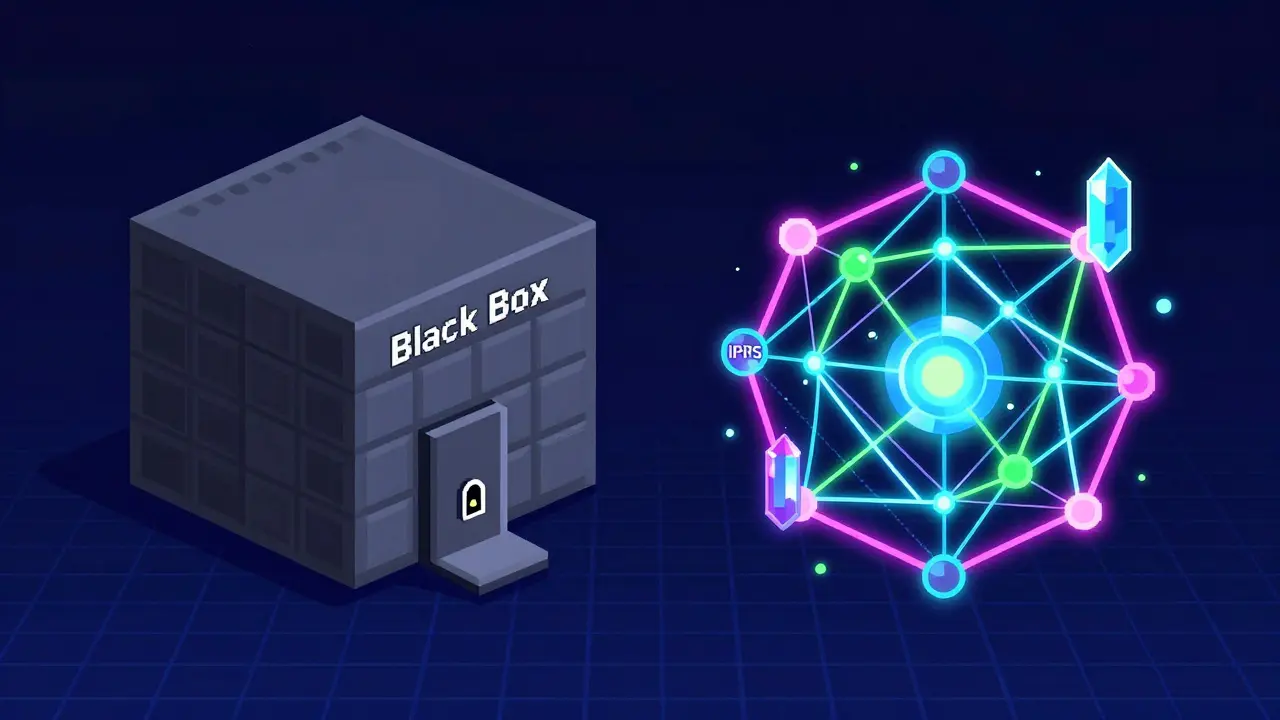
You've probably noticed that the traditional cloud-think Google Drive or AWS-is a bit of a black box. They own your data, they can change their prices overnight, and if their servers go down, your files vanish. That's why decentralized storage has exploded. But when you start looking into it, you're hit with a alphabet soup of options: IPFS, Filecoin, and Arweave. Are they competitors? Or are they just different tools for different jobs?
Here is the reality: choosing the wrong one can mean the difference between your data living forever or disappearing because you forgot to pay a monthly subscription. We aren't just talking about a few gigabytes of photos; we're talking about the backbone of the next internet. Let's break down how these three actually work and which one fits your specific project.
| Feature | IPFS | Arweave | Filecoin |
|---|---|---|---|
| Primary Goal | Fast Content Routing | Permanent Archiving | Storage Marketplace |
| Payment Model | Free (or Pinning Fee) | One-time Upfront | Recurring Contracts |
| Data Persistence | Temporary (unless pinned) | Permanent | Contract-based |
| Ideal Use Case | Websites, Fast Assets | NFT Metadata, DAO Records | Big Data, AI Training |
The Peer-to-Peer Foundation: Understanding IPFS
Think of IPFS is the InterPlanetary File System, a peer-to-peer hypermedia protocol that changes how we address data. In the old web, you look for a file by where it is (like a specific server at google.com). In IPFS, you look for a file by what it is. This is called content addressing.
If you upload a photo to IPFS, it gets a unique fingerprint (a hash). If ten different people host that same photo, your browser just grabs it from whoever is closest and fastest. It's brilliant for speed and reducing bandwidth. However, there's a catch: IPFS isn't "storage" in the way we usually think of it. It's a routing system. If no one is "pinning" (actively hosting) your file, it simply disappears from the network. This is why many developers use pinning services like Pinata to ensure their data stays online, typically paying around $0.50 per GB per month.
The Digital Library: How Arweave Solves Permanence
If IPFS is a fast delivery system, Arweave is a decentralized storage network designed for permanent data preservation using a "blockweave" structure. While other systems ask you to pay rent, Arweave asks for a one-time entry fee. You pay once, and the data is stored forever-or at least for centuries.
This works through an endowment model. Your payment goes into a fund that pays miners to keep the data. To keep miners honest, Arweave uses a Proof-of-Access mechanism, meaning miners must prove they can still access random old blocks of data to earn new rewards. For those storing NFT metadata, this is a lifesaver. About 78% of top Ethereum NFT collections rely on this "set-and-forget" reliability because they can't risk a digital artwork vanishing because a credit card expired.
The trade-off? The upfront cost is steep. In 2025, storing a terabyte permanently costs roughly $3,500. It's a heavy hit at the start, but it removes the anxiety of monthly billing cycles for the next hundred years.
The Industrial Warehouse: Filecoin's Market Approach
Now, enter Filecoin, which is essentially the economic layer built on top of IPFS. If IPFS is the road, Filecoin is the trucking company that charges you to move and store the goods. It creates a competitive marketplace where storage providers bid for your data.
Filecoin uses two heavy-duty checks to ensure your data is safe: Proof of Replication (PoRep) and Proof of Spacetime (PoSt). These force miners to prove they are actually storing the specific data they promised and that they've kept it for the duration of the contract. As of 2025, the network is massive, holding 14 exbibytes of data. This makes it the go-to for heavy lifting, such as AI training sets or massive video archives, where a one-time permanent fee would be financially impossible.
The downside here is complexity. Managing these storage deals isn't as simple as uploading a file to Dropbox. It requires active contract management. If you let your contract lapse or your provider fails their PoSt challenge, you could lose access to your data. It's a powerful tool, but it requires a professional hand.
Choosing Your Weapon: The Practical Decision Tree
You shouldn't pick a provider based on which token is pumping; you should pick based on the lifecycle of your data. Ask yourself: "How long does this need to exist, and how often will people access it?"
- High access, short-to-medium term: Use IPFS with a pinning service. It's fast and the integration takes only a few hours for a developer.
- Critical history, forever term: Use Arweave. Whether it's a DAO's voting records or an heirloom digital photo, the one-time fee is worth the peace of mind.
- Massive volume, flexible term: Use Filecoin. If you have 50TB of research data that you might need for three years, the subscription-style contract is the only scalable option.
We're seeing a shift where these aren't just rivals. Many projects now use a hybrid approach. They use IPFS for the fast delivery of the frontend, Arweave for the permanent record of the smart contract, and Filecoin for the heavy raw data backups.
The Hidden Costs and Barriers to Entry
It's not all sunshine and decentralization. There are real-world frictions you need to know about. For instance, if you want to run your own Filecoin node, you can't just use an old laptop. You'll need at least 128GB of RAM and 32TB of storage. It's an enterprise-grade commitment.
Arweave, while easier to use from a developer perspective, has a smaller node base (around 8,000) compared to the millions of IPFS nodes. While their replication factor is high-often between 100 and 1,000 copies of a file-some analysts worry about how the network would handle a massive geopolitical disruption that takes out specific regions.
Then there's the regulatory shadow. Because Filecoin uses formal contracts, regulators are still debating if those contracts are actually "securities." Meanwhile, Arweave faces the opposite problem: because the storage is permanent, it's a nightmare for the EU's Digital Services Act if someone manages to store illegal content that can never be deleted.
Will my data actually stay permanent on Arweave?
Theoretically, yes. Arweave uses an endowment fund where the interest earned on the initial payment covers the cost of storage indefinitely. As long as the network of miners exists and the economic model remains stable, your data is designed to persist for centuries.
Can I move data from IPFS to Filecoin?
Yes, because Filecoin is built on IPFS. You can use the same content-addressing (CIDs) from IPFS, but you essentially "upgrade" the hosting from a casual peer to a paid, professional provider who guarantees the storage through a cryptographic contract.
Which is the cheapest option for small projects?
For very small projects, IPFS with a free tier pinning service is the cheapest. However, for a small amount of data that must never disappear, Arweave is cheaper in the long run because you avoid the "subscription trap" of monthly fees.
What happens if a Filecoin storage provider goes offline?
Filecoin handles this through redundancy. You typically don't store your data with just one provider; you spread it across several. If one provider fails their Proof of Spacetime challenge, they are penalized (slashed), and the network helps you recover the data from other replicas.
How hard is it for a non-coder to use these?
IPFS is the easiest, especially with tools like Brave browser or Pinata. Arweave is moderately simple via various "uploaders." Filecoin is the most difficult, usually requiring a third-party storage manager or a developer to set up the deals.
Next Steps for Implementation
If you're just starting, don't overthink it. Start with IPFS to get your assets live. If you realize those assets are the "soul" of your project (like a whitepaper or a set of art pieces), migrate them to Arweave. If your project grows to the point where you're managing terabytes of logs or AI data, look into Filecoin's FVM (Filecoin Virtual Machine) to automate your storage contracts with smart contracts.
Keep an eye on emerging protocols like Walrus, which aim to lower the cost even further using erasure coding. The decentralized storage space is moving fast, and the best strategy is often to not rely on a single point of failure-even if that point is a decentralized network.




Adedamola Oyebo
April 19, 2026 AT 20:25Solid breakdown!! The PoS and PoRep mechanisms in Filecoin are actually the real MVPs here... without them, the whole trustless model just collapses!!!
Michelle Stanish
April 21, 2026 AT 05:14I think IPFS is overrated.
Joshua Salwen
April 22, 2026 AT 17:40Omigod, can we please talk about how absolutly ridiculous the cost of Arweave is?! $3,500 for a terabyte? That is literally highway robbery in the digital age! I mean, who actually has that kind of liquid cash just to throw at a "forever" promise that might not even exist in twenty years? It is honestly a joke, a total farce, and anyone who thinks this is a viable long-term strategy for a small business is completely deluded! The sheer audacity of these pricing models is just mind-blowing, really!
nikki krinkin
April 22, 2026 AT 18:58It's interesting to see the hybrid approach mentioned. Using different layers for different needs seems like the only way to actually make this usable for real people.
Luke George
April 24, 2026 AT 10:17Of course they mention "regulatory shadows." It's just another way for the alphabet agencies to track every single byte of data we move. They want us on AWS so they can just flip a switch and erase us. Arweave is the only one that doesn't smell like a government honeypot, though even that is probably a front.
siddharth narula
April 26, 2026 AT 08:05One must contemplate the morality of "permanence" in a universe defined by entropy. To seek an eternal digital footprint is to deny the natural cycle of birth and decay, a hubristic attempt to achieve godhood through silicon and electricity. 🧘♂️ Truly, the pursuit of a permanent record is but a mirror to our own fear of being forgotten in the vast cosmos.
Saurav Bhattarai
April 28, 2026 AT 03:23Imagine thinking a "blockweave" is a revolutionary concept. How quaint. It's cute that people actually think this is the pinnacle of storage technology while the real heavy lifting is being ignored. Pure comedy.
Robert Preston
April 29, 2026 AT 07:26If you're struggling with the Filecoin setup, just remember that the learning curve is steep because the stakes are higher. It's not meant for casual use, and trying to force it into a Dropbox-like experience is exactly why people get frustrated.
John and Lauren Busch
April 29, 2026 AT 09:57Sure, pay $3k for a
Jeff Barlett
April 29, 2026 AT 18:16Exactly! Who is actually paying that? It's a total scam. The whole
Kaitlyn Wu
April 30, 2026 AT 19:04We need to be clear that while these tools are powerful, they require a level of technical literacy that many are still lacking. We should be focusing on creating better onboarding guides rather than just comparing specs.
Kim Smith
May 1, 2026 AT 11:48i feel like the whole idea of owning our data is just so beautiful in a weird way, like we are finally breaking the chains of the corporate lords who have been eating our privacy for decads and it makes me think about how the internet was originally meant to be a wild garden of free exchange and not just a series of shopping malls owned by billionaires who dont even know we exist lol.
Keri Pommerenk
May 3, 2026 AT 05:26totally agree with the hybrid approach mentioned in the post. using ipfs for the fast stuff and arweave for the important bits is the way to go
Michael Harms
May 4, 2026 AT 04:59This is such a great breakdown! It really helps to see the landscape laid out like this. I'm super excited to see how Walrus and other new projects shake things up in the next couple of years!
Tracy Sperandio
May 4, 2026 AT 17:52Let's get some real momentum behind the Arweave migration! The peace of mind knowing your legacy is etched in digital stone is absolutely electrifying. Stop settling for the corporate crumbs and take control of your data destiny!
Alex Long
May 4, 2026 AT 22:01Too long. Just use AWS and stop pretending this matters.
nathan jones
May 6, 2026 AT 06:25I've used IPFS for a few small site assets, it's pretty decent.
Sean Mitchell
May 7, 2026 AT 22:09The absolute tragedy of it all is that we have the technology to achieve total data sovereignty, yet most people will continue to blindly upload their private lives to a server in Virginia for the convenience of a slightly faster load time. It is a catastrophic failure of the collective imagination!
Anna Grealis
May 9, 2026 AT 01:03The EU's Digital Services Act is just a cover for the Great Reset. They want permanent storage to be illegal so they can curate history and delete anyone who doesn't fit the narative. It's all planned out. The typos in the legislation are actually codes for the technocrats.
Gillian Kent
May 9, 2026 AT 05:20I think it is importent to look at how diffrent cultures use data... some might value the permanance of Arweave more than others who prefer the flexability of Filecoin. We can all find a way to coexist with these tools.
Ankit Sindhu
May 9, 2026 AT 23:44Welcome to the space everyone. If you are a beginner, don't let the complexity of Filecoin scare you off; there are plenty of us here to help you get your first deal set up.
Adam Mann
May 10, 2026 AT 11:23It is really just wonderful to see so many options emerging for the average person to protect their digital life and I honestly believe that as we move forward together, we will find a balance where the cost of permanent storage becomes accessible for everyone, not just the wealthy, because the spirit of the internet should always be about inclusion and making sure that no one is left behind in the digital divide regardless of their economic status or where they live in the world.
Evan Iacoboni
May 11, 2026 AT 11:40The post mentions the 128GB RAM requirement for Filecoin nodes. That's a massive barrier. Why is the hardware requirement so bloated for a decentralized network? It feels like it's designed for data centers, not individuals.
Mark Pfeifer
May 12, 2026 AT 15:41I'm curious about the actual replication factor on Arweave. If a geopolitical event happens, is the distribution actually diverse enough to survive, or are the nodes just clustered in a few key countries?
Karen Mogollon Gutierrez
May 13, 2026 AT 17:45I find it utterly abhorrent that we are even debating the cost of data permanence when the alternative is the systematic erasure of our digital existence by corporate entities! To suggest that a few thousand dollars is "steep" is a trivialization of the existential threat posed by centralized cloud storage! The audacity of such a narrow perspective is simply staggering!