
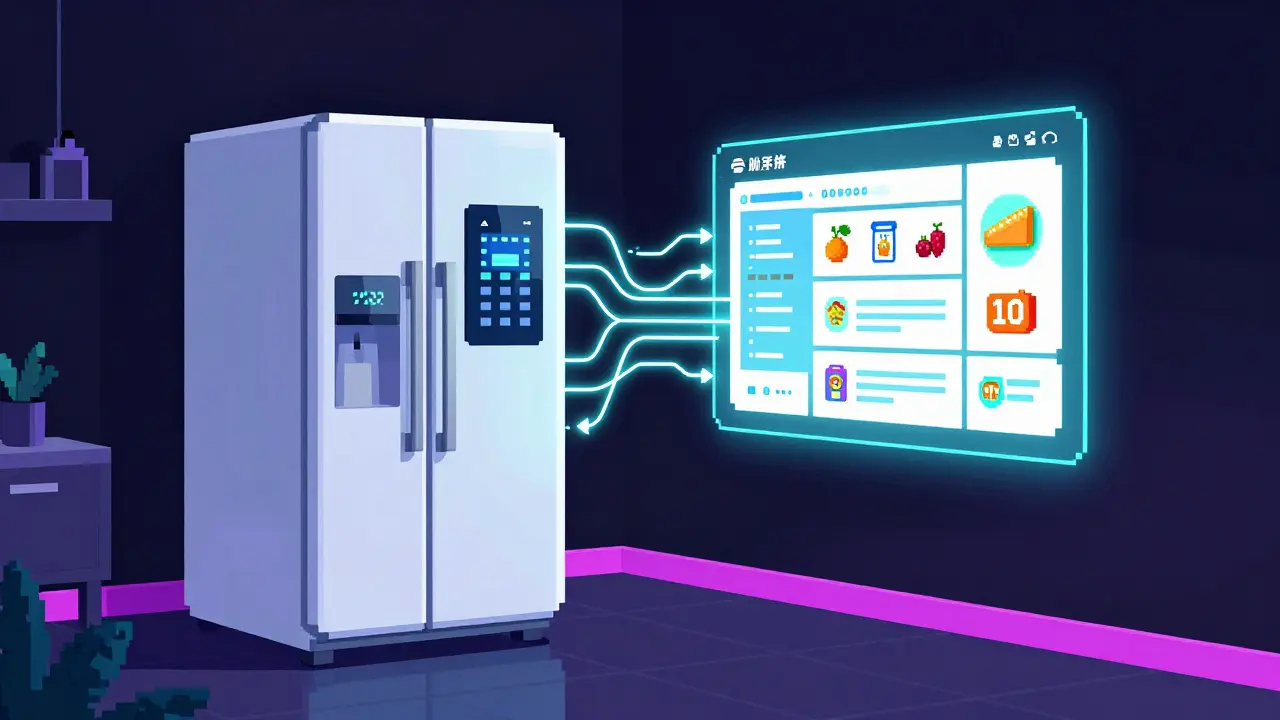
Imagine a world where your smart fridge talks to your grocery delivery app, your hospital records sync instantly with your primary care doctor’s tablet, and your company’s cloud servers communicate without a single line of custom code. That is the promise of interoperability, defined as the ability of different information systems, applications, and devices to seamlessly exchange, interpret, and use data in coordinated ways. In 2025, this isn’t just a nice-to-have feature; it is the backbone of modern digital infrastructure. Without it, we are stuck in silos-wasting time, money, and critical seconds in emergencies.
But here is the catch: achieving true interoperability is harder than ever. We have more devices, more clouds, and more complex networks than at any point in history. The solution isn’t one magic bullet. It is a combination of standardized protocols, artificial intelligence, and flexible network architectures. Let’s look at how these pieces fit together in 2025.
The Foundation: Standards That Speak the Same Language
You cannot have conversation if everyone speaks a different language. In the tech world, standards are that common tongue. For decades, we relied on basic protocols like Border Gateway Protocol (BGP), which enables routers from different manufacturers to communicate across networks. BGP laid the groundwork for the internet, allowing mobile, satellite, and fiber providers to exchange data efficiently. But today’s needs go beyond simple routing.
In specialized fields like healthcare, standards are even more critical. Take DICOM, or Digital Imaging and Communication in Medicine. This standard ensures that an MRI machine from one manufacturer can send images to a viewing system from another without corruption or loss. Then there is SNOMED CT, or Systematized Nomenclature of Medicine Clinical Terms. SNOMED CT provides a universal coding system for clinical concepts. When a doctor in New York writes “heart attack,” SNOMED CT translates that into a specific code that a specialist in London understands exactly as intended. These standards minimize latency and reduce costs, fueling high-performance connectivity for everything from 4K video streaming to next-generation AI applications.
Semantic Interoperability: Ensuring Meaning, Not Just Movement
Moving data is easy. Understanding it is hard. This is where semantic interoperability, which ensures that different systems interpret exchanged data in the same way, becomes essential. In 2025, semantic interoperability is no longer optional for clinical decision support, data analytics, and AI-driven innovations.
Consider a patient transferring between two hospitals. If the first hospital sends a medication list, semantic interoperability ensures the receiving system accurately identifies each drug by its standardized code, such as RxNorm, a standardized nomenclature for clinical drugs. This prevents misinterpretation of drug names, dosages, and prescription details. Imagine if “Aspirin” was interpreted differently by two systems-one seeing it as a painkiller, the other as a blood thinner. The consequences could be fatal. By using codes like SNOMED CT or RxNorm, we prevent these errors, improve patient safety, and allow home healthcare teams to integrate monitoring data directly into electronic health records (EHRs) for proactive intervention.
APIs and Microservices: Building Bridges, Not Walls
Legacy systems are everywhere. Hospitals, banks, and governments run on software built ten, twenty, even thirty years ago. Rewriting all of it is impossible. So, what do we do? We build bridges. In 2025, Application Programming Interfaces (APIs), which allow various software applications to communicate with each other even when not originally designed for integration, are the primary tool for this job.
APIs enable organizations to connect legacy systems with newer platforms without a complete overhaul. Pair this with microservices, an architecture that breaks down monolithic systems into smaller, manageable components, and you get agility. Providers can upgrade individual parts of their system-like a billing module or a patient intake form-without disrupting the entire network. Cloud-based platforms amplify this effect, offering built-in interoperability features that allow real-time sharing, storage, and access to data while maintaining strict encryption and security standards.

AI and Machine Learning: Automating the Chaos
Data is messy. It comes in unstructured emails, scanned PDFs, voice notes, and raw sensor readings. Enter Artificial Intelligence (AI) and Machine Learning (ML), technologies that improve data extraction and streamline workflows to bridge gaps between modern technologies and legacy systems. In 2025, AI-based solutions are crucial for cleaning and organizing this chaos.
AI-powered tools automate the Extract, Transform, Load (ETL) process. They read a doctor’s handwritten note, identify key medical terms, map them to SNOMED CT codes, and push them into the EHR automatically. This reduces administrative burden and frees up clinicians to focus on patients. Furthermore, metadata management solutions, which enable development, storage, and management of metadata that offers context and enables data discovery, help organizations find and use this data effectively. API management platforms then secure and scale these exchanges, ensuring that only authorized parties can access sensitive information.
Multi-Cloud and Network Interoperability
Most enterprises don’t live in just one cloud. They spread their workloads across AWS, Azure, Google Cloud, and private servers to optimize cost, performance, and security. But integrating services across these providers is notoriously difficult. Cloud platforms were not designed to talk to each other out of the box.
In 2025, cloud routing solutions, which facilitate seamless data exchange between different cloud providers at the network level, are solving this problem. These solutions eliminate manual workarounds, allowing applications to function as if they are running in a unified environment. Additionally, multi-AI routing functionality, which enables different AI models to interact and ensures flawless routing, is becoming vital for autonomous devices. As we move toward self-driving cars and remote robotics, these devices need to share data instantly and safely across different network infrastructures.
The SD-WAN Challenge: A Standardization Gap
One of the biggest hurdles in 2025 is Software-Defined WAN (SD-WAN) interoperability. SD-WAN has replaced traditional Multiprotocol Label Switching (MPLS) for many companies because it is cheaper, faster to deploy, and more secure. It allows organizations with bandwidth needs of 10 Gbps or less to set up agile, encrypted connections in minutes rather than weeks. Its successor, Secure Access Service Edge (SASE), which combines SD-WAN with cloud-native security services, is also gaining traction.
However, there is a catch: there are currently no universal standards for interoperability between different SD-WAN vendors. If you buy hardware from Vendor A and try to manage it with software from Vendor B, things often break. Organizations face significant hurdles ensuring seamless communication. When official standards lag behind market demand, innovative bridging technologies emerge. Just as cloud routing platforms solved multi-cloud issues, similar approaches are likely unfolding in the SD-WAN space, creating unified ecosystems despite the lack of formal standards.
Strategic Imperative: Why It Matters Now
Why should you care about interoperability in 2025? Because it drives efficiency, compliance, and innovation. According to Shay Perera, Co-Founder and CTO at Navina, 2025 is a pivotal year where improved but gradual integration occurs as regulatory bodies and vendors work toward greater consistency. He predicts a surge in connected devices, like heart monitors integrated directly with EMRs, creating fuller patient pictures.
True interoperability requires a shift in mindset. It’s not just about technology; it’s about people and processes. When data flows freely, clinicians can deliver personalized, coordinated care. Researchers can accelerate discoveries by accessing structured, machine-readable data. Businesses can make better decisions based on real-time insights. As society moves toward futures reliant on real-time data processing, interoperability remains at the heart of this evolution, defining competitive advantage and the ability to serve communities effectively.
| Technology | Primary Function | Key Benefit | Challenge |
|---|---|---|---|
| APIs & Microservices | Connect legacy and new systems | Modular upgrades without full replacement | Requires careful design and security management |
| SNOMED CT / RxNorm | Standardize clinical terminology | Prevents misinterpretation of medical data | Complex implementation and training required |
| AI/ML Tools | Automate data extraction and cleaning | Reduces manual entry errors and workload | High computational cost and privacy concerns |
| Cloud Routing | Enable cross-cloud communication | Unified experience across multiple providers | Vendor lock-in risks if not managed well |
| SD-WAN / SASE | Flexible, secure wide-area networking | Faster deployment than MPLS | Lack of universal interoperability standards |
Next Steps for Implementing Interoperability
If you are looking to improve interoperability in your organization, start small. Audit your current data silos. Identify which systems are causing the most friction. Then, prioritize standards adoption. Ensure your team understands SNOMED CT or relevant industry codes. Invest in API management platforms to secure your connections. Finally, explore AI tools that can automate the tedious parts of data integration. Remember, interoperability is a journey, not a destination. Keep testing, keep iterating, and keep focusing on the end user-whether that is a patient, a customer, or a colleague.
What is the difference between technical and semantic interoperability?
Technical interoperability refers to the ability of systems to connect and exchange data physically. Semantic interoperability goes further, ensuring that the meaning of the data is preserved and understood correctly by the receiving system. For example, sending a file is technical; ensuring the receiving system knows that "HTN" means "Hypertension" is semantic.
Why is SD-WAN interoperability a challenge in 2025?
SD-WAN interoperability is challenging because there are no universal standards governing how different vendors' SD-WAN platforms communicate. This forces organizations to rely on proprietary solutions or third-party bridging technologies, which can increase complexity and cost.
How does AI improve data interoperability?
AI improves interoperability by automating the extraction, transformation, and loading of data. It can clean unstructured data, map it to standardized codes like SNOMED CT, and identify patterns that humans might miss, making data more usable and consistent across systems.
What role do APIs play in healthcare interoperability?
APIs act as bridges between different software applications, allowing them to communicate securely. In healthcare, APIs enable legacy Electronic Health Records (EHRs) to share data with newer apps, wearables, and cloud platforms without requiring a complete system overhaul.
Is SNOMED CT used outside of healthcare?
No, SNOMED CT is specifically designed for healthcare. It provides a comprehensive clinical terminology for representing medical diagnoses, procedures, and findings. Other industries have their own standards, such as DICOM for medical imaging or BGP for network routing.