
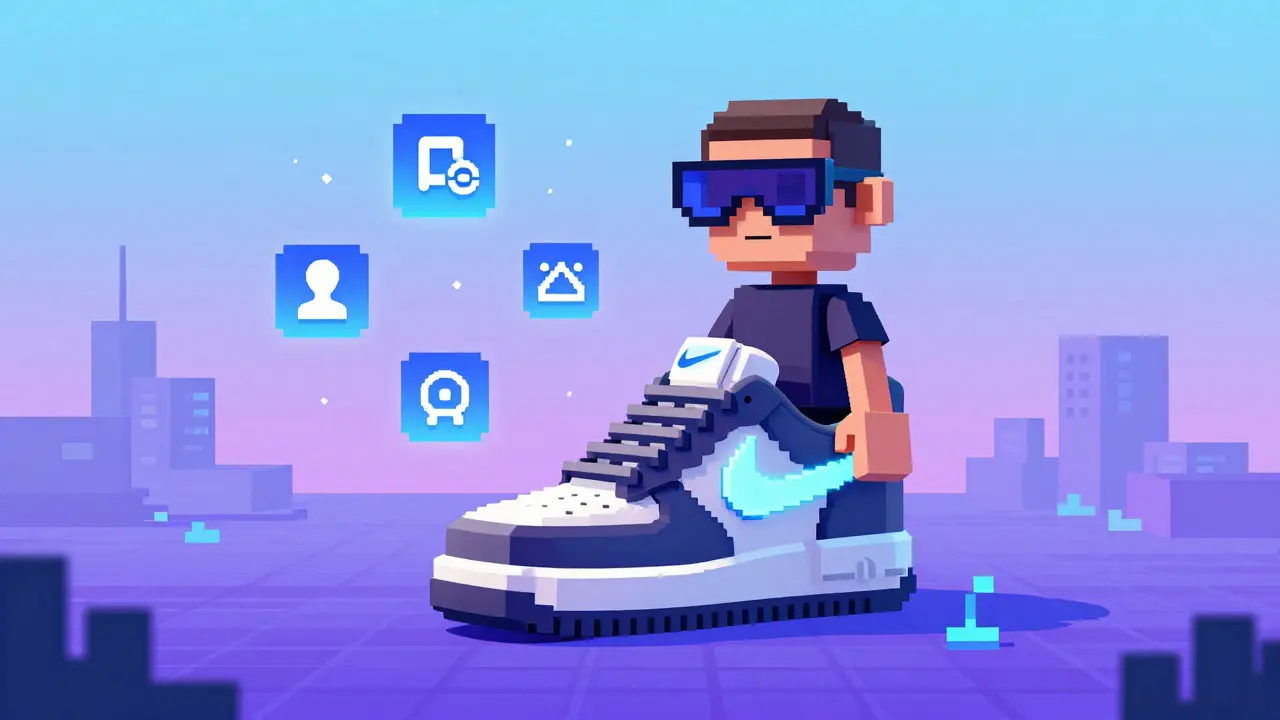
Creating and trading metaverse assets isn’t science fiction anymore - it’s a real, active market with real money changing hands. But it’s not as simple as buying a digital shirt or a piece of land and waiting to get rich. Most people who jump in lose money. Others spend months learning the tools, only to sell their first asset for $12. If you want to actually make this work, you need to understand what these assets are, how they’re built, where they sell, and who’s really winning.
What Exactly Are Metaverse Assets?
Metaverse assets are digital items that exist inside virtual worlds and are owned using blockchain technology. These aren’t just images or videos you download - they’re unique, verifiable digital objects stored on blockchains like Ethereum or Polygon. You can own them, sell them, or use them inside games and virtual spaces.Common types include:
- Virtual land - plots in platforms like Decentraland or The Sandbox, where you can build shops, galleries, or games
- Wearables - clothes, shoes, accessories for your avatar, like a digital Gucci bag or Nike sneakers
- Art and collectibles - static or animated digital art pieces displayed in virtual galleries
- Interactive objects - doors that open, music players, arcade machines you can place in your virtual space
These assets are usually built as NFTs using standards like ERC-721 (unique items) or ERC-1155 (multiple copies of the same item). That’s what makes them ownable - no one else can copy or claim your land or shirt because the blockchain proves it’s yours.
How Are Metaverse Assets Made?
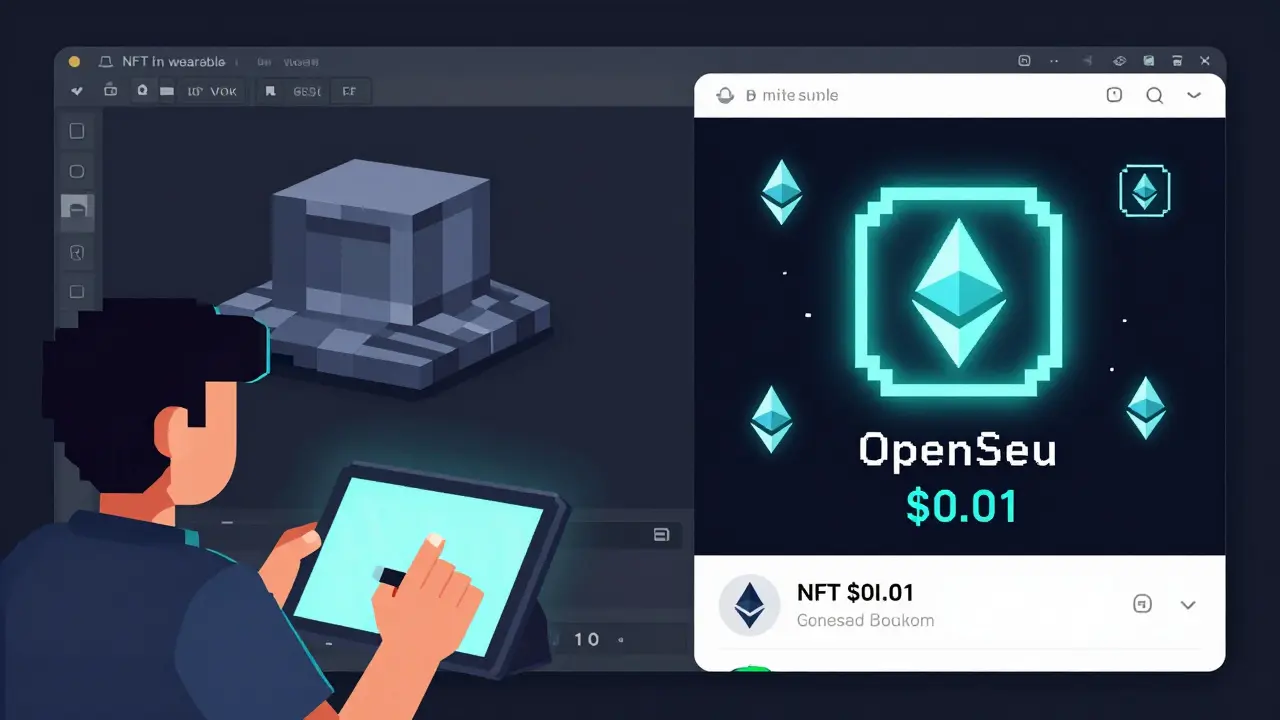
Creating an asset isn’t just about drawing something in Photoshop. You need 3D models, textures, and smart contracts. The tools and rules vary wildly depending on the platform.For Decentraland, you need to use GLB format files under 20MB with PBR materials. Polygon counts matter: a simple hat might be 500 polygons, while a full building can hit 50,000. You build using Blender (free), Maya ($1,785/year), or Decentraland’s own browser-based Builder tool.
The Sandbox uses voxel-based modeling - think Minecraft-style blocks. Their editor, VoxEdit, lets you build with 32x32x32 voxel limits. Files export as VXM. It’s easier for beginners than Blender, but limits detail.
Once your model is ready, you mint it as an NFT. On Ethereum, gas fees can run $50-$200 per mint depending on network traffic. That’s why many new creators now use Polygon, where minting costs as little as $0.01. But here’s the catch: Polygon has less trading volume. Ethereum still holds 80% of all NFT sales, so your asset might sit unsold if you pick the wrong chain.
Smart contracts - the code that makes your asset tradeable - are written in Solidity. You don’t need to write them yourself if you use platforms like OpenSea or the marketplace built into Decentraland. But if you want custom features (like royalties that pay you every time your asset is resold), you’ll need a developer or a template.
Where Do You Sell Metaverse Assets?
You can’t just list your digital shirt on eBay. You need marketplaces built for blockchain assets.OpenSea is still the biggest. In 2022, it handled $5.8 billion in metaverse asset trades. It supports Ethereum, Polygon, and Solana. Fees are 2.5% per sale. It’s the go-to for beginners because it’s easy to list and has the most buyers.
Each platform also has its own marketplace:
- Decentraland Marketplace - only sells Decentraland assets. Fees: 2-5% + gas
- The Sandbox Marketplace - for VXM assets and LAND. Fees similar, but more curated
- LooksRare and Magic Eden - alternatives with lower fees or better royalty controls
Here’s what most new creators don’t realize: listing your asset isn’t enough. You need visibility. If you’re selling a pair of virtual sneakers, you need to post them in Discord groups, Reddit threads, Twitter Spaces, or even TikTok. The market is crowded. Without promotion, your asset will vanish into the background.
What’s Actually Selling - And What’s Not?
Not all metaverse assets are equal. Some hold value. Most don’t.Virtual land used to be the dream. In 2022, a plot in Decentraland sold for $2.4 million. Today, average prices range from $1,000 to $15,000. Premium locations - near popular districts like Fashion Street or the Casino - still hold value. But most plots? They’re worth $200 or less. Yuga Labs’ Otherdeeds, which sold for $1,000+ at launch, lost 75% of their value by late 2023.
Wearables are the real money maker for most creators. Hiroto Kai, a Decentraland fashion designer, makes over $50,000 a month selling avatar clothing. His items? Priced between $20 and $500. Why? Because people want to look good in virtual spaces. Brands like Nike and Gucci sell digital sneakers for $100-$300. They’re not just collectibles - they’re status symbols.
Interactive objects? They’re niche. A virtual jukebox that plays music in your land? It sells - but only to other creators building spaces. Gaming assets like Axie Infinity creatures? They exploded in 2021, then crashed. Daily users dropped 90% after the game’s economy broke. That’s a warning: if your asset depends on a game’s economy, you’re at its mercy.
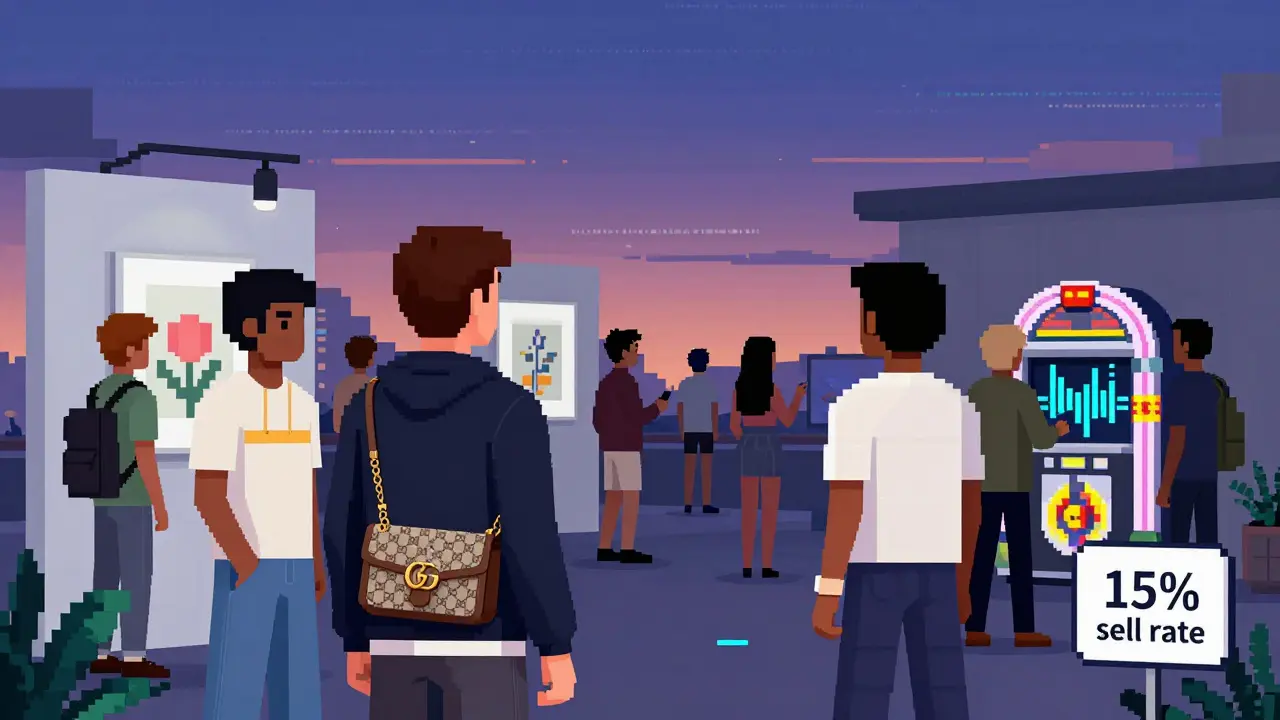
According to Coin Bureau’s analysis of 10,000 trades, only 15-20% of metaverse assets increase in value after six months. The rest either sit unsold or lose value. So don’t buy into hype. Look at sales history, not price tags.
Who’s Winning - And Who’s Getting Burned?
There are two kinds of people in this space: those who treat it like a side hustle, and those who treat it like a business.u/MetaBuilder on Reddit earned $180,000 building virtual spaces for brands in Decentraland. It took him 6-8 months to learn the tools. He didn’t just model buildings - he learned how to pitch to clients, negotiate contracts, and manage timelines. He’s a digital architect now.
On the other hand, u/VirtualStruggles spent $800 in Ethereum gas fees trying to mint a collection of 10 wearables. Only 2 sold. He lost $700. He didn’t know about Polygon. He didn’t know how to market. He thought the blockchain would do the work for him.
Big companies are still investing. Nike made $185 million in metaverse revenue in 2022. Adidas and Gucci are still launching digital collections. But they’re not selling to gamers. They’re selling to brand-conscious users who want to show off in social VR spaces. That’s the real market.
Meanwhile, Gartner predicts 90% of current metaverse platforms will fail in five years. Why? Because most people still don’t use them. Only 200,000-400,000 users are active daily across all platforms. That’s less than 0.01% of internet users. The tech is there. The audience isn’t.
How to Start - Without Losing Your Money
If you’re serious about creating or trading metaverse assets, here’s how to begin without getting crushed:- Start small - Make one wearable. Not a whole collection. Not a building. One shirt. One hat. Use Blender or VoxEdit - both free.
- Use Polygon - Mint on Polygon, not Ethereum. Gas fees are pennies. You can test without risking hundreds.
- List on OpenSea - It’s the easiest place to get visibility. Set your price low - $5-$20 - to get your first sales.
- Build a following - Post your asset on r/decentraland, r/TheSandboxGaming, and Twitter. Show the process. People like behind-the-scenes.
- Don’t buy LAND unless you have a plan - Unless you’re building something on it, land is just a speculative bet. Most will never sell.
- Learn from creators, not hype - Watch YouTube tutorials from Coin Bureau, or read Reddit threads where people share real earnings, not dreams.
There’s no shortcut. But there is a path. It’s not about getting rich overnight. It’s about building something others want - and proving it can sell.
What’s Next in 2026?
The metaverse isn’t dead - it’s changing. Apple’s Vision Pro opened a new door. People can now wear a headset and step into a 3D web. That means demand for high-quality 3D assets will rise. But the price of the headset - $3,499 - keeps it out of reach for most. So the market will stay small for now.Regulation is coming. The SEC is watching NFTs. If your asset is treated as a security, you could face legal trouble. That’s why brands like Nike are careful - they’re selling digital fashion, not investment contracts.
Platforms like Decentraland and The Sandbox are still around. But they’re not the future. The future is interoperability - assets that work across games, apps, and VR spaces. That’s still years away. For now, focus on what works: wearables, simple art, and real users who care about how they look in virtual spaces.
If you’re creating, make something useful. If you’re trading, buy only what you understand. And never invest more than you can afford to lose.
Can I make money creating metaverse assets?
Yes - but only if you treat it like a skill, not a lottery. Top creators earn thousands per month selling avatar wearables, especially on Decentraland. Most beginners earn nothing. Success requires learning 3D modeling, understanding platform rules, and marketing your work. The barrier is high, but the payoff is real for those who persist.
Is virtual land a good investment?
Rarely. Most plots sell for under $1,000 and sit unused. Only premium locations near popular districts (like Fashion Street in Decentraland) hold value. Even then, demand has dropped since 2022. Buying land without a plan to build on it is speculation, not investment. Save your money unless you’re a developer or designer.
Should I use Ethereum or Polygon for minting?
Start with Polygon. Minting costs under $0.01, compared to $15-$50 on Ethereum. Ethereum has more buyers, but if you can’t afford the gas fees or your asset doesn’t sell quickly, you’ll lose money. Use Polygon to test your designs. Once you have sales, you can migrate to Ethereum if needed.
What’s the easiest asset to create for beginners?
Avatar wearables - like hats, glasses, or shoes. They’re small (low polygon count), don’t need complex animations, and can be made with free tools like Blender or VoxEdit. You can learn the basics in 20-40 hours. Start with one item, mint it on OpenSea, and see if anyone buys it.
Are metaverse assets legal?
Currently, yes - but regulation is coming. The SEC has warned that some NFTs could be classified as securities if they promise profits based on others’ efforts. Brands like Nike avoid this by selling digital fashion as collectibles, not investments. Always structure your asset as a digital item, not a financial product. Consult a legal expert if you’re scaling.
How do I know if a metaverse asset is worth buying?
Check its sales history on OpenSea or the platform’s marketplace. Look at how many times it’s sold, at what price, and over what time. Avoid items with no sales in 3+ months. Also, check the creator’s track record. Are they active? Do they have other items selling? Don’t buy based on hype or a flashy thumbnail.
Do I need a crypto wallet to trade metaverse assets?
Yes. You need a wallet like MetaMask or Coinbase Wallet to buy, sell, or store these assets. You’ll also need ETH or MATIC to pay for gas fees and transactions. Setting up a wallet is simple, but never share your seed phrase. Treat it like your bank password - lose it, and you lose everything.

tim ang
January 26, 2026 AT 22:25Just made my first wearable in VoxEdit last night - a dumb little hat with neon stripes. Minted it on Polygon for like 3 cents. Listed it at $5. Got one sale today. Not rich, but I’m hooked. This is way more fun than my 9-to-5.
MICHELLE REICHARD
January 28, 2026 AT 21:41Oh wow, another delusional soul thinks they can ‘make it’ in the metaverse. You didn’t just mint a hat - you minted a digital landfill item. The only thing growing here is the pile of unsold NFTs rotting in wallets. The real asset? The blockchain. Everything else is just glitter on a dumpster.
Julene Soria Marqués
January 28, 2026 AT 22:51Wait, so you spent hours making a hat and sold it for $5? That’s less than minimum wage. And you’re proud? 🤦♀️ I’ve seen 10-year-olds on TikTok make more selling digital stickers. At least they know their audience. You just made a hat for ghosts.
Bonnie Sands
January 29, 2026 AT 22:38They’re watching you. All of them. The NSA, the Fed, the crypto billionaires - they want your data, your art, your identity. That ‘hat’ you made? It’s tagged, tracked, and sold to advertisers before you even hit ‘list’. This isn’t freedom - it’s digital slavery with a side of gas fees.
MOHAN KUMAR
January 31, 2026 AT 13:16Start small, yes. But also, learn from others. I saw a guy in India make 200 simple shoes in Blender, list them on OpenSea for $3 each. Sold 120 in a week. No fancy marketing. Just consistency. You can do it too.
Andy Marsland
February 1, 2026 AT 00:45Let me be clear - this entire metaverse movement is a grotesque parody of capitalism dressed up as innovation. You think you’re creating art? No. You’re participating in a speculative bubble fueled by bored millennials with crypto windfalls and zero understanding of economic fundamentals. The fact that you believe a digital shirt has value proves you’ve been conditioned by the algorithmic circus. You’re not a creator. You’re a product.
Anna Topping
February 1, 2026 AT 11:37I used to think the metaverse was about connection. Now I think it’s about performance. Everyone’s trying to look cool in a world no one’s really in. I made a digital coat once. Wore it in Decentraland for two hours. No one noticed. No one cared. I deleted it. Sometimes the most powerful act is not making anything at all.
Jeffrey Dufoe
February 3, 2026 AT 08:27Hey, I tried making a virtual door last month. Took me 3 days. Got it on OpenSea. Sold for $12. Didn’t make me rich, but I bought coffee with it. That’s a win. Keep going. One thing at a time.
katie gibson
February 4, 2026 AT 04:40OMG I just saw someone sell a digital sneaker for $1200 and I cried. Like, why? Why is this real? I’m not even mad - I’m just… jealous? I made a glittery unicorn tail and it’s been sitting there for 3 months. I think I need a new life. Or a therapist. Or both.
Ashok Sharma
February 5, 2026 AT 22:05Beginners often focus too much on tools and fees. But success lies in understanding the community. Join Discord servers. Comment on others’ work. Be genuine. People buy from people they trust. Not from algorithms.
Barbara Rousseau-Osborn
February 6, 2026 AT 18:56You think you’re a creator? You’re a pawn. Every time you mint, you’re feeding the machine. Every sale? They take 2.5%. Every gas fee? They profit from your desperation. You’re not building wealth - you’re paying for the privilege of being exploited. Wake up. This isn’t Web3. It’s Web3.0 Scam.
Arnaud Landry
February 6, 2026 AT 23:44It’s all orchestrated. The ‘success stories’? Bot accounts. The ‘trending assets’? Pumped by whale wallets. The ‘community’? Paid moderators. Even the ‘free tools’ are data harvesters. You’re not participating in a revolution - you’re the data point in a corporate experiment disguised as liberation.
David Zinger
February 8, 2026 AT 04:21Sara Delgado Rivero
February 8, 2026 AT 08:38Stop telling people to use Polygon. Ethereum is the only real chain. Anyone who mints on Polygon is basically saying ‘I don’t believe in value’. You want to be taken seriously? Use ETH. Or don’t bother at all.
Arielle Hernandez
February 10, 2026 AT 06:53As someone who grew up in a village in Kerala where digital access was rare, I’ve watched this space evolve with awe. What’s remarkable isn’t the technology - it’s the global community forming around shared creativity. A student in Manila, a retiree in Ohio, a designer in Lagos - all trading digital art. This is human connection, reborn. Don’t reduce it to profit margins.
HARSHA NAVALKAR
February 11, 2026 AT 20:21I tried making a digital umbrella. Got zero sales. Then I cried. Then I deleted my wallet. Then I went for a walk. Now I’m okay. The metaverse doesn’t need me. Maybe I don’t need it either.
Ryan Depew
February 13, 2026 AT 14:18Most people don’t realize that 90% of metaverse assets are just recycled 3D models from TurboSquid. You think you’re original? Nah. You’re just repackaging someone else’s work with a new name and a gas fee. The real creators? They’re the ones who build engines, not just hats.
Mathew Finch
February 15, 2026 AT 04:09Let’s be real - this whole thing is a cult. People worship blockchain like it’s a deity. They’ll spend $200 on a digital shirt but can’t afford a real one. They’ll trade pixels like they’re gold. Meanwhile, the world burns. This isn’t progress. It’s a distraction for the privileged.
Nadia Silva
February 16, 2026 AT 14:16Why are we even doing this? Canada has universal healthcare. We have forests. We have peace. Why are we wasting our time making digital hats for people who live in basements? This is the new version of selling Beanie Babies. Only now, you can’t even hold it.
Roshmi Chatterjee
February 17, 2026 AT 17:33I started last week with a free Blender tutorial. Made a pair of virtual sunglasses. Listed for $10. Sold in 12 hours. Then I made 3 more. Now I’m teaching my sister how to do it. We’re not rich, but we’re learning. And that’s better than scrolling TikTok all day.
Jonny Lindva
February 18, 2026 AT 14:12Just want to say - your hat matters. Even if no one buys it. The act of creating something, putting it out there, that’s the win. I’ve been there. Keep going. We’re all figuring this out together.
Harshal Parmar
February 20, 2026 AT 00:40Bro I made 15 digital shoes in a week. One sold for $25. I reinvested that into a better texture pack. Then I made 10 more. Now I have 3 sales a week. It’s slow. But it’s real. You don’t need to be a genius. You just need to show up. And don’t listen to the haters. They’re just scared you might actually do it.
Matthew Kelly
February 20, 2026 AT 09:26I made a digital campfire last month. Lit it in my virtual cabin. People came just to sit by it. No sales. No hype. Just quiet. I didn’t need money. I needed to feel something real. That’s the metaverse I believe in.
Adam Fularz
February 21, 2026 AT 02:02They said the internet would connect us. Now we’re just selling digital socks to bots. You think you’re building the future? You’re building a graveyard of unsold NFTs. And you call that progress? Pathetic. Just pathetic.