
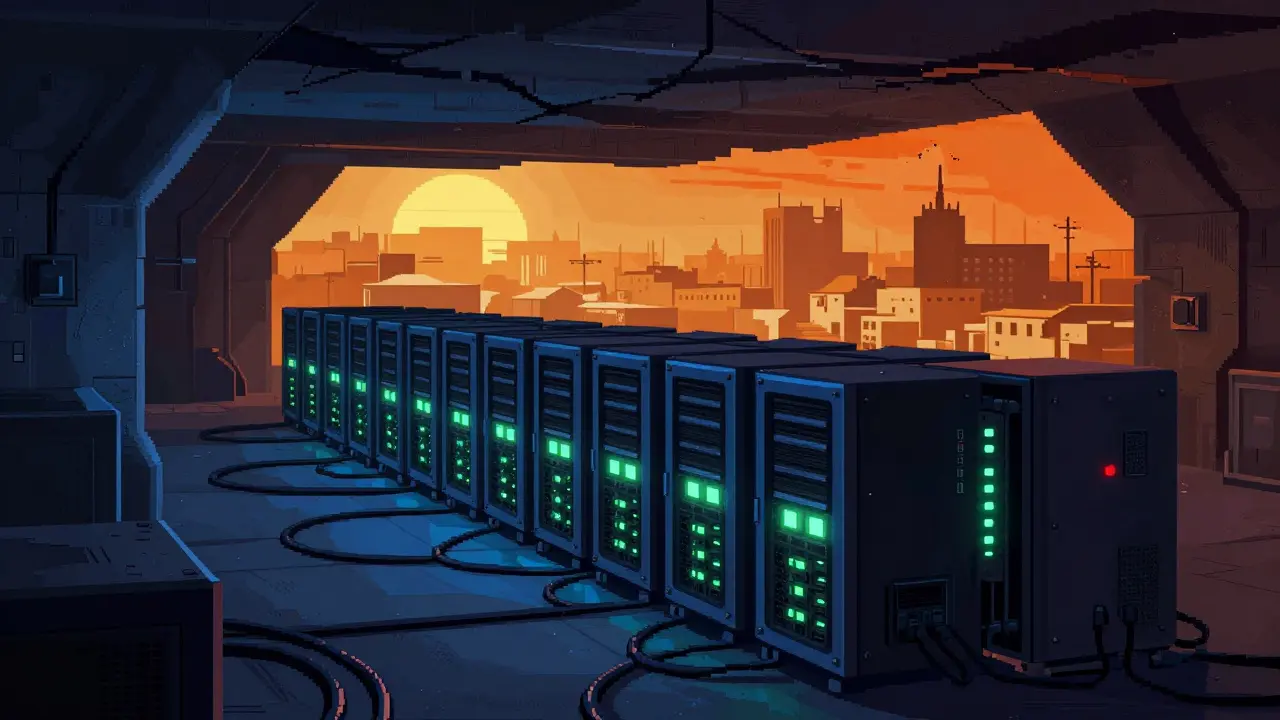
Imagine a country where the power grid is so unstable that factories shut down during peak heatwaves, yet massive server rooms run 24/7 in secret tunnels beneath sports stadiums. This isn't a dystopian novel; it’s the reality of state-controlled crypto mining in Iran, a system where government entities mine Bitcoin not just for profit, but as a strategic tool to bypass international sanctions. While most nations regulate or ban cryptocurrency mining due to environmental concerns, Iran has weaponized it. The result? A complex web of subsidies, corruption, and technological adaptation that keeps the regime funded while leaving ordinary citizens in the dark-literally.
The Birth of a Sanctions-Busting Strategy
To understand why Iran turned to crypto, you have to look at its economic isolation. For years, U.S. and EU sanctions have blocked Iran from accessing the global banking system (SWIFT). Traditional trade became nearly impossible. Enter 2018. Under President Hassan Rouhani, the government legalized cryptocurrency mining. It wasn’t about embracing decentralization; it was about survival. By allowing miners to operate legally, the state could monitor the flow of capital and create a backdoor for foreign currency.
The Central Bank of Iran (CBI) didn’t stop there. They announced plans for a national digital currency backed by the rial. The goal was clear: facilitate international transactions without touching traditional banks. By late 2020, daily trading volumes hit between $16 million and $20 million across 12 different cryptocurrencies. But the real game-changer came when the Islamic Revolutionary Guard Corps (IRGC) and entities linked to Supreme Leader Ali Khamenei stepped in. They didn’t just want to watch; they wanted to own the infrastructure.
| Year | Event | Impact |
|---|---|---|
| 2018 | Mining legalized | State gains oversight; creates legal framework for sanctions evasion. |
| 2020 | IRGC enters sector | Shift from private mining to state-controlled 'crypto cartel.' |
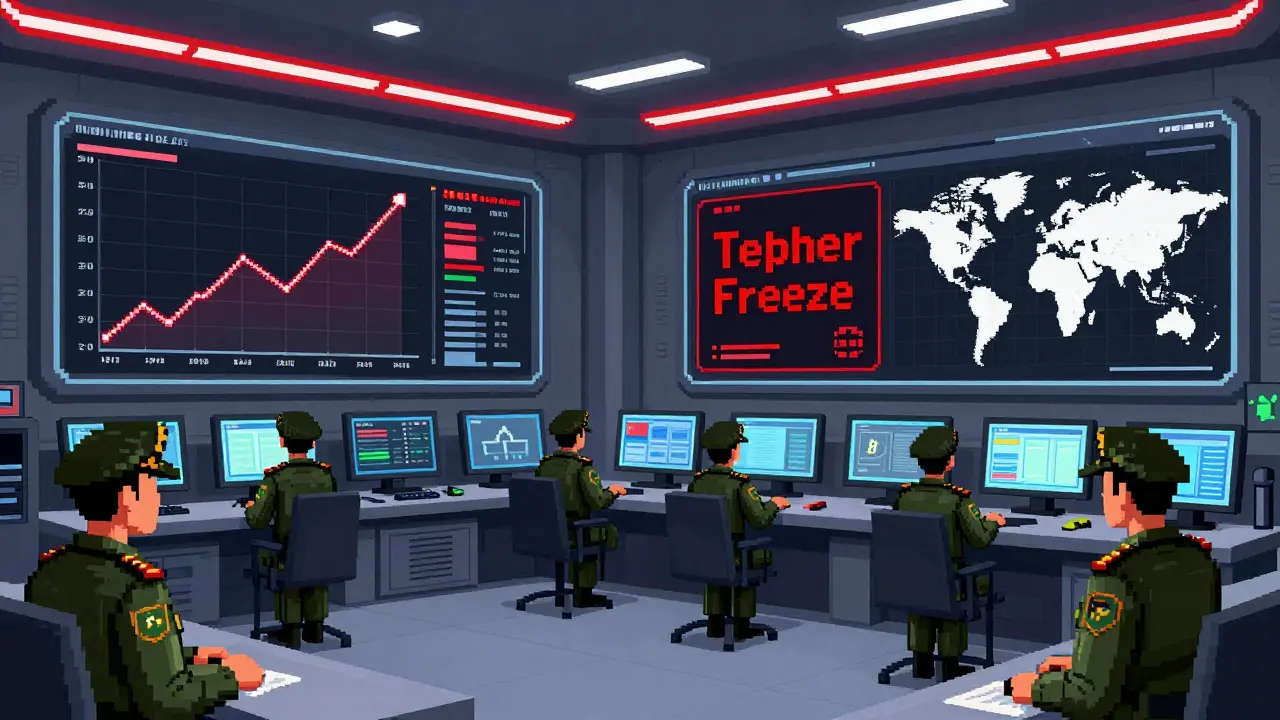
| 2025 | Tether freezes funds | Largest freeze of Iranian-linked assets; forces pivot to DAI/Polygon. |
The 'Crypto Cartel': How the IRGC Mines Bitcoin
If you think of typical crypto mining as tech entrepreneurs buying ASICs in their garage, Iran’s model is radically different. It’s industrial-scale espionage-adjacent economics. The IRGC, along with religious foundations like Astan Quds Razavi, has established massive mining farms. These aren’t hidden in basements; they’re often located on military bases or in special economic zones where regulations are loose and protection is armed.
Take the Rafsanjan facility in Kerman province. This 175-megawatt Bitcoin farm is a joint venture between an IRGC-linked enterprise and Chinese investors. Why China? Because Chinese companies needed cheap energy, and Iran had surplus electricity-at least on paper. The catch? The electricity costs. While commercial rates globally hover around higher figures, these state-affiliated operations pay tariffs as low as 0.004 cents per kWh. That’s roughly 1/50th of the global average. This subsidy turns mining into a money-printing machine for the regime.
But it’s not always above board. In May 2025, investigators discovered a large-scale mining operation hidden in the tunnels beneath the Shahid Ghorbani Sports Complex in Ahvaz. For over two years, this facility ran undetected, siphoning power meant for public use. This pattern repeats across the country: state actors exploit national resources for private gain, protected by political connections and, occasionally, force.
The Energy Crisis: Citizens Pay the Price
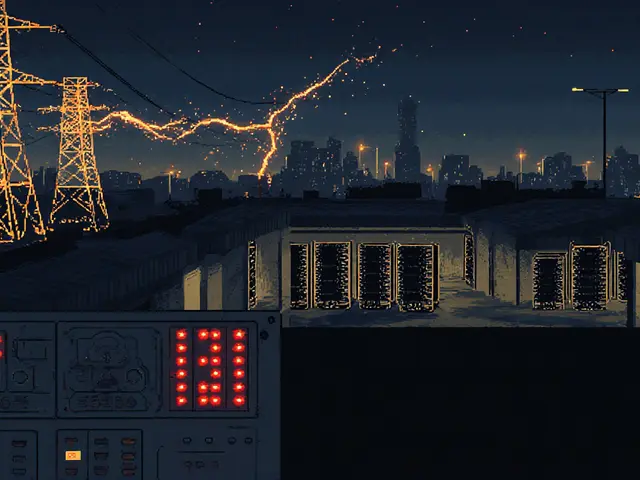
You can’t talk about Iran’s crypto mining without addressing the human cost. The national power grid is strained, especially during summer heatwaves when temperatures soar past 45°C (113°F). In May 2024, Tehran’s District 3 experienced a 14-hour blackout. Meanwhile, nearby IRGC-affiliated mining farms kept running. The hashtag #IranEnergyCrisis trended on social media as citizens connected the dots: their blackouts were funding the regime’s Bitcoin stash.
The numbers are staggering. By early 2023, total national mining capacity exceeded 1,000 megawatts. That’s enough power to light up entire cities. Yet, when the Ministry of Industry, Mine and Trade cuts power to *legal* mining operations during peak demand, the state-controlled farms often remain exempt. This double standard fuels public outrage. On Reddit’s r/Iran community, users documented factory shutdowns and hospital generator usage while mining continued uninterrupted. It’s a stark example of how state-controlled crypto exacerbates inequality.
- Public Outrage: Social media campaigns highlight the disparity between citizen suffering and state profit.
- Industrial Impact: Factories face rationing, hurting manufacturing output.
- Health Risks: Hospitals rely on generators during blackouts, endangering patients.

Regulatory Whiplash: From Tolerance to Surveillance
Iran’s approach to crypto regulation is chaotic. One day, mining is encouraged; the next, it’s cracked down on. As of 2025, legal mining requires a license from the Ministry of Industry, Mine and Trade. The process takes 6-8 weeks and mandates the use of government-approved hardware-which ironically reduces efficiency by 15-20% compared to top-tier international models. Miners must also pay a specific tariff of 7 cents per kWh, though enforcement is spotty.
Then comes the surveillance angle. In December 2024, the CBI blocked all cryptocurrency-to-rial payment gateways. Why? Because transaction volumes reached billions of dollars, yet operators paid no taxes. Financial statements were hidden. In January 2025, the ban was partially lifted, but with a catch: exchanges had to provide government API access for "full user data." Every transaction is now monitored. This isn’t just regulation; it’s financial control.
In August 2025, the government enacted the "Law on Taxation of Speculation and Profiteering," imposing capital gains tax on crypto trading. Now, Bitcoin is treated like gold or real estate. The message is clear: if you want to play, the state gets a cut. But for the IRGC? Rules don’t apply.
Global Pressure and Adaptation
The world is watching. International sanctions have tightened, forcing Iran to adapt. On July 2, 2025, Tether executed its largest-ever freeze of Iranian-linked funds, blocking 42 addresses tied to Nobitex (Iran’s largest exchange) and IRGC wallets. This wasn’t just a slap on the wrist; it disrupted entrenched transaction patterns. Suddenly, moving USDT out of Iran became difficult.
So, what did Iran do? They pivoted. Government-coordinated efforts urged users to offload USDT in favor of DAI via the Polygon network. This move preserved access to liquid stablecoins while bypassing some restrictions. It shows a high level of sophistication. Iran isn’t just reacting; it’s innovating under pressure. TRM Labs noted that this mirrors adaptations seen after the loss of traditional banking channels. The regime is building a parallel financial system, one block at a time.
Is cryptocurrency mining legal in Iran?
Yes, but with strict conditions. Legal mining requires a license from the Ministry of Industry, Mine and Trade, adherence to specific electricity tariffs (around 7 cents/kWh), and use of approved hardware. However, state-affiliated entities often operate outside these rules.
Who controls the majority of crypto mining in Iran?
The Islamic Revolutionary Guard Corps (IRGC) and organizations linked to Supreme Leader Ali Khamenei dominate the sector. They operate large-scale farms with subsidized electricity and minimal regulatory scrutiny.
How does crypto mining affect Iran's energy grid?
It contributes significantly to power shortages. During peak demand, mining operations consume vast amounts of electricity, leading to blackouts for residential and industrial users. State-controlled farms often receive exemptions from power cuts.
Why did Tether freeze Iranian crypto funds in 2025?
Tether froze 42 addresses linked to Iranian exchanges and IRGC wallets to comply with international sanctions. This was the largest such action against Iran, aiming to disrupt illicit financial flows.
What is the future of crypto mining in Iran?
The sector will likely see increased state control and surveillance. The government aims to balance sanctions evasion, tax revenue collection, and energy management, though tensions between these goals remain high.




Craig Swanson
June 2, 2026 AT 22:09Look, I get that the regime needs cash to survive sanctions, but this is just predatory behavior on a massive scale. You don't sacrifice your own people's basic needs like electricity for Bitcoin speculation. It's not clever strategy; it's exploitation wrapped in tech jargon. The IRGC isn't 'innovating'; they're looting the national grid while hospitals run on generators. That’s not resilience, that’s criminal negligence against citizens who have no say in the matter.
Eric Grosso
June 4, 2026 AT 22:11i mean its kinda wild how they got away with this for so long. like sure sanctions are tough but hiding servers under stadiums? thats next level sneaky. also the fact that they pay almost nothing for electricity makes me wanna scream. its basically free money printed by stealing from the poor. why doesnt anyone shut this down completely?
Edith Mair
June 6, 2026 AT 09:57The pivot to DAI on Polygon is a fascinating technical adaptation, but it doesn't change the ethical rot at the core of this system. They are essentially laundering sanctions evasion through decentralized finance protocols. This highlights a critical vulnerability in our current regulatory frameworks. We cannot allow authoritarian regimes to use crypto as a shield for human rights abuses. The technology itself is neutral, but its application here is deeply problematic.
Sam Dashti
June 8, 2026 AT 03:34Honestly, watching them dance around Tether's freeze is like watching a master thief pick a lock in slow motion. They swap USDT for DAI on Polygon because they know exactly where the bodies are buried in the code. It's slick, it's dirty, and it's terrifyingly effective. The real question isn't if they'll keep doing it, but how long before the rest of the world realizes we're funding a digital arms race with our own blockchain infrastructure. 🎲
Joe Clements
June 9, 2026 AT 16:32I feel for the families dealing with blackouts during heatwaves. It's hard to imagine having to rely on generators just to keep food from spoiling or medical equipment running. I hope there are community groups helping those affected find alternative solutions. Solidarity with the Iranian people during this difficult time.
Rosie Morris
June 11, 2026 AT 04:48its so sad u cant even turn on a fan without worrying about the grid crashing. i read some posts from iranian subreddits and ppl r literally scared to use appliances. meanwhile the govt is minting bitcoin like crazy. its just unfair and cruel. hope things get better soon for everyone there 😞
lorna erni
June 12, 2026 AT 04:27This whole situation is an absolute disgrace! How dare they prioritize crypto profits over human lives? The IRGC should be held accountable for every blackout, every hospital failure, every factory shutdown. We need global pressure to cut off their access to these technologies immediately. Enough is enough!
stalin brian
June 12, 2026 AT 05:13from a cultural perspective this is a huge shift. traditionally iran had strong industrial roots but now theyre pivoting to digital shadows. its interesting how sanctions force such creative, albeit unethical, adaptations. maybe if the world engaged more openly instead of isolating them, they wouldnt need these shadow economies. just a thought though i know its complicated.
kamal ifrani
June 12, 2026 AT 14:34Let's not play dumb here. This isn't 'adaptation,' it's theft. Plain and simple. The IRGC is stealing electricity from citizens to enrich themselves. Calling it 'strategy' is insulting to anyone who understands basic economics or morality. These aren't victims of sanctions; they are perpetrators of economic violence against their own population. Wake up.
saradee dee
June 13, 2026 AT 16:08Oh my gosh, reading about the tunnels under the stadium gave me chills. It feels like a spy movie but it's real life. The contrast between the secret high-tech mines and the empty streets during blackouts is just too dramatic. It breaks my heart to think about the kids studying by candlelight while algorithms mine coins underground. Such a tragic waste of potential.
Bill Gunn
June 15, 2026 AT 06:09From a technical standpoint, the efficiency gains from subsidized power are undeniable, but the externalities are catastrophic. 📉 The 1/50th cost rate distorts the entire market. When you factor in the social cost of healthcare failures and industrial stagnation, the 'profit' is illusory. It's a classic tragedy of the commons scenario, exacerbated by authoritarian control. We need better auditing tools for energy consumption in crypto networks. 🔍⚡
Dana Rapoport
June 15, 2026 AT 10:30We must consider the philosophical implications of using decentralized technology to centralize power further. Irony is thick here. The promise of crypto was liberation from state control, yet here it is used to strengthen a repressive regime. This challenges our understanding of technological neutrality. Perhaps the tool isn't the problem, but the intent behind its deployment defines its moral weight.