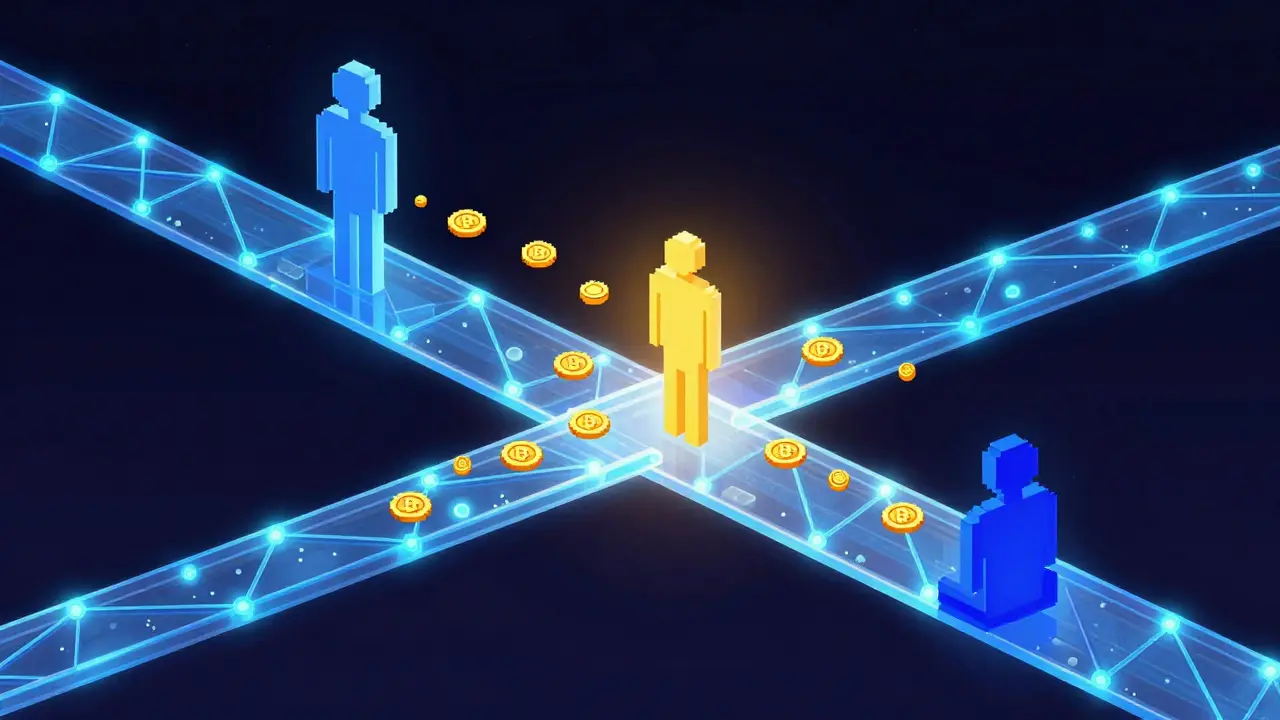

Imagine running a coffee shop where every transaction costs you pennies instead of the standard 2.9% plus a fixed fee charged by traditional credit card processors. Now imagine settling international payments in minutes rather than waiting three to seven business days for banks to clear funds. This isn't a futuristic fantasy anymore; it is the emerging reality of Decentralized Finance, or a blockchain-based financial ecosystem that eliminates traditional intermediaries like banks and brokers, enabling peer-to-peer transactions through smart contracts. As we move through 2026, the conversation around DeFi has shifted dramatically from speculative hype to practical utility. The barriers that once kept everyday users away-complex interfaces, regulatory fog, and security fears-are crumbling under the weight of technological maturity and clearer government frameworks.
The Shift from Fringe to Future-Ready
For years, DeFi was viewed as a niche playground for crypto enthusiasts who were comfortable navigating complex code and risking their savings on unproven protocols. That era is ending. Industry leaders, including the Executive Leadership Team at NMI, predicted back in 2025 that DeFi would transition from 'frictionless' to 'future-ready.' They were right. The explosive growth reported by the World Economic Forum’s Global Future Council on Decentralized Finance underscores that this system is no longer an alternative fringe option but a legitimate competitor to traditional finance.
What changed? Three critical factors converged. First, regulators stopped trying to ban blockchain and started building frameworks for it. Second, the underlying technology became fast enough and cheap enough to handle real-world volume. Third, the user experience improved so much that you no longer need a computer science degree to use a wallet. These shifts have turned DeFi into a viable infrastructure layer for global commerce, not just a trading venue for volatile tokens.
How DeFi Outperforms Traditional Banking
To understand why businesses are adopting these systems, you have to look at the numbers. Traditional banking relies on intermediaries-banks, clearinghouses, and payment processors-who take cuts at every step. DeFi removes these middlemen using programmable smart contracts. When conditions are met, the contract executes automatically. No approval needed. No paperwork.
| Feature | Traditional Finance | Decentralized Finance (DeFi) |
|---|---|---|
| Transaction Cost | ~30 cents + % fees per transaction | Fractions of a cent (network dependent) |
| Cross-Border Speed | 3-7 business days | Minutes |
| Intermediaries | Banks, brokers, processors | Smart contracts (code) |
| Privacy | Extensive surveillance & reporting | Pseudonymous but transparent ledger |
| Fraud Protection | Chargebacks available | Irreversible; self-custody required |
Consider a small restaurant owner. With traditional credit card processing, they lose significant margins on every sale. In face-to-face transactions, they don’t even get the benefit of chargeback protection because fraud is rare in person, yet they still pay the fees. Sam Broner from a16z crypto notes that small and medium-sized businesses with strong brands are leading enterprise DeFi adoption precisely because of this inefficiency. By accepting stablecoins or native cryptocurrencies, these businesses keep more profit and settle instantly.
The Role of Smart Wallets and Infrastructure
You cannot have a functional financial system without secure access points. In traditional banking, your bank account number serves as your identity and storage. In DeFi, your wallet is everything. Modern DeFi wallets are essential infrastructure providing users complete control over assets and private keys while offering integrated functionalities like trading, staking, and multi-protocol support. Gone are the days when you had to copy-paste long strings of hexadecimal characters to send money.
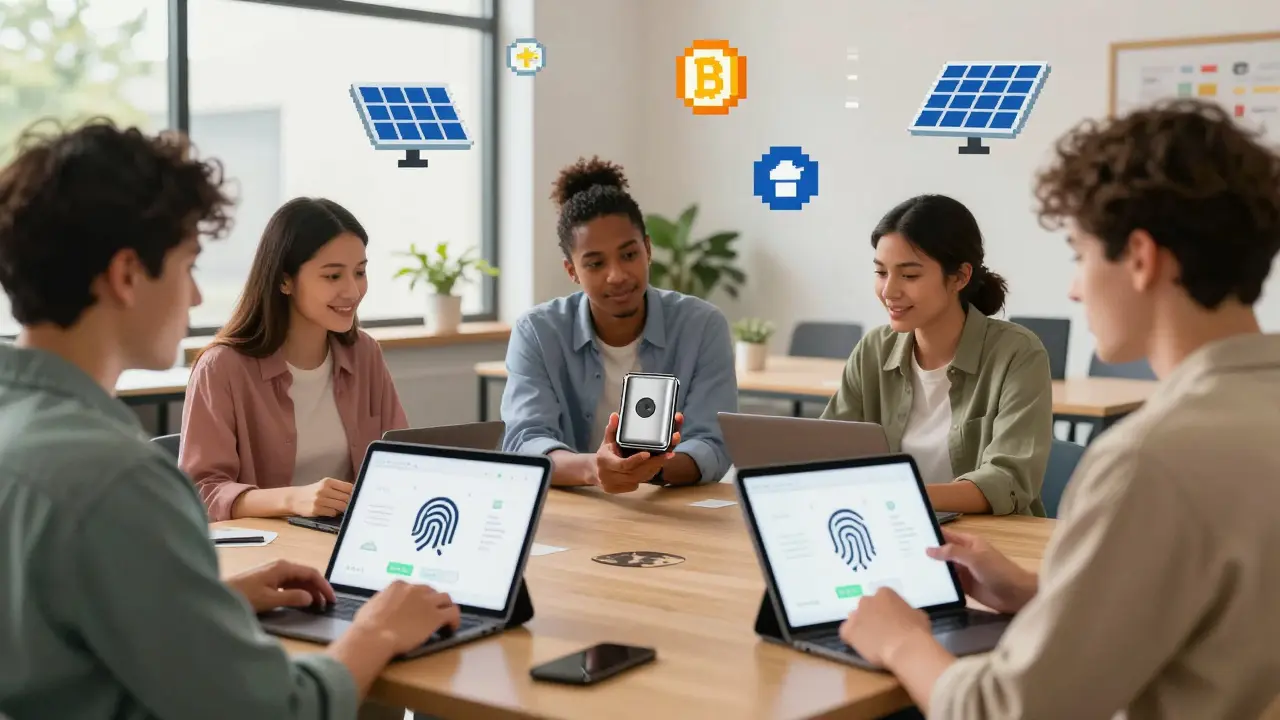
Today’s wallets feature biometric authentication, multi-chain support, and hardware integration. You can log in with your fingerprint or face ID, just like unlocking your phone. These wallets connect seamlessly to various protocols, allowing you to lend, borrow, or trade without leaving the interface. For those worried about online risks, hardware wallet integration ensures that private keys never leave a physical device, adding a layer of security comparable to keeping cash in a home safe.

Real-World Applications Beyond Speculation
If you think DeFi is only about buying Bitcoin hoping it goes up, you are missing the bigger picture. The true power lies in tokenization and automated services. Peter from Unstoppable Finance emphasizes that DeFi extends far beyond simple payments. It enables the tokenization of physical assets. Imagine owning a fraction of a solar farm in Germany, with dividends paid out automatically via smart contract to your wallet in New York. Or consider supply chain financing, where invoices are converted into liquid assets that can be traded instantly.
Another major development is the rise of tokenized government bonds. Countries are exploring ways to issue debt digitally. This creates interest-bearing, low-risk assets within the DeFi ecosystem. Unlike Central Bank Digital Currencies (CBDCs), which often come with strict surveillance capabilities, tokenized bonds offer yield and liquidity without compromising privacy. This bridges the gap between institutional-grade safety and decentralized freedom.
Challenges and the Learning Curve
Despite the benefits, DeFi is not without its hurdles. The most significant barrier remains user education. Early adopters praise the transparency and lack of bureaucracy, but new users often struggle with the concept of self-custody. In traditional banking, if you lose your debit card, you call the bank. In DeFi, if you lose your private key or recovery phrase, your funds are gone forever. There is no customer service hotline to reset your password.
This irreversible nature also means there are no chargebacks. If you send money to the wrong address, or if a smart contract has a bug, you cannot reverse the transaction. This requires a higher level of diligence from users. However, the learning curve is flattening. Most users achieve basic proficiency in 2-4 weeks, understanding how to manage wallets and execute swaps. Advanced strategies like yield farming may take 2-3 months to master, but community resources, Discord servers, and educational documentation have made this process much smoother than in previous years.
Regulatory Clarity and Institutional Integration
The fog of regulatory uncertainty is lifting. Governments realize they cannot ignore a financial system that operates globally and efficiently. The UK’s Financial Conduct Authority has launched a digital securities sandbox, allowing firms to test innovative products under supervision. HM Treasury has signaled interest in digital government bond issuance, signaling official endorsement of blockchain technology for state functions.
As regulations clarify, larger enterprises are entering the space. They are not just experimenting; they are integrating stablecoins for treasury management and international payments. This institutional adoption brings legitimacy and deeper liquidity to the market. It also drives further improvements in technology, as developers build tools that meet compliance standards while maintaining decentralization.
Looking Ahead: A Parallel Financial System
Will DeFi replace traditional banks entirely? Probably not. Traditional finance excels in areas requiring extensive consumer protections, such as mortgage lending and insured deposits. Instead, we are moving toward a parallel system. DeFi will dominate high-frequency, cross-border, and programmable financial activities where speed and cost matter most. Traditional banks will likely adapt by integrating blockchain backend systems to compete.
The convergence of improved technology, clearer regulations, and demonstrated economic benefits positions DeFi for significant mainstream adoption. We are seeing the early stages of a financial revolution that prioritizes efficiency, transparency, and user sovereignty. For businesses and individuals willing to learn the ropes, the rewards are substantial.
Is Decentralized Finance safe for beginners?
DeFi carries inherent risks, primarily related to user error and smart contract vulnerabilities. However, with proper education and the use of reputable, audited platforms, it can be safe. Beginners should start with small amounts, use hardware wallets for storage, and thoroughly research any protocol before interacting with it. The lack of chargebacks means you must be extra careful with transactions.
How do DeFi transaction fees compare to credit cards?
DeFi transaction fees are typically significantly lower than credit card processing fees. While credit cards charge around 2.9% plus a fixed fee per transaction, DeFi network fees vary but are often fractions of a cent to a few dollars, depending on network congestion. This makes DeFi highly attractive for small businesses and micro-transactions.
What is a DeFi wallet and do I need one?
A DeFi wallet is a software or hardware tool that stores your private keys and allows you to interact with blockchain networks. Yes, you need one to participate in DeFi. Modern wallets offer user-friendly interfaces, biometric login, and multi-chain support, making them easier to use than traditional online banking apps for many tasks.
Can I use DeFi for international business payments?
Yes, DeFi is excellent for international payments. Transactions settle in minutes regardless of geographic location, bypassing the 3-7 day delays of traditional SWIFT transfers. Many businesses use stablecoins pegged to fiat currencies to avoid volatility while benefiting from speed and low costs.
What is the role of regulation in the future of DeFi?
Regulation is crucial for mainstream adoption. Clear frameworks provide legal certainty for businesses and protect consumers from scams. As governments develop specific rules for digital assets, institutional players feel safer entering the space, which brings more liquidity and stability to the DeFi ecosystem.