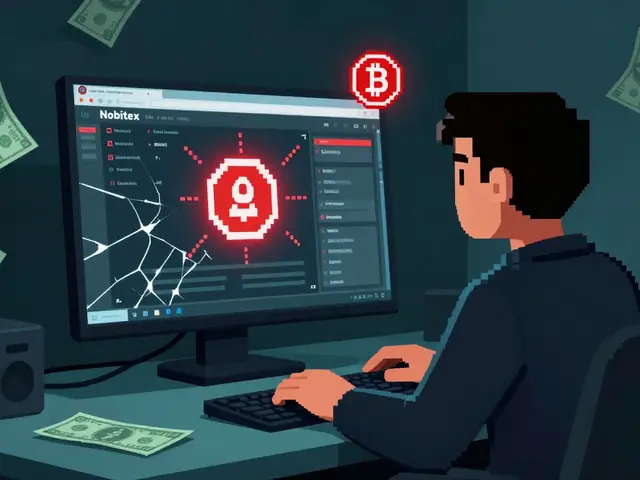

Imagine waking up to find your emergency fund for a family surgery gone. That was the reality for u/AnkaraTrader in November 2022, who lost 187,000 TRY (about $10,000) when FTX Turkey shut down abruptly amid the global FTX bankruptcy crisis. For half a million Turkish users, this wasn't just a market dip; it was a financial earthquake. If you are researching why this platform failed or what it means for your current crypto strategy, you need to look beyond the headlines.
The Promise of Localized Crypto Trading
Before the crash, FTX Turkey operated as the localized arm of the global FTX exchange, tailored specifically for Turkish citizens. Launched in 2019 by Sam Bankman-Fried’s empire, it aimed to solve a specific problem: Turkey’s economic instability. With inflation soaring past 85% annually, according to official figures cited by Turkey's Financial Crimes Investigation Board (MASAK), Turks were desperate for assets that wouldn’t lose value overnight. The Lira was bleeding, and crypto felt like a life raft.
The platform offered more than just trading. It provided Turkish lira (TRY) on-ramps, meaning you could deposit cash directly from a local bank account. This was huge. Most global exchanges made you jump through hoops with credit cards or P2P transfers. FTX Turkey handled it smoothly, with minimum deposits around 100 TRY ($5). They also offered full Turkish-language customer support, which built trust among locals who weren’t comfortable navigating English-only interfaces. At its peak, the platform served over 500,000 users, positioning itself as a bridge between traditional banking and the volatile crypto world.
Technical Specs and User Experience
Under the hood, FTX Turkey ran on the same high-speed trading engine as FTX Global but featured a localized interface. It supported spot trading, futures contracts, and leveraged tokens. You could trade up to 45 different cryptocurrency pairs, though some sources cite up to 120 depending on the period. The fees were attractive: makers paid 0.05%-0.07%, and takers paid 0.1%-0.2%. Compare that to local rival Paribu, which charged 0.25%-0.4%, and you see why traders flocked here.
Security seemed solid, too. The platform claimed SSL encryption, two-factor authentication (2FA), and cold storage for 95% of assets. Pre-collapse reviews on Trustpilot averaged 4.1 stars out of 5. Users praised fast withdrawals and responsive support. But there was a catch. Many retail investors didn’t understand the complex derivatives they were buying. Data analyzed by MASAK showed that 78% of Turkish FTX users held leveraged positions. They thought they were investing safely, but they were actually gambling with borrowed money.
| Feature | FTX Turkey | Binance Turkey | Paribu |
|---|---|---|---|
| Trading Fees (Taker) | 0.1% - 0.2% | 0.1% Standard | 0.25% - 0.4% |
| Crypto Pairs | ~45-120 | 200+ | Fewer, focused on majors |
| Regulatory Status | Unregistered locally | Partnered with Bgator | SPK Registered |
| Advanced Features | Leveraged Tokens, Futures | Extensive Derivatives | Basic Spot Trading |

The Regulatory Blind Spot
Here is where the story turns dark. While FTX Turkey looked like a compliant local business, it wasn’t. According to KPMG International’s January 2023 report, the platform operated without necessary regulatory approvals in Turkey. It relied on the Bahamas-based framework of FTX Global. This is called regulatory arbitrage-choosing the loosest rules to maximize profit while ignoring local laws.
MASAK Director General Mehmet Hakan Atilla stated clearly in November 2022 that FTX Turkey violated Article 7 of Turkey’s Anti-Money Laundering Law. They weren’t registered as a 'liable organization.' Professor Levent Gökdemir from Boğaziçi University called it a "textbook example" of leaving citizens exposed. When the global house of cards fell, Turkish users had no local safety net. No SPK license meant no protection under Turkish investor compensation schemes.
The Collapse and Immediate Aftermath
On November 11, 2022, FTX Global filed for Chapter 11 bankruptcy in Delaware. Within 72 hours, liquidity on FTX Turkey’s order book collapsed by 92%, according to Kaiko metrics. Suddenly, you couldn’t withdraw. Then, you couldn’t even log in reliably. Reddit threads exploded with anger. One user, CryptoSavas, advised others later to never keep more than three days' worth of trading capital on any exchange. That advice came too late for many.
The recovery process was a nightmare. Users had to file claims in U.S. bankruptcy court while dealing with MASAK investigations. You needed original ID documents, transaction screenshots, and bank verification. For non-English speakers, this was a barrier. A MASAK survey found that 68% of affected users still hadn’t received funds despite submitting all paperwork months later. The average claim amount was $2,147, affecting mostly retail investors with balances under 5,000 TRY.

Lessons for Today’s Investors
So, what does this mean for you? First, verify regulatory status yourself. Don’t trust an exchange’s marketing. Check the Capital Markets Board (SPK) registry. Second, beware of leverage. If you don’t understand how liquidation works, stay away from leveraged tokens. Third, diversify custody. Not your keys, not your coins-but if you must use an exchange, choose one with clear local compliance.
The FTX collapse changed Turkey’s crypto landscape permanently. Trading volume dropped 40% in early 2023. Trust in centralized exchanges plummeted; only 28% of surveyed users said they’d use similar platforms again. In response, the Turkish government launched a digital lira pilot program. They want to offer a regulated alternative to volatile cryptocurrencies, aiming to prevent another FTX-style disaster.
Key Takeaways
- Regulation Matters: FTX Turkey lacked SPK registration, leaving users unprotected during the crash.
- Leverage Risk: 78% of users held leveraged positions, amplifying losses when the market turned.
- Recovery Difficulty: Navigating U.S. bankruptcy courts from Turkey was complex and slow for most retail users.
- Market Impact: The collapse accelerated stricter custodial requirements in Turkey, pushing for 100% reserve backing.
Is FTX Turkey currently operational?
No, FTX Turkey ceased operations in November 2022 following the global FTX bankruptcy filing. There have been no announcements of a revival, and the entity remains defunct.
Did Turkish users receive refunds from FTX?
Refunds are being processed through the U.S. bankruptcy proceedings. As of late 2023, many users were still waiting. MASAK reports indicated significant delays, with 68% of surveyed users reporting non-receipt of funds despite providing required documentation.
Why did FTX Turkey fail so quickly?
The failure stemmed from the global mismanagement of FTX Global, including misuse of customer funds. Locally, the lack of Turkish regulatory oversight (SPK/MASAK registration) meant there were no local safeguards to protect user assets when the global liquidity crisis hit.
What was the main complaint from Turkish users?
The primary complaints were inaccessible funds and the complexity of the refund process. Users struggled to navigate international bankruptcy claims while dealing with local bureaucratic hurdles imposed by MASAK.
How did the FTX collapse affect other Turkish exchanges?
It caused a 40% drop in overall trading volume in Turkey between Nov 2022 and Feb 2023. However, it also led to stricter regulations. Exchanges like Paribu and Binance Turkey faced increased scrutiny, leading to new directives requiring 100% reserve backing by mid-2023.