
You’ve probably seen the buzz around Cyclone Protocol, a project that promised to bring serious privacy to blockchain transactions. But if you’re looking for a new, active airdrop happening right now in 2026, you might be disappointed. The headline "Anonymity for Everyone" refers to Cyclone’s initial fair launch campaign from early 2021. That event is long over. However, understanding how that distribution worked is crucial if you want to grasp the project’s history, its tokenomics, or why it’s still relevant in the privacy sector today.
This isn’t just about missing out on free tokens. It’s about understanding a specific model of decentralized finance (DeFi) distribution that tried to solve the problem of insider pre-mining. Cyclone didn’t just hand out coins; they built a system based on engagement and points. Let’s break down exactly what happened, how the technology works, and what it means for anyone interested in privacy-preserving protocols.
The Core Problem: Why Privacy Needs Incentives
Blockchain is transparent by design. Every transaction is visible on the ledger. For most people, this is fine. But for those who value financial privacy, it’s a dealbreaker. Enter zkSNARKs (Zero-Knowledge Succinct Non-interactive Arguments of Knowledge). This cryptographic technology allows one party to prove to another that a statement is true without revealing any information beyond the validity of the statement itself.
Cyclone Protocol uses zkSNARKs to break the link between who sends money and who receives it. Imagine depositing cash into a massive pool, mixing it with everyone else’s cash, and then withdrawing your share to a completely different address. No one can trace the original deposit to your withdrawal. That’s the core promise. But here’s the catch: creating these "mixing pools" requires computational power and liquidity. Someone has to run the servers and provide the funds.
This is where the CYC token comes in. It’s not just currency; it’s an incentive mechanism. The protocol rewards users who provide anonymity services, add liquidity, and participate in governance. Without these incentives, the privacy infrastructure wouldn’t exist. The initial airdrop was designed to bootstrap this ecosystem by distributing tokens to genuine community members rather than venture capitalists.
How the 'Anonymity for Everyone' Airdrop Actually Worked
The Q1 2021 airdrop wasn’t a simple "connect wallet and claim" snapshot. It was a merit-based distribution. The team allocated 1,500 CYC tokens to participating addresses, but the amount each person received depended on their accumulated points. This points system tracked user engagement across multiple channels, primarily through a dedicated Telegram bot.
To earn points, users had to actively participate in the community. This included joining required groups, referring others, and ensuring their wallets were properly configured with the bot. The goal was to reward sustained engagement. If you just signed up and disappeared, you got fewer points. If you helped build the community, you earned more.
- Points Accumulation: Users earned points through verified actions monitored by the Telegram bot.
- Proportional Distribution: The total 1,500 CYC pool was split proportionally based on individual point totals.
- Anti-Spam Measures: Accounts flagged as spammers or manipulators had their points reduced or eliminated.
- Referral Compliance: Referrers lost points if their referrals failed to join required groups or configure wallets correctly.
This approach prevented "sybil attacks," where bots create thousands of fake accounts to farm airdrops. By requiring real-world engagement and proper wallet configuration, Cyclone ensured that early token holders were likely genuine users interested in the project’s success.
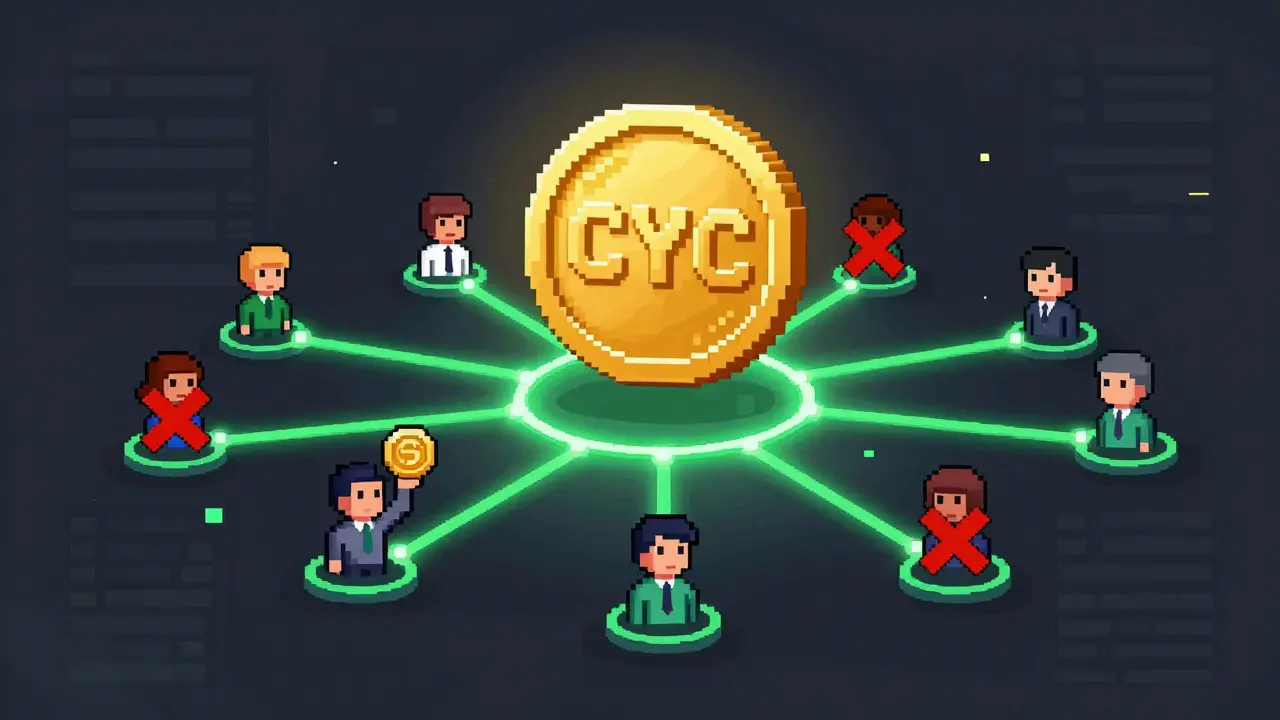
Fair Launch vs. Pre-Mining: A Philosophical Divide
One of the most significant aspects of Cyclone’s launch was its rejection of traditional token allocation models. Most crypto projects reserve large percentages of tokens for the team, advisors, and early investors. This is often called "pre-mining." Critics argue this creates centralization and gives insiders an unfair advantage to dump tokens on retail buyers later.
Cyclone Protocol explicitly stated that CYC tokens were not pre-mined or pre-allocated for investors or team members. Distribution was tied exclusively to actual contribution to the protocol. This aligned with the project’s decentralization goals. The idea was that if you wanted CYC tokens, you had to help build the network-by providing liquidity, running nodes, or engaging in governance.
| Feature | Traditional Pre-Mine Model | Cyclone Fair Launch Model |
|---|---|---|
| Team Allocation | Often 10-20% reserved | No pre-allocation |
| Investor Access | Private sales at low prices | No private sales |
| Distribution Basis | Capital investment | Community contribution & points |
| Decentralization Risk | Higher (insider control) | Lower (community-driven) |
This philosophy meant that early holders were incentivized to support the network’s growth because their holdings represented work done, not just capital invested. It also made the token supply more resistant to sudden sell-offs by insiders, as there were no large, locked-up bags waiting to unlock.
Technical Implementation: Privacy Meets Distribution
The technical side of the airdrop mirrored the protocol’s core functionality. Cyclone launched initially on the IoTeX blockchain, supported by Halo, IoTeX’s development incentive plan. IoTeX offered lower transaction costs and faster processing times compared to Ethereum mainnet, making it an ideal testing ground for complex privacy operations.
The distribution mechanism utilized zkSNARKs to maintain transactional privacy even during the airdrop claims. When users claimed their tokens, the process was designed to obscure the link between their identity and the transaction. Users received cryptographic notes during deposits, which served as withdrawal keys. These notes are critical-they act like private keys. If you lose them, you lose access to your funds permanently. There is no customer support to reset them.
- Deposit Phase: Users deposited funds into anonymity pools.
- Note Generation: The protocol generated cryptographic notes as proof of ownership.
- Withdrawal Phase: Users used these notes to withdraw funds to new addresses, breaking the on-chain trail.
This infrastructure extended to the airdrop itself. Recipients could claim tokens while maintaining a degree of transactional privacy, reinforcing the project’s commitment to security from day one. Later expansions included support for Ethereum, Polkadot, and Heco, broadening the protocol’s reach across major ecosystems.

Challenges and Community Reception
Despite the innovative approach, the airdrop faced challenges. Eligibility verification was complex. Some users reported unexpected point reductions due to spam detection algorithms or referral compliance failures. The team addressed these issues through comprehensive FAQ documentation and public transparency.
Air drop data was hosted on GitHub repositories, allowing users to verify their eligibility independently. This openness helped build trust, even when disputes arose. Users who believed their accounts were incorrectly flagged could appeal through official channels. The project maintained that strict criteria were necessary to prevent manipulation and ensure fair distribution among genuine participants.
Security warnings were also prominent. Participants were reminded to store their withdrawal notes securely and never share them. Possession of a note grants complete access to associated funds. Phishing scams targeting airdrop recipients were common, so verifying authentic project communications through official channels was essential.
Current Status and Future Outlook
As of 2026, Cyclone Protocol continues active development. The roadmap outlined in 2021 included yielding aggregation, economic improvements, and DAO activation. While some timelines shifted, the core vision remains: a decentralized, community-governed privacy protocol.
The CYC token trades on multiple exchanges, though its market cap fluctuates with broader crypto trends. The project’s multi-chain strategy positions it to compete with other privacy-focused solutions. However, regulatory scrutiny remains a challenge for all privacy protocols. Governments worldwide are increasingly focused on anti-money laundering (AML) and know-your-customer (KYC) regulations, which can impact the viability of anonymous transactions.
Cyclone’s emphasis on decentralization and community ownership may help mitigate some regulatory risks. By transferring full contract ownership to token holders via DAO governance, the project aims to operate without a central entity liable for compliance breaches. This structure supports long-term sustainability while maintaining core privacy functionality for legitimate use cases.
Is the Cyclone Protocol CYC airdrop still active in 2026?
No. The primary "Anonymity for Everyone" airdrop took place in Q1 2021 as part of the protocol's fair launch. Any current offers claiming to be the original airdrop are likely scams. Ongoing rewards exist for liquidity providers and anonymity service contributors, but these require active participation, not passive claiming.
What is zkSNARKs and why does Cyclone use it?
zkSNARKs stands for Zero-Knowledge Succinct Non-interactive Arguments of Knowledge. It’s a cryptographic method that allows one party to prove knowledge of a value without revealing the value itself. Cyclone uses it to hide the connection between depositors and recipients in transaction pools, ensuring complete privacy for users.
How did the points-based distribution prevent spam?
The system required sustained engagement via a Telegram bot. Points were awarded for verified actions like joining groups and configuring wallets. Spam accounts or those with non-compliant referrals had points reduced or eliminated. This ensured only genuine community members received significant allocations.
Did Cyclone Protocol pre-mine tokens for the team?
No. Cyclone explicitly rejected pre-mining and pre-allocation for investors or team members. All initial CYC tokens were distributed based on community contribution and engagement, aligning with their decentralization goals.
What happens if I lose my cryptographic withdrawal note?
If you lose your cryptographic note, you permanently lose access to your funds. Unlike centralized exchanges, there is no password reset or customer support. You must store these notes securely, similar to how you would protect private keys.
Which blockchains does Cyclone Protocol support?
Cyclone initially launched on IoTeX. It has since expanded to support Ethereum, Polkadot, and Heco. This multi-chain approach allows users to access privacy features across different ecosystems.



Pauline Larocco71
May 12, 2026 AT 06:23honestly i feel like most people just want the free tokens and dont actually care about privacy. its sad to see how quickly everyone forgets the mission once the hype dies down
i remember when cyclone first came out and it felt like a breath of fresh air in such a dirty space
beti macedo
May 13, 2026 AT 10:03It is truly remarkable how this protocol managed to establish such a robust framework for decentralized anonymity without resorting to traditional pre-mining tactics which are so prevalent in the industry today
The merit-based distribution system serves as an excellent model for future projects seeking to align incentives with genuine community participation rather than speculative capital accumulation
Michelle Bonahoom
May 15, 2026 AT 09:59typical crypto nonsense trying to sell us on privacy while the whole thing is probably run by some offshore shell companies anyway
nobody cares about zkSNARKs they just want to pump and dump their bags before the SEC comes knocking
keep dreaming about your fair launch while the insiders rake in millions
Matt Davis
May 16, 2026 AT 16:24You are completely missing the point here because you seem to think that 'fair launch' means something magical happens automatically
In reality the entire concept of a points-based airdrop is just a sophisticated way to filter out bots while still allowing whales to game the system through multi-account referrals
I have seen this exact same playbook executed by three other failed projects in 2021 and every single one ended up collapsing under the weight of their own unconvincing decentralization claims
The fact that they used IoTeX initially is laughable because who even remembers that chain anymore besides the die-hard fans who are still holding worthless bags from that era
Albert Lee
May 17, 2026 AT 01:05Wow Matt that is quite the aggressive take but I totally get where you are coming from
It is absolutely heartbreaking to see how cynical the community has become over the years
We need to remember that innovation often comes with skepticism and Cyclone was genuinely trying to solve a real problem for real people who value their financial privacy
Let us not forget the thousands of users who found solace in these tools during some very dark times
Ankush Pokarana
May 17, 2026 AT 20:15when we look at the philosophical underpinnings of what cyclone attempted to achieve we must consider the broader implications of trustless systems in an increasingly surveilled world
the rejection of pre-mining was not merely a marketing tactic but a fundamental statement about the nature of value creation in digital ecosystems
by tying token distribution to actual engagement they were attempting to create a stakeholder model that rewarded contribution rather than mere capital presence
this approach resonates deeply with the idea that true decentralization requires active participation from its members rather than passive ownership of assets
Bianca Vilas Boas Lourenço
May 18, 2026 AT 03:43oh wow another article about dead projects pretending to be relevant 😒
like yeah sure the airdrop was over five years ago but let us pretend like anyone actually learned anything from it
i bet half the people reading this never even heard of cyclone until now 🙄
Yash Lodha
May 18, 2026 AT 19:14the truth is that cyclone protocol was likely a front for laundering funds through complex mixing pools designed to evade regulatory scrutiny
the so-called privacy features were nothing more than sophisticated obfuscation techniques intended to hide illicit transactions from law enforcement agencies
i have always suspected that the team behind it had ties to various underground networks operating in jurisdictions with lax financial regulations
do not fall for the innocent narrative they spun around community engagement and points systems
Jesse Alston
May 19, 2026 AT 10:28hey everyone just wanted to clarify that while the original airdrop is definitely over there are still legitimate ways to interact with the protocol if you are interested in privacy features
make sure you double check all links and never share your withdrawal notes with anyone ever 🔒
i have helped several friends set up their wallets correctly so feel free to dm me if you need basic guidance on securing your keys
Sarah C
May 19, 2026 AT 14:55i really appreciate how detailed this breakdown is especially regarding the technical implementation aspects
it helps to understand why certain decisions were made during the initial launch phase
thanks for sharing this information with the community
Kimberly Herbstritt
May 21, 2026 AT 02:42actually i disagree with the notion that this was a purely altruistic effort
the team clearly benefited from the increased attention and subsequent token appreciation even if they did not hold pre-mined allocations
calling it a fair launch ignores the inherent advantages held by those with early access to the technology
Sharada Vakkund
May 22, 2026 AT 00:33let us come together as a community to support projects that prioritize user privacy and security
cyclone may have started small but its impact on the broader ecosystem cannot be underestimated
we should encourage more developers to adopt similar models of transparency and engagement
Sudarshan Anbazhagan
May 23, 2026 AT 05:14it is imperative that we recognize the significance of the anti-spam measures implemented during the distribution phase
without such rigorous verification processes the integrity of the entire network would have been compromised by bad actors seeking to exploit vulnerabilities
the reduction of points for non-compliant referrals served as a crucial deterrent against manipulation attempts
John Gonzalez Bentham
May 24, 2026 AT 01:27everyone keeps praising the no pre-mine angle but thats just basic common sense now isnt it
back in 2021 every project claimed to be decentralized but half of them were controlled by three guys in a garage
cyclone wasnt special they were just lucky to catch the wave before the regulators woke up
Ellie Riddell
May 25, 2026 AT 01:36so funny how people act like losing your cryptographic note is some rare edge case
its literally the most obvious risk in any self-custody setup and yet folks still lose them daily
maybe if users stopped treating private keys like passwords they wouldnt end up locked out forever
Destiny Kilby
May 26, 2026 AT 16:08the emphasis on storing withdrawal notes securely is absolutely critical
many individuals underestimate the finality of blockchain transactions and assume there will be a safety net
unfortunately there is no customer support to reset lost credentials in a truly decentralized system
Jerry CUNNINGHAM SR
May 28, 2026 AT 14:08it is important to acknowledge both the successes and failures of early privacy protocols like cyclone
their multi-chain expansion strategy demonstrates adaptability in a rapidly evolving technological landscape
however regulatory challenges remain a significant hurdle for all participants in this sector