Imagine buying a $10,000 Bitcoin position with only $1,000 of your own money. It sounds like a dream scenario for rapid wealth accumulation. But in the world of Margin Trading, a financial strategy that allows traders to borrow funds from an exchange to increase their position size beyond their actual capital, that extra $9,000 isn't free money-it's a loan that demands interest and carries the threat of total loss if the market moves against you by just a few percent.
In 2026, crypto markets are more mature than ever, yet they remain brutally volatile. Margin trading amplifies this volatility. For every dollar you gain, you could lose a dollar faster. This guide cuts through the hype to explain exactly how margin trading works, why it’s dangerous for beginners, and how experienced traders use it without going broke.
The Core Mechanics: How Crypto Margin Works
At its simplest, margin trading is borrowing power. When you trade on "spot" (the standard way), you buy what you can afford. If you have $500, you buy $500 worth of Ethereum. With margin, you deposit that $500 as collateral-called initial margin-and borrow additional funds from the exchange or other traders to open a larger position.
This relationship is defined by Leverage, which acts as a multiplier. If you select 5x leverage, your $500 becomes $2,500 in buying power. Here is the catch: while your potential profits multiply by five, so do your losses. A 10% drop in price wipes out 50% of your initial capital. A 20% drop wipes it all out.
Exchanges manage this risk through two key metrics:
- Maintenance Margin: The minimum equity you must keep in your account to stay open. If your balance falls below this threshold, the exchange steps in.
- Liquidation Price: The specific asset price at which your position is forcibly sold to repay the borrowed funds. Once hit, your collateral is gone.
For example, if you go long on Bitcoin with 10x leverage and BTC drops 10%, you don’t just lose 10% of your money-you lose 100% of it. This is why understanding the math before clicking "buy" is non-negotiable.
Long vs. Short: Betting Both Ways
One major advantage of margin trading over spot trading is flexibility. In spot markets, you only make money when prices rise. With margin, you can profit from falling markets too.
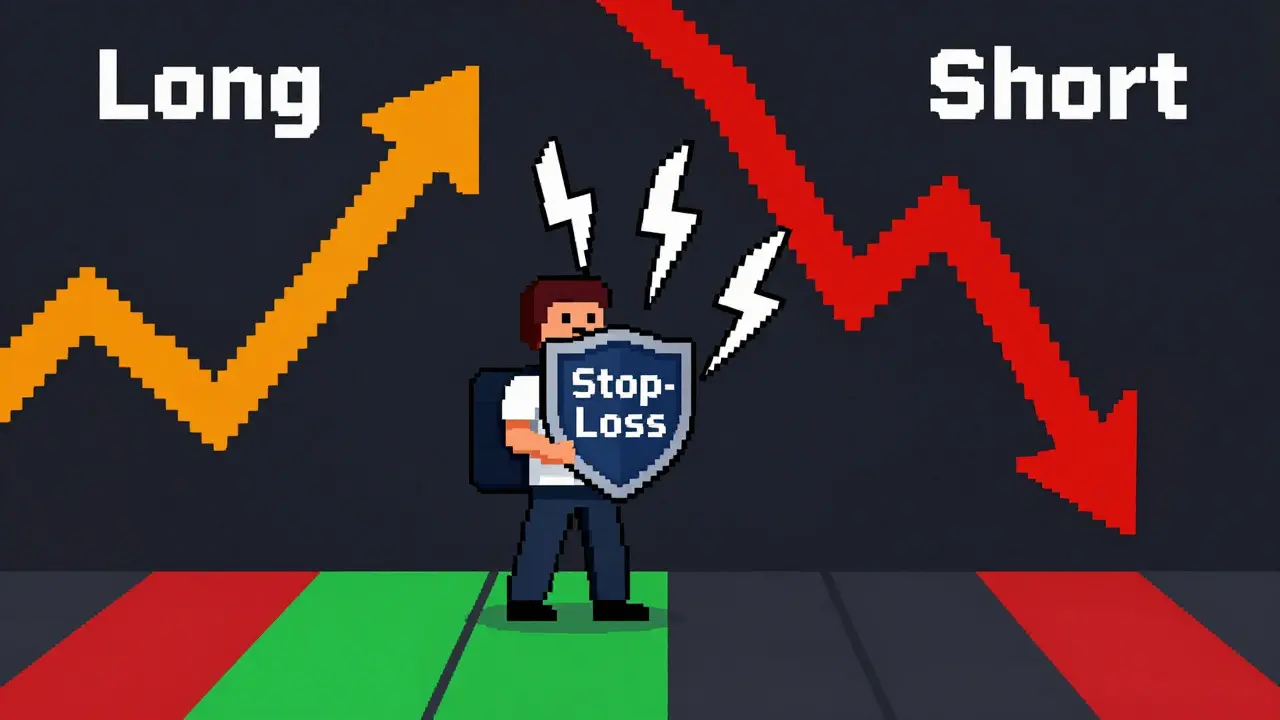
Going Long: You believe the price will rise. You borrow funds to buy more assets than you could afford otherwise. If the price goes up, you sell, repay the loan plus interest, and keep the amplified profit.
Going Short: You believe the price will fall. You borrow the asset itself, sell it immediately at the current high price, and hope to buy it back later at a lower price to return to the lender. The difference between the sale price and the repurchase price is your profit. However, if the price rises instead, your losses grow infinitely because there is no ceiling on how high an asset price can go.
This dual-direction capability makes margin trading a powerful tool for hedging existing portfolios, not just speculation. Many institutional investors use short positions to protect their spot holdings during anticipated market downturns.
Margin Trading vs. Spot Trading: Key Differences
To decide if margin is right for you, compare it directly to traditional spot trading. The differences aren't just about size-they're about ownership, cost, and risk profile.
| Feature | Spot Trading | Margin Trading |
|---|---|---|
| Capital Required | Full value of the asset | Fractional (collateral only) |
| Overship | You own the actual crypto | You hold a leveraged position; asset may be held in escrow |
| Risk Level | Low (limited to investment amount) | High (risk of total loss + debt liability) |
| Costs | Trading fees only | Trading fees + Interest rates + Funding fees |
| Liquidation Risk | None | High (automatic closure if margin falls) |
Note that margin trading differs significantly from Futures Trading. While both use leverage, futures are derivative contracts that expire at a set time and often involve funding rates rather than direct interest payments on borrowed principal. Margin trading usually involves actual spot assets being borrowed, meaning you owe the exact asset back, adjusted for interest.
The Hidden Costs: Fees and Funding Rates
New traders often focus solely on price movement and ignore the ticking clock of costs. In margin trading, time is money-literally.
Interest Rates: Every hour you hold a borrowed position, you pay interest. These rates vary by asset and demand. During bull runs, borrowing stablecoins to buy Bitcoin might cost 0.01% per day. During crashes, demand for cash spikes, and rates can jump dramatically.
Funding Rates: On some platforms, especially those using perpetual swaps, you pay or receive a "funding fee" every 8 hours. If the market is overwhelmingly bullish, longs pay shorts. If bearish, shorts pay longs. Ignoring these periodic charges can eat into profits even if the price stays flat.
Always calculate your "breakeven point." If you’re paying 0.05% daily interest, the asset must move in your favor enough to cover that cost before you actually start making money. Holding a margin position for weeks without significant movement is often a losing strategy due to accumulated fees.
Liquidation: The Silent Killer
Liquidation is the most feared event in margin trading. It happens when your account equity drops below the maintenance margin requirement. The exchange’s algorithm instantly sells your position to ensure the lender gets paid back.
Why does this matter? Because crypto is volatile. A sudden 5% dip-a common occurrence in Bitcoin or Ethereum-can trigger liquidations for anyone using 10x or higher leverage. In May 2021, during a sharp market correction, billions of dollars in leveraged positions were wiped out in hours. Traders didn’t just lose their collateral; in some cross-margin scenarios, they owed additional funds to the exchange.
To avoid this, many pros use Stop-Loss Orders. A stop-loss automatically closes your position at a predetermined price, giving you control over the exit rather than letting the exchange dictate it. Setting a stop-loss 10-15% below your entry point is a common rule of thumb to prevent catastrophic liquidation.
Regulatory Landscape in 2026
The availability of margin trading depends heavily on where you live. By 2026, regulations have tightened considerably compared to the wild west of early crypto years.
In the United States, the SEC and CFTC maintain strict oversight. Major exchanges like Coinbase discontinued retail margin trading features due to compliance burdens, leaving US users largely reliant on futures contracts through regulated entities. Conversely, in Europe, MiCA regulations cap leverage for retail investors at 2x-5x to protect consumers from excessive risk. Asia-Pacific regions often offer higher leverage limits (up to 125x on some derivatives platforms), but come with less investor protection.
Before opening a margin account, verify your jurisdiction’s rules. Using offshore platforms to bypass local laws can expose you to counterparty risk-if the exchange fails, your funds may be unrecoverable.
Risk Management Strategies That Actually Work
If you decide to try margin trading, treat it like handling explosives: respect the power, follow safety protocols, and never take unnecessary risks.
- Start Small: Begin with low leverage (2x-3x). High leverage is not a shortcut to riches; it’s a shortcut to zero.
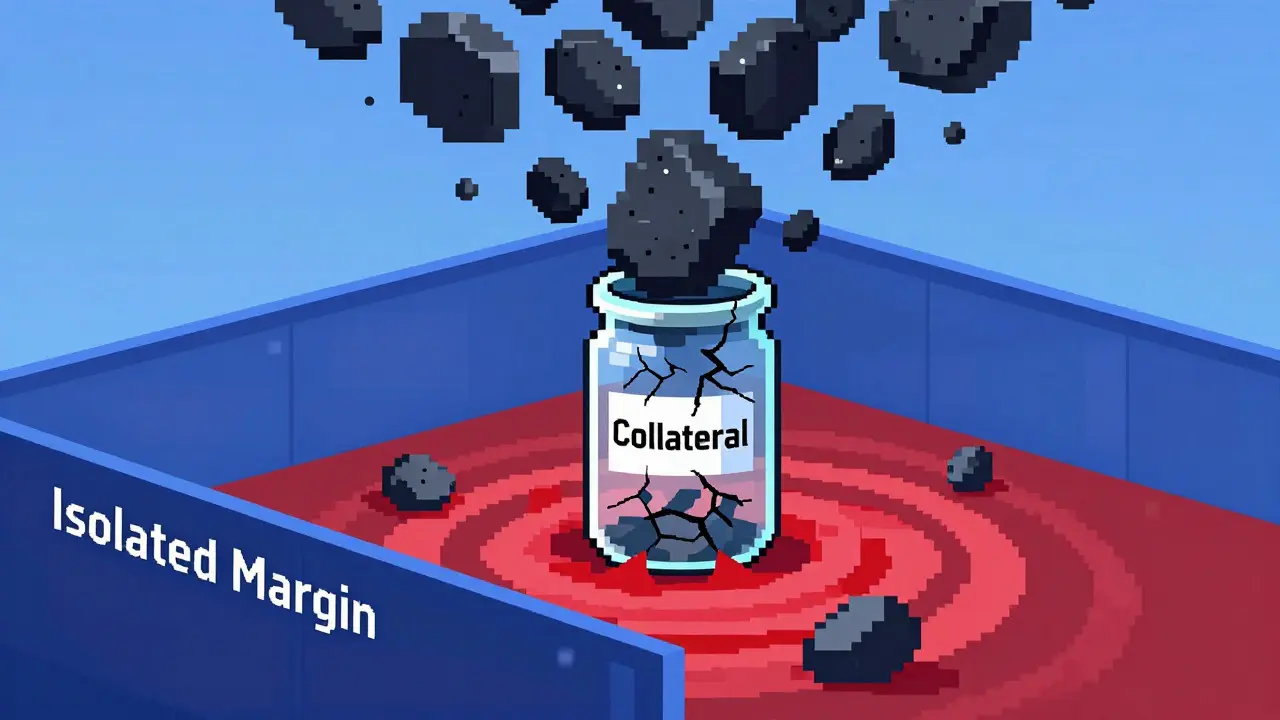
- Use Isolated Margin: Most exchanges offer "isolated" vs. "cross" margin. Isolated margin limits your loss to the specific amount allocated to that trade. Cross margin uses your entire wallet balance as collateral, risking everything if one trade goes bad. Always choose isolated for beginners.
- Diversify Collateral: Don’t put all your eggs in one basket. Use stablecoins as collateral to avoid double exposure (e.g., borrowing USD to buy BTC, then both BTC and USD fluctuate).
- Monitor Funding Rates: Check if holding your position is costing you more than the potential profit justifies.
- Have an Exit Plan: Know your target profit and your max loss before entering the trade. Stick to it emotionally.
Remember, even professional traders with decades of experience get liquidated. The difference is they risk only 1-2% of their total portfolio on any single margin trade, ensuring one bad day doesn’t ruin their financial life.
Is margin trading legal?
Yes, margin trading is legal in most jurisdictions, but access varies. In the US, retail spot margin trading is restricted by the SEC, though futures-based leverage is available via CFTC-regulated exchanges. In Europe, leverage is capped for retail users under MiCA. Always check local regulations before signing up.
Can I lose more than my initial deposit?
In isolated margin, your loss is limited to the collateral assigned to that trade. In cross-margin, you risk your entire account balance. In rare cases of extreme volatility where the exchange cannot close your position fast enough, you might owe additional funds (negative balance), though many modern platforms have insurance pools to cover this.
What is the best leverage for beginners?
Beginners should avoid high leverage entirely. If you must use margin, stick to 2x or 3x. This gives you a 33-50% buffer against price drops before liquidation, allowing room for normal market noise without wiping you out.
How do I calculate my liquidation price?
Most exchanges provide a calculator. Generally, Liquidation Price = Entry Price / (1 + Leverage) for longs, or Entry Price * (1 - Leverage) for shorts, adjusted for fees and maintenance margin requirements. Always add a buffer to this calculated price when setting your stop-loss.
Should I use margin trading for long-term investing?
No. Margin trading is designed for short-to-medium term trades due to interest costs and liquidation risks. For long-term holding (HODLing), spot trading is safer and cheaper since you own the asset outright without paying daily interest on borrowed funds.