

How CannabisCoin Actually Works
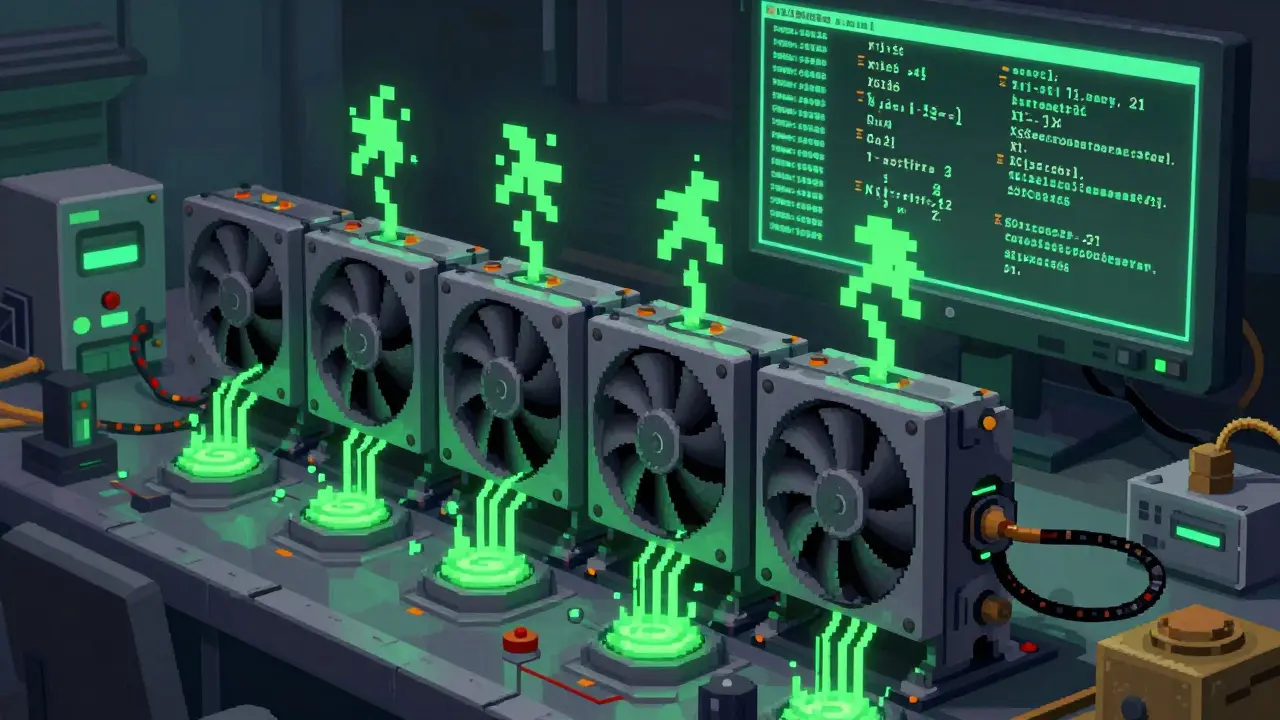
Unlike modern coins that use a stake-based system, CannabisCoin uses a Proof of Work (PoW) consensus mechanism. This means that the network is secured by miners who use computational power to solve complex puzzles. Specifically, it employs the X11 hashing algorithm, which is designed to be more resistant to ASIC miners than simpler algorithms, theoretically giving home miners a fairer shot at earning rewards. One of the most appealing parts of the project for purists is that it launched with no premine. In the crypto world, a "premine" is when developers keep a huge chunk of coins for themselves before the public gets a chance to mine. Because CANN avoided this, the distribution was meant to be fair and transparent from day one. If you want to earn CANN, you don't buy it from a founder; you mine it by confirming transactions on the blockchain.The Economics of CANN: By the Numbers
When you look at the balance sheet for CannabisCoin, the numbers tell a story of a coin that has seen much better days. After hitting an all-time high of roughly $0.60, the price has plummeted. Currently, it trades in a very low range, typically between $0.0020 and $0.0022.| Attribute | Current Value |
|---|---|
| Market Capitalization | $663,000 - $722,000 USD |
| Circulating Supply | ~321.12 Million CANN |
| All-Time High | $0.6049 USD |
| Hashing Algorithm | X11 |
The Liquidity Trap: Can You Actually Trade It?
Here is where things get tricky. Having a coin is one thing; being able to sell it for cash is another. This is known as liquidity. For CANN, the liquidity is almost non-existent. If you check major platforms like Binance, Coinbase, or Crypto.com, you might see price charts for CannabisCoin, but you won't find a "Buy" button. These exchanges provide data, but they don't actually host the trading pair. In fact, 24-hour trading volumes have been reported as low as $0 or just a few dollars. When the last recorded trade happened months ago, it suggests that the market for this coin has largely dried up. If you hold a large amount of CANN, you might find it nearly impossible to offload those coins without crashing the price further, simply because there aren't enough buyers on the other side.The Intersection of Cannabis and Crypto
Why would anyone create a coin specifically for marijuana? The answer lies in the banking sector. Many traditional banks refuse to work with cannabis businesses because of federal laws (particularly in the US), even if the business is legal at the state level. This creates a massive hurdle for companies trying to pay employees or accept customer payments. By using a Blockchain, which is a decentralized ledger of transactions, companies could theoretically bypass the middleman. A cannabis shop in one region could accept CANN from a customer in another without a bank blocking the transaction. However, this dream faces a massive wall: regulation. Governments don't just care about the money; they care about the substance. If a currency is explicitly branded for cannabis, it may attract more scrutiny from regulators than a generic coin like Bitcoin. This branding is a double-edged sword-it creates a clear identity, but it also puts a target on the coin's back.
Is Mining CannabisCoin Still Worth It?
If you are a hobbyist miner, you might be wondering if you should point your hardware toward the X11 algorithm. To decide, you have to look at the "Profitability Equation": (Mining Rewards x Coin Price) - Electricity Cost. Given that the price is currently fractions of a cent and the trading volume is negligible, the cost of electricity will almost certainly outweigh the value of the coins you earn. Unless you are mining for the ideology of supporting the network or you believe the coin will skyrocket in the future, mining CANN is currently a losing game financially.Final Verdict: Niche Utility or Dead Project?
CannabisCoin represents a fascinating experiment in "industry-specific" tokens. It solves a real problem-the lack of banking for cannabis firms-but it failed to gain the traction needed to survive the brutal volatility of the crypto market. For the average person, CANN is not an investment vehicle. It is a niche asset with severe liquidity issues. If you are deeply embedded in the cannabis logistics sector and find a community of users willing to accept it, it has some utility. For everyone else, it serves as a cautionary tale about the dangers of hyper-niche cryptocurrencies that lack exchange support.Is CannabisCoin a safe investment for beginners?
No. Due to its extremely low liquidity, minimal trading volume, and the fact that it isn't listed on major exchanges, it is considered a high-risk micro-cap asset. Beginners should stick to more established assets with higher liquidity.
How do I buy CannabisCoin?
Since it is not available on Binance or Coinbase, you would need to find a small, niche exchange that supports the CANN pair. Be very careful when using unknown exchanges, as they often lack the security standards of larger platforms.
What is the X11 algorithm?
X11 is a hashing algorithm that cycles through 11 different hashing functions. It was designed to make mining more difficult for specialized ASIC hardware, making it more accessible for those using GPUs (Graphics Processing Units).
Does CannabisCoin have a premine?
No, CannabisCoin was created without a premine. This means no coins were allocated to the developers or founders before the public launch, ensuring a fairer distribution through mining.
Why is the price of CANN so low compared to its all-time high?
Like many niche coins from previous cycles, CANN suffered from a lack of sustained adoption and liquidity. When the initial hype died down and no major exchanges listed the coin, the price dropped significantly and has not recovered.




Aaron Zeiler
April 28, 2026 AT 19:50basically just another ghost chain that tried to ride a trend and failed because there is no actual utility beyond a cool name
Michael Repak
April 30, 2026 AT 14:28Totally agree with the point about banking hurdles!!! It's so frustrating how the legacy system slows down legal businesses!!! Great breakdown of the tech side too!!!
Livvy Cooper
May 1, 2026 AT 22:27Waste of electricity. Just use cash or a real bank if you can.
Kara Spadone
May 2, 2026 AT 06:24The energy of this coin is just... depleted 📉. It's a lesson in trying to force a spiritual connection between finance and nature when the foundation is just greed 🙄
Abhishek Verma
May 2, 2026 AT 19:43Oh wow, a coin for weed. How groundbreaking. I'm sure the developers are just devastated that their revolutionary plan to name a coin after a plant didn't make them billionaires overnight.
Arun Prabhu
May 3, 2026 AT 03:35The sheer audacity of believing a primitive PoW mechanism could solve systemic regulatory failures is laughable. A pedestrian attempt at innovation that predictably dissolved into a puddle of irrelevance. Truly a banal specimen of the altcoin era.
Tracy McBurney
May 4, 2026 AT 14:20If you actually look at the volume, it's dead. There is no 'recovery' coming here. Anyone claiming otherwise is just trying to exit their bag on some unsuspecting newbie. The lack of exchange listing is a death sentence in this market.
April D Thompson
May 5, 2026 AT 16:42Imagine the cosmic irony of a decentralized currency trying to liberate a plant that is already fundamentally free in nature! We are all just dancing in the digital rain, hoping for a spark of true liberation, but we end up trapped in these tiny micro-cap cages of our own making! It's a tragedy of the modern age, really!
Rain Richardsson
May 6, 2026 AT 11:23Makes sense. Banking is the real bottleneck.
Lex Harley
May 8, 2026 AT 07:51The x11 hash is cool but with the current lappy, the hash rate is just too low to make it viable. Total lack of liquidity makes the slippage insane if you even try to swap it on a DEX.
Janis Naglis
May 9, 2026 AT 06:35We can still find a way to innovate!!! Maybe a different consensus model would help the eco-system!!! Let's stay positive about the intersection of tech and botany!!!
Jehan ZA
May 10, 2026 AT 12:27It is quite unfortunate that the regulatory environment has stifled such an ambitious project. One must respect the attempt to solve a genuine industry problem, regardless of the financial outcome.
edie rosa
May 11, 2026 AT 19:47It's honestly pathetic that people still try to justify these 'industry' coins when it's clear they're just scams. The moral bankruptcy of the crypto space is on full display here. Who actually benefits from this other than the people who dumped their coins years ago? It's just a cycle of greed and desperation that leaves the most vulnerable people holding a worthless digital token while the 'innovators' laugh all the way to the bank. We pretend it's about 'banking solutions' but it's really just about finding a niche to exploit. The fact that it's tied to cannabis just makes it a punchline for the regulators. It's an absolute disaster and anyone still holding this is just denying reality in a desperate attempt to feel like a visionary investor.
Iestyn Lloyd
May 13, 2026 AT 04:55The X11 algorithm is indeed a specific choice to prevent ASIC dominance, though as noted, the economics rarely favor the miner in this specific case.
Gabrielle Danis
May 14, 2026 AT 22:09The absence of a premine is a commendable feature, although it cannot compensate for a complete lack of market demand and liquidity.
Barbara Jones
May 16, 2026 AT 14:36i think its kinda cool they tryed to help out the shops even if it didnt work out in the end... hope they find a better way to do it soon
Kathleen Warren
May 18, 2026 AT 09:26It is a bit sad that it didn't take off. I can see why a small business owner would want this, but it's too scary for most people to use.
Brendan Thraxton
May 19, 2026 AT 05:57still think there is a path forward if they pivot to a more stable peg or partner with actual dispensaries lol just needs a new spark