
Fractional Ownership Calculator
How Much Can You Own?
Calculate your fractional ownership in tokenized assets based on current market projections
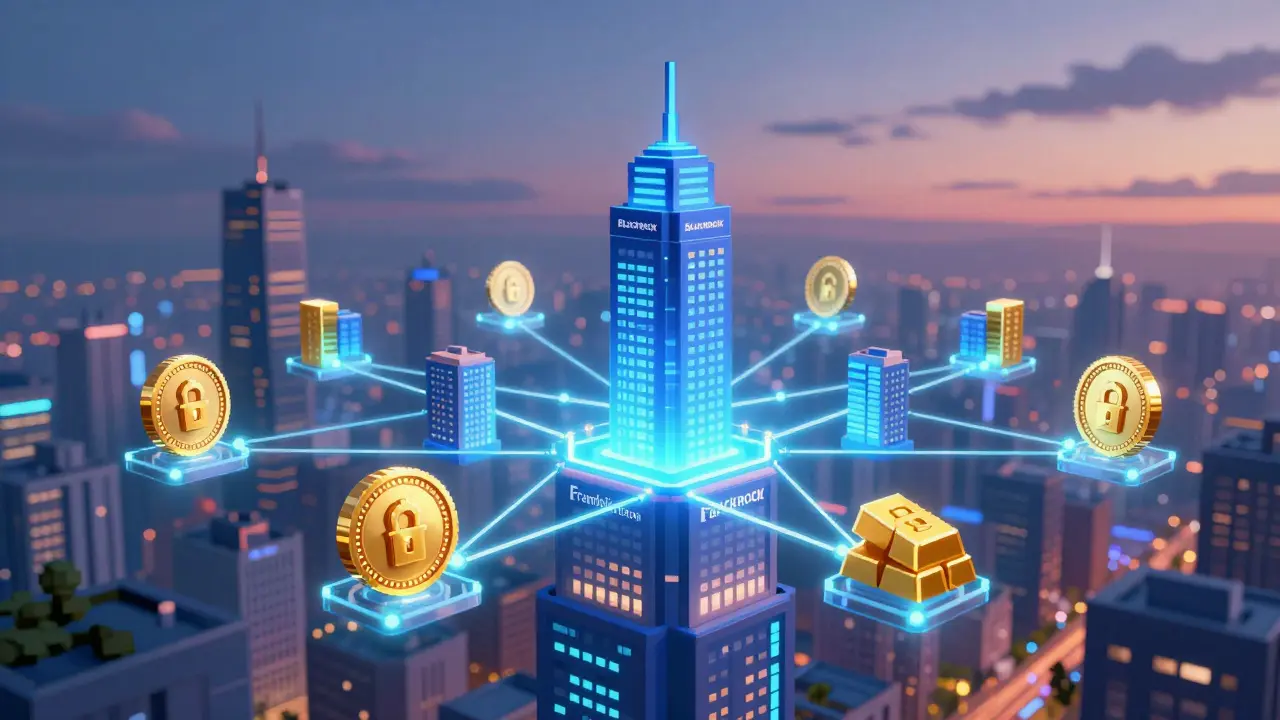
By 2030, the value of assets tied to blockchain-stocks, bonds, real estate, commodities-could hit $30 trillion. That’s not a guess. It’s a projection from Security Token Market, a research group tracking how traditional finance is being rebuilt on blockchain. And it’s not just hype. BlackRock, Franklin Templeton, and other giants are already moving billions into tokenized funds. This isn’t science fiction. It’s happening right now.
What Exactly Are Security Tokens?
Security tokens are digital versions of real-world assets. Think of them like shares in a company, bonds, or even a slice of a skyscraper-but instead of paper certificates or ledger entries, they live on a blockchain. Each token represents ownership, and because they’re built on code, they can be programmed to do things like automatically pay dividends, restrict who can buy them, or split ownership into tiny fractions. Unlike cryptocurrencies like Bitcoin or Ethereum, which are designed as currencies or platforms, security tokens are regulated. In the U.S., they fall under the Securities and Exchange Commission’s rules. That means they must be registered, disclose financial info, and follow anti-fraud laws. This makes them safer than the wild-west ICOs of 2017. It also means institutions feel comfortable putting real money into them.Why Now? The Perfect Storm
Three things are pushing security tokens into the mainstream: regulation, institutions, and technology. The U.S. SEC finally gave clear guidelines on what counts as a security token. Before, companies didn’t know if they were breaking the law. Now, they can build compliant offerings called Security Token Offerings (STOs). That’s a game-changer. No more guessing. Just rules. Big finance is stepping in. BlackRock launched on-chain liquidity funds. Franklin Templeton tokenized a $250 million bond fund. These aren’t side projects. They’re core parts of their strategy. Institutional investors held nearly 70% of all capital in tokenized assets in 2024. This isn’t retail speculation. This is professional money moving in. On the tech side, blockchains are getting better at talking to each other. Interoperability means a token issued on one network can be traded on another. That opens up global liquidity. Permissionless blockchains-like Ethereum-are winning over private, restricted ones because they let anyone participate. Lower fees. Faster trades. More buyers.Where Is the Money Going?
Real estate still leads the pack, making up over 30% of all tokenized assets. Why? Because property is illiquid. Selling a building takes months. Tokenizing it lets you sell 1% ownership to an investor in Singapore, another 1% to someone in Berlin-all in minutes. That’s the power of fractional ownership. But the fastest-growing segment? Commodities. Gold, oil, even agricultural products are being tokenized at a 50% annual growth rate. Why? Because they’re easy to verify, highly liquid, and already traded globally. Tokenizing them removes middlemen and cuts costs. There’s also over $200 billion in stablecoins-digital dollars backed by real cash. While not technically security tokens, they’re the fuel for the whole system. They let investors move value quickly between tokenized assets without converting to fiat currency.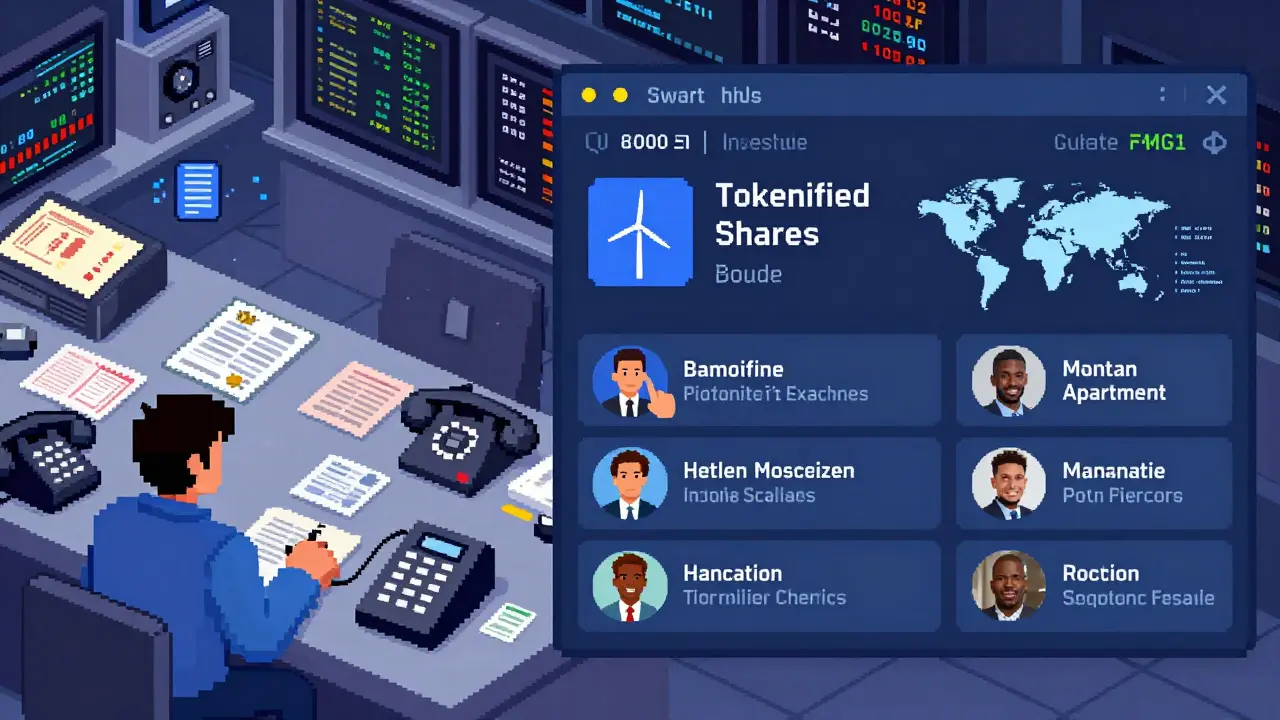
Who’s Leading? Geography Matters
North America controls 36% of the market. The U.S. is the clear driver. Clear rules. Deep pockets. Strong tech infrastructure. But the fastest growth? Asia-Pacific. Countries like India are pushing tokenization hard. The Reserve Bank of India allows tokenized RuPay cards. Payment apps like PhonePe and Paytm are already using tokenization to secure transactions. That’s not just finance-it’s infrastructure. The Middle East and Africa are catching up fast, with a projected 27.5% annual growth rate. Saudi Arabia and the UAE are building blockchain hubs. They’re not waiting. They’re racing to become global hubs for tokenized assets.Why Retail Isn’t the Main Player-Yet
You won’t see a lot of everyday people buying security tokens on apps like Robinhood. Why? Because they’re complex. You need to understand compliance, KYC, and how smart contracts work. Most retail investors aren’t ready. But that’s changing. Platforms are emerging that simplify access. Imagine buying a $10 slice of a Manhattan apartment through your brokerage app. That’s coming. But right now, the market is dominated by hedge funds, family offices, and asset managers. They have teams of lawyers and tech experts. Retail will follow once the UX gets simpler.The Tech Behind the Tokens
Tokenization isn’t just about putting an asset on a blockchain. It’s about building a whole new financial layer. Smart contracts handle everything: who owns what, when dividends are paid, who can transfer the token. These contracts are audited, immutable, and transparent. No more hidden fees. No more delays. Interoperability protocols like Polkadot and Cosmos let tokens move between chains. That’s critical. If your token is locked on one network, it’s useless. But if it can trade on Ethereum, Polygon, and a regulated private chain-all seamlessly-that’s real liquidity. On-chain identity systems are also growing. Instead of uploading your passport to five different platforms, you verify once with a government-recognized digital ID. Then, you can access any compliant tokenized asset. Privacy. Security. Efficiency.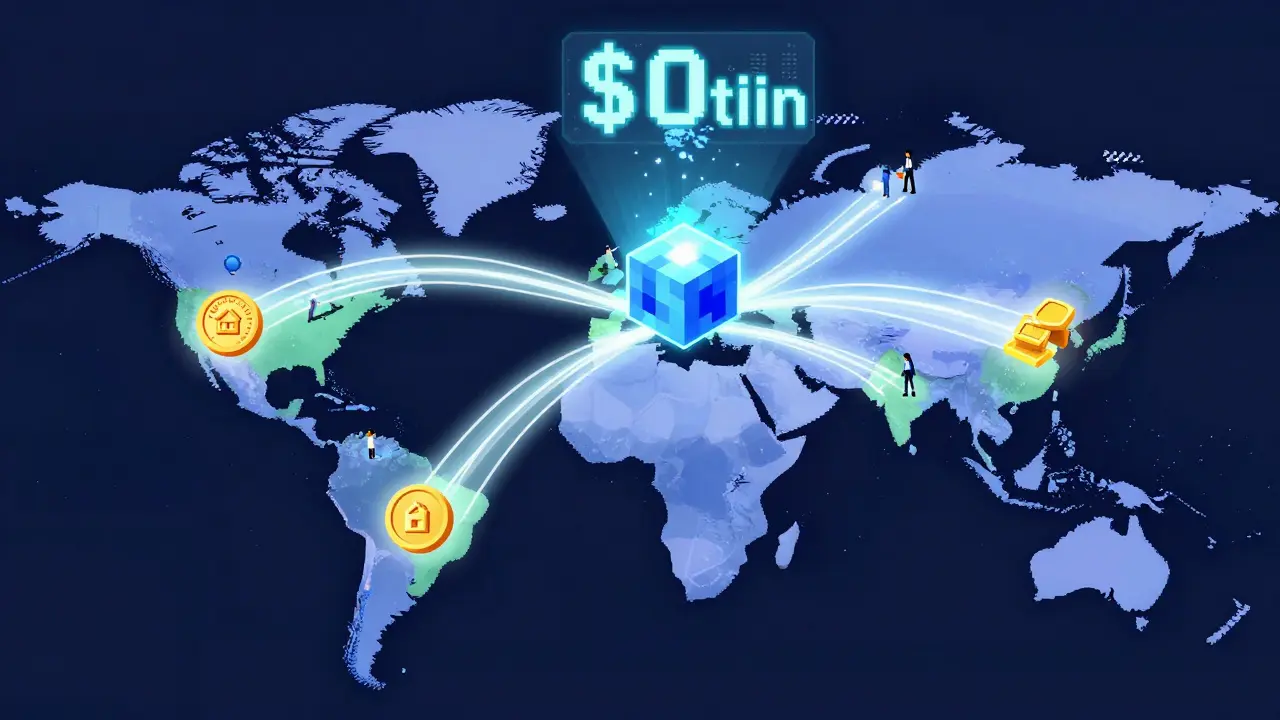
Challenges Still Ahead
This isn’t a free ride. There are big hurdles. Regulation varies wildly. A token that’s legal in the U.S. might be banned in Germany. Cross-border trading is messy. Investors need to know which rules apply where. Taxation is unclear. Is selling a tokenized share a capital gain? Is receiving dividends taxed differently? Governments haven’t caught up. And infrastructure isn’t perfect. Wallets are still clunky. Custody solutions for institutional investors are expensive. Liquidity pools are thin outside of major assets. But these aren’t deal-breakers. They’re growing pains. Every new market has them. The difference this time? Institutions are building the solutions. They’re not waiting for regulators to catch up-they’re helping write the rules.The Road to $30 Trillion
The $30 trillion projection sounds insane. But look at the math. There’s over $300 trillion in global financial assets. If just 10% of that gets tokenized by 2030, you’re at $30 trillion. That’s not fantasy. That’s possible. Real estate alone is worth over $300 trillion globally. Tokenizing even 5% of that adds $15 trillion. Add in corporate bonds ($100 trillion), private equity ($10 trillion), and commodities ($15 trillion), and you’re already close. The real driver? Efficiency. Tokenization cuts settlement times from days to seconds. Reduces costs by 30-50%. Opens markets to global investors. That’s not a tweak. That’s a revolution.What This Means for You
If you’re an investor, this opens doors. You can own a piece of a German wind farm or a California office tower without needing $5 million. You can diversify globally with a few clicks. If you’re a business owner, you can raise capital without going public. Issue tokens for a single project-not the whole company. Attract international investors. Cut out banks and brokers. If you’re in tech or finance, this is the next big wave. The tools are being built. The regulations are forming. The money is coming. This isn’t about replacing Wall Street. It’s about upgrading it. Slower. Smarter. More transparent. More inclusive. The future of finance isn’t just digital. It’s programmable. And it’s already here.Are security tokens the same as cryptocurrencies like Bitcoin?
No. Bitcoin is a decentralized digital currency. Security tokens represent ownership in real-world assets like stocks, bonds, or property. They’re regulated by financial authorities like the SEC, while most cryptocurrencies aren’t. Security tokens follow securities laws; Bitcoin does not.
Can regular people invest in security tokens?
Yes, but it’s not easy yet. Most platforms require accreditation or strict KYC checks. Some newer platforms are starting to allow non-accredited investors to buy small fractions of tokenized assets, but access is still limited. Retail adoption will grow as platforms simplify the process and regulators expand access.
Why is real estate the biggest segment in tokenization?
Real estate is illiquid-selling a building takes months. Tokenization turns it into a liquid asset by allowing fractional ownership. One investor can buy 0.5%, another 1%. This opens the market to global buyers, reduces entry barriers, and creates faster liquidity. That’s why it leads the market.
What’s the difference between STOs and ICOs?
ICOs (Initial Coin Offerings) were unregulated fundraising efforts where tokens had no legal backing. Many turned out to be scams. STOs (Security Token Offerings) are regulated. They issue tokens that represent legal ownership in an asset and must comply with securities laws. This makes them safer and more attractive to institutional investors.
Will security tokens replace traditional stock markets?
Not replace-enhance. Traditional exchanges will still exist. But more assets will be traded on blockchain-based platforms because they’re faster, cheaper, and more transparent. Think of it like email replacing snail mail: you still have post offices, but most communication moved online.
How do I know if a security token is legitimate?
Check if it’s registered with a financial regulator like the SEC, FCA, or MAS. Look for a legal prospectus, audit reports, and a clear asset backing. Avoid tokens that promise guaranteed returns or lack transparency. Legitimate STOs disclose everything-ownership, risks, fees, and how funds are used.
What’s stopping tokenization from going mainstream?
Three things: inconsistent global regulations, lack of user-friendly platforms, and unclear tax rules. Until governments align on cross-border rules and wallets become as simple as Venmo, adoption will be slow outside institutional circles. But progress is fast-platforms like Securitize and Polymarket are already solving these problems.

Jerry Perisho
December 9, 2025 AT 04:38Tokenization isn't magic-it's just better accounting. Smart contracts replace middlemen, not trust. The SEC's clarity is the real breakthrough. No more guessing if you're breaking the law. That's what lets BlackRock move billions. This is finance, not crypto bros.
Jonathan Sundqvist
December 9, 2025 AT 11:06USA built this. Europe’s still arguing over coffee. Asia’s copying. Africa’s dreaming. We lead. Period. Stop pretending this is global-it’s American innovation with global side effects.
Josh Rivera
December 11, 2025 AT 06:50Oh wow, BlackRock’s doing it now? Shocking. Didn’t they just get fined for hiding fees last year? Tokenization just lets them hide better. Same game, new deck. You think the algorithm’s gonna be fairer? LOL.
Krista Hewes
December 11, 2025 AT 07:45i just dont get why people think this is easy? like i tried to buy a tokenized bond last month and my wallet crashed twice and then the site asked for my birth certificate and a selfie holding a newspaper? why is everything so complicated??
Jon Visotzky
December 12, 2025 AT 18:03Real estate tokenization is wild. I know a guy who bought 0.3% of a Miami condo for $8k. Gets rent payouts every month. No property manager. No calls at 2am. Just crypto. He’s happy. I’m jealous.
Mairead Stiùbhart
December 14, 2025 AT 15:55Oh so now we’re all financial engineers? Congratulations, you turned your 401(k) into a blockchain sudoku puzzle. Tell me again why I should trust code more than a human with a handshake?
ronald dayrit
December 15, 2025 AT 07:47Think about it: ownership isn’t a legal fiction anymore. It’s a cryptographic state. The blockchain doesn’t care if you’re rich or poor, American or Indian-it just verifies. This isn’t about money. It’s about redefining the social contract of value. We’re moving from paper trust to algorithmic truth. That’s bigger than capitalism. It’s metaphysical.
Madison Agado
December 17, 2025 AT 06:07It’s funny how we call this ‘disruption’ when really it’s just automation. The same assets, same laws, just fewer clerks. The revolution isn’t in the tech-it’s in who gets to use it. Right now? Still the same 1%.
Tara Marshall
December 18, 2025 AT 06:52Stablecoins are the real backbone. No one trades tokenized real estate in USD. They use USDC. That’s the hidden infrastructure. The tokens are the product. The stablecoin is the fuel.
Nelson Issangya
December 19, 2025 AT 01:28This is the future and you’re still stuck on KYC forms? Wake up. The world is moving. If you’re not onboard by 2027, you’ll be left behind. This isn’t optional. It’s evolution.
Billye Nipper
December 19, 2025 AT 08:08Can we just take a moment to appreciate how much easier this will make life for small investors? No more $500k minimums. No more gatekeepers. You can own a piece of a solar farm in Texas and a vineyard in Italy… and it’s all in one app. I’m crying. This is beautiful.
Isha Kaur
December 19, 2025 AT 08:15In India we’ve been tokenizing payments for years through UPI and Paytm. The RBI has been quiet but smart. Tokenization isn’t new to us-it’s just now being labeled as finance. We’ve been doing digital ownership since 2018. The West is just catching up to what we call ‘basic banking’.
Roseline Stephen
December 20, 2025 AT 13:08I’m not against this. But I worry about elderly people. My grandma doesn’t know what a blockchain is. Will she be able to inherit a tokenized house? Or will it vanish into some digital void because she didn’t know to write down her seed phrase?
Noriko Robinson
December 22, 2025 AT 06:10It’s not about replacing Wall Street. It’s about letting everyone sit at the table. Even if you only have $10. That’s the quiet revolution. Not the tech. Not the money. The inclusion.
Tisha Berg
December 24, 2025 AT 04:27Real talk: if you’re not using a hardware wallet yet, you’re asking for trouble. This isn’t Robinhood. One wrong click and your 0.1% of a skyscraper is gone forever. Don’t be that person.
Glenn Jones
December 25, 2025 AT 13:26Oh wow, ‘interoperability’? That’s just a fancy word for ‘we still can’t agree on anything.’ Polkadot? Cosmos? More fragmented chaos. The SEC wants one chain. Europe wants another. China’s building its own. This isn’t progress-it’s a digital Tower of Babel. And guess who pays? The retail investor.
Thomas Downey
December 25, 2025 AT 22:05One must ask: is the democratization of capital merely a neoliberal illusion, masked beneath the glittering façade of cryptographic abstraction? The commodification of ownership, once the domain of fiduciary responsibility, now reduced to algorithmic liquidity pools-this is not advancement, but epistemological decay.
Neal Schechter
December 27, 2025 AT 12:13Just remember: if someone’s selling you a token that says ‘guaranteed 20% returns,’ run. Fast. Real tokenized assets don’t promise returns-they show you the asset, the cash flow, the legal docs. If it sounds too good to be true? It is. Stay smart.